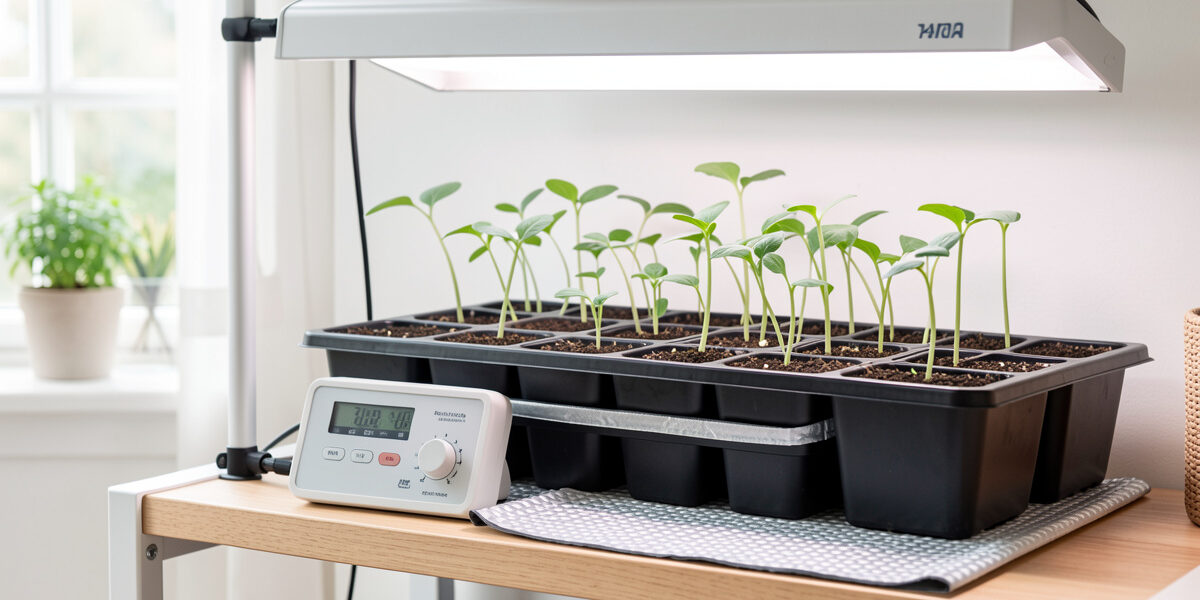
The best seedling heat mat is the one paired with a thermostat — because the mat itself is just a fixed heater, and the controller is what actually sets and holds the soil temperature your seeds need. A quality mat is waterproof-rated, sized to your tray, and warms evenly to roughly 5–10 °C above the room. But spend the real money on the thermostat, not the mat.
I have run cheap mats and better mats side by side over several Nordic winters, and the honest conclusion surprised me: the mats matter far less than the marketing suggests, and the piece nobody photographs — the little thermostat box — is what separates fast, even germination from a cooked flat of seed. Here is what I actually look for, what I ignore, and how I set mine up so the number I read is the number the seeds feel.
What Makes a Good Seedling Heat Mat?
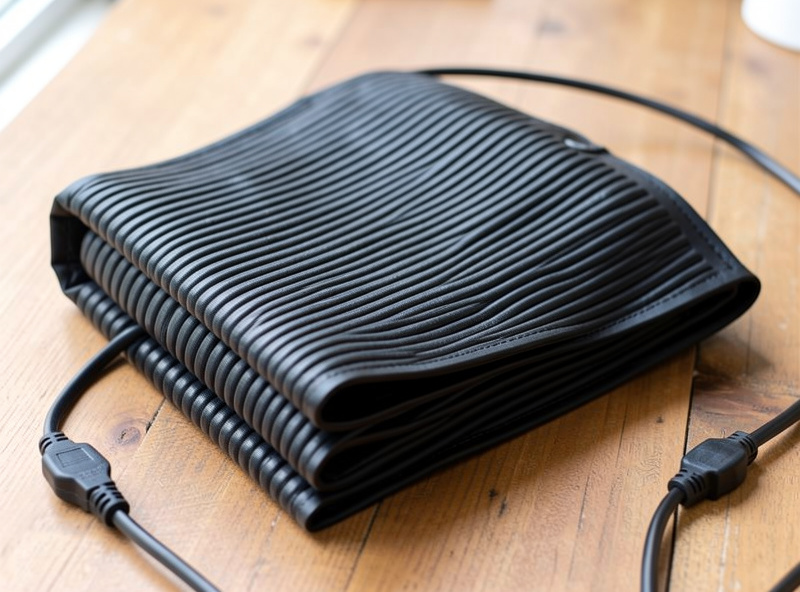
A good mat warms evenly, is rated for damp use, and matches your tray footprint. That is genuinely most of it. A seedling mat is a low-wattage flexible heater — typically 15–20 W for a single 1020-tray size — designed to lift the soil a modest amount above room temperature. Even warming across the surface matters, because a mat with hot and cold spots germinates a tray unevenly.
The non-negotiable spec is water resistance. You are running this under trays that get watered, so it must be sealed and rated for wet or damp environments, ideally with a certification mark you can check. Beyond that, look for a mat sized to your setup — a standard mat covers one 1020 flat — and a cable long enough to reach your outlet without strain. Everything else on the box, especially vague “far-infrared” or wattage-bragging language, is noise. If you are still deciding whether you even need one, I work through that in do you need a heat mat for seeds; this guide assumes you have decided yes.
Why the Thermostat Matters More Than the Mat
A bare mat has no idea what temperature your soil is — it just pushes heat until you unplug it. On a warm shelf that means it can drive the root zone past 32 °C, where germination drops off sharply and seed can genuinely cook. A thermostat with a soil probe closes that loop: you set a target, and the controller switches the mat on and off to hold it. That is the difference between a heater and a tool.
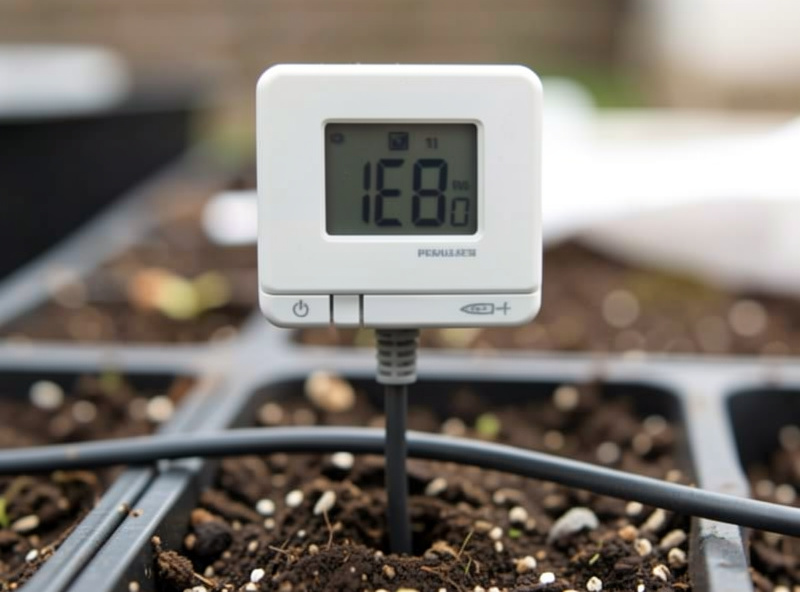
I ruined a tray of peppers years ago with a bare mat — perfect seed, perfect mix, killed because I assumed the mat would level off at something sensible. It does not; it just keeps warming. Since I added a thermostat I set peppers to about 28 °C and tomatoes to about 25 °C and stop thinking about it — the full crop-by-crop table of numbers I dial in is in seedling heat mat temperature. The controller costs about what the mat does, and it is the better investment of the two. If a bundle forces you to choose, buy the cheaper mat and the better thermostat. You can pair the two easily; an Amazon search for a heat mat thermostat controller turns up plenty of digital units with a soil probe.
What Size Heat Mat Do You Need?
Match the mat to how many trays you start at once, not to how many you dream of starting. A single-tray mat (roughly 25×50 cm) warms one 1020 flat and suits most apartment growers. If you sow in waves — a flat of peppers, then tomatoes two weeks later — one mat that you cycle between trays is usually plenty, because you only need heat during the germination window, then the tray moves off to make room for the next.
Larger 4-tray mats exist and make sense if you start a lot at once, but they draw more power and take more shelf space, and in a small kitchen that is a real cost. My rule: buy the smallest mat that covers your typical single sowing, and cycle trays across it rather than heating a big surface you rarely fill. The mat is only in play for the days between sowing and emergence, so one well-used small mat outperforms a big one sitting half-empty.
| Mat type | Typical size | Power | Best for |
|---|---|---|---|
| Single-tray mat | ~25×50 cm | 15–20 W | Apartment growers, one flat at a time |
| Double-tray mat | ~25×90 cm | 30–45 W | Two flats, or cycling several sowings |
| Large 4-tray mat | ~60×90 cm | 60–100 W | Big spring sowings, dedicated grow shelf |
| Any mat + thermostat | — | — | Everyone — the controller is the real buy |
Are Expensive Heat Mats Worth It?
Mostly no — but do not buy the very cheapest, unsealed mat either. The premium you pay on a good mat buys durable, properly sealed waterproofing and reliable even heating, and that is worth having under a wet tray. Above that floor, the extra spend on brand-name mats mostly buys packaging. The heating element in a 200-kronor mat and a 500-kronor mat is doing the same simple job.
Where I will not economise is safety. This is a heating element run under water in a home, so I want a mat with a recognised safety certification and intact, sealed edges, and I replace any mat whose coating has cracked. A frayed or unsealed mat near wet trays is not a corner worth cutting. Spend to clear that safety bar, add a thermostat, and stop — the money past that point does nothing your seedlings can feel.
How I Set Up and Use My Heat Mat
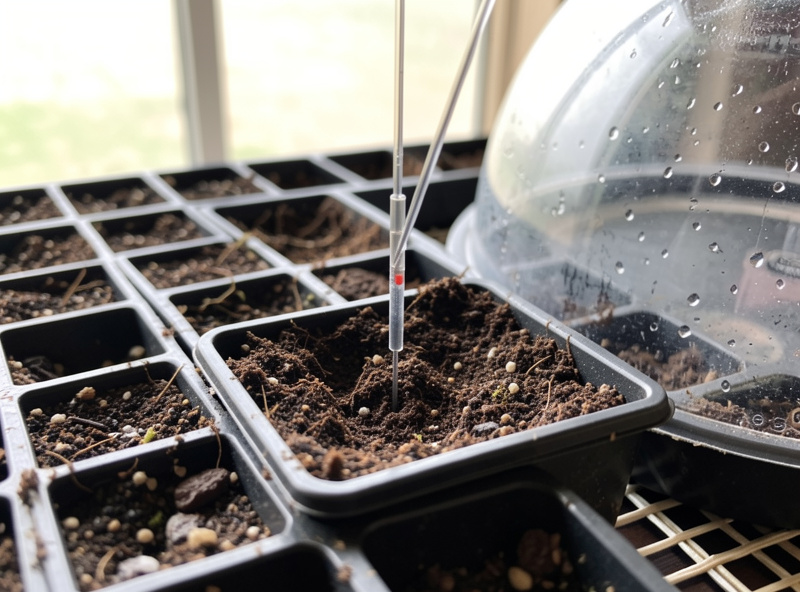
Setup is simple and the probe placement is the part people get wrong. I lay the mat on a level shelf, sit the 1020 tray of filled cells on it, and push the thermostat probe into the soil of a representative middle cell — not taped to the mat surface, where it reads hotter than the soil the seeds sit in. Then I set the target for the crop and let the controller cycle.
A few habits that save flats: I run the mat only during germination and lift the tray off it once seedlings are up, because warm, wet soil under emerged seedlings invites damping-off. I keep the tray on the mat but move it under the light the moment the first loops break the surface, so I never trade fast germination for leggy stretch in the dark. And I check the soil moisture more often on the mat, because bottom heat dries the surface faster — my notes on how often to water seedlings apply double here. Once the crop is up, the light takes over; get that right with the best light for growing plants indoors, and see where the mat sits among everything else on my seed-starting equipment list.
As an Amazon Associate I earn from qualifying purchases.
What I would buy today: a single-tray waterproof mat that clears the safety bar, and a digital thermostat with a soil probe — total maybe 400–600 kronor, and it will outlast a decade of winters. Skip the big mat, skip the brand premium, and put the saved money into a better light instead. The mat is the muscle; the thermostat is the brain; and the light is what actually grows the plant once the seed is up. For the underlying temperature science, university extension germination data lines up closely with the settings I use, and the University of Minnesota Extension’s starting-seeds-indoors guidance is a solid reference for cold-climate growers.
Common Heat Mat Problems and How I Fix Them
Most heat mat complaints trace back to three things, and none of them is a faulty mat. The first is uneven germination — half the tray up, half still sitting. That is almost always a mat with no thermostat sitting on an uneven or drafty surface, so one end runs warmer than the other. The fix is a level shelf, a thermostat holding one steady number, and rotating the tray once during the germination window so no corner stays cold.
The second is a mat that feels barely warm to the hand and seems broken. Seedling mats are deliberately low-wattage — they lift the soil only 5–10 °C above the room, not roast it — so a mat that feels lukewarm through a tray of moist soil is usually working exactly as designed. The way to check is the soil-probe reading, not your palm. I have watched people return perfectly good mats because they expected them to feel hot.
The third is condensation and corrosion at the cable joint. Water pooling on the mat surface is the real enemy of a mat’s lifespan, and it collects when the mat sits in the dished base tray catching runoff. I keep the mat itself out of standing water — the trays bottom-water into their own reservoir, and the mat stays on a dry, level board beneath. A mat kept dry at its edges and joints lasts years; one sitting in a puddle corrodes and becomes the safety risk you were trying to avoid. When a coating cracks or the cable entry looks corroded, I retire the mat rather than nurse it, because this is a heater running under water in a home.
What is the best seedling heat mat to buy?
The best mat is a waterproof-rated one sized to your tray, paired with a separate digital thermostat that has a soil probe. The mat only supplies heat, while the thermostat sets and holds the actual temperature. Spend more on the controller than on the mat itself.
Do I need a thermostat with my heat mat?
Strongly recommended. A bare mat keeps warming with no feedback and can push soil past 32 degrees Celsius, which harms germination and can cook seed. A thermostat with a probe in the soil lets you set a target temperature and holds it, turning the mat from a fire risk into a precise tool.
What size heat mat do I need?
For most apartment growers a single-tray mat around 25 by 50 centimetres is enough, since you only need heat during the germination window and can cycle trays across it. Larger multi-tray mats suit big spring sowings but draw more power and take more space.
Are expensive heat mats worth the money?
Only up to a point. Pay enough for durable waterproofing, even heating, and a recognised safety certification, but above that floor the extra cost on premium brands mostly buys packaging. The heating element does the same simple job at most price points.
Where do I put the temperature probe on a heat mat?
Push the probe into the soil of a representative middle cell, not onto the mat surface. The mat surface reads hotter than the soil the seeds actually sit in, so a surface reading will fool you into running the root zone too cool or too warm.