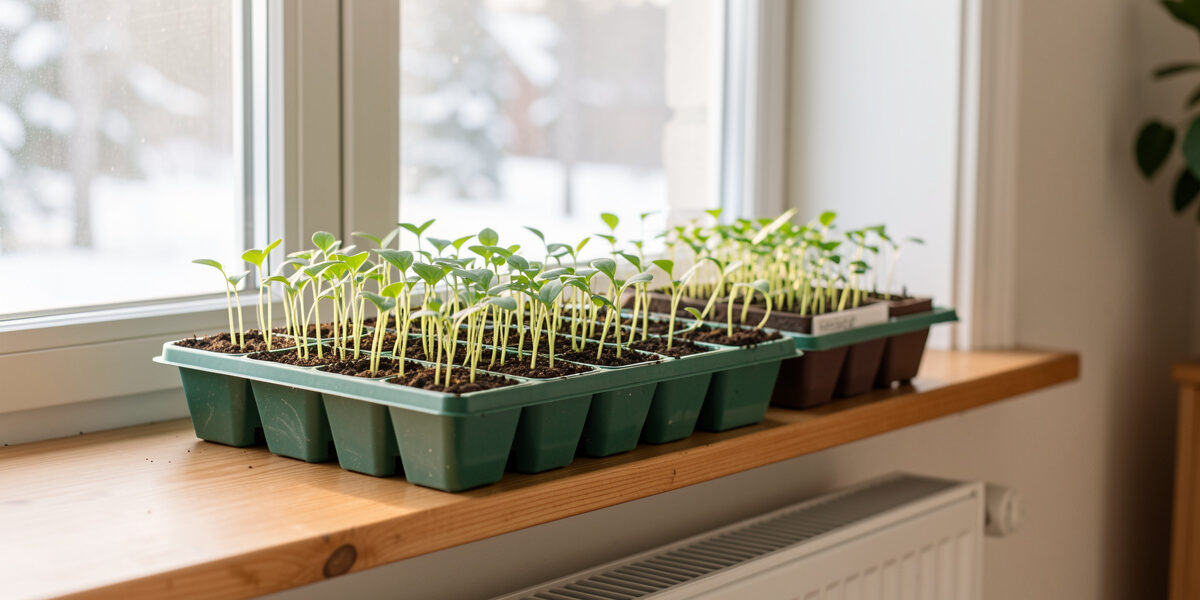
You need a heat mat for warm-season seeds — tomatoes, peppers, aubergine, cucumber — started in a cool room, and you do not need one for cool-season greens or for anyone with a reliably warm 22 °C space. A mat earns its keep by holding the soil at 24–29 °C, where those heat-lovers germinate in days instead of sulking for weeks.
That is the short answer, and it is more useful than the “yes, always buy one” you will read on most US gardening sites. In a Swedish apartment in February my seed-starting shelf sits at maybe 18 °C, and that gap between room temperature and what a pepper actually wants is the whole reason a mat exists. But I have also wasted a mat — and set a flat of lettuce back weeks — by using it on the wrong crop. Here is exactly when bottom heat pays off, when it does nothing, and when it actively hurts.
Do You Actually Need a Heat Mat for Seeds?
It depends on two things: what you are sowing and how warm your room is. Germination is driven by soil temperature, not air temperature, and each crop has a range where it fires fastest. If your sowing sits in that range on its own, a mat adds nothing. If it sits 5–10 °C below, a mat closes the gap and can cut germination time in half.
My rule is simple. If the room where the trays live holds a steady 21–22 °C, most vegetables germinate acceptably without help, and only the true heat-lovers see a real benefit. If the room runs cool — a hallway, a spare room, a windowsill over a cold sill in a Nordic winter — then a mat is the difference between seeds that come up and seeds that rot in cold, wet medium before they ever break dormancy. Cold, damp soil is the enemy here; seed sitting for three weeks in 14 °C medium is far more likely to rot than germinate. For the full picture of where the mat sits among everything else on the shelf, see my seed-starting equipment list.
Which Seeds Benefit Most From Bottom Heat?
Warm-season crops benefit most, because their germination optimum is well above a cool room. Tomatoes want soil around 24–27 °C; peppers and aubergine closer to 27–29 °C; cucumbers, squash, and melons up at 27–32 °C. In an 18 °C room, all of those germinate slowly and unevenly — and slow, uneven germination in cold medium is where damping-off and rot creep in.
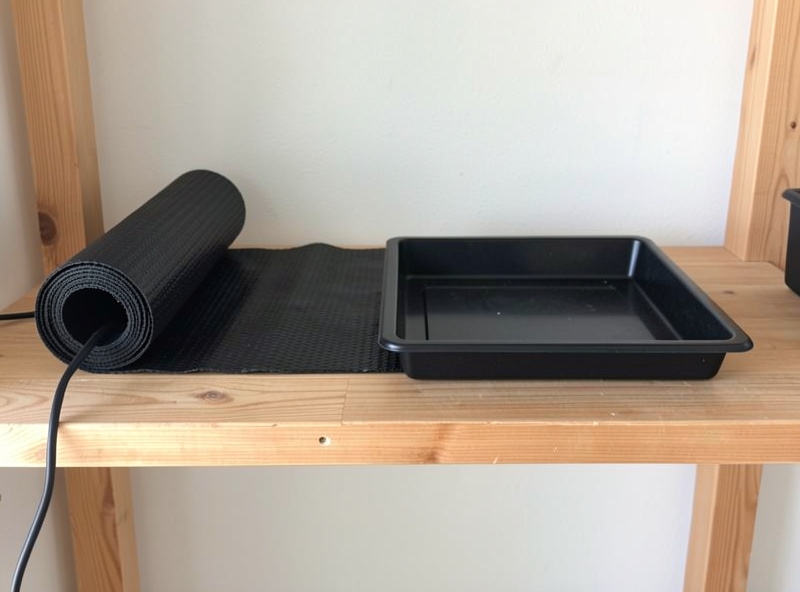
These are the crops I put on the mat every year. On my shelf peppers are the poster child — start them cool and they take three weeks and come up ragged; give them bottom heat and they are through in five to seven days, even and strong. If you are starting these from seed, the mat is not a luxury. My detailed walkthroughs for starting peppers from seed indoors and starting tomato seeds indoors both lean on bottom heat for exactly this reason. University extension guidance agrees: the University of Minnesota Extension’s starting-seeds-indoors resource lists bottom heat specifically for warm-season vegetables. I lay out the exact crop-by-crop numbers I dial the thermostat to in seedling heat mat temperature.
Which Seeds Don’t Need — or Actively Hate — a Heat Mat?
Cool-season crops germinate fine at room temperature, and some genuinely resent a mat. Lettuce, spinach, kale, pak choi, peas, and most brassicas are happy at 15–21 °C, which any heated room provides. Put them on a mat and at best you waste the heat; at worst, with lettuce and spinach, you trip thermo-dormancy — a built-in response where warmth above roughly 25 °C tells the seed it is midsummer and germination shuts down.
I learned this the hard way. Early on I treated the mat as a general accelerator and parked a flat of leaf lettuce on it beside the peppers. The peppers loved it; the lettuce simply refused, and I lost most of that sowing before the penny dropped. Now the greens germinate on a plain shelf and only the heat-lovers get the mat. If you grow the low-light-tolerant greens I rely on through a Nordic winter — leaf lettuce, pak choi, spinach — you may honestly never need a mat at all.
Free Alternatives: Radiator Shelf, Top of the Fridge, Airing Cupboard
Before you buy anything, look at the warm spots you already own. The top of a fridge, a shelf above a radiator, or an airing cupboard can all deliver gentle bottom warmth for free. I have germinated plenty of tomatoes on a board resting above a radiator, moving the tray to the light the instant the first seedlings showed.
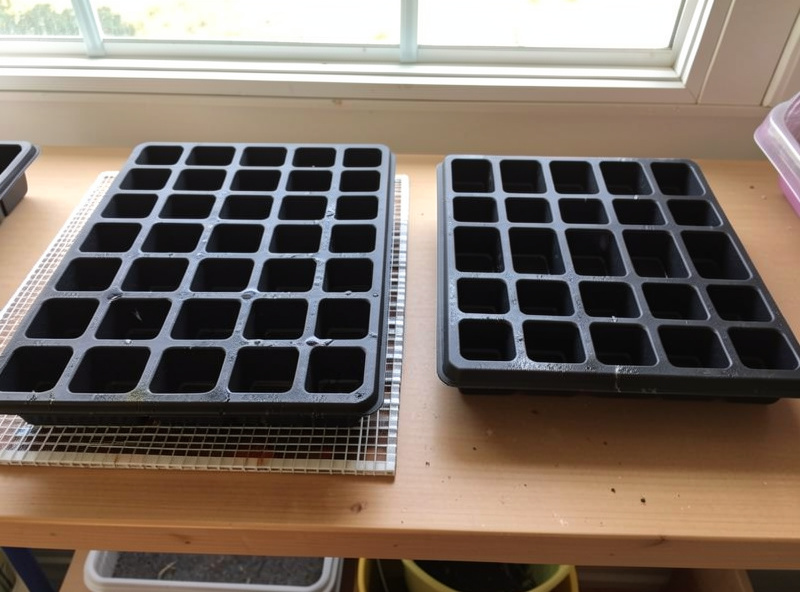
The catch with free heat is that it is uncontrolled. A radiator cycles on and off, so the soil temperature swings; the top of a fridge is only faintly warm and varies by model. None of these hold a steady number the way a mat with a thermostat does, and the airing cupboard has no light, so you must move the tray out the moment germination starts or the seedlings go leggy in the dark within a day. For a handful of tomatoes these hacks are genuinely fine. The moment you are starting flats of heat-lovers every winter and want repeatable results, a dedicated mat stops being optional.
| Heat source | Temperature control | Cost | Best for |
|---|---|---|---|
| Seedling heat mat + thermostat | Precise, holds a set number | 350–700 kr | Repeatable warm-season sowings every season |
| Bare heat mat (no thermostat) | Fixed offset, can overshoot | 150–350 kr | Cool rooms, if you monitor soil temp |
| Radiator shelf | Swings with the heating cycle | Free | A few trays, moved to light at emergence |
| Top of the fridge | Gentle, uncontrolled | Free | Slow-but-warm germination of easy crops |
| Warm room, no heat | Ambient only | Free | Cool-season greens and brassicas |
How Much Faster Does a Heat Mat Make Seeds Germinate?
For heat-lovers, dramatically faster — often cutting germination time by half or more. A pepper that takes two to three weeks in an 18 °C room comes up in under a week at 28 °C. The mat does not make more seeds germinate in absolute terms if they were viable to begin with, but it makes them germinate faster and more evenly, and even, fast emergence is what keeps a flat ahead of rot and fungus.
Speed matters more than it sounds in a short Nordic season. Every week a slow crop dawdles in the tray is a week off the growing window at the other end. When I start peppers eight to ten weeks before the last frost, shaving two weeks off germination is two more weeks of growth before they go out — or the difference between a ripe crop and a green one when autumn closes in. The mat buys time, and time is the scarce resource up north.
When a Heat Mat Becomes a Liability
A mat without temperature control is the fastest way to cook a flat of seed. A bare mat is a fixed-output heater — it warms the soil to roughly 5–10 °C above ambient and keeps pushing, so in a warm room it can drive the root zone past 32 °C, where germination drops off a cliff. I have baked a tray of peppers exactly this way: perfect seed, perfect mix, ruined because I trusted the mat to know when to stop. It does not.
The fix is a thermostat with a probe pushed into the soil, so you set the number the seeds actually feel rather than guessing from the mat surface. The other liability is leaving trays on heat after germination — warm, wet soil under emerged seedlings invites damping-off, so the mat comes off once the crop is up and growing. If you decide a mat is worth it, buy one that is rated for damp use and pair it with a controller; a decent starter pair is easy to find with an Amazon search for a seedling heat mat with thermostat. My full breakdown of what separates a good mat from a fire-risk cheapie is in best seedling heat mat. Keep an eye on watering too — heat dries the surface faster, so check my notes on how often to water seedlings and light them properly with the best light for growing plants indoors so speed on the mat is not undone by stretch under a weak window.
As an Amazon Associate I earn from qualifying purchases.
So — do you need one? If you start tomatoes, peppers, or cucurbits from seed in a cool room, yes, and it will pay for itself in speed and even germination the first season. If you grow cool-season greens, or your room is reliably warm, save the money and the shelf space. What I would do starting today: buy the mat only when your crop list actually includes the heat-lovers, and spend the extra on the thermostat rather than a bigger mat. The controller is what turns a fire risk into a tool.
Do all seeds need a heat mat to germinate?
No. Only warm-season crops such as tomatoes, peppers, aubergine, and cucurbits benefit meaningfully from bottom heat, and only when the room is cool. Cool-season greens like lettuce, spinach, and kale germinate fine at room temperature and can actually stall if kept too warm.
Can I use a heat mat for lettuce and other greens?
It is best not to. Lettuce and spinach can enter thermo-dormancy above about 25 degrees Celsius, where warmth signals midsummer and germination shuts down. Germinate cool-season greens on a plain shelf at room temperature and save the mat for heat-loving crops.
What can I use instead of a heat mat?
Free warm spots like the top of a fridge, a shelf above a radiator, or an airing cupboard can provide gentle bottom heat. The downside is that the temperature is uncontrolled and swings, and dark spots need the tray moved to light the moment seedlings emerge. For repeatable results with heat-lovers, a mat with a thermostat is more reliable.
How much faster do seeds germinate on a heat mat?
For warm-season crops, often twice as fast or more. A pepper that takes two to three weeks in an 18 degree room can come up in under a week at 28 degrees. The mat mainly speeds and evens germination rather than raising the total number of viable seeds that sprout.
Is it safe to leave a heat mat on all the time?
Only with a thermostat. A bare mat with no controller can push the soil past 32 degrees Celsius and harm germination, and leaving trays on heat after seedlings emerge invites damping-off. Use a probe in the soil, set a target temperature, and remove the mat once the crop is up.