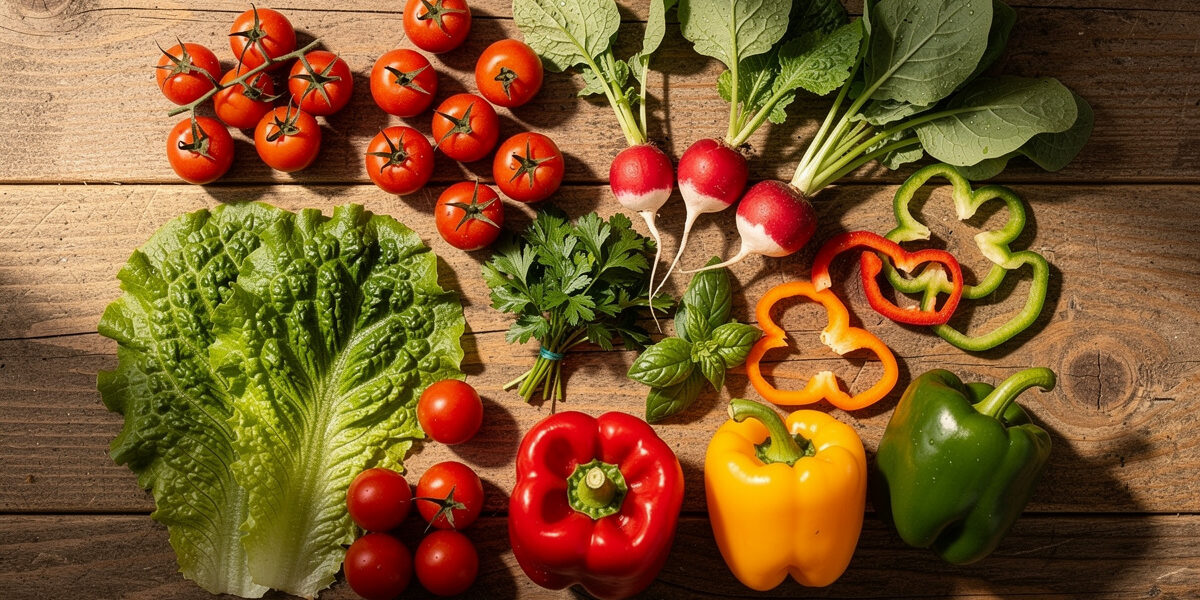
The 15 easiest vegetables to grow in containers share three traits: shallow roots, fast harvests, and tolerance for beginner mistakes. A cherry tomato in a 5-gallon container yields 10-15 pounds per season; a $3 lettuce packet gives 20+ cuttings. Start with Tier 1 if this is your first season.
Tier 1: The Easiest Vegetables to Grow in Containers (Start Here)
These vegetables are forgiving, productive, and perfect for your first urban garden. They tolerate beginner mistakes and provide quick wins to build your confidence. I keep Tier 1 crops running indoors under LED bars through the dark months — cut-and-come-again greens under a full-spectrum light produce reliably from October through March when the balcony is frozen over.
1. Lettuce and Salad Greens
Why it’s perfect for urban gardens: Lettuce grows fast (harvest in 30-45 days), takes minimal space, and thrives in partial shade—ideal for balconies that get only morning sun. Cut-and-come-again varieties provide multiple harvests from a single planting. University of Maryland Extension notes that cool-season crops like lettuce manage with just 3-5 hours of direct sun, which is exactly the light profile a north- or east-facing balcony gives you (Growing Vegetables in Containers, UMD Extension).
Container requirements: 1-2 gallon container or shallow window box. Roots are shallow; depth matters less than surface area.
Growing tips:
- Sow seeds directly; no need to transplant
- Harvest outer leaves when 3-4 inches tall, let center continue growing
- Plant every 2 weeks for continuous harvests
- Shade cloth prevents bolting (going to seed) in summer heat
Best varieties for containers: Buttercrunch, Black Seeded Simpson, Salad Bowl mix, arugula
2. Radishes
Why it’s perfect for urban gardens: Radishes are the fastest vegetable you can grow—ready to harvest in just 3-4 weeks. They take minimal space and provide instant gratification for impatient beginners.
Container requirements: 1-2 gallon container, 6-8 inches deep. Any container works.
Growing tips:
- Sow seeds directly; thin to 2-inch spacing
- Harvest when golf-ball sized—oversized radishes turn woody
- Succession plant every 2 weeks for constant supply
- Both roots and greens are edible
Best varieties for containers: Cherry Belle, French Breakfast, Easter Egg (colorful mix)
3. Green Onions (Scallions)
Why it’s perfect for urban gardens: Green onions are the ultimate low-maintenance crop. You can even regrow them endlessly from grocery store scraps. They fit anywhere and produce constantly.
Container requirements: Shallow container or even a sturdy jar with water for regrowing. Minimal root depth needed.
Growing tips:
- Regrow from scraps: Cut off tops, leave 2 inches of white bulb, place in water
- Transplant to soil when roots reach 2 inches for perpetual harvest
- Cut what you need; plant continues producing
- Hardy enough to stay outdoors through light frost
Pro tip: One grocery store bunch of green onions can provide a year’s worth of harvests through regrowing.
4. Herbs (Basil, Parsley, Cilantro, Mint)
Why it’s perfect for urban gardens: Fresh herbs are expensive to buy but incredibly easy to grow. A single basil plant provides $20+ worth of harvests over a season. Plus, herbs thrive in the warm, protected conditions of balconies and windowsills.
Container requirements: 1-2 gallon pot per herb. Most herbs prefer slightly crowded conditions.
Growing tips:
- Basil needs warmth—don’t plant until nighttime temps stay above 50°F
- Pinch off flower buds to extend leaf production
- Harvest regularly to encourage bushy growth
- Most herbs prefer slightly dry soil—don’t overwater
Best starter herbs: Basil, mint, parsley, chives, cilantro (cool weather), oregano, thyme
5. Kale
Why it’s perfect for urban gardens: Kale is virtually indestructible. It survives frost, heat, neglect, and beginner mistakes. One plant produces for months using the cut-and-come-again method, and it actually tastes better after a light frost.
Container requirements: 3-5 gallon container per plant. Kale gets surprisingly large—give it room.
Growing tips:
- Harvest lower/outer leaves first, letting center leaves continue growing
- Remove yellowing leaves promptly
- Can be planted in early spring and again in late summer for fall harvests
- Tolerates partial shade better than most vegetables
Best varieties for containers: Dwarf Blue Curled, Red Russian, Lacinato (dinosaur kale)
Tier 2: The Reliable Producers (High Reward)
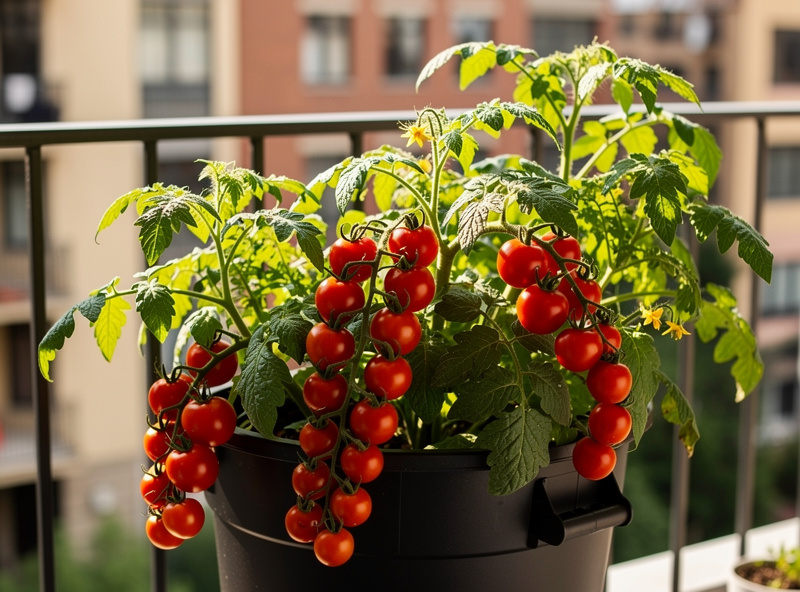
These vegetables require slightly more attention but deliver impressive harvests. Perfect once you’ve grown a few things successfully. In a Nordic climate with a short season, Tier 2 is where the real return on limited container space begins — one cherry tomato plant in a 5-gallon fabric bag outproduces a windowsill of lettuce once the light returns in May.
6. Cherry Tomatoes
Why it’s perfect for urban gardens: Cherry tomatoes are the most productive vegetable per plant you can grow. A single healthy plant can produce 200+ tomatoes over a season. And homegrown tomatoes taste nothing like store-bought—it’s a different vegetable entirely.
Container requirements: 5-gallon minimum, 7-10 gallons ideal. Tomatoes are heavy feeders with extensive roots—bigger containers mean bigger harvests. Iowa State Extension’s container-tomato guidance walks through pot size, staking, and watering in detail, and it lines up with what I’ve found on my own balcony (Growing Tomatoes in Containers, ISU Extension).
Growing tips:
- Choose “determinate” or “patio” varieties for containers—they stay compact
- Provide a cage or stake at planting time (adding later damages roots)
- Water consistently—irregular watering causes fruit cracking
- Feed every 2 weeks once flowering begins
Best varieties for containers: Tumbling Tom, Tiny Tim, Patio Princess, Sweet 100 (needs support)
7. Peppers (Sweet and Hot)
Why it’s perfect for urban gardens: Pepper plants are compact, beautiful, and incredibly productive. They’re also expensive at the grocery store—especially specialty hot peppers—making them one of the best value crops for urban growers.
Container requirements: 5-gallon container per plant. Peppers have similar needs to tomatoes but stay more compact.
Growing tips:
- Start with transplants—peppers are slow from seed
- Wait to plant until temperatures are consistently warm (peppers hate cold)
- Pinch off early flowers to encourage stronger plant growth first
- Most peppers don’t need staking unless heavily loaded with fruit
Best varieties for containers: Sweet: Lunchbox, Mini Bell. Hot: Jalapeño, Thai chili, Habanero
8. Bush Beans
Why it’s perfect for urban gardens: Bush beans are compact, fast-growing, and don’t need trellising (unlike pole beans). They’re also nitrogen-fixers, meaning they actually improve your soil while growing. Plant them alongside other vegetables for a productivity boost.
Container requirements: 3-5 gallon container for 4-6 plants. Beans have modest root systems.
Growing tips:
- Direct sow seeds—beans don’t like transplanting
- Plant in succession every 3 weeks for continuous harvests
- Harvest frequently when beans are young and tender
- Don’t over-fertilize—too much nitrogen means leaves but no beans
Best varieties for containers: Bush Blue Lake, Provider, Contender
9. Spinach
Why it’s perfect for urban gardens: Spinach is one of the most nutrient-dense vegetables you can grow, and it thrives in the cool, partial-shade conditions many urban balconies offer. It’s also incredibly expensive per pound at grocery stores.
Container requirements: 2-3 gallon container. Spinach has shallow roots like lettuce.
Growing tips:
- Plant in early spring or fall—spinach bolts (goes to seed) in summer heat
- Harvest outer leaves for continuous production
- Can tolerate light frost, extending your growing season
- Succession plant every 2-3 weeks
Best varieties for containers: Bloomsdale Long Standing, Space, Tyee
10. Swiss Chard
Why it’s perfect for urban gardens: Chard is the most heat-tolerant leafy green, producing through summer when lettuce and spinach have bolted. The colorful stems (red, yellow, orange) also make it genuinely beautiful—ornamental and edible.
Container requirements: 3-5 gallon container per plant. Chard gets larger than spinach or lettuce.
Growing tips:
- Harvest outer stalks, leaving inner leaves to continue growing
- Extremely forgiving of irregular watering
- One planting produces for 6+ months
- “Bright Lights” variety offers a rainbow of stem colors
Best varieties for containers: Bright Lights, Fordhook Giant, Ruby Red
Tier 3: The Space Maximizers (Vertical Growing)
These vegetables use vertical space, perfect for making the most of small urban footprints.
11. Peas (Snap and Snow)
Why it’s perfect for urban gardens: Peas grow up, not out, using minimal floor space. They’re also cool-weather crops, perfect for early spring when your other vegetables aren’t ready yet. Fresh-picked peas are mind-blowingly sweet compared to frozen.
Container requirements: 3-5 gallon container. Add a small trellis, stakes, or even twine for climbing.
Growing tips:
- Plant in early spring (6 weeks before last frost) or fall
- Peas climb using tendrils—provide something to grab
- Harvest frequently to encourage more pod production
- Plants decline in summer heat—pull and replace with warm-season crops
Best varieties for containers: Sugar Snap, Snow peas, Dwarf Grey Sugar
12. Cucumbers (Bush Varieties)
Why it’s perfect for urban gardens: Cucumbers can be trained to grow vertically on a trellis, saving massive amounts of space. A single healthy plant produces 10-20 cucumbers over the season.
Container requirements: 5-gallon minimum. Cucumbers are thirsty plants with larger root systems.
Growing tips:
- Choose “bush” or “patio” varieties for containers—standard cukes are too vigorous
- Consistent watering is crucial—irregular water causes bitter, misshapen fruit
- Provide support even for bush types; fruit stays cleaner off the ground
- Harvest frequently when small (4-6 inches) for best texture
Best varieties for containers: Bush Pickle, Spacemaster, Patio Snacker
13. Zucchini (Compact Varieties)
Why it’s perfect for urban gardens: One zucchini plant can produce more than a family can eat. They’re legendary for productivity. Compact patio varieties bring that abundance to container gardens without taking over your entire balcony.
Container requirements: 5-7 gallon minimum. Zucchini has an extensive root system.
Growing tips:
- Choose compact/bush varieties specifically bred for containers
- Harvest when small (6-8 inches)—oversized zucchini are watery and seedy
- Check plants daily during peak production—they grow fast
- Hand-pollinate if you’re not seeing fruit (use a small paintbrush between flowers)
Best varieties for containers: Astia, Patio Star, Eight Ball (round zucchini)
Tier 4: The Patient Rewards (Worth the Wait)
These vegetables take longer but offer unique satisfaction. Plant them once you’re comfortable with the basics.
14. Carrots
Why it’s perfect for urban gardens: Homegrown carrots taste dramatically different from store-bought—sweeter, more flavorful, and far more satisfying. Short varieties work perfectly in containers and mature faster than traditional types.
Container requirements: 8-12 inch deep container (depth matters more than width for carrots). Loose, rock-free potting mix is essential.
Growing tips:
- Choose “short” or “round” varieties—traditional long carrots need deep soil
- Sow seeds directly—carrots don’t transplant
- Keep soil consistently moist until germination (7-21 days)
- Thin seedlings ruthlessly—crowded carrots won’t develop properly
Best varieties for containers: Parisian (round), Little Finger, Thumbelina, Nantes types
15. Beets
Why it’s perfect for urban gardens: Beets are a two-for-one vegetable—both the roots and the greens are edible and delicious. They’re also surprisingly forgiving and handle container growing well. Roasted homegrown beets are a revelation.
Container requirements: 3-5 gallon container at least 8 inches deep. Beets need less depth than carrots.
Growing tips:
- Each “seed” is actually a cluster—thin to one seedling per cluster
- Harvest greens while waiting for roots to mature
- Harvest roots when golf-ball sized for best flavor
- Can tolerate light frost, extending growing season
Best varieties for containers: Detroit Dark Red, Chioggia (striped), Golden (won’t stain)
Vegetable Quick Reference Table
| Vegetable | Container Size | Days to Harvest | Difficulty |
|---|---|---|---|
| Lettuce | 1-2 gal | 30-45 days | Easy |
| Radishes | 1-2 gal | 21-28 days | Easy |
| Cherry Tomatoes | 5-10 gal | 60-75 days | Moderate |
| Peppers | 5 gal | 65-80 days | Moderate |
| Bush Beans | 3-5 gal | 50-60 days | Easy |
| Spinach | 2-3 gal | 35-45 days | Easy |
| Cucumbers | 5 gal | 55-65 days | Moderate |
| Carrots | 8-12″ deep | 60-75 days | Moderate |
Putting It All Together: Starter Combinations
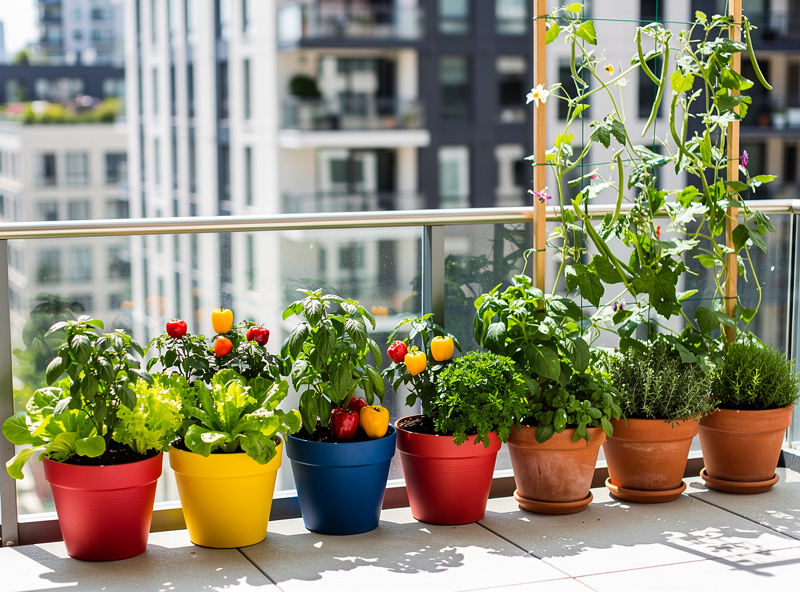
Here are the container combinations I have run on my own balcony — scaled for what a renter’s outdoor space actually fits. If you’re completely new to urban gardening, start with our urban gardening beginner guide for step-by-step setup instructions before choosing your vegetables. For a comprehensive overview of container gardening methods, pot selection, and seasonal planning, see our container gardening complete guide. If you need quality containers to get started, browse fabric grow bags on Amazon — the 5-gallon size handles everything from tomatoes to kale without breaking a balcony’s weight budget.
Windowsill Only (1-2 small pots)
- Green onions (regrown from scraps)
- Fresh herbs (basil, parsley, chives)
Small Balcony (4-6 containers)
- 1 cherry tomato plant
- 1 pepper plant
- 1 container of salad greens
- 1 container of herbs
- Optional: 1 container of radishes or green onions
Medium Balcony/Patio (8-12 containers)
- 2 tomato plants (different varieties)
- 2 pepper plants
- 1 zucchini or cucumber
- 2 containers of greens (lettuce, kale, chard rotation)
- 1 container of beans
- 2-3 containers of herbs
- Succession plantings of radishes
Where to Buy Seeds and Seedlings
Quality seeds and healthy seedlings determine your success before you even plant. After multiple seasons of testing through short Nordic growing windows, here is where I source mine.
Online seed catalogs offer the widest variety — companies like Johnny’s Selected Seeds, Baker Creek, and Burpee carry hundreds of vegetable varieties optimized for container growing. My own seed box is mostly Johnny’s and Baker Creek; the cold-tolerant cultivars bred for northern growers consistently outperform generic hardware-store packets on my balcony. A single $3-4 packet produces 20-100 seeds, enough for multiple seasons.
Local nurseries provide healthy, locally-adapted seedlings at $3-5 each. The advantage: plants are already acclimated to your climate, and staff can recommend varieties that perform well in your area. Buy seedlings for slow-starting crops like tomatoes and peppers, and grow fast crops like lettuce and radishes from seed. In my experience, nursery tomato starts beat seed-grown plants by at least 3 weeks — critical when your outdoor season is only 4 months long.
Farmers markets often sell starter plants from local growers at competitive prices. These plants are typically hardier than big-box store seedlings and already adapted to your regional conditions. Where I live, the market starts selling hardened-off transplants in mid-May, and those plants rarely suffer transplant shock the way big-box seedlings do.
Ready to get started? Check out our guide to essential urban gardening equipment to see exactly what you need (and what you can skip). As an Amazon Associate I earn from qualifying purchases.
Frequently Asked Questions
What is the easiest vegetable to grow in containers?
Lettuce and salad greens are the easiest vegetables to grow in containers. They grow fast (30-45 days), need minimal space, tolerate partial shade, and you can harvest outer leaves while the plant continues producing. Radishes are a close second, ready in just 3-4 weeks with almost no maintenance.
How many vegetables can I grow in a 5-gallon bucket?
One large plant per 5-gallon bucket: one tomato, one pepper, or one cucumber. For smaller plants, you can fit 2-3 lettuce plants, 4-6 bush beans, or 3-4 radishes in a single 5-gallon container. Never overcrowd—plants compete for nutrients and water when packed too tightly.
Can I grow root vegetables in containers?
Yes, but choose short or round varieties. Carrots like Parisian (round) or Little Finger work well in containers 8-12 inches deep. Radishes are perfect for shallow containers. Beets grow well in 3-5 gallon containers. Avoid long carrot varieties and parsnips that need deep soil.
What vegetables grow best together in containers?
Good container combinations: lettuce + radishes (different root depths), tomatoes + basil (basil repels pests), peppers + lettuce (peppers are tall, lettuce stays low). Avoid planting heavy feeders together—they compete for nutrients. Keep mint in its own container as it spreads aggressively.
How much sunlight do container vegetables need?
Most fruiting vegetables (tomatoes, peppers, cucumbers) need 6-8 hours of direct sunlight. Leafy greens (lettuce, spinach, kale) can manage with 4-5 hours. Herbs need 5-6 hours. If your space gets less than 4 hours of direct sun, focus on shade-tolerant greens and herbs, or supplement with LED grow lights.
Related Articles
Continue your urban gardening journey with these helpful guides:
- How to Start Urban Gardening: Complete Beginner’s Guide – The perfect starting point for anyone new to growing food in the city
- Urban Gardening Equipment Guide – Essential tools and what you can skip to save money
- Vertical Gardening 101 – Maximize your growing area by growing upward
- Indoor vs Outdoor Urban Gardening – Which approach fits your space and lifestyle
- Urban Gardening on a Budget – Start growing food for under $50
- 7 Urban Gardening Mistakes to Avoid – Learn from common errors and save your plants