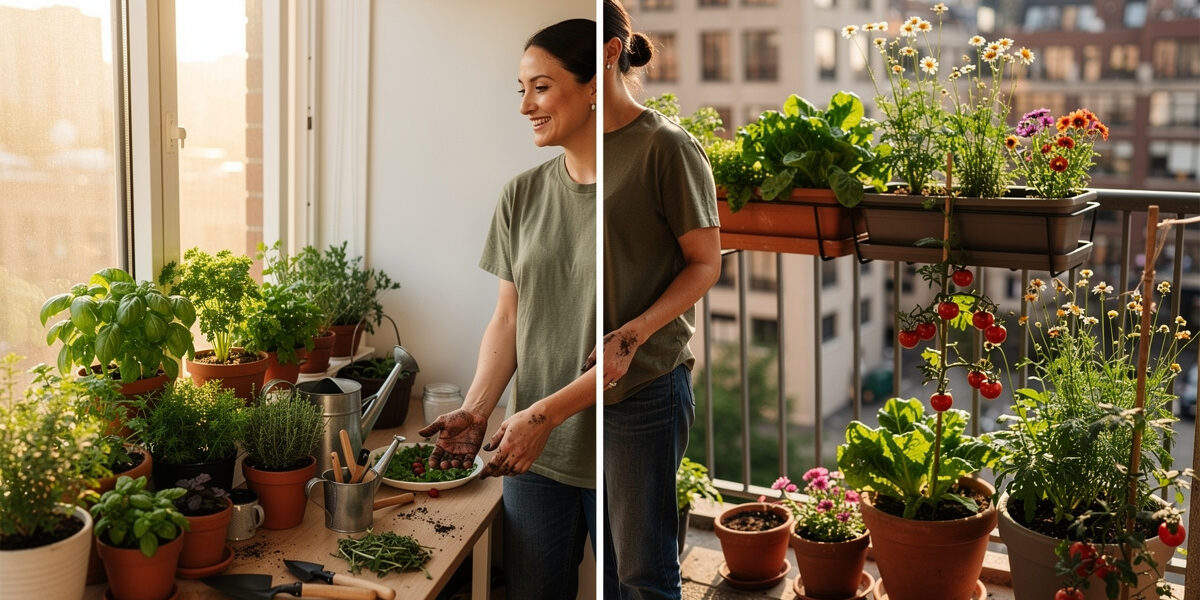
Indoor vs outdoor urban gardening comes down to one tradeoff: year-round harvests with grow lights for $20-40 in setup, or 2-3x higher seasonal yields under natural sun. Your choice depends on space, climate, and what you want to grow. This guide compares cost, crop selection, and real yield across both approaches.
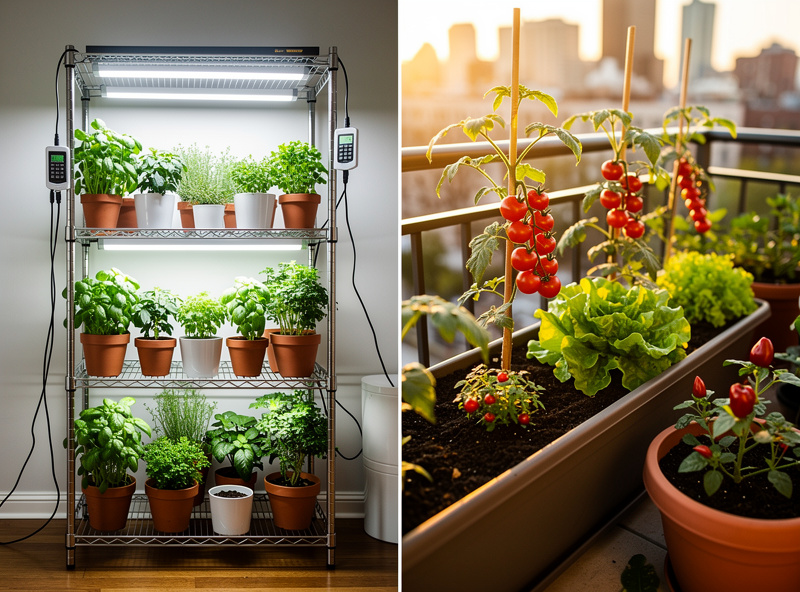
Indoor Urban Gardening: Growing Inside Your Home
Indoor gardening transforms windowsills, countertops, and spare corners into productive growing spaces. In my Nordic apartment, the indoor grow shelf runs 12 months a year — sprouting jars on the counter, microgreens under LED bars, and herbs on the brightest windowsill. It is the only option for apartment dwellers without outdoor access, but plenty of gardeners with balconies run both setups for year-round production and complete control over growing conditions.
Advantages of Indoor Growing
Year-round production: Indoor gardens aren’t limited by seasons or weather. You can harvest fresh herbs in January and salad greens in December. This consistent production is the primary reason many urban gardeners choose indoor growing. While outdoor gardeners wait through winter, indoor growers enjoy fresh basil for pasta and cilantro for tacos regardless of the season.
Climate control: Your plants enjoy stable temperatures, protection from extreme weather, and no risk of frost. This controlled environment reduces plant stress and eliminates many weather-related failures. Sudden heatwaves, unexpected frosts, or heavy rains that devastate outdoor gardens won’t touch your indoor plants.
Pest and disease pressure: Indoor gardens face significantly fewer pest problems. No aphids, caterpillars, or browsing animals. Diseases spread more slowly in isolated indoor environments. Without wind-blown spores and crawling insects, your plants stay healthier with minimal intervention.
Convenience: Your garden is always accessible, regardless of weather. Rain, snow, or extreme heat won’t prevent you from tending plants or harvesting dinner ingredients. You can check on your herbs while making coffee or grab fresh greens for lunch without stepping outside.
Privacy and security: Indoor gardens are completely private and protected from theft or vandalism that can affect community plots or accessible balcony gardens. Your tomatoes won’t disappear overnight, and no one will judge your gardening experiments.
Challenges of Indoor Growing
Light limitations: Most indoor spaces lack adequate natural light for vegetables. Even south-facing windows typically provide only 4-6 hours of direct sun, while fruiting plants need 8+ hours. This means investing in grow lights for productive indoor gardens. Without supplemental lighting, you’ll be limited to shade-tolerant herbs and greens.
Grow light costs: Quality LED grow lights cost $50-200+ and increase electricity bills by $10-30/month. This is the biggest expense difference between indoor and outdoor growing. The initial investment and ongoing electricity costs add up over time.
Limited crop selection: Full-sized tomatoes, peppers, and squash require more light and space than most indoor setups can provide. Indoor gardens excel at herbs, microgreens, and leafy greens but struggle with fruiting vegetables. You’ll need to adjust your expectations about what you can realistically grow.
Space constraints: Containers, lights, and equipment compete for limited indoor space. Spills and soil mess must be managed carefully in living areas. A 5-gallon tomato container takes up significant real estate in a small apartment.
Pollination challenges: Indoor plants lack wind and insect pollinators. Tomatoes and peppers need hand-pollination (simple but requires attention) to set fruit. You’ll need to shake plants or use a small brush to move pollen between flowers.
Indoor Growing Costs Breakdown
| Item | Budget Option | Mid-Range | Premium |
|---|---|---|---|
| Containers (3-5 pots) | $15 (recycled/upcycled) | $30 (standard plastic) | $60 (self-watering/designer) |
| Potting Mix | $10 (DIY mix) | $15 (quality bagged) | $25 (organic specialty) |
| Grow Lights | $40 (basic LED strip — I run full-spectrum bars that cover a 2×1 ft shelf) | $100 (full-spectrum LED) | $200+ (professional panels) |
| Seeds/Seedlings | $10 (seed packets) | $20 (mix of seeds + starts) | $40 (organic/heirloom varieties) |
| Basic Tools | $15 (dollar store) | $30 (quality essentials) | $60 (complete kit) |
| Monthly Electricity | $10 (small setup) | $20 (medium setup) | $40 (large/multi-light) |
| TOTAL STARTUP | $90-110 | $195-225 | $385-445 |
| Annual Ongoing | $120 (electricity + soil) | $240 | $480 |
Note: Costs vary by region and season. Shop end-of-season sales (August-September) for 50-70% discounts on equipment.
Outdoor Urban Gardening: Balconies, Patios, and Rooftops
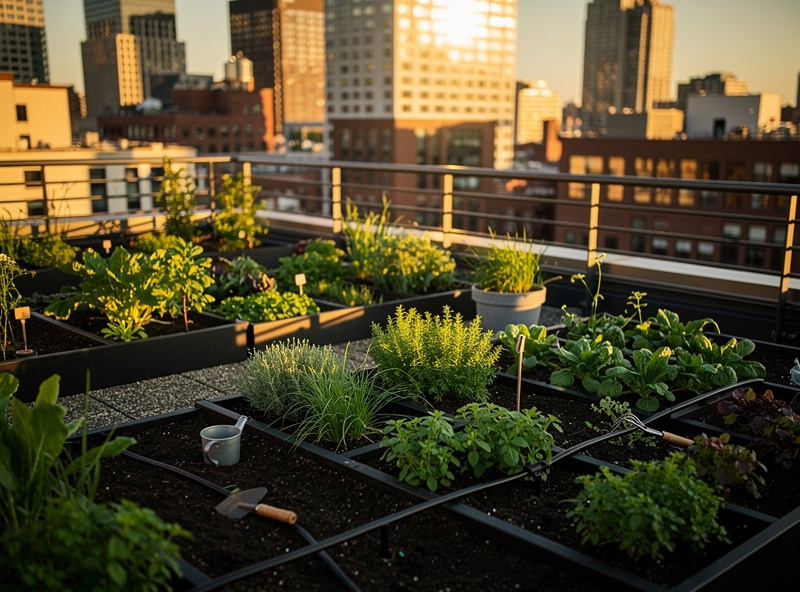
Outdoor container gardening uses balconies, patios, fire escapes, and rooftops to create productive growing spaces. This traditional approach offers the widest crop selection and lowest ongoing costs, making it ideal for beginners and budget-conscious gardeners.
Advantages of Outdoor Growing
Natural sunlight: Outdoor spaces receive full spectrum sunlight—essential for photosynthesis and plant health. Even partial sun outdoors (4-6 hours) often exceeds the light available indoors without expensive supplemental lighting. University of Maryland Extension’s container vegetable guidance confirms that warm-season crops like tomatoes and peppers need 6-8 hours of direct sun while leafy greens manage on 3-5, which is the real dividing line between what grows outdoors and what struggles inside (Growing Vegetables in Containers, UMD Extension). Plants naturally grow stronger and produce more with real sunlight.
Wider crop selection: Outdoor gardens can grow virtually any vegetable: tomatoes, peppers, squash, cucumbers, beans, and root vegetables. You’re not limited to low-light-tolerant crops. Want to grow watermelons or corn? You can (space permitting).
Natural pollination: Wind and insects handle pollination automatically. No hand-pollination needed for tomatoes, peppers, or other fruiting crops. Bees, butterflies, and beneficial insects visit your garden naturally.
Lower costs: No electricity required for grow lights. Once established, outdoor gardens need only soil, seeds, and basic tools. Nature provides the light for free.
Higher yields: Full sun and natural conditions typically produce larger harvests per plant than indoor equivalents. A single outdoor cherry tomato plant can produce 10-20 lbs of fruit—equivalent to $40-80 worth of organic tomatoes from the store. Iowa State Extension’s guide to growing tomatoes in containers covers the pot-size, staking, and watering decisions that drive that kind of output (Growing Tomatoes in Containers, ISU Extension).
Connection with nature: Outdoor gardening gets you outside, breathing fresh air, and connecting with the natural world. Morning watering becomes a peaceful ritual rather than a chore.
Challenges of Outdoor Growing
Weather exposure: Plants face wind, rain, extreme temperatures, and storms. A single hailstorm or heatwave can damage an entire garden. Container plants are particularly vulnerable because their roots can’t access deep soil moisture or insulation like in-ground plants.
Pests: More pest pressure outdoors, but also more natural predators (ladybugs, birds). Healthy plants resist most pest problems, but you’ll need to monitor for aphids, caterpillars, and other common garden pests.
Seasonal limitations: Most climates have a defined growing season. Winter months mean no fresh production unless you have a heated space or cold frame. In northern climates, the outdoor season may be only 4-5 months.
Space constraints: Balconies and patios limit container quantity. Weight restrictions may prevent large setups. You’ll need to maximize every square foot through vertical growing and careful plant selection.
Watering demands: Outdoor containers dry out faster than indoor ones, especially in summer heat. Daily watering is often necessary during peak growing season.
Outdoor Growing Costs Breakdown
| Item | Budget Option | Mid-Range | Premium |
|---|---|---|---|
| Containers (5-8 pots) | $20 (recycled buckets) | $50 (quality plastic) | $100 (fabric/ceramic) |
| Potting Mix | $15 (bulk/DIY) | $25 (quality bagged) | $45 (premium organic) |
| Seeds/Seedlings | $15 (mostly seeds) | $35 (mix of both) | $60 (all seedlings) |
| Basic Tools | $15 (dollar store) | $35 (quality essentials) | $75 (complete set) |
| Plant Supports | $10 (DIY stakes/twine) | $25 (cages/trellises) | $50 (heavy-duty) |
| Fertilizer/Amendments | $15 (basic) | $30 (organic) | $60 (specialty blends) |
| TOTAL STARTUP | $90-110 | $200-240 | $390-450 |
| Annual Ongoing | $60-80 | $120-150 | $200-250 |
Cost Comparison Summary
| Cost Factor | Indoor | Outdoor | Winner |
|---|---|---|---|
| Initial Setup (Budget) | $90-110 | $90-110 | Tie |
| Annual Operating Costs | $120-480 | $60-250 | Outdoor |
| 3-Year Total Cost | $450-1,550 | $270-1,200 | Outdoor |
| Year-Round Production | Yes | No (4-8 months) | Indoor |
| Crop Variety | Limited (herbs/greens) | Extensive (all vegetables) | Outdoor |
| Yield Potential | Moderate | High | Outdoor |
| Climate Control | Excellent | Weather-dependent | Indoor |
Key Takeaway: Outdoor growing costs 40-60% less over 3 years but limits you to the growing season. Indoor growing costs more but provides year-round harvests. The hybrid approach balances both worlds.
The Hybrid Approach: Best of Both Worlds
Many successful urban gardeners use both indoor and outdoor growing strategically. This hybrid approach maximizes advantages while minimizing drawbacks of each method. Here’s how to implement it effectively:
Strategy 1: Indoor Seed Starting
Start seeds indoors 6-8 weeks before outdoor planting. Transplant seedlings outside when weather permits. This extends your season without expensive lights year-round.
Implementation:
- Timeline: Start tomatoes and peppers indoors in March for May transplanting
- Equipment needed: Basic seed starting tray ($10), seed starting mix ($8), sunny window or small grow light ($30)
- Benefits: Earlier harvests, stronger plants, greater variety selection
- Savings: $3-5 per plant vs. buying seedlings ($4-6 each)
- Power usage: Minimal—2-3 hours of supplemental light daily for 6-8 weeks
Strategy 2: Indoor Herbs, Outdoor Vegetables
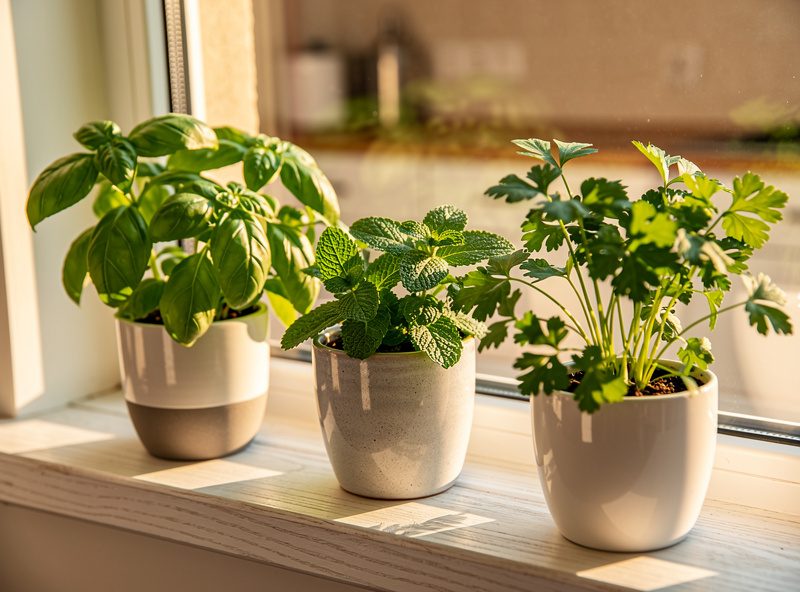
Grow herbs on a windowsill year-round (they tolerate lower light) while using outdoor space for vegetables during the growing season. This is the most popular hybrid setup among urban gardeners — and it is exactly the split I run: basil, parsley, and chives on the kitchen window through winter, tomatoes and peppers on the balcony May through September.
Best herbs for indoor:
- Basil: Thrives on sunny windowsills; harvest continuously
- Parsley: Tolerates lower light; biennial provides harvests for 2 years
- Chives: Extremely hardy; grows well even in partial shade
- Mint: Aggressive grower; keep in its own pot to prevent takeover
- Cilantro: Quick growing; succession plant every 3 weeks
Setup recommendations:
- 3-4 herb pots on a south-facing windowsill
- No grow lights needed for most herbs if you have 4+ hours of sun
- Rotate pots weekly for even growth
- Annual cost: $20-30 for fresh herbs year-round vs. $200+ buying at store
Strategy 3: Seasonal Migration
Move containers indoors before frost (peppers and herbs often survive winter inside). Move back outdoors in spring. This protects your investment in perennial herbs and extends pepper production.
Plants that migrate well:
- Peppers: Perennial in tropical climates; will survive 2-3 years indoors
- Perennial herbs: Rosemary, thyme, oregano, sage, lavender
- Green onions: Easily regrown from scraps indoors
Migration timeline:
- Late summer: Take cuttings from outdoor herbs; root in water
- First frost warning: Move containers indoors to sunny location
- Winter: Maintain herbs with minimal watering; harvest as needed
- Spring: Harden off plants over 1-2 weeks; return outdoors
Strategy 4: Year-Round Microgreens
Grow microgreens indoors year-round (minimal light and space needed) while maintaining an outdoor garden seasonally. Microgreens are nutrient-dense, grow in 7-14 days, and require only a windowsill.
Why microgreens are perfect for indoor — and why I run them year-round:
- Harvest in 7-14 days from seed to plate
- Need only 2-4 hours of light daily
- Grow in shallow trays (no deep containers needed)
- Ready to harvest faster than any outdoor crop
- Restaurant-quality garnishes at home
Best microgreen varieties:
- Radish (spicy, fast-growing)
- Broccoli (mild, nutritious)
- Sunflower (nutty, substantial)
- Pea shoots (sweet, tender)
- Mustard (spicy kick)
Strategy 5: Winter Indoor Salad Factory
When outdoor season ends, transition to indoor salad production. Grow lettuce, spinach, and arugula indoors through winter using a simple LED grow light setup.
Winter indoor setup:
- 2-3 shallow containers (10×20 inch trays work well)
- Basic LED grow light ($40-60)
- 12-14 hours of light daily
- Cut-and-come-again harvesting
- Fresh salads even in January
Cost effectiveness: $5 worth of seeds produces $40+ worth of organic salad greens over winter months.
Strategy 6: The “Greenhouse Effect” – Indoor Tropicals
Grow heat-loving tropical plants indoors that can’t survive your outdoor climate. Lemon trees, fig trees, and dwarf citrus can thrive near sunny windows, providing exotic harvests.
Best indoor tropicals:
- Dwarf Meyer Lemon: Fragrant flowers, actual lemons indoors
- Fiddle Leaf Fig: Beautiful foliage, edible figs with hand-pollination
- Dwarf Banana: Dramatic leaves, possible fruit with patience
- Avocado (from pit): Free houseplant; may produce fruit in 5-7 years
Hybrid Setup Cost Analysis
| Component | One-Time Cost | Annual Cost |
|---|---|---|
| Outdoor Summer Garden | $100-150 | $80-120 |
| Indoor Herb Windowsill | $30-50 | $20-30 |
| Indoor Microgreens Setup | $40-60 | $30-40 |
| Seed Starting Station | $40-70 | $15-25 |
| Winter Salad Production | $60-100 | $40-60 |
| TOTAL HYBRID SETUP | $270-430 | $185-275 |
| Value of Harvests | – | $400-800/year |
| NET ANNUAL SAVINGS | – | $125-615/year |
ROI Timeline: A well-planned hybrid garden pays for itself in Year 1 and generates $500-2,000 in food value over 5 years.
Decision Framework: Which Is Right for You?
Choose INDOOR growing if:
- You have no outdoor space (no balcony, patio, or yard)
- Your priority is year-round fresh herbs and greens
- You live in an extreme climate (very cold or very hot)
- You’re interested in microgreens and sprouts
- You want maximum control over growing conditions
- You have $100-200 for initial setup and $10-30/month for electricity
Choose OUTDOOR growing if:
- You have a balcony, patio, or rooftop with 4+ hours of sun
- You want to grow tomatoes, peppers, and fruiting vegetables
- Budget is a primary concern
- You enjoy outdoor time and don’t mind seasonal limitations
- You want maximum variety in what you grow
- You prefer lower ongoing costs over year-round production
Choose HYBRID growing if:
- You want fresh herbs year-round AND a vegetable garden seasonally
- You want to extend your growing season
- You’re willing to invest $300-400 upfront for maximum production
- You enjoy both aspects of gardening
- You want the best return on investment long-term
- You have some indoor space (windowsill) AND outdoor access
Getting Started: Practical First Steps
Whether you choose indoor, outdoor, or a hybrid approach, the fundamentals are the same. For a complete step-by-step walkthrough of your first urban garden, see our urban gardening beginner guide. For container-specific methods, pot selection, and seasonal planning, see our container gardening complete guide.
For Indoor Growing
- Evaluate your sunniest window (south-facing is best)
- Start with herbs and salad greens—most forgiving for beginners
- Get quality potting mix and containers with drainage
- Consider a basic grow light ($30-50) if windows are limited
- Start small—3-4 pots maximum until you understand indoor conditions
- Budget $100-150 for initial setup
For Outdoor Growing
- Map your sunlight—observe where sun hits your space throughout the day
- Check balcony/patio weight limits and rules — fabric grow bags are lighter than ceramic and a smart pick for balconies with strict weight limits
- Start with 3-5 containers and expand after your first season
- Choose beginner-friendly crops: tomatoes, herbs, lettuce, peppers
- Plan for watering—daily in summer heat
- Budget $100-150 for initial setup
For Hybrid Growing
- Start with outdoor garden in spring (main production)
- Add windowsill herbs once outdoor garden is established
- Try microgreens indoors in fall when outdoor season ends
- Add grow lights gradually as you identify needs
- Expand based on what you use most and enjoy growing
- Budget $250-400 for complete hybrid setup over 2 seasons
Quick Decision Guide
Use this decision matrix to choose the right approach for your situation:
| Your Situation | Recommended Approach | Startup Cost | Expected Yield |
|---|---|---|---|
| South-facing balcony, 6+ hrs sun | Outdoor primary, indoor herbs | $50-100 | High (year-round herbs) |
| North-facing balcony, 3-4 hrs sun | Hybrid: outdoor greens + indoor grow light | $70-140 | Moderate |
| No outdoor space, bright windows | Indoor primary (herbs, microgreens, greens) | $30-60 | Low-Moderate |
| No outdoor space, no bright windows | Indoor with grow lights | $50-100 | Moderate |
| Rooftop or large patio access | Outdoor primary, indoor seed starting | $100-300 | Very High |
If you have ANY outdoor space with 4+ hours of sun, start there. Outdoor growing is more forgiving, less expensive, and supports a wider variety of plants. Add indoor growing later for year-round herbs or microgreens.
If you’re indoor-only, don’t be discouraged. A sunny windowsill with herbs and salad greens provides real value and genuine satisfaction. Add grow lights when you’re ready to expand.
The best approach is the one that fits your space, budget, and lifestyle. Start where you are, with what you have. The goal is not perfection — it is producing fresh food and enjoying the process. In a Nordic climate specifically, the hybrid approach is not optional — it is how you eat homegrown greens in February when the balcony is buried in snow.
Ready to get started? Check out our guide to essential urban gardening equipment for a complete list of what you’ll need, or read how to start for under $50 with our budget-friendly approach. If you are setting up an indoor grow space, browse full-spectrum LED grow lights on Amazon — a basic panel in the $30-60 range handles herbs and leafy greens through the darkest months. As an Amazon Associate I earn from qualifying purchases.
Frequently Asked Questions
Can I grow vegetables indoors without grow lights?
Yes, but your options are limited. Herbs like mint, parsley, and chives can grow on a bright south-facing windowsill. Microgreens and sprouts need no direct sunlight at all. However, fruiting vegetables like tomatoes and peppers absolutely require grow lights indoors. A basic LED grow light costs $20-40 and dramatically expands what you can grow inside.
Is indoor or outdoor gardening easier for beginners?
Outdoor container gardening is generally easier for beginners because plants get natural sunlight, better air circulation, and more forgiving conditions. Indoor gardening requires managing light, humidity, and airflow artificially. Start outdoors if you have any balcony or windowsill with direct sun. Move indoors if you have no outdoor space at all.
How much does an indoor grow light setup cost?
A basic LED grow light setup for herbs and leafy greens costs $20-40. A more serious setup for tomatoes and peppers runs $50-100. Factor in electricity costs of $3-8 per month depending on usage. Many urban gardeners start with a sunny windowsill and add grow lights only when they want to expand their indoor growing capacity.
Can I combine indoor and outdoor gardening?
Absolutely, and many urban gardeners do. Start seeds indoors under lights, then transplant outdoors when weather warms. Grow herbs year-round indoors while keeping vegetables outdoors in summer. Use indoor growing for winter greens when outdoor containers are dormant. The combination gives you year-round production with maximum flexibility.
Do indoor plants attract more pests than outdoor plants?
Indoor plants face different pest challenges. Without natural predators, pests like fungus gnats, spider mites, and aphids can multiply quickly. However, indoor gardens are also isolated from outdoor pest populations. Prevent indoor pests by inspecting new plants before bringing them home, avoiding overwatering, and maintaining good air circulation with a small fan.
Related Articles
Continue your urban gardening journey with these helpful guides:
- How to Start Urban Gardening: Complete Beginner’s Guide – The perfect starting point for anyone new to growing food in the city
- Urban Gardening Equipment Guide – Essential tools and what you can skip to save money
- 15 Best Vegetables for Urban Gardens – Space-efficient vegetables ranked by ease and productivity
- Vertical Gardening 101 – Maximize your growing area by growing upward
- Urban Gardening on a Budget – Start growing food for under $50
- 7 Urban Gardening Mistakes to Avoid – Learn from common errors and save your plants