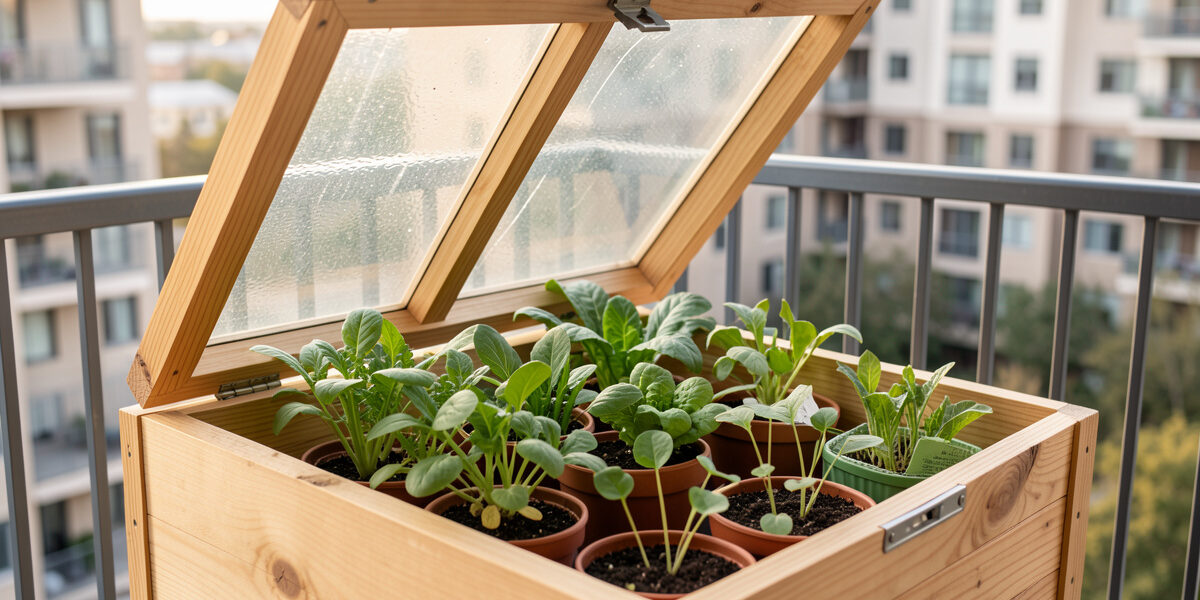
The cold frame is the one piece of season-extension gear I’d refuse to garden without up here. It’s a low box with a clear lid that you sit over a bed or fill with pots — a bottomless mini greenhouse that traps the sun’s heat and blocks the wind. For growing in confined outdoor areas, see mini greenhouse options for small spaces. On my balcony it’s the first thing I set up in late winter and the last thing I pack away in autumn, and across a Nordic year it earns its keep three different ways: starting hardy crops weeks early, hardening off indoor seedlings without the daily shuffle, and holding cold-tolerant greens croppable deep into the dark months. If you grow anything in a short-season climate, this is where I’d start.
This guide is everything I’ve learned running cold frames through real Swedish winters — how they actually work, how to build or buy one for a balcony, where to site it, and the one skill that separates a frame that works from a frame that cooks your plants. It’s part of my broader season extension guide, which covers how the cold frame fits alongside row covers, hoop houses, and overwintering.
How a cold frame actually works
The mechanism is pure passive solar. Sunlight passes through the transparent lid and heats the soil and the air inside. The walls — wood, brick, or rigid plastic — block the wind that would otherwise strip that warmth away, and at night the whole box holds the day’s stored heat far better than open ground. The result is a microclimate a few degrees warmer than outside, with no electricity and no fuel. In practice mine runs several degrees above ambient on a still night, and on a sunny spring afternoon the inside can be shirt-sleeve warm while it’s near freezing on the balcony.
That warmth does two things for a cold-climate grower. In spring it lets the soil inside warm up weeks before open ground would, so hardy seeds germinate and seedlings establish early. In autumn and winter it keeps cold-tolerant crops above their killing point and sheltered from wind, so they keep yielding when everything unprotected has given up. The frame doesn’t fight deep-winter darkness — nothing unheated does — but it stretches both shoulder seasons hard, which for the crops that take cold is most of the battle.
What a cold frame buys you across the year
I think of the frame as three tools in one box. In late winter and early spring it’s a propagation and head-start space: I sow hardy greens directly in it three to four weeks ahead of when I could outside, and the soil warmth gets them moving. Through spring it’s a hardening-off chamber — the single best use of all. Seedlings started indoors under a grow light can’t go straight outside; they need acclimatising over a week or two, and without a frame that means carrying trays in and out twice a day. With a frame I just crack the lid a little more each day and the plants harden off on their own schedule (the same transition I describe for tomato seedlings).
In autumn and winter it becomes a holding pen for cold-hardy crops — kale, mâche, winter spinach, leeks — keeping them alive and croppable into and sometimes through the cold months. Grown to size in autumn and then held under the frame, these crops give me fresh salad on the mild days of a Nordic winter, which still feels slightly miraculous every time.
Build one or buy one?
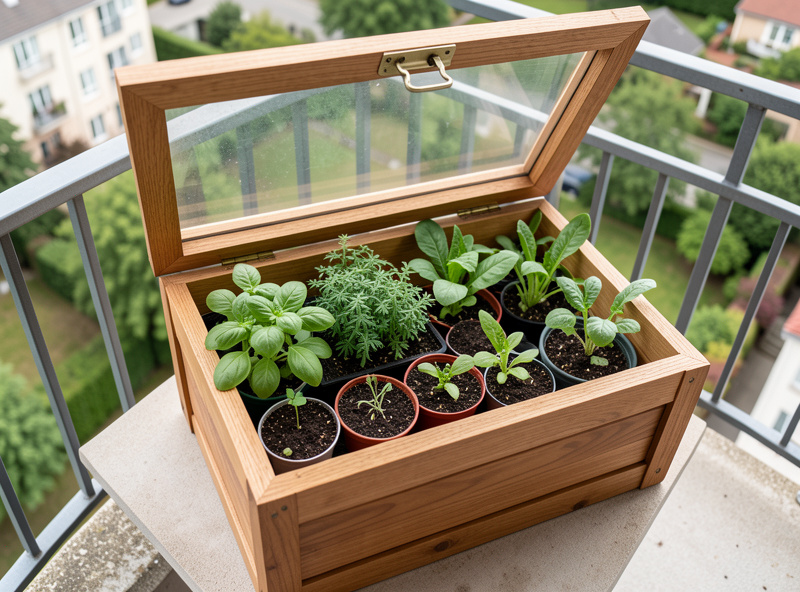
You can spend anywhere from nothing to a fair bit here, and for most small-space growers I genuinely recommend starting cheap. A perfectly good frame is just a bottomless box with a clear top. The classic DIY is an old window sash laid over a frame of scrap wood or stacked bricks; I’ve also seen great ones from straw bales with a sheet of rigid twin-wall polycarbonate on top. The materials matter less than the principle: opaque walls, transparent lid, and a back slightly taller than the front so the lid slopes toward the sun and sheds rain and snow.
If you’d rather buy, the ready-made options for a balcony are either a rigid polycarbonate cold frame (durable, holds heat well, more expensive) or a soft-cover pop-up frame (cheap, light, less robust in wind). I run a rigid one because the balcony gets wind and I wanted something that wouldn’t blow apart, but a soft cover is a fine low-commitment way to find out whether you’ll use it. Whatever you choose, a basic cold frame is a modest cost for something that works every season for years.
Glazing: glass vs polycarbonate
The lid is the part that matters most, and the choice is really glass versus twin-wall polycarbonate. Glass (an old window) transmits the most light and looks lovely, but it’s heavy, fragile, and gives almost no insulation — single glazing loses heat fast overnight. Twin-wall polycarbonate transmits a touch less light but its air gap insulates, so it holds overnight warmth noticeably better, and it’s light and shatterproof — a real advantage on a balcony where a dropped glass lid is a hazard. For a cold-climate frame doing winter holding, I’d take the polycarbonate every time; the better night insulation matters more than the marginal light loss, especially when winter light is already the limiting factor.
Siting it on a balcony or in a small space
Where you put the frame decides how well it works. The rules are simple: maximum sun, minimum wind. On a balcony that usually means tight against a south-facing wall, which both catches the most low winter sun and borrows the building’s stored warmth — the wall acts as thermal mass, releasing heat back into the frame overnight. Angle the sloped lid toward the sun’s low winter arc. Keep it off the coldest, most exposed corner. And make sure you can actually reach in to vent and harvest without contorting — a frame you can’t easily open is a frame you’ll forget to vent.
One small-space trick I use: I sit the frame over fabric grow bags and shallow trays rather than a fixed bed, so I can lift crops in and out and reconfigure what’s under cover as the season shifts. It turns one frame into a flexible holding space rather than a single permanent planting.
Venting: the skill that makes or breaks a cold frame
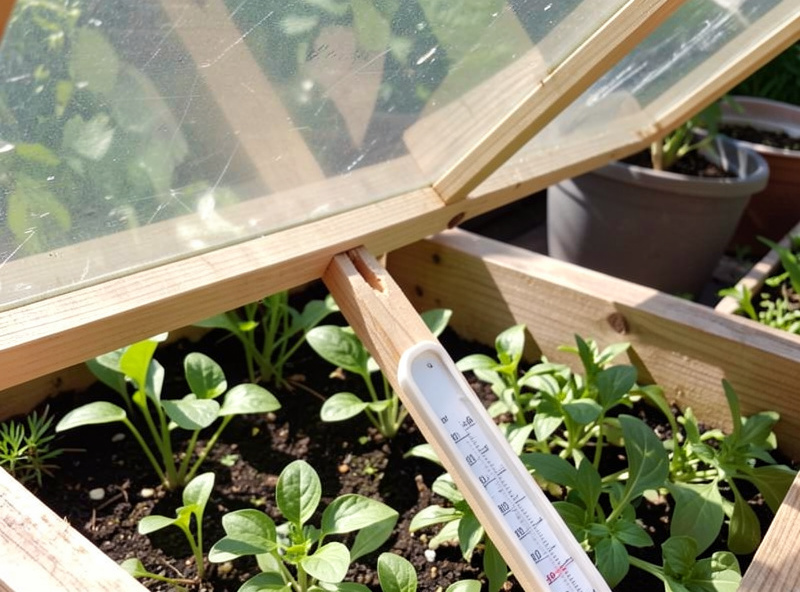
If you remember one thing from this guide, make it this. The number one way people kill plants in a cold frame isn’t cold — it’s heat. On a clear day, even in March, a closed frame can hit 30°C inside while it’s near freezing outside. A few hours of that and tender seedlings cook. The fix is venting: prop the lid open whenever the sun is out and the air is mild, and close it again before dusk to trap the day’s heat for the night.
I prop mine on a notched stick to a few set heights, opening it wider as the day warms. A soil thermometer in the bed takes the guesswork out — once you’ve seen how fast it climbs, you’ll never leave a frame sealed on a sunny morning again. The genuinely worry-free solution is a non-electric automatic vent opener: a wax-filled cylinder that expands in heat and pushes the lid open on its own, then lets it close as it cools. For anyone who’s out of the house on a sunny day, it’s the cheapest peace of mind in gardening, and I wouldn’t run a frame without one now.
Common cold-frame mistakes
Beyond not venting, the mistakes I see most are: siting it in shade or wind, which wastes the whole point; using single glass and wondering why it loses heat overnight; letting condensation and stale air build up (vent on mild days even in winter to keep fungal problems down); and overwatering — a covered frame loses far less moisture than open ground, so the soil inside stays wet much longer and root rot becomes the risk rather than drought. I water inside the frame maybe a third as often as I’d water the same crop in the open. Get those right and the frame is close to foolproof.
How much warmer is the inside of a cold frame?
A cold frame typically runs a few degrees above outside air on a still night, and far warmer on a sunny day. That few-degree overnight lift, plus full wind protection, is exactly what keeps hardy crops alive past the first frosts.
Glass or polycarbonate for a cold frame lid?
Twin-wall polycarbonate is the better choice for a cold climate. It insulates overnight thanks to its air gap, and it is light and shatterproof, which matters on a balcony. Glass transmits slightly more light but loses heat fast and is fragile.
Why do plants die in a cold frame on sunny days?
They overheat. A closed frame can reach 30 degrees Celsius inside while it is near freezing outside. Always vent by propping the lid whenever the sun is out and the air is mild, then close it before dusk to trap the day’s heat.
What can I grow in a cold frame in winter?
Cold-hardy crops grown to size in autumn: kale, mache, winter spinach, claytonia, and leeks. They will not grow much in deep winter darkness, but they hold under the frame and you harvest fresh on the milder days.
Do I water plants in a cold frame less often?
Yes. A covered frame loses far less moisture than open ground, so the soil inside stays wet much longer. I water inside the frame roughly a third as often as the same crop in the open, to avoid root rot.
As an Amazon Associate I earn from qualifying purchases. The cold frame and thermometer links above point to the kind of gear I run on the balcony; buying through them supports the site at no extra cost.