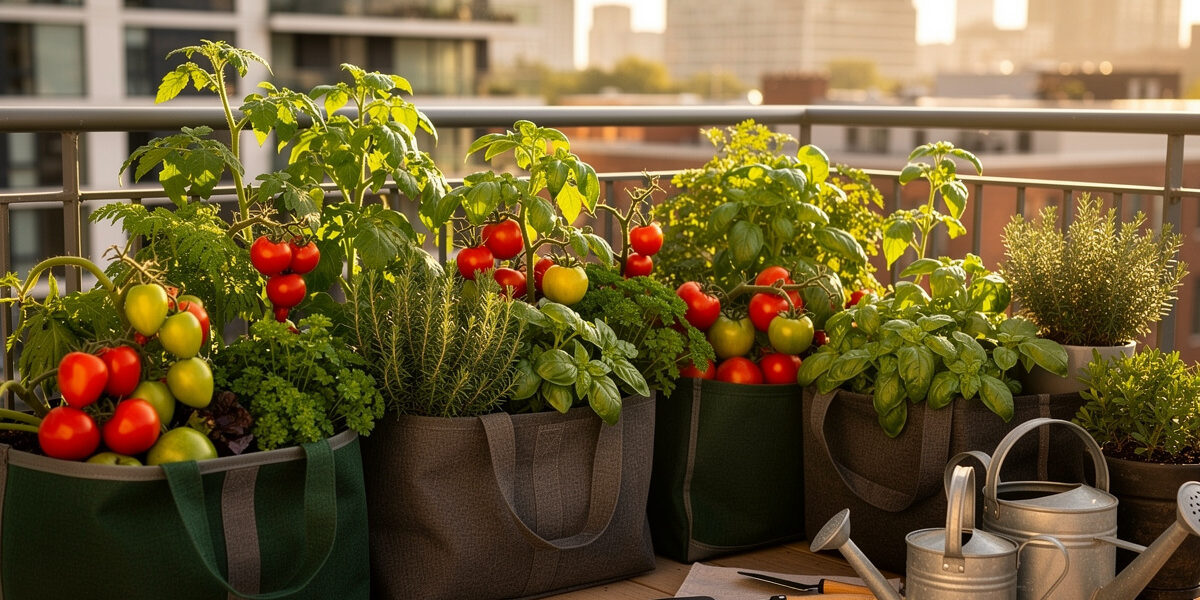
Fabric pots are most of my balcony garden — light, cheap, and they grow noticeably healthier roots than the rigid plastic pots they replaced. The trick is air-pruning: when a root hits the breathable wall it stops, dries back, and branches, so instead of a pot-bound tangle circling the edge you get a dense, fibrous root ball that takes up water and nutrients far better. They also drain freely and warm up fast — handy for an early start in a cool climate, though on a windy balcony they dry out quickly, so staying on top of watering is the one real catch. Here’s how I choose and run them for tomatoes, peppers, greens, and root crops.
Why Fabric Planters Are Revolutionizing Vegetable Gardening
For the best vegetables to grow in fabric, see best vegetables for urban gardens.
Fabric vegetable planters have transformed how home gardeners grow food in limited spaces. These lightweight, breathable containers address many challenges that traditional planters present, offering solutions that promote healthier plants, higher yields, and more flexible gardening. Whether you are cultivating tomatoes on a balcony, peppers on a patio, or an entire vegetable garden on a rooftop, fabric planters provide advantages that rigid containers simply cannot match.
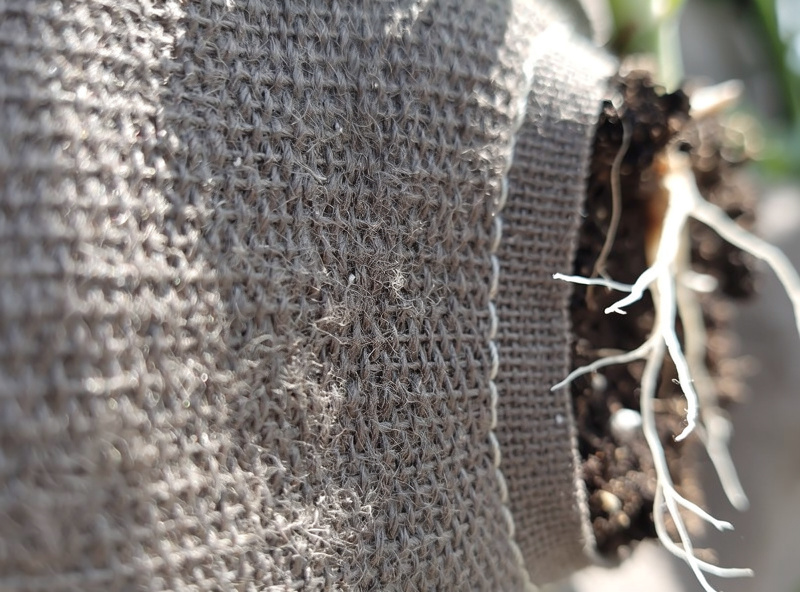
The genius of fabric planters lies in their soft-sided construction, typically made from durable felt-like materials or specialized geotextiles. Unlike plastic or ceramic containers, fabric pots allow air to penetrate the root zone from all sides, creating an environment that promotes exceptional root health and plant vigor. This air-pruning effect prevents the root circling that constrains growth in traditional containers, resulting in naturally fibrous root systems that absorb water and nutrients more efficiently than their constrained counterparts.
How Fabric Planters Work
The Science of Air Pruning
When plant roots reach the edge of a traditional rigid container, they hit a solid wall and begin circling, looking for a path of least resistance. These circling roots eventually strangle themselves and the plant, creating a rootbound condition that stunts growth and reduces yields. In fabric containers, when roots reach the porous wall, they are exposed to air, which dehydrates the root tip and causes natural pruning.
This air-pruning stimulates the plant to produce new, branching roots behind the pruned tip, creating a dense, fibrous root ball throughout the container rather than just at the edges. The result is a more efficient root system with vastly increased surface area for water and nutrient uptake. Rutgers Cooperative Extension describes the same mechanism — roots reach the breathable fabric side, encounter drier soil and more air, and stop rather than circling (Benefits of Grow Bag Gardening, Rutgers NJAES). Plants grown in fabric containers typically establish faster, grow more vigorously, and produce higher yields than identical plants in plastic pots.
Superior Drainage and Aeration
Fabric containers provide drainage and aeration impossible to achieve in solid-walled planters. Excess water escapes through the fabric from all sides, not just the bottom, preventing the waterlogged conditions that cause root rot in poorly drained containers. Simultaneously, air penetrates the porous walls, oxygenating the root zone and supporting the beneficial soil microbiology essential for plant health.
This enhanced drainage makes fabric planters ideal for vegetables that despise wet feet, including tomatoes, peppers, eggplants, and herbs. Even in heavy rain or during overenthusiastic watering, excess moisture quickly exits through the container walls, protecting roots from suffocation and rot.
Temperature Regulation
Traditional dark-colored plastic containers absorb solar heat, creating root zone temperatures that can exceed 100°F on hot summer days. These extreme temperatures stress plants, reduce growth, and can kill beneficial soil organisms. Fabric containers moderate temperature through evaporative cooling as moisture evaporates through the porous walls, keeping root zones significantly cooler than plastic equivalents.
This temperature regulation extends the growing season, allowing earlier spring planting and later autumn harvests. In hot climates, this cooling effect can mean the difference between thriving vegetables and heat-stressed, unproductive plants. The insulating properties of fabric also provide some protection against sudden temperature drops.
Types of Fabric Vegetable Planters
For container comparison, check urban gardening beginner guide.
Traditional Grow Bags
Classic fabric grow bags are cylindrical or square containers with open tops and flat bottoms. Available in sizes from 1 gallon to 200+ gallons, they accommodate everything from single herb plants to entire raised bed gardens. Standard grow bags feature sturdy handles for mobility and are constructed from thick, durable felt or polypropylene fabric rated for multiple growing seasons.
Popular sizes for vegetables include: 5-gallon bags for peppers, eggplants, and compact tomatoes; 7-10 gallon bags for standard tomatoes, cucumbers, and bush squash; 15-20 gallon bags for indeterminate tomatoes, melons, and large pepper varieties. The flexibility to choose exactly the right size for each crop optimizes growing conditions and garden efficiency.
Raised Bed Fabric Planters
For gardeners seeking traditional raised bed aesthetics with fabric benefits, rectangular fabric raised beds offer the perfect compromise. These large containers, typically 2-4 feet wide and 1-2 feet deep, provide substantial growing area for multiple plants while maintaining the drainage and root-pruning benefits of fabric technology. They are ideal for intensive vegetable gardening in spaces where permanent raised beds are impossible.
Raised bed fabric planters accommodate diverse plantings, allowing you to grow complementary crops together just as you would in ground-level beds. Deep versions support root vegetables like carrots and parsnips, while standard depths excel for leafy greens, herbs, and fruiting vegetables.
Specialty Fabric Containers
Innovative fabric container designs address specific growing challenges. Tomato-specific bags feature reinforced sides to support heavy vines and caging systems. Potato grow bags include flap openings at the bottom for easy harvest without disturbing plants. Strawberry planters incorporate multiple planting pockets in vertical arrangements, maximizing production in minimal footprints.
Vertical fabric planters with multiple pockets allow growing cascading vegetables and herbs in upright configurations, perfect for balconies and small patios. These living walls create stunning visual displays while producing substantial harvests from minimal ground area.
Heavy-Duty Commercial Options
For serious vegetable production or long-term installations, commercial-grade fabric containers offer enhanced durability. These heavy-duty versions feature reinforced stitching, UV-stabilized fabrics, and robust construction that withstands years of continuous use. While more expensive than consumer-grade options, their longevity makes them economical over time for dedicated vegetable gardeners.
Best Vegetables for Fabric Planters
Learn about vertical gardening to maximize fabric planter space.
Tomatoes: The Perfect Fabric Crop
Tomatoes exemplify the benefits of fabric containers, thriving in the excellent drainage and aeration these planters provide. The air-pruned root systems support the vigorous growth that heavy-producing tomatoes require. Choose 10-15 gallon containers for indeterminate varieties that grow 6+ feet tall, or 5-7 gallons for compact determinate types.
Tomatoes in fabric containers require consistent watering, as the enhanced drainage means soil dries faster than in plastic pots. Install drip irrigation or check moisture daily during hot weather. The superior root health in fabric containers translates to exceptional disease resistance and higher yields than traditional container growing.
Peppers and Eggplants
Peppers and eggplants, both members of the nightshade family with tomatoes, perform spectacularly in fabric containers. These heat-loving vegetables benefit from the temperature moderation fabric provides, while the excellent drainage prevents root diseases that plague these crops in heavy soils. Five-gallon fabric containers accommodate most pepper and eggplant varieties perfectly.
The concentrated heat that dark fabric containers absorb early in the season helps warm soil faster, allowing earlier planting in cool climates. By midsummer, the evaporative cooling prevents the overheating that can reduce fruit set in these warmth-loving vegetables.
Leafy Greens and Herbs
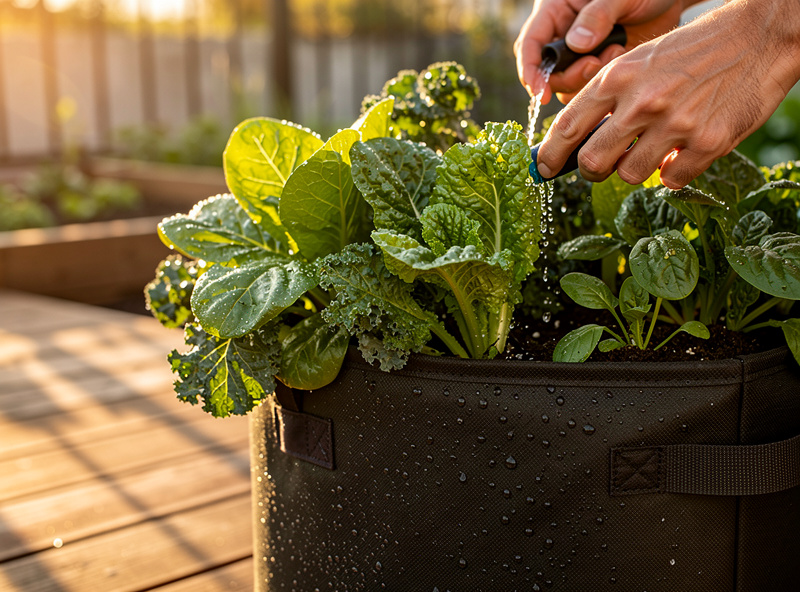
Lettuce, spinach, kale, chard, and other leafy greens thrive in fabric containers, producing tender, rapid growth in the aerated root environment. The 1-3 gallon containers suit most leafy crops, while larger 5-gallon bags accommodate full-sized kale or chard plants. Harvest outer leaves continuously for months of production from single plantings.
Herbs are particularly well-suited to fabric growing, appreciating the drainage that prevents the root rot that often kills container-grown basil, rosemary, and sage. Create mixed herb containers or dedicate individual bags to spreading herbs like mint that would overtake other plantings. For additional container herb ideas, see our guide on outdoor plants pots delivered.
Root Vegetables
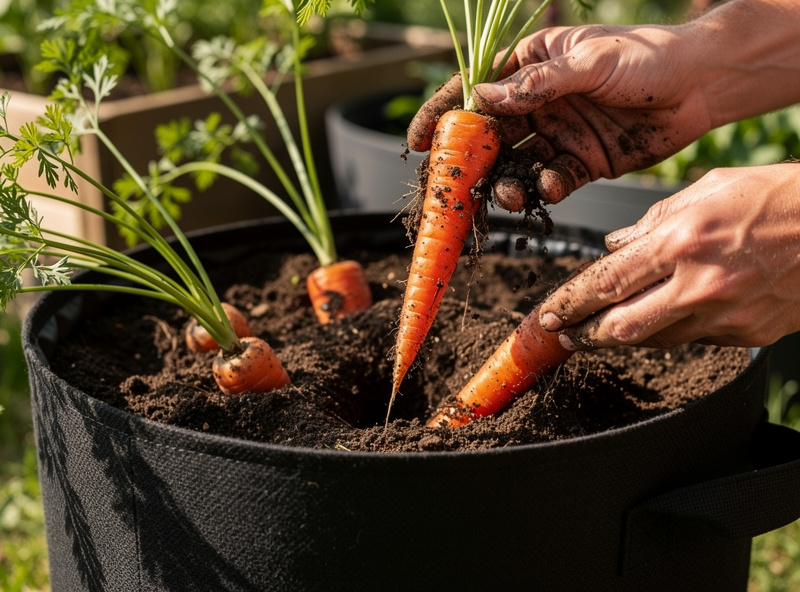
Root vegetables including carrots, radishes, beets, and turnips grow beautifully in fabric containers, often producing straighter, cleaner harvests than ground-grown equivalents. Choose containers at least 12 inches deep for carrots and parsnips, while 8-10 inches suffices for beets, turnips, and radishes. The loose, uncompacted soil in fabric containers allows roots to expand without obstruction.
The ease of harvest is a major advantage, simply tip the container and gently shake out soil to reveal perfect, unblemished roots without digging or damaging. Successive plantings every 2-3 weeks ensure continuous harvests throughout the growing season.
Squash, Cucumbers, and Melons
Vining crops that would sprawl across vast garden areas can be concentrated in large fabric containers with vertical support. Bush squash varieties thrive in 10-15 gallon containers, while vining cucumbers and melons require 15-20 gallons to support their extensive root systems and heavy production. Provide sturdy trellising to maximize space efficiency.
The warmth that dark fabric containers absorb accelerates growth of these heat-loving crops, while the excellent drainage prevents the fungal issues that often plague cucurbits in wet conditions. The concentrated growing space makes pest management easier than sprawling ground plantings.
Soil and Fertilizer for Fabric Planters
Avoid common gardening mistakes with fabric containers.
Potting Mix Selection
Fill fabric containers with high-quality potting mix rather than garden soil, which compacts and drains poorly in containers. Look for mixes containing peat moss or coconut coir for moisture retention, perlite or vermiculite for drainage, and compost for nutrients. Avoid mixes containing garden soil or topsoil, which are too heavy for container culture.
For vegetables, premium organic potting mixes provide excellent results. Some gardeners create custom blends: 50% high-quality potting mix, 25% compost, and 25% perlite or coarse sand for enhanced drainage that vegetables prefer. This mix provides ideal conditions for the vigorous growth that fabric containers encourage.
Fertilization Strategy
Vegetables are heavy feeders that deplete container nutrients quickly. Incorporate slow-release organic fertilizer into the potting mix at planting time, following package rates. Supplement with liquid organic fertilizer (fish emulsion, seaweed extract, or compost tea) every 2-3 weeks during the growing season to support continuous production. University of Maryland Extension’s container-vegetable guidance covers the same feeding logic — containers leach nutrients faster than garden beds, so a steady schedule beats occasional heavy doses (Growing Vegetables in Containers, UMD Extension).
As an Amazon Associate I earn from qualifying purchases.
The enhanced root development in fabric containers means plants access nutrients more efficiently than in traditional pots, but they also grow more vigorously and therefore require more feeding. Monitor plants for nutrient deficiency signs: yellowing older leaves indicate nitrogen needs, while purple leaf edges suggest phosphorus deficiency.
Watering Techniques for Fabric Containers
Understanding Moisture Needs
Fabric containers dry out faster than plastic or ceramic pots due to their porous nature and evaporative cooling. In hot, windy weather, small fabric containers may require daily watering. Larger containers retain moisture longer but still need more frequent attention than non-porous alternatives. Check moisture by inserting your finger 2-3 inches into the soil, watering when it feels dry at that depth.
The improved drainage means overwatering is rare in fabric containers, but underwatering can quickly stress plants. Establish a consistent watering routine, adjusting frequency based on weather, plant size, and container dimensions.
Efficient Watering Methods
Water fabric containers slowly and deeply, allowing moisture to penetrate the entire root ball rather than just wetting the surface. Water until liquid begins dripping from the container sides, indicating saturation throughout. Morning watering is ideal, giving plants hydration before heat stress and allowing foliage to dry before evening.
Drip irrigation and soaker hoses work excellently with fabric containers, providing slow, consistent moisture delivery that matches the containers excellent drainage. Timer-controlled systems allow automated watering for travelers or busy gardeners who cannot water daily.
Self-Watering Options
Some fabric containers incorporate self-watering reservoirs at the base, extending time between watering while maintaining the air-pruning benefits. These systems work particularly well for thirsty vegetables like tomatoes and cucumbers during hot weather. Check reservoir levels regularly and refill as needed, understanding that even self-watering containers require monitoring during peak summer heat.
Seasonal Care and Maintenance
Spring Planting and Establishment
Fill fabric containers with fresh potting mix each spring for best results. While containers can be reused, refreshing soil prevents disease buildup and replenishes nutrients depleted by previous crops. Position containers in their final locations before filling, as fabric bags become heavy and unwieldy once planted.
Plant vegetables at appropriate depths, water thoroughly after planting, and maintain consistent moisture during the establishment period (first 2-3 weeks). The air-pruned roots establish rapidly in fabric containers, often showing visible new growth within days of transplanting.
Summer Management
Peak summer demands vigilant watering of fabric containers, particularly for large, productive plants. Mulch the soil surface with straw, shredded leaves, or compost to reduce evaporation and moderate soil temperature. Monitor for pests and diseases regularly, addressing issues promptly while they remain manageable.
Support heavy fruiting vegetables with cages, stakes, or trellises installed at planting time to avoid disturbing established roots later. Fabric containers work well with various support systems, providing stable anchoring for tall tomatoes, cucumbers, and climbing beans.
Autumn Harvest and Cleanup
As growing seasons end, harvest final crops and remove spent plant material promptly to prevent disease harborage. Compost healthy plant debris; discard diseased material in trash. Shake excess soil from fabric containers and allow them to dry completely before storage to prevent mold and extend container life.
In mild climates, fabric containers accommodate cool-season vegetables like kale, spinach, and winter lettuces, extending the harvest season well into cold weather. The improved drainage prevents waterlogging during autumn rains that damage plants in poorly drained ground beds.
Winter Storage
Clean, dry fabric containers store compactly folded flat or stacked, taking minimal storage space compared to rigid planters. Store in a dry location protected from rodents that might nest in folded fabric. Inspect containers before spring reuse, repairing any minor damage and replacing bags that show significant wear.
Quality fabric containers last 5-7 seasons or longer with proper care, making them economical despite higher initial cost than plastic pots. Heavy-duty versions may last a decade or more, providing exceptional value for dedicated vegetable gardeners.
Comparison with Traditional Containers
Fabric vs. Plastic
While plastic containers are cheaper initially, fabric planters offer superior long-term value through improved plant health and higher yields. Plastic containers cause root circling that eventually constrains growth, while fabric promotes natural, healthy root development. Plastic heats excessively in sun and can waterlog in wet conditions, while fabric moderates temperature and provides excellent drainage.
For gardeners serious about vegetable production, fabric containers advantages justify the modest additional cost. The combination of healthier plants, higher yields, and extended container longevity makes fabric the clear winner for intensive vegetable gardening.
Fabric vs. Raised Beds
Traditional raised beds offer permanence and large growing areas but require significant investment, space, and construction effort. Fabric raised bed alternatives provide similar growing capacity with instant setup, portability, and fraction of the cost. They are ideal for renters, temporary gardens, or spaces where permanent installations are impossible.
For large-scale vegetable production, permanent raised beds may ultimately be more practical. But for most home gardeners, especially those with limited space or temporary situations, fabric containers offer advantages that traditional raised beds cannot match.
Frequently Asked Questions
How long do fabric grow bags last?
Quality fabric grow bags typically last 5-7 growing seasons with proper care, while heavy-duty commercial versions may last 10+ years. Extend container life by emptying and drying completely between seasons, storing in dry locations, and avoiding dragging across rough surfaces that abrade fabric.
Do fabric containers need saucers?
No, fabric containers do not use saucers as this would defeat their excellent drainage. Allow containers to drain freely, placing them on surfaces that can handle moisture or elevating slightly on pot feet. Some gardeners place fabric containers inside decorative outer pots during display, removing them for watering and drainage.
Can I reuse potting mix in fabric containers?
While possible, refreshing potting mix annually provides best results for vegetable production. If reusing, remove at least 25% of old mix and replace with fresh compost and new potting soil. This replenishes nutrients and breaks disease cycles while maintaining the beneficial structure that fabric containers create.
Are fabric vegetable planters safe for growing food?
Yes, high-quality fabric vegetable planters are typically made from BPA-free, food-safe polypropylene or recycled PET plastics. They are chemically stable and do not leach harmful toxins into the soil, making them perfectly safe and highly recommended for cultivating organic edible crops.
Do fabric planters dry out faster than plastic pots?
Yes, because the material is highly porous and breathable, fabric vegetable planters dry out noticeably faster than traditional plastic containers. During the peak summer heat (above 85°F), you may need to water your fabric planters daily to maintain optimal soil moisture levels.
How do you clean fabric vegetable planters at the end of the season?
To clean fabric vegetable planters, empty the soil, brush off the excess dirt, and allow them to dry completely in the sun. Then, you can hand wash them with a mild soap solution or soak them in a 10% bleach solution for 15 minutes to kill any lingering pathogens before storing them for the winter.