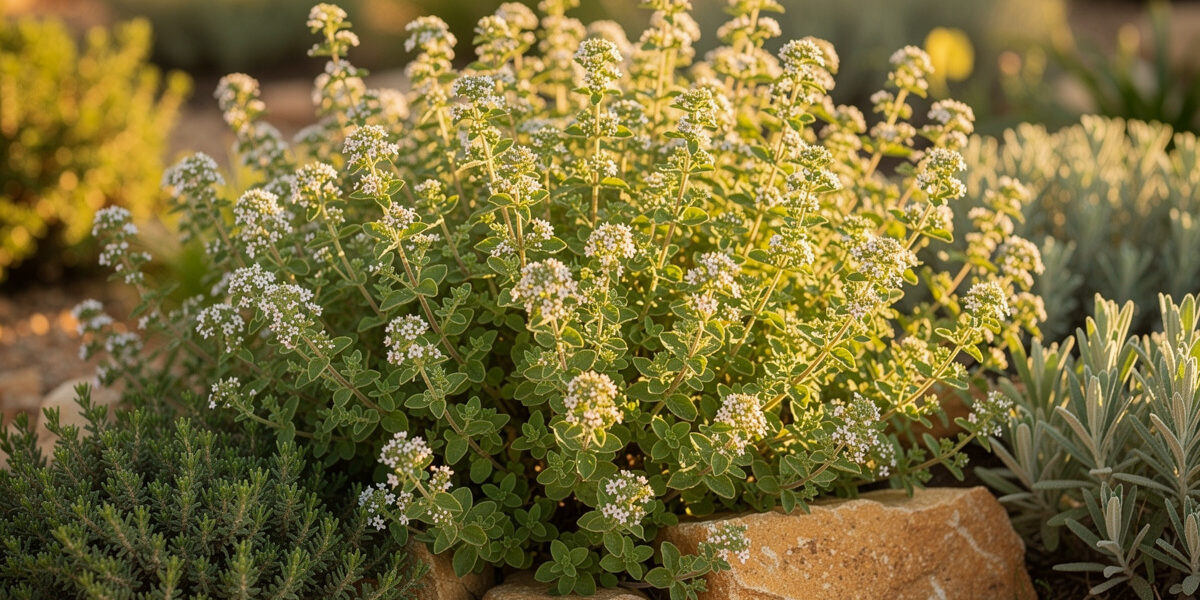
Oregano planting is one of the highest-return investments in a herb garden — a single $5 nursery transplant produces 3 to 5 cups of dried oregano annually for 5 to 7 years before division becomes necessary. On my balcony, the Greek variety sits in a 12-inch terracotta pot through every Swedish summer and keeps giving more than I can dry. The plant is genuinely drought-tolerant, hardy from zone 4 through 10, and resists nearly every common pest. The catch is variety selection: most “oregano” sold as nursery transplants is mild ornamental Greek-style oregano with thin flavor, while the Greek subspecies (Origanum vulgare hirtum) is the version with the punchy carvacrol-rich punch. Picking the wrong variety produces a healthy plant that does not taste like anything. This guide covers planting, care, harvest, and the variety selection that makes the difference.
As an Amazon Associate I earn from qualifying purchases.
Variety Selection: The Most Important Decision
Oregano sold at garden centers covers four distinct plant types with very different culinary value. Buy by Latin name, not by common name, to get what you actually want:
- Greek oregano (Origanum vulgare subsp. hirtum): The pizza-and-pasta oregano. Strong pungent flavor with high carvacrol content. White flowers. Hardy zones 5-10. This is the variety to buy.
- Common oregano (Origanum vulgare): Milder flavor, sometimes labeled “wild oregano” or “European oregano.” Hardy zones 4-9. Workable but less intensely flavored.
- Italian oregano (Origanum × majoricum): A hybrid between oregano and marjoram. Sweeter, milder flavor. Hardy zones 6-9. Good for delicate dishes but not the right substitute for pizza oregano.
- Cuban or Mexican oregano (Plectranthus amboinicus or Lippia graveolens): Different genus entirely. Different flavor profile (more thyme-like or citrus-like). Tender perennial only in zones 9+.
The single rule for variety selection: at the nursery, crush a leaf between your fingers and smell it. If the scent is barely noticeable, it is decorative oregano. If the scent is sharp and unmistakable, it is the cooking variety. Walk past plants without strong scent.
Site Selection and Soil Requirements
Oregano grows in conditions that would kill many herbs, but the species has clear preferences for peak flavor:
- Sun: 6 to 8 hours of direct sun. The compounds responsible for oregano’s flavor (carvacrol and thymol) develop in proportion to sun intensity. Shade-grown oregano survives but tastes flat.
- Soil: Lean, well-drained, slightly alkaline (pH 6.5 to 7.5). Oregano in rich vegetable-garden soil grows lush but with weaker flavor — the same compound development that drives flavor accelerates under mild stress. It wants a warm, sunny spot in free-draining soil, as the RHS oregano growing guide stresses.
- Drainage: Required. The 60-minute drainage test applies — water in a 12 inch hole must clear within an hour. Raised beds or 20% sand amendment fix heavy clay sites.
- Spacing: 15 inches between plants. Oregano forms a low spreading mound and crowds out neighbors at closer spacing.
For the Mediterranean perennial section of a mixed herb bed, oregano pairs naturally with rosemary, sage, and thyme — all share the dry-side preferences. The parent guide Herb Garden: Complete Outdoor Growing Guide covers the full Mediterranean herb bed layout.
When to Plant Oregano
Oregano transplants reliably across a wide window. Spring planting is most common; fall planting also works in zones 7+:
- Zones 4-5: Mid-May to early June. Plant after soil consistently holds 55 degrees F at 4 inches deep.
- Zones 6-7: Mid-April to mid-May. Spring planting only — fall transplants struggle to root before winter.
- Zones 8-9: Late March through April for spring crop. October planting also works for established perennial overwintering.
- Zone 10: November through February. Skip summer planting entirely — oregano transplants poorly in heat above 90 degrees F.
Hardening off is necessary for nursery transplants. Set the pot outside in dappled shade for 7 days, increasing direct sun exposure by an hour daily, before transplanting into the permanent bed.
Planting Method: From Transplant or Seed
Both methods produce viable plants but the timeline differs:
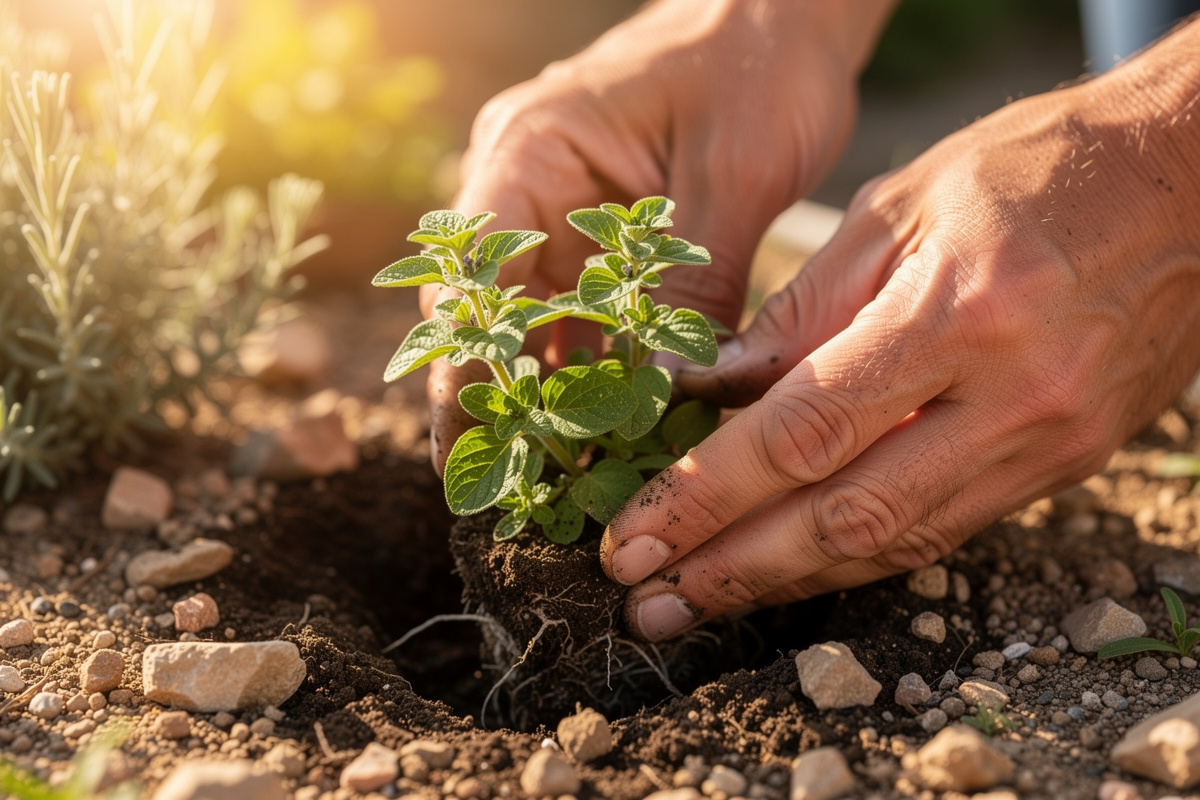
- Transplant (recommended): 4 to 6 inch nursery plant in spring. Dig a hole twice the width of the root ball, set at the same depth as the pot, backfill with native soil amended with 1 part compost. Water thoroughly once at planting; after that, water sparingly.
- Seed: Surface sow indoors 8 to 10 weeks before last frost (oregano seed needs light to germinate; do not bury). Transplant outside after hardening off when seedlings reach 3 inches. From seed to mature plant takes a full first season.
- Division (free if you have access to an established plant): Dig a clump in early spring, split into 4 to 6 inch sections each with roots, replant immediately. Fastest route to a full-size productive plant.
Most nurseries label varieties poorly. If unsure whether the plant is true Greek oregano, the leaf-crush smell test (mentioned above) is the only reliable check at point of purchase. Online specialty seed companies like Seeds of Italy or Strictly Medicinal list specific cultivars by Latin name.
Watering, Mulching, and the Drought-Tolerance Reality
Oregano is one of the most drought-tolerant herbs in the garden, but “drought-tolerant” does not mean “no water in the establishment phase.” The schedule:
- First 8 weeks after planting: Water deeply once per week. Soil should fully dry between waterings.
- Year one through midsummer of year two: Reduce to once every 10 to 14 days. Skip waterings if rainfall has been adequate.
- Year two onward (mature plants): Stop watering entirely except in extended drought (3+ weeks no rain). Established oregano genuinely handles dry summers.
- Container plants: Different rules — water when top 1 inch of soil dries, typically every 5 to 7 days in summer.
Mulch with 1 inch of pea gravel, decomposed granite, or coarse compost. Avoid wood-chip or straw mulch directly against the stems — both hold moisture and rot the crown.
Pruning and Maintaining a Productive Stand
Oregano spreads outward from a central crown each year, producing dense ground cover within 2 to 3 seasons. The pruning routine maintains productivity and prevents the woody decline that affects unattended plants:
- Pinching during the growing season: Pinch growing tips weekly to encourage branching and prevent flowering. Each pinch becomes a culinary harvest.
- Mid-summer hard cut: Cut entire plant back to 4 inches above the soil in late June or early July, just as flower buds appear. Plant rebounds within 2 to 3 weeks with a fresh flush of higher-quality leaves.
- Late fall tidy-up: In zones 7+, light cleanup only. In zones 4-6, leave dead growth as winter protection; clean up in spring.
- Division every 3 to 4 years: Older clumps lose vigor in the center. Dig in early spring, split into 4 to 6 inch sections, replant strongest pieces.
The mid-summer hard cut is the single most useful technique for oregano productivity. Plants that flower untreated produce roughly half the leaf yield of plants cut back at bud emergence, and post-flowering leaves taste mildly bitter.
Harvesting Oregano for Peak Flavor
Oregano flavor peaks just before flowering, with carvacrol and thymol concentrations reaching their seasonal high in early summer. Harvest timing rules:
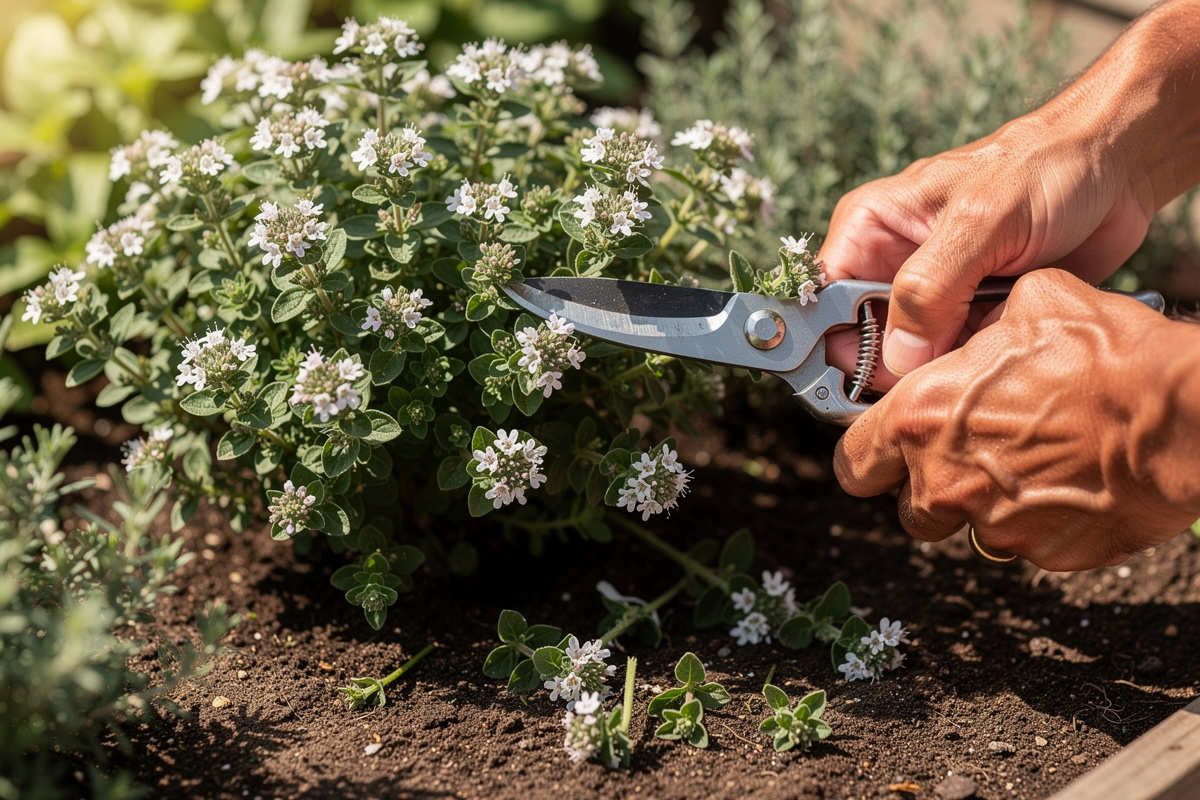
- Major harvest for drying: Just before or at first flower bud appearance — typically late June in northern zones, early-mid May in southern zones. Cut entire stems back by half.
- Continuous kitchen harvest: Snip individual stems weekly throughout the growing season. Take from the outer plant first; the inner growing point continues producing.
- Time of day: Morning after dew dries. Essential oils peak overnight and dissipate as the day heats.
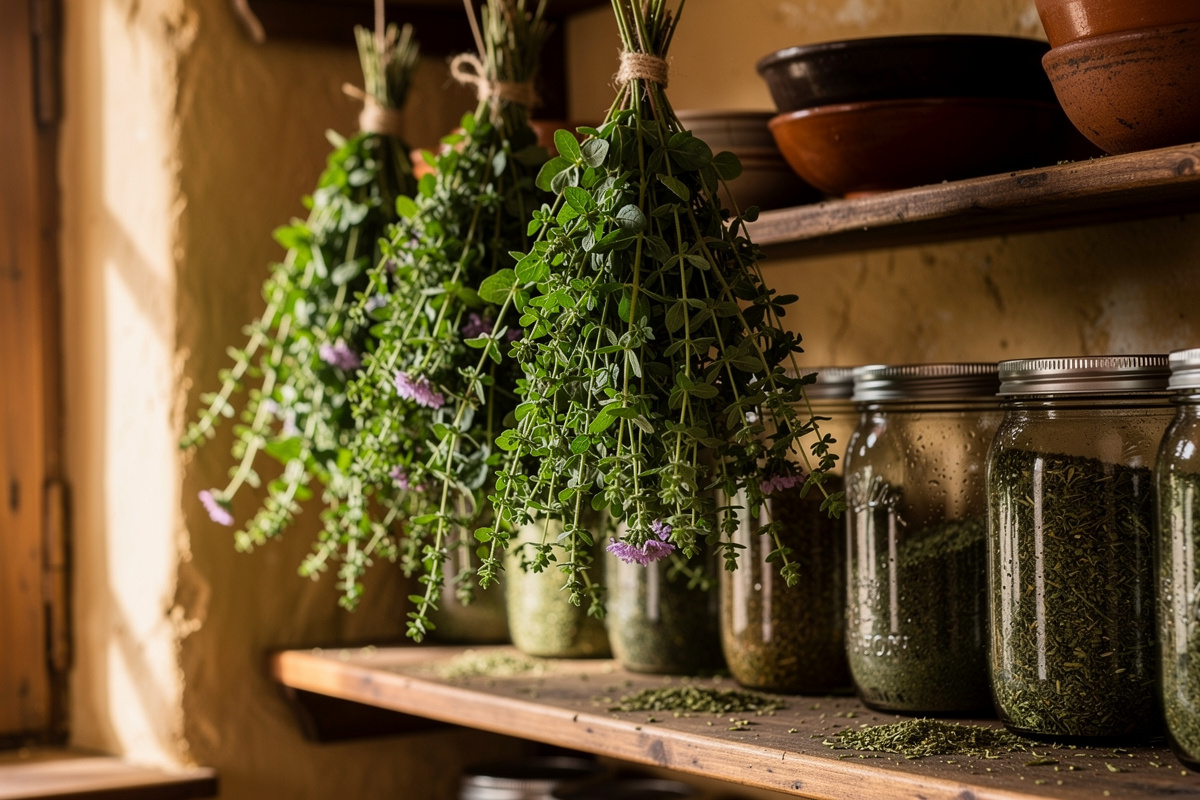
- Drying: Hang stems upside down in bundles in a dark warm well-ventilated space for 7 to 14 days. Strip dried leaves from stems and store in airtight glass jars.
Dried oregano keeps full flavor for 12 months. After 12 months, leaves remain visually intact but flavor weakens noticeably. The best practice is to dry only one year’s supply at a time and replenish from the garden annually.
Container Growing Notes
Oregano works well in containers but the management differs from in-ground plants:
- Container size: 12 inch minimum diameter and depth. Mature oregano fills a 14 inch pot in 2 seasons.
- Material: Unglazed terracotta is ideal — porous walls help with drainage and prevent root rot. Glazed ceramic and plastic work but require more attention to watering.
- Soil: Standard potting mix amended with 30% coarse sand or pumice for drainage. Skip moisture-retentive mixes.
- Watering: Every 5 to 7 days in summer when top inch dries. Water from below if possible to avoid leaf splash.
- Overwintering: Move pots to a sheltered location in zones 4-5. Outdoor pots can survive zone 6+ winters with the pot wrapped in burlap.
Common Mistakes That Lead to Flavorless Oregano
Five mistakes make most oregano disappointments preventable:
- Buying the wrong variety. Generic “oregano” at the garden center is usually decorative ornamental oregano with thin flavor. Crush a leaf and smell before buying — strong pungent scent means true cooking variety.
- Planting in rich vegetable-garden soil. Lush growth comes at the cost of flavor. Plant in lean rocky soil, or amend a planting hole with sand and gravel.
- Watering on a tomato schedule. Daily summer watering rots roots within 8 weeks. Established oregano needs no water in zones 4-9 except in extended drought.
- Skipping the mid-summer hard cut. Untreated plants flower, drop leaf production, and produce mildly bitter post-flower leaves. The hard cut at bud emergence doubles annual yield.
- Harvesting after flowering. Peak flavor is just before bloom. Once flowers open, leaf flavor declines for the remainder of that flush.
Oregano in Containers Through a Nordic Winter
Greek oregano in a 12-inch terracotta pot has survived three winters on my balcony with nothing but a gravel mulch. The plant dies back to a woody crown in November and looks dead through the dark months, but come March the first tiny green leaves appear at the base while the rest of the balcony is still frozen. Oregano is the earliest herb to break dormancy in my setup and one of the most reliable perennials for a cold-climate container gardener.
Frequently Asked Questions
What is the difference between Greek oregano and regular oregano?
Greek oregano (Origanum vulgare hirtum) has the strong pungent flavor used in pizza and Mediterranean cooking, with high carvacrol content. Common oregano (Origanum vulgare) is milder. The leaf-crush smell test is the most reliable check at the nursery — strong sharp scent means Greek oregano; weak scent means common or ornamental.
How much sun does oregano need?
6 to 8 hours of direct sun is required for peak flavor. The compounds responsible for oregano’s pungent taste (carvacrol and thymol) develop in proportion to sun intensity. Shade-grown oregano survives but produces leaves with noticeably weaker flavor.
How often should I water oregano?
First 8 weeks after planting: deep watering once per week. Year one through midsummer of year two: every 10 to 14 days. Year two onward: stop watering entirely except in 3+ week drought. Container oregano needs water every 5 to 7 days in summer when top inch of soil dries.
When should I cut back oregano?
Hard cut to 4 inches above soil in late June or early July, just as flower buds appear. Plant rebounds within 2 to 3 weeks with a fresh flush of higher-quality leaves. This single technique doubles annual yield and prevents the bitter post-flower leaf flavor.
Can oregano survive winter outdoors?
Yes in USDA zones 4-9 with no protection beyond a 1 inch gravel mulch base. In zones 4-6, leave dead growth as winter protection and clean up in spring. Zone 4 is marginal for some Greek oregano cultivars — plant against a south-facing wall for thermal mass.
How long does an oregano plant live?
5 to 7 productive seasons before division becomes necessary. Older clumps lose vigor in the center. Dig the plant in early spring of year 4 or 5, split into 4 to 6 inch sections, and replant the strongest pieces — discard the woody center. The resulting daughter plants produce at full vigor through years 9 to 11.
Should I let oregano flower?
Only if you want to attract pollinators or save seed. Flowering shifts plant energy from leaf production to seed production, reducing leaf yield by roughly 50% and producing mildly bitter post-flower leaves. For peak culinary use, pinch flower buds before they open or do the mid-summer hard cut at bud emergence.