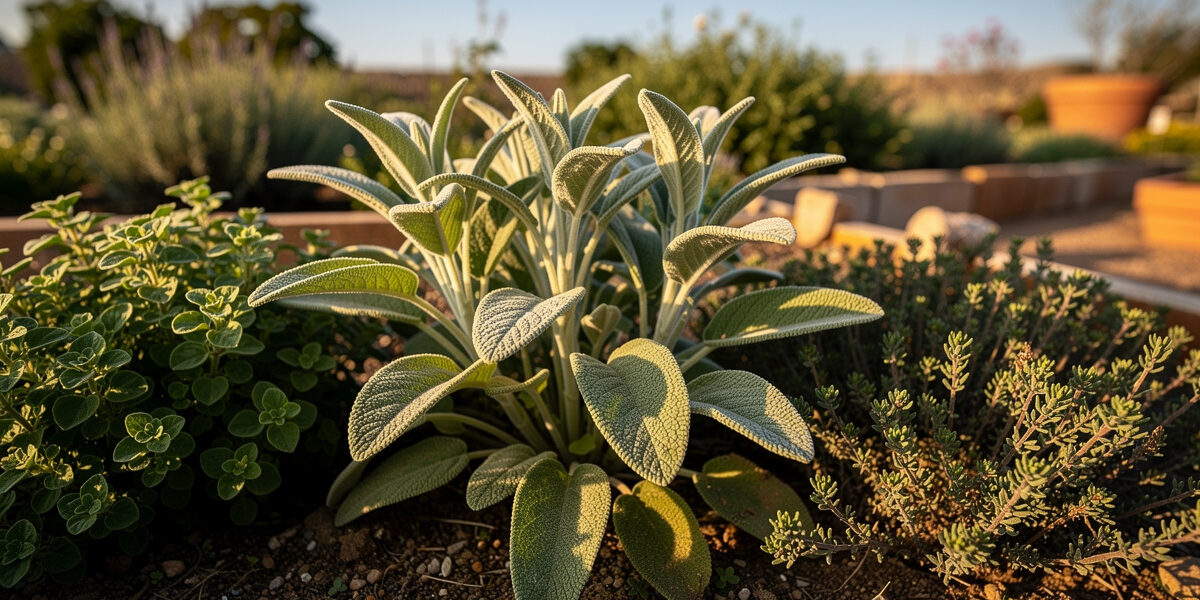
Sage is one of the most rewarding herbs you can grow — a tough Mediterranean perennial that hands you aromatic leaves for years and, once established, asks for almost nothing. The catch in a cool, damp climate like mine is drainage: sage rots in a wet winter long before it dies of cold, so the whole game up north is sharp-draining soil and a sunny, sheltered spot. You can start it from seed, but honestly a nursery plant is the easier route. Here’s how I get it through that fragile first season and keep it going for years.
Sage (Salvia officinalis) is a Mediterranean perennial that produces useful leaves for 4 to 6 seasons before woody decline forces a replacement. The growing technique splits cleanly into two phases: a fragile first 90 days from seed or transplant where overwatering kills more plants than any pest, then a long productive plateau where neglect actually outperforms attentive care. This guide covers the how-to-grow side: germination, transplant timing, watering schedule, pruning routine, harvest cadence, and overwintering. For the variety selection, culinary applications, and other uses of sage, the dedicated reference is Sage Herb Plant: Varieties, Uses, and Identification; this guide stays focused on growing technique.
As an Amazon Associate I earn from qualifying purchases.
Sage Growing Conditions: What the Plant Actually Wants
Sage evolved on dry, rocky Mediterranean hillsides. Replicating those conditions in a backyard garden means accepting four non-negotiables:
- Sun: 6 hours minimum, 8 hours ideal. Sage grown in part shade survives but produces 40 to 60% less leaf and develops weaker flavor.
- Drainage: Fast. The 60-minute rule applies — pour a gallon into a 12 inch hole; if water sits longer than an hour, sage will eventually rot. Raised beds or 20% sand amendment fixes heavy clay sites.
- Soil pH: 6.5 to 7.0, leaning slightly alkaline. Sage tolerates pH 6.0 but yields stunt and stems stay weak.
- Air flow: 18 inch spacing minimum from any wall, fence, or neighboring plant. Stagnant air drives powdery mildew, the only common sage disease.
If your site fails any of these — particularly drainage — the cleanest fix is a raised bed or large container rather than amending heavy in-ground soil season after season. The parent guide Herb Garden: Complete Outdoor Growing Guide covers bed-prep details that apply across the Mediterranean herb cluster.
Starting Sage: Seed vs Transplant vs Cuttings
Three propagation methods produce viable sage plants. The right choice depends on your timeline and how many plants you need:
- Transplant from nursery (recommended for most home gardens): Buy a 4 inch potted sage in spring for $5 to $8. Skips the slow seed-starting phase and gives a usable plant within 6 weeks of transplanting.
- Seed (cheapest, slowest): Direct sow or start indoors 8 to 10 weeks before last frost. Germination takes 14 to 21 days at 65-70 degrees F. Slow first season — sage does not reach full size until year two.
- Stem cuttings (free if you know someone with established sage): Take 4 to 6 inch softwood cuttings in late spring. Strip lower leaves, dip in rooting hormone, and root in seed-starting mix under a humidity dome. Roots in 3 to 4 weeks, transplant after 6 to 8 weeks.
For a single-household herb bed, one transplanted sage plant is usually enough — a mature plant produces 4 to 6 cups of fresh leaf per growing season, which is more than most kitchens can use fresh. Plant a second only if you preserve large quantities for winter cooking.
When to Transplant Sage Outdoors
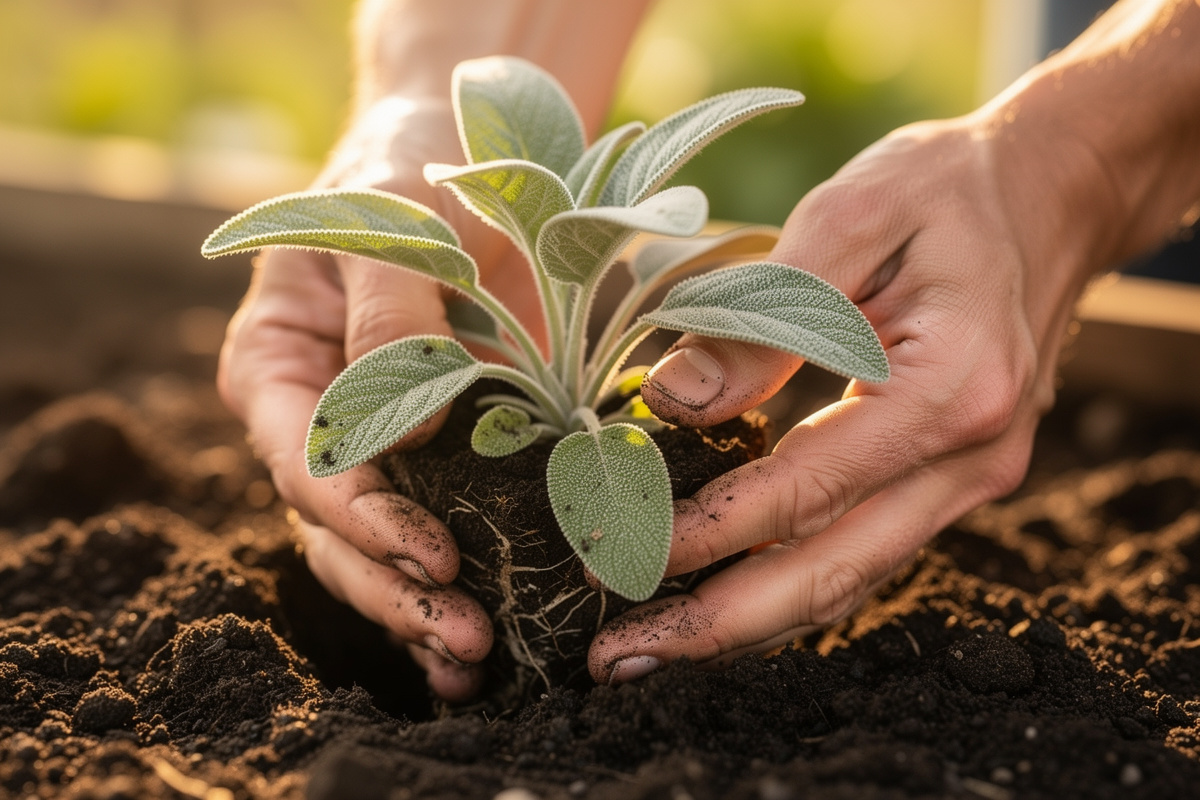
Sage transplants reliably from late spring through early summer once soil holds 60 degrees F at 4 inches deep. The window varies by zone:
- Zones 3-4: Late May to mid-June. Plant against a south-facing wall for thermal mass.
- Zones 5-6: Mid-May. Most reliable transplant window is 7-10 days after average last frost.
- Zones 7-8: Late March to mid-April. A second fall planting in late September also works for established perennials.
- Zones 9-10: February through March for spring crop. Sage struggles in zone 10 summer heat above 90 degrees F — cool-season planting only.
Hardening off is critical. Nursery sage is greenhouse-grown with thin cuticles. Set the pot outside in dappled shade for 7 to 10 days, increasing direct sun exposure by an hour daily, before transplanting. Skipping this step kills more first-year sage than overwintering ever does.
Watering Schedule: The Single Hardest Part of Sage Growing
Most sage failures trace back to overwatering. The temptation to water daily during summer kills more Mediterranean herbs than drought ever will — sage wants full sun and light, well-drained soil and resents wet feet (University of Wisconsin Horticulture). The schedule that works:
- Establishment phase (first 8 weeks after transplant): Water deeply once per week. Soil should fully dry between waterings — stick a finger 2 inches into the soil; if it feels damp, skip the watering.
- Year one through midsummer of year two: Reduce to once every 10 to 14 days. Sage roots are establishing depth; surface watering encourages shallow roots that fail in heat waves.
- Year two onward (mature plants): Stop watering entirely except during multi-week droughts. Established sage is genuinely drought-tolerant in zones 4-9.
- Container sage: Different rules — water when top 1 inch of soil dries, typically every 5 to 7 days in summer. Use unglazed terracotta to prevent root rot.
The signal that sage wants water: leaves go slightly soft and droop at midday. Wait until you see this signal at least 2 days in a row before watering — sage that wilts overnight after a sunny day usually recovers without intervention by morning.
Feeding and Mulching
Sage is a light feeder. Over-fertilized plants grow leggy stems with weak flavor and poor winter hardiness. The minimal-input routine:
- Year one: One side-dress of balanced 5-5-5 organic fertilizer in early summer. That is it.
- Year two onward: A 1-inch top-dress of compost in early spring as the only feeding. No supplemental nitrogen.
- Mulch: 1 inch of pea gravel, decomposed granite, or coarse compost. Avoid wood-chip or straw mulch directly against the woody stem — both hold moisture and rot the crown.
For the broader fertility framework that applies across the Mediterranean herb cluster (oregano, thyme, rosemary, sage), see Best Soil for Herbs: Culinary Garden Guide.
Pruning Sage to Prevent Woody Decline
Pruning is the single most underused technique that determines whether a sage plant lasts 3 years or 6. Without pruning, sage develops a woody base with leaves only at the stem tips by year three — the classic “leggy sage” decline. The fix is annual hard pruning in late spring:
- Year one: Light pruning only. Pinch growing tips to encourage branching. Do not cut back to old wood.
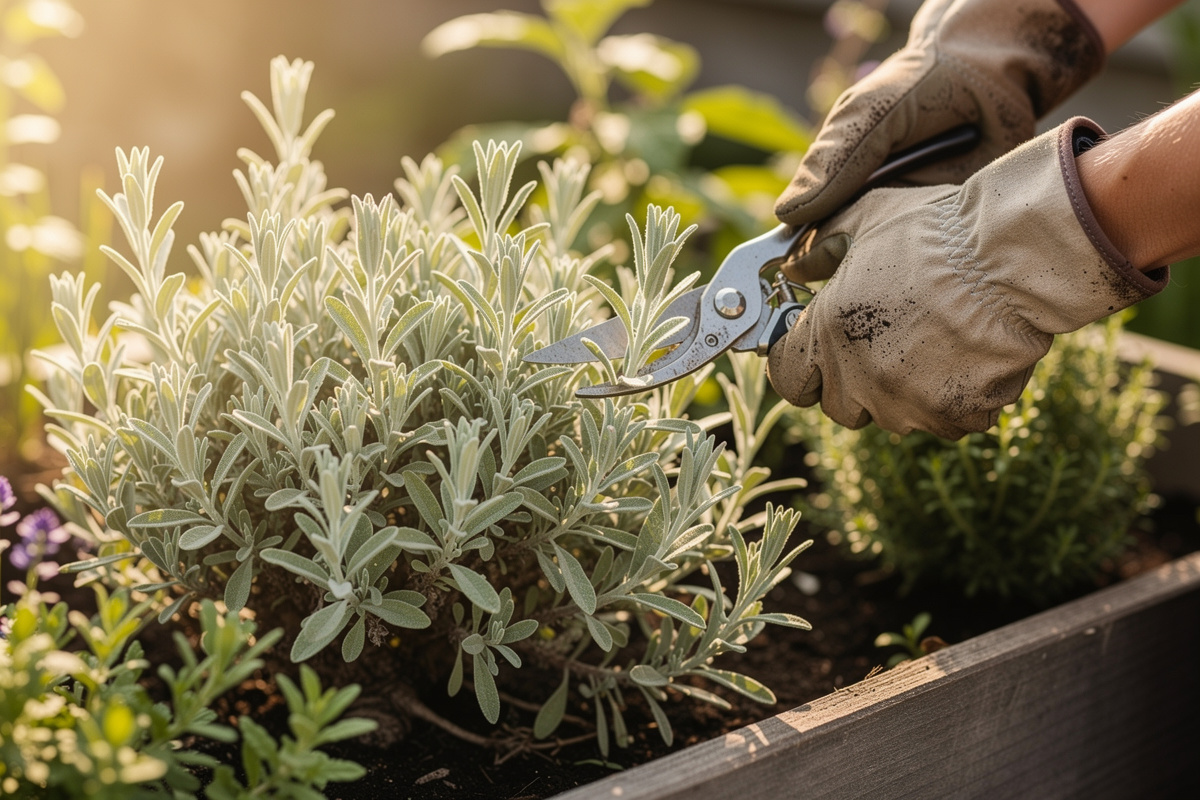
- Year two onward, late spring (after new growth begins): Cut all stems back by one-third to one-half, just above a green leaf node. Avoid cutting into bare brown wood — sage rarely regrows from bare wood.
- Late fall (zones 7+): Light tidy-up only. Heavy fall pruning reduces winter hardiness.
- Late fall (zones 3-6): No fall pruning. Leave dead growth as winter protection; cut back in spring.
If a sage plant is already woody and declining, layering or stem cuttings can produce a replacement plant in one season. Cut a 6 inch softwood tip in early summer, root in seed-starting mix, transplant in fall. The replacement plant takes over as the old one is removed in the following spring.
Harvesting Sage Leaves Through the Season
Sage is harvestable from week 8 of year one through the end of its productive lifespan. The frequency rules:
- Year one: Light harvests only — no more than 1/3 of the plant per cut, no more than once per month. The plant needs leaf area to establish roots.
- Year two onward: Cut individual stems as needed for cooking. A 6 inch stem with 8 to 12 leaves is the typical kitchen harvest unit.
- Major harvests for drying or freezing: Take in late spring after new growth hardens, and again in late summer before flowering. Cut entire stems back by one-third on harvest days.
- Time of day: Morning after dew dries. Essential oils peak overnight and dissipate as the day heats.
Sage flowers in early summer of year two and beyond, producing purple-blue spikes 12 to 18 inches above the foliage. Pinching flower buds before they open extends leaf production by 3 to 4 weeks. If you let the plant flower for ornamental value or pollinator support, leaf flavor weakens but recovers within 2 weeks of removing the spent flower stalks.
Overwintering Sage Outdoors
Sage hardiness varies by cultivar and microclimate but covers a wide zone range:
- Zones 4-9: Reliable in-ground overwintering with no protection. Cut back lightly in late fall, mulch the base with 2 inches of straw or evergreen boughs, and resume normal care in spring.
- Zone 3: Marginal. Plant against a south-facing wall, mulch heavily (4 to 6 inches), and accept that some winters will kill the plant. Treat as a 2 to 3 year crop rather than a long-term perennial.
- Zone 10: Sage struggles in extended summer heat above 90 degrees F. Provide afternoon shade in zones 10a and 10b; treat as a cool-season annual in 10c.
- Container sage in cold zones: Move pots to an unheated garage or sunny window for winter. Water once monthly — pots dry slowly indoors and overwatering rots the dormant root system.
For perennial herbs that share Mediterranean overwintering needs, see Oregano Planting: Mediterranean Perennial Setup for a closely related species, and Lavender Growth: Complete Perennial Herb Guide for the closely related Lamiaceae family.
Common Mistakes That Kill Sage Plants
Five recurring mistakes account for most failed sage gardens:
- Daily watering during summer. Mediterranean herbs evolved with infrequent deep rain followed by long dry periods. Daily watering rots roots within 6 to 8 weeks.
- Skipping the annual spring pruning. Without pruning, sage goes woody by year three and leaf production drops 50 to 70%. Hard prune every spring after new growth begins.
- Wood-chip or straw mulch against the stem base. Both hold moisture and rot the crown. Use gravel or decomposed granite within 4 inches of the stem.
- Planting in part shade. Sage tolerates 4 hours of sun but produces poor flavor and grows leggy. If your only sage spot is shadier than 6 hours of direct sun, grow a sage cousin (lemon balm, mint) instead.
- Heavy fall pruning in cold zones. Cutting sage back hard in late fall removes winter protection and exposes the woody base to freeze-thaw damage. Save hard pruning for spring.
Frequently Asked Questions
How long does it take to grow sage from seed?
Sage germinates in 14 to 21 days at 65-70 degrees F soil temperature. Plants reach harvestable size at 12 to 16 weeks but should not be harvested heavily until year two. From seed to mature productive plant takes a full growing season; transplants from nursery skip this slow first phase.
Why is my sage plant getting woody and leggy?
Sage develops woody bare stems by year three without annual pruning. The fix is hard pruning each spring after new growth begins, cutting all stems back by one-third to one-half just above green leaf nodes. Avoid cutting into bare brown wood — sage rarely regrows from bare wood. If the plant is already woody, take stem cuttings to root a replacement.
How often should I water sage?
Mature sage is genuinely drought-tolerant and needs no supplemental watering in zones 4-9 except during multi-week droughts. First-year plants need a deep weekly watering during the establishment phase, then once every 10 to 14 days through year one. Container sage needs water every 5 to 7 days in summer when the top inch of soil dries.
Can sage survive winter outdoors?
Yes in USDA zones 4-9 with no protection beyond a 2 inch mulch base. Zone 3 is marginal — plant against a south-facing wall and accept that some winters will kill the plant. Zone 10 sage struggles in extended summer heat above 90 degrees F, not winter cold. Container sage in cold zones moves to an unheated garage or sunny window for winter.
How much sun does sage need?
Six hours of direct sun minimum, eight hours ideal. Sage grown in 4 hours of sun survives but produces 40 to 60% less leaf and develops weaker flavor. Less than 4 hours is not workable. If your only available spot is shadier, choose lemon balm or mint instead — both tolerate part shade.
When should I prune my sage plant?
Hard prune in late spring after new growth begins, cutting all stems back by one-third to one-half just above green leaf nodes. Light tidy-up only in late fall in zones 7+. No fall pruning in zones 3-6 — leave dead growth as winter protection and prune in spring.
How long does a sage plant live?
4 to 6 productive seasons with annual pruning. Without pruning, plants decline to leggy unproductive shrubs by year three or four. Replace plants every 4 to 6 years either by buying new transplants or rooting stem cuttings from the existing plant. Cuttings taken in early summer root within 3 to 4 weeks under humidity.