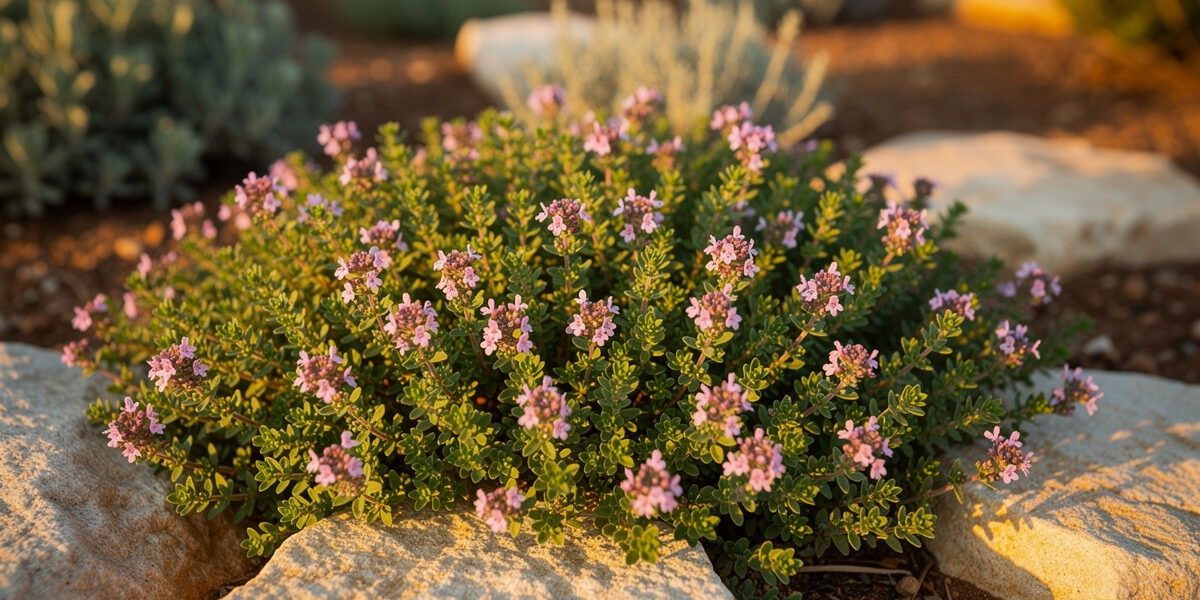
Lemon thyme (Thymus citriodorus, often cataloged as Thymus × citriodorus) is a thyme cultivar that delivers everything common thyme does — drought tolerance, perennial hardiness, low-spreading habit — with a distinct lemon-citrus scent layered on top. The plant is tougher than basil for citrus flavor in the kitchen, hardier than lemongrass for cold climates, and prettier than most herbs thanks to gold or silver variegated cultivars. The growing technique is simple, but the variety selection makes more difference here than with most herbs: ornamental variegated cultivars look beautiful but produce weaker culinary flavor than the plain green form. This guide covers planting, care, harvest, and the cultivar choices that match different uses.
As an Amazon Associate I earn from qualifying purchases.
Lemon Thyme Botany and Cultivar Selection
Lemon thyme is a low-growing evergreen subshrub in the Lamiaceae (mint) family. Mature plants reach 6 to 12 inches tall and spread 12 to 18 inches wide. The leaves are small, oval, and emit a distinct lemon scent when crushed — citral and geraniol compounds give the species its citrus character on top of the standard thyme thymol base.
The main cultivars in trade and their differences:
- Plain green lemon thyme: Strongest flavor, fastest growth, most heat tolerant. The cultivar to buy for kitchen use.
- Aureus (golden variegated): Yellow-green leaves with distinct lemon scent. Pretty but slower-growing and 30 to 40% weaker culinary flavor than plain lemon thyme.
- Silver Queen (silver variegated): Cream-edged leaves. The most ornamental cultivar but the weakest culinary flavor.
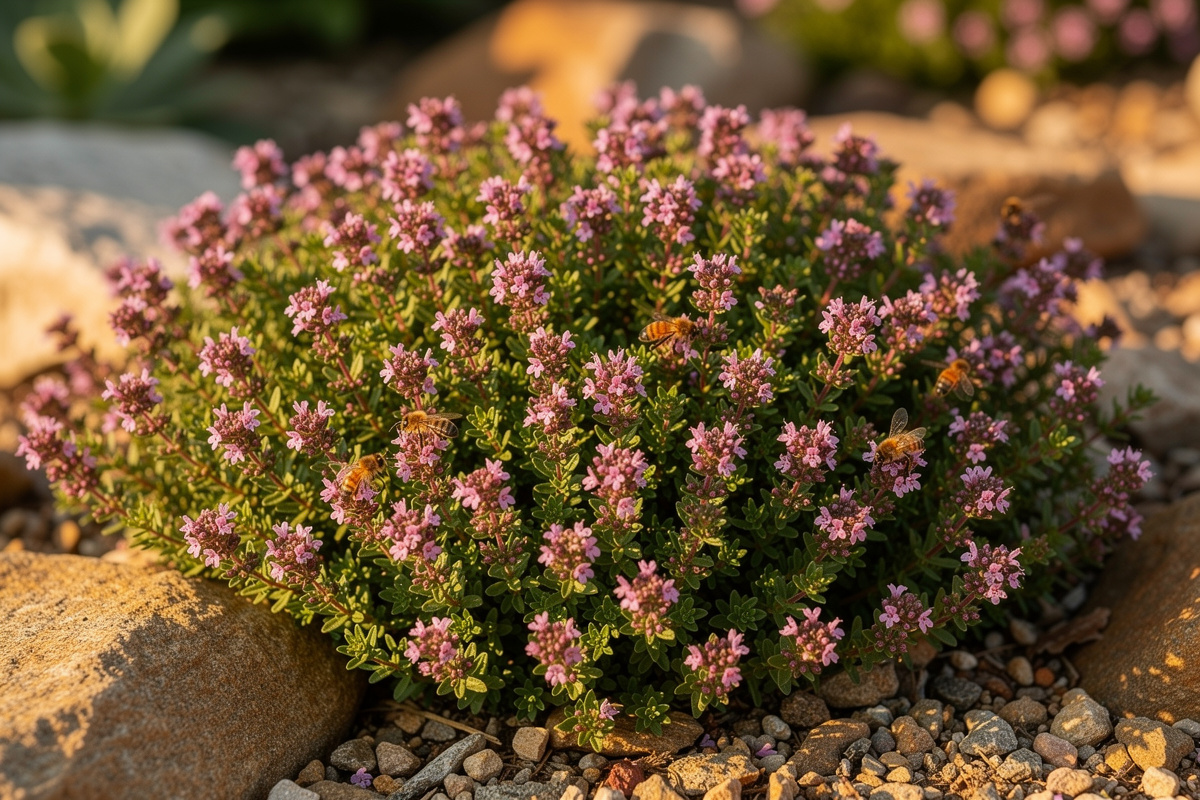
- Doone Valley: Compact form with uniform green leaves; flowers prolifically. Good intermediate choice for kitchens that also want pollinator attraction.
The single rule for variety selection: at the nursery, crush a leaf between your fingers and smell it. A strong lemon-and-thyme scent means a culinary-grade plant. A weak scent means an ornamental cultivar bred for appearance over flavor. For the closely related ground-cover species, see Planting Creeping Thyme: Ground Cover Guide — that guide covers Thymus serpyllum, the spreading lawn-replacement species that grows differently from the upright lemon thyme covered here.
Site and Soil Requirements
Lemon thyme shares the Mediterranean preferences of common thyme:
- Sun: 6 to 8 hours of direct sun. Tolerates 5 hours minimum but produces leggy growth and weaker flavor below that.
- Soil: Lean, gritty, well-drained. pH 6.5 to 7.5 (slightly alkaline preferred). Rich vegetable-garden soil produces lush growth at the cost of flavor and winter hardiness — thyme wants a warm, sunny site in free-draining soil (RHS thyme growing guide).
- Drainage: Critical. Lemon thyme cannot survive wet feet. Raised beds, rock gardens, or 25% sand amendment fix heavy clay sites.
- Spacing: 12 inches between plants. Lemon thyme forms a low spreading mat over 2 to 3 seasons.
The single best lemon thyme location is the dry-side perennial bed alongside oregano, sage, and rosemary. For the bed-planning context, see Herb Garden: Complete Outdoor Growing Guide.
Planting Method: Transplant, Cuttings, or Layering
Lemon thyme rarely produces viable seed (it’s a hybrid), so seed propagation is unreliable. Three working methods:
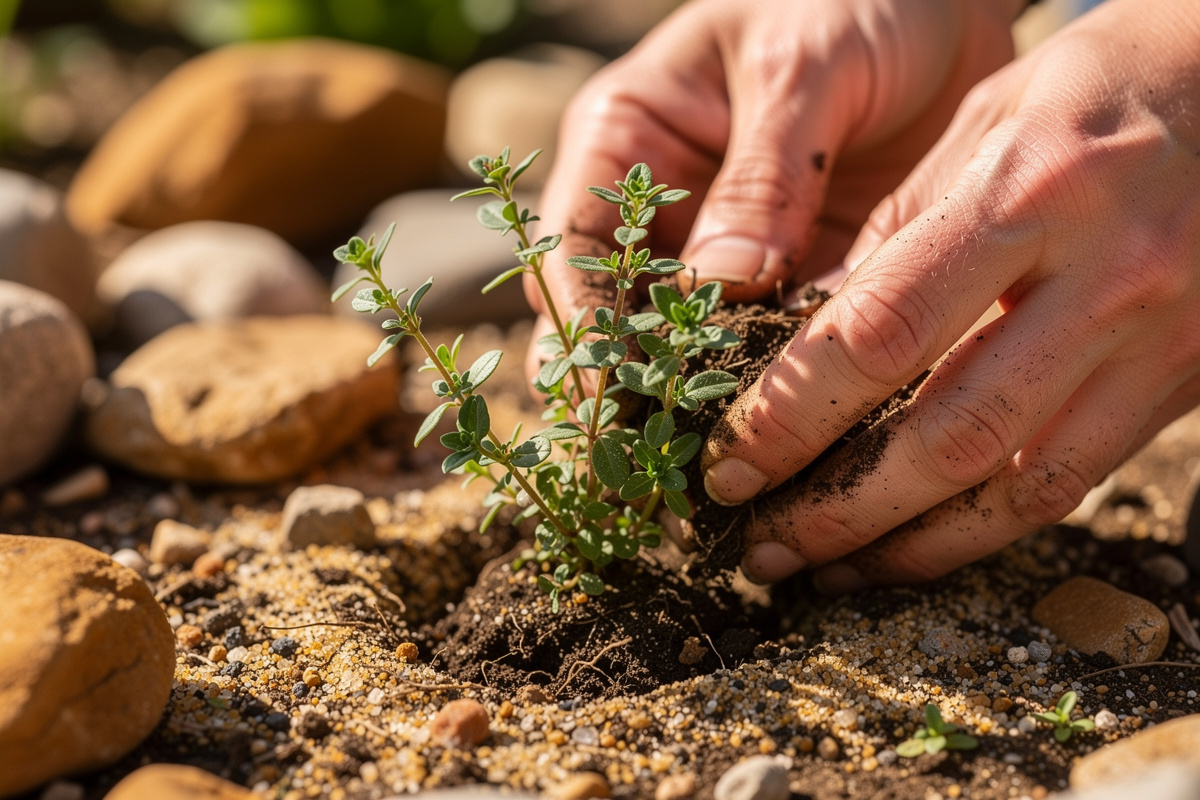
- Nursery transplant (recommended): Buy a 4 inch potted lemon thyme starter plant in spring for $5 to $8. Plants are harvestable within 8 weeks and well-established by end of season one.
- Stem cuttings: Take 3 inch tip cuttings in late spring after new growth firms slightly. Strip lower leaves, dip in rooting hormone, root in seed-starting mix under humidity for 3 to 4 weeks. Success rate is high (70 to 80%).
- Layering (free if you have an established plant): Pin a low-growing stem to the soil with a U-shaped wire, cover the pinned section with 1/2 inch of soil. Roots form within 6 weeks; sever from the parent plant and transplant.
Layering is the easiest path to free additional plants once you have one established lemon thyme. A single layered stem reliably produces a transplantable daughter plant within 2 months.
When to Plant Lemon Thyme
Lemon thyme transplants reliably in spring across all zones it tolerates:
- Zones 5-6: Mid to late May after last frost. Soil should hold 55 degrees F at 4 inches deep before planting.
- Zones 7-8: Late March to mid-April for spring planting. Fall planting (early October) also works for established plants.
- Zone 9: February through April. Skip summer transplanting in zone 9 — heat above 90 degrees F stresses establishing plants.
- Zone 4 (marginal): Late May. Plant against a south-facing wall and accept that some winters cause foliage damage requiring a hard spring prune.
Hardening off is necessary for nursery transplants. Set the pot outside in dappled shade for 5 to 7 days, increasing direct sun exposure by an hour daily, before transplanting into the permanent bed.
Watering, Mulching, and the Drought Reality
Like other Mediterranean thymes, lemon thyme is genuinely drought-tolerant once established. The schedule:
- First 8 weeks after transplant: Water deeply once per week. Soil should fully dry between waterings.
- Year one through midsummer of year two: Reduce to once every 10 to 14 days. Skip if recent rainfall has been adequate.
- Year two onward (mature plants): Stop watering entirely except in 3+ week droughts. Established lemon thyme handles typical zone 5-9 summers without supplemental water.
- Container plants: Water when top 1 inch of soil dries, typically every 5 to 7 days in summer.
Mulch with 1 inch of pea gravel, decomposed granite, or coarse grit. Avoid wood-chip or straw mulch — both hold moisture against the woody stem base and cause crown rot.
Pruning to Prevent Woody Decline
Lemon thyme is more forgiving than common thyme but still benefits from annual pruning. Without pruning, plants develop bare woody stems with leaves only at the tips by year three. The routine:
- Late spring hard prune: After new growth begins, cut all stems back by one-third. Avoid cutting into bare brown wood — lemon thyme regrows poorly from old wood.
- Mid-summer pinching: Pinch flowering tips to extend leaf production. Each pinch is a kitchen harvest.
- Late fall tidy-up: Light cleanup only in zones 7+. No fall pruning in zones 4-6 — leave dead growth as winter protection.
- Renewal every 4 to 5 years: Older plants lose vigor. Replace by taking stem cuttings 18 months before you remove the parent plant; the rooted daughter plant matures while the parent declines.
Harvesting Lemon Thyme for Kitchen Use
Lemon thyme is harvestable from week 8 of year one onward. The rules:
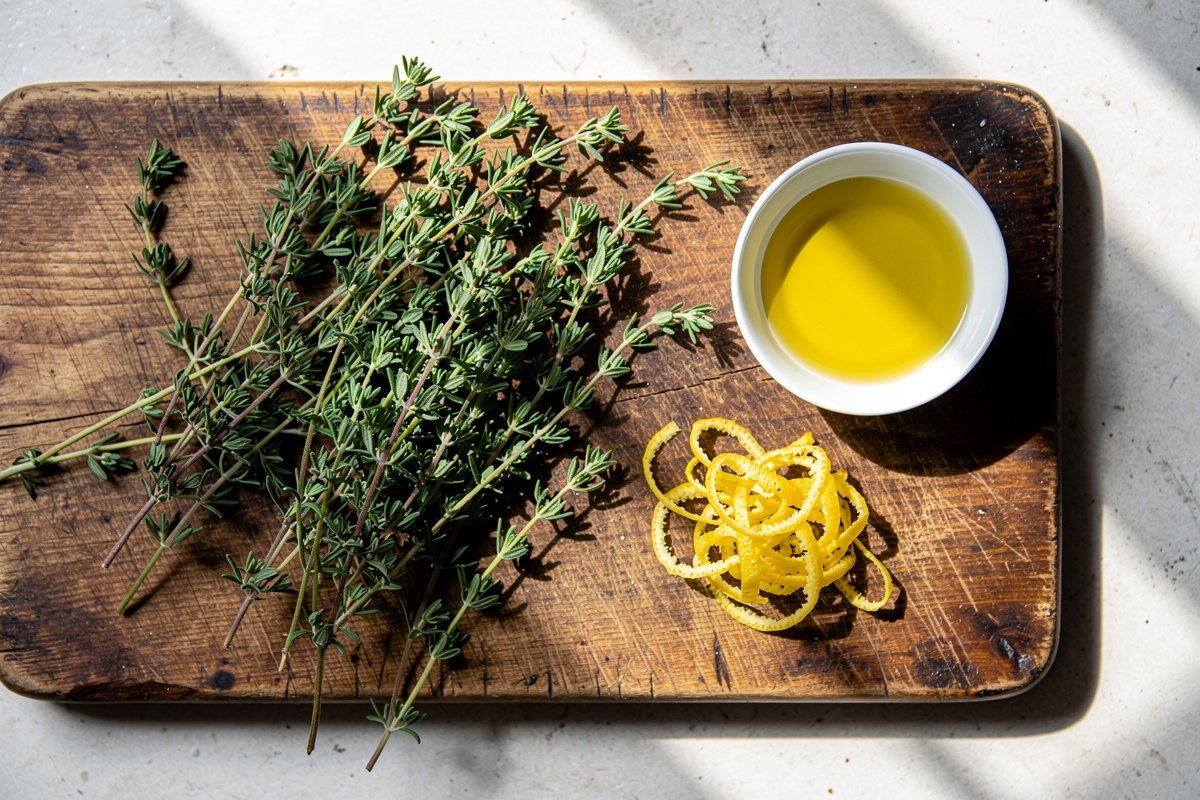
- Take individual stems as needed for cooking. Snip 2 to 3 inch tips; the plant branches at the cut and continues producing.
- Take no more than one-third of the plant per harvest. Lemon thyme rebounds quickly from this level.
- Major harvest for drying: Just before flowering (typically late June in northern zones). Cut entire stems back by half. Hang upside down in bundles for 7 to 10 days.
- Time of day: Morning after dew dries. Essential oils peak overnight.
Dried lemon thyme keeps full flavor for 9 to 12 months — the lemon notes (citral, geraniol) evaporate slightly faster than the underlying thymol. Store in airtight glass in a dark cabinet.
Container Growing for Lemon Thyme
Lemon thyme is one of the better herbs for container life:
- Container size: 10 to 12 inch diameter and depth. Lemon thyme has a moderate root system and tolerates smaller pots than many other Mediterranean herbs.
- Material: Unglazed terracotta is ideal — porous walls help with drainage and prevent root rot.
- Soil: Standard well-draining potting mix amended with 30% coarse sand or pumice for drainage.
- Watering: Every 5 to 7 days in summer when top inch dries. Skip if rainfall has been adequate.
- Overwintering: Move pots to a sheltered location in zones 4-5. Outdoor pots survive zone 6+ winters with the pot wrapped in burlap or moved against a south-facing wall.
Lemon thyme also thrives in mixed-herb container groupings with sage and rosemary — all share dry-soil preferences. For the broader container herb framework, see Growing Herbs Indoors: Complete Container Guide.
Culinary Uses Beyond Common Thyme Substitutes
Lemon thyme works in nearly every common-thyme recipe with the added citrus dimension:
- Roasted poultry: Stuffed under chicken skin before roasting. Citral lifts the savory profile without overpowering.
- Fish and seafood: Pairs particularly well with white fish, scallops, and shrimp. Use fresh leaves, not dried, for fish.
- Roasted vegetables: Carrots, sweet potatoes, and squash benefit from the citrus thyme combination at the same dose as common thyme.
- Tea blends: 2 fresh sprigs in a cup of boiling water for 5 minutes makes a mild herbal tea — substitute for camomile when you want something stronger.
- Marinades and salad dressings: Strip leaves into vinaigrettes for grilled chicken or summer green salads.
Common Mistakes That Limit Lemon Thyme Productivity
Five common mistakes:
- Buying variegated cultivars expecting strong culinary flavor. Aureus and Silver Queen look beautiful but produce 30 to 40% weaker flavor than plain green lemon thyme. Crush a leaf and smell before buying.
- Planting in rich vegetable-garden soil. Produces lush stems with weaker flavor and poor winter hardiness. Use lean gritty soil, or amend a planting hole with sand.
- Overwatering. Daily summer watering rots roots within 8 weeks. Established plants need no water in zones 5-9 except during 3+ week droughts.
- Wood-chip or straw mulch against the stem base. Holds moisture and rots the woody crown. Use gravel or decomposed granite within 4 inches of the stem.
- Skipping annual spring pruning. Plants go woody by year three without it. Prune all stems back by one-third in late spring after new growth begins.
Frequently Asked Questions
What is the difference between lemon thyme and regular thyme?
Lemon thyme (Thymus citriodorus) shares the same growth habit, hardiness, and care requirements as common thyme but adds a distinct citrus scent and flavor from citral and geraniol compounds layered on top of the thymol base. Use lemon thyme as a 1:1 substitute in most recipes; the citrus dimension complements fish, poultry, and roasted vegetables particularly well.
Is lemon thyme a perennial?
Yes. Lemon thyme is a hardy perennial in USDA zones 5-9, with zone 4 marginal in protected sites. Plants live 4 to 5 productive seasons before declining. Take stem cuttings every 3 to 4 years to produce replacement plants before the parent loses vigor.
Can I grow lemon thyme indoors?
Yes, in a 10-12 inch container with a south-facing window providing 6+ hours of direct sun, or supplemental LED grow light. Use unglazed terracotta with a sand-amended potting mix. Water only when top inch of soil dries — typically every 5 to 7 days. The plant goes nearly dormant in winter if light hours drop below 8 daily.
Does lemon thyme spread?
Yes, slowly. Lemon thyme forms a low spreading mat 12 to 18 inches wide over 2 to 3 seasons. It does not run aggressively like mint or lemon balm — the spread is by branch tips that root where they touch moist soil. Easy to control by trimming the perimeter or layering tips for new plants.
Why are my lemon thyme leaves turning yellow?
Most often overwatering. Lemon thyme needs fully dry soil between waterings; constantly moist soil rots roots and yellows leaves within 6 to 8 weeks. Check drainage, reduce watering frequency, and remove any wood-chip or straw mulch touching the stem base. If yellowing appears in fall, that is normal pre-dormancy color change.
How do I dry lemon thyme leaves?
Cut whole stems just before flowering (typically late June in northern zones). Hang upside down in bundles in a dark warm well-ventilated space for 7 to 10 days. Strip dried leaves from stems and store in airtight glass jars. Dried lemon thyme keeps full flavor for 9 to 12 months; the citrus notes fade slightly faster than the thyme base.
Which lemon thyme cultivar tastes best?
Plain green lemon thyme has the strongest culinary flavor. Variegated cultivars (Aureus golden, Silver Queen silver) are 30 to 40% weaker in flavor — beautiful but ornamental-leaning. Doone Valley is a strong intermediate choice. Always crush a leaf and smell at the nursery; weak scent means weak flavor regardless of label.