DIY yellow sticky traps catch 90% of adult fungus gnats within 48 hours of deployment, costing under $0.25 each when you make them yourself versus $2-3 for store-bought. I run homemade traps on every plant shelf in my apartment — from the microgreen tray to the indoor strawberry rig — and they’re the single best monitoring tool I own. One glance at a trap tells me whether I have an active breeding population or just a few hitchhikers.
But here’s what took me months to figure out: traps alone will never eliminate an infestation. I spent my first season swapping sticky traps weekly, catching hundreds of adults, while larvae kept hatching in the perpetually-wet soil underneath. Traps are the diagnostic tool and the adult-knockdown piece of a multi-pronged protocol. For the complete elimination strategy that pairs traps with soil treatment, see the step-by-step fungus gnat elimination guide.
As an Amazon Associate I earn from qualifying purchases.
The Role of Traps in Fungus Gnat Management
Sticky traps catch adults but don’t kill larvae. For complete elimination, follow the step-by-step fungus gnat guide.
For a complete overview of all fungus gnat identification and treatment methods, see the complete fungus gnat guide.
DIY fungus gnat traps are an essential component of integrated pest management, providing immediate population reduction while offering valuable monitoring capabilities. These homemade solutions capture adult gnats, preventing them from laying eggs and perpetuating infestations, while simultaneously giving you visual feedback on treatment effectiveness and population trends. When combined with soil treatments that target larvae, traps form a complete control strategy that breaks the gnat life cycle at multiple points.
The effectiveness of trapping lies in exploiting fungus gnat behavior patterns. These weak-flying insects are attracted to specific colors, particularly yellow, and to moist environments where they naturally congregate. By strategically placing traps that capitalize on these behaviors, you can significantly reduce adult populations without using chemicals that might harm plants or pets. The immediate visual results of trapping also provide psychological relief, showing tangible progress in what can feel like an endless battle against these persistent pests.
Yellow Sticky Traps: The Gold Standard
Why Yellow Works
Fungus gnats, like many flying insects, have strong phototactic responses to specific colors, with yellow being particularly attractive. This color preference likely evolved because yellow signals flower presence, suggesting nectar and pollen food sources. Commercial yellow sticky traps exploit this instinct, using bright yellow surfaces coated with non-drying adhesive that captures insects on contact.
The effectiveness of yellow extends beyond initial attraction. Once an insect lands on the bright surface, the contrast makes it difficult for them to navigate away, increasing capture rates. Yellow traps outperform other colors for fungus gnat capture, which is why the UC Statewide IPM Program recommends yellow sticky traps for monitoring fungus gnat adults and comparing catch counts over time to see whether a population is rising or falling.
Commercial vs. DIY Yellow Traps
While commercial yellow sticky traps are readily available and relatively inexpensive, DIY versions can be equally effective at a fraction of the cost. The key components are a yellow surface (cardstock, plastic, or index cards) and a sticky coating. Commercial adhesives specifically formulated for insect trapping provide the best results, but homemade alternatives can work in a pinch.
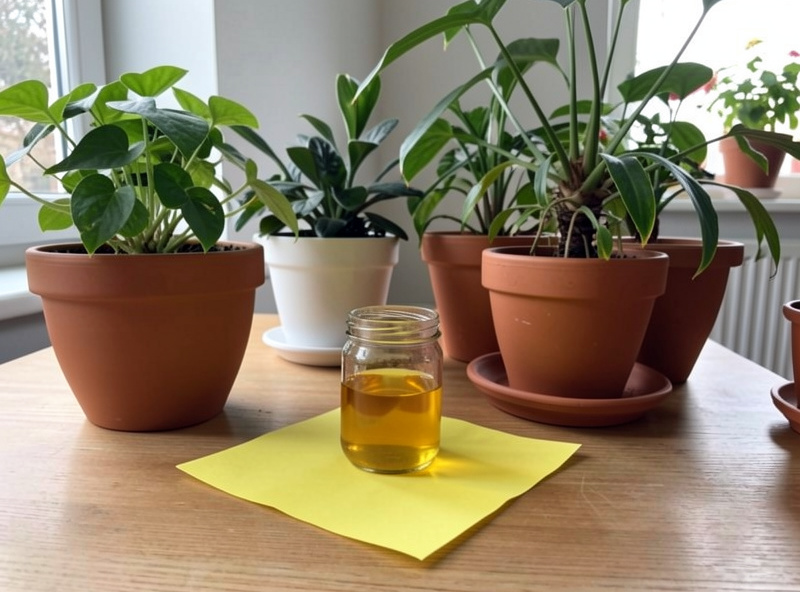
For homemade traps, I use bright yellow cardstock or paint white surfaces with yellow acrylic paint. Coat with Tangle-Trap, Tacky Trap, or similar horticultural adhesive products available at garden centers. Avoid using petroleum jelly or other household products that may dry out quickly or damage plant surfaces if contact occurs.
Proper Placement Techniques
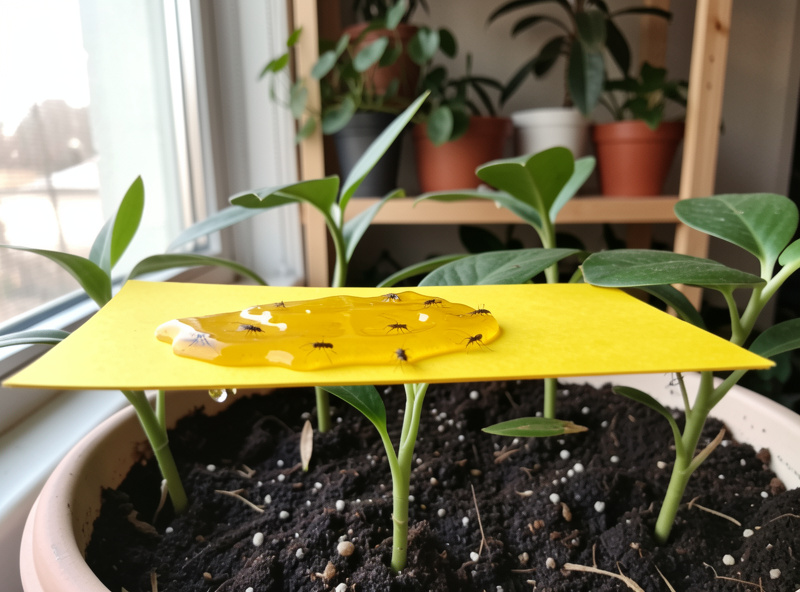
Placement dramatically affects trap effectiveness. In my setup, I position yellow sticky traps horizontally just above the soil surface where adult gnats naturally congregate. The horizontal orientation maximizes surface area at the gnat activity zone and prevents debris from falling onto the adhesive. For standard houseplants, place traps 1-2 inches above the soil surface.
Insert stake-style traps firmly into soil, ensuring they remain upright and stable. Card-style traps can be supported with bamboo skewers, plant stakes, or small wooden dowels pushed into the pot edge. Multiple traps per large plant or heavily infested area increase capture rates and provide better population monitoring.
Monitoring and Maintenance
I check traps weekly, counting captured gnats to track population trends. Initially high capture rates that decline over time indicate successful treatment. Increasing capture rates suggest ongoing reproduction requiring continued or escalated intervention. Record counts to objectively assess whether your control strategy is working.
Replace traps when they become covered with insects, dust, or debris that reduces stickiness. Typically, traps remain effective for 2-4 weeks under normal conditions. In dusty environments or heavy infestations, more frequent replacement may be necessary. Remove traps carefully to avoid releasing captured insects back into the environment.
Homemade Vinegar and Wine Traps
While vinegar traps catch adults, you also need to treat the soil. Try hydrogen peroxide drench to kill larvae.
Why Fermentation Attracts Gnats
While fungus gnats primarily breed in soil, they are also attracted to fermentation products including vinegar and wine. The yeast and bacterial activity in fermenting liquids produces volatile compounds that attract adult gnats seeking food sources. This attraction is stronger for fruit flies than fungus gnats, but can still capture significant numbers of gnats when properly deployed.
The attraction mechanism involves the production of acetic acid, ethanol, and various esters during fermentation. These compounds signal the presence of decomposing organic matter where gnats might find fungi or other food sources. While not as targeted as yellow sticky traps, liquid traps provide continuous capture without requiring sticky surfaces that some gardeners prefer to avoid.
Apple Cider Vinegar Trap Construction
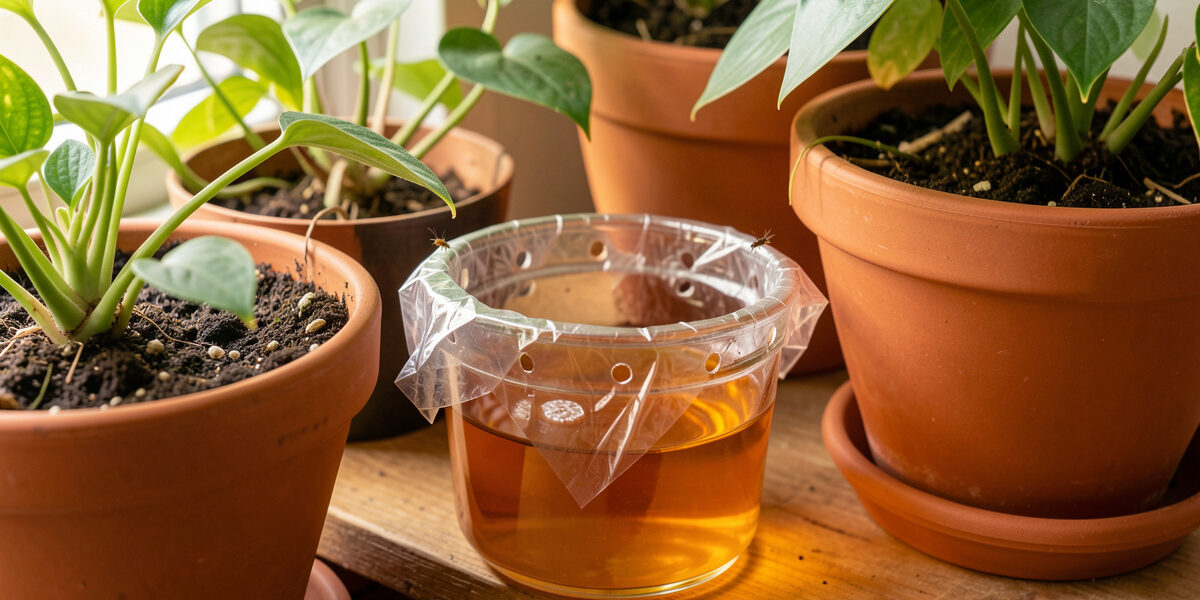
The classic vinegar trap uses apple cider vinegar as the attractant with dish soap as a surfactant. Fill a small container (jar, cup, or bowl) with 1-2 inches of apple cider vinegar. Add 2-3 drops of dish soap and stir gently to break surface tension. The soap prevents trapped insects from walking on the liquid surface, ensuring they sink and drown.
Cover the container with plastic wrap secured by a rubber band, then poke several small holes (1/8 inch diameter) in the wrap. The holes allow gnats to enter while preventing easy escape. Alternatively, create a funnel from paper or plastic with a small opening at the bottom, inserting it into the container so insects enter easily but cannot navigate back out through the narrow opening.
Wine and Beer Traps
Similar traps can be constructed using red wine, beer, or fruit juice as attractants. These often capture more insects than vinegar due to stronger fermentation activity and more complex aromatic profiles. Red wine particularly effective due to its combination of alcohol, acids, and fruit compounds.
For wine traps, use 1-2 inches of leftover red wine with a drop of dish soap. The alcohol content speeds the trapping process compared to vinegar. Beer traps work similarly, with the yeast content providing ongoing fermentation attraction. Fruit juice traps capture fewer gnats but work well for mixed populations including fruit flies.
Placement and Effectiveness
Position liquid traps near soil surfaces where gnats are most active, or in areas where you observe the highest adult activity. Multiple traps throughout an infested area increase total capture. Change liquid every 3-5 days as fermentation decreases and attractant power diminishes. Clean containers thoroughly between refills to remove any insect residue that might deter new captures.
Effectiveness varies based on gnat population density and competing attractants. In heavy infestations, traps may capture hundreds of gnats daily. In light infestations, they provide monitoring and modest population reduction. Combine liquid traps with yellow sticky traps for maximum capture across different attraction mechanisms.
Potato Slice Traps for Larvae Monitoring
How Potato Traps Work
While most traps target flying adults, potato slice traps capture soil-dwelling larvae, providing direct assessment of the destructive life stage. Raw potato slices placed on the soil surface attract gnat larvae that feed on the starch. After 4-8 hours, larvae congregate beneath or within the potato slices, making them visible and countable.
This monitoring technique is particularly valuable for confirming larval presence when adult activity suggests infestation but direct soil examination is difficult. It also provides a non-chemical method of larval reduction, though less effective than soil drenches or biological controls.
Construction and Use
Cut raw potato into 1/4-inch thick slices, approximately 2-3 inches in diameter. Place slices directly on the soil surface of suspected infested pots, with the cut side down against the soil. Cover the potato with a thin layer of soil or place upside-down to maintain moisture and darkness that larvae prefer.
Leave potato slices in place for 4-8 hours or overnight. Carefully lift and examine the underside for small white larvae with black heads. Count the larvae to assess infestation severity: 1-5 larvae indicates light infestation, 5-20 moderate, and over 20 severe requiring immediate aggressive treatment.
Interpretation and Action
After counting, dispose of the potato slice and captured larvae in sealed trash to prevent escape. The count indicates infestation level and treatment urgency. Even light larval populations warrant intervention before explosion. Repeat potato monitoring weekly during treatment to track larval population trends and treatment effectiveness.
Advanced DIY Trap Designs
Soda Bottle Traps
Create effective multi-purpose traps using empty plastic soda bottles. Cut the bottle in half, then invert the top portion into the bottom to create a funnel. Fill the bottom with vinegar, wine, or yeast-sugar solution as attractant. The funnel design allows insects to enter easily but prevents escape through the narrow opening.
These traps capture significant numbers due to their capacity and the funnel mechanism that prevents exit. Hang them near infested plants or place on soil surfaces. The clear plastic allows monitoring of capture rates and trap condition. Replace attractant weekly and clean thoroughly between uses.
Electronic Traps
For tech-inclined gardeners, small USB-powered UV light traps designed for mosquitoes can be adapted for gnat control. These devices use ultraviolet light to attract flying insects, then capture them on sticky boards or electrocute them with a low-voltage grid. While more expensive than passive traps, they provide continuous operation and significant capture rates.
Position electronic traps near plant collections, running them continuously during active infestation periods. The UV light attracts gnats from greater distances than color-based traps, potentially capturing insects before they reach plants. Combine with other control methods for comprehensive management.
Light and Color Combination Traps
Enhance yellow sticky trap effectiveness by adding a small LED light above or beside the trap. The light attracts gnats during evening hours when they are most active, while the yellow color provides constant attraction. Solar-powered garden lights positioned near traps create automated evening capture systems without electricity costs.
Alternatively, place yellow traps near existing light sources that gnats already congregate around, such as reading lamps or desk lights. The combination of artificial light and yellow color maximizes capture during peak gnat activity periods.
Integrating Traps into Control Strategies
For long-term prevention, add a sand barrier on soil to stop new eggs from being laid.
Traps as Monitoring Tools
Beyond capturing insects, traps serve as valuable monitoring devices that inform treatment decisions. High capture rates indicate active infestation requiring aggressive intervention. Declining capture rates suggest successful treatment. Sudden increases after apparent elimination signal reinfestation requiring renewed attention.
Maintain trapping records noting dates, locations, and capture counts. This data reveals patterns: which plants consistently attract gnats, seasonal population fluctuations, and treatment effectiveness over time. Use this information to refine your integrated pest management strategy and prevent future problems.
Combining Traps with Other Controls
Traps alone rarely eliminate infestations but form an essential component of complete control strategies. Combine yellow sticky traps and liquid traps with soil treatments like hydrogen peroxide drenches or biological controls — a box of BTI mosquito bits dissolved into my watering can is what actually knocks the larvae down between trap checks. The traps capture adults and prevent egg-laying while soil treatments kill larvae, breaking the life cycle at multiple points simultaneously.
For comprehensive treatment strategies, see my guides on how to get rid of fungus gnats and hydrogen peroxide for fungus gnats.
When to Remove Traps
Continue trapping until you consistently capture zero gnats for at least two weeks, indicating successful elimination. Then maintain traps in reduced numbers as ongoing monitoring devices, checking monthly to detect any reinfestation early. Some gardeners keep permanent traps on susceptible plants as insurance against recurring problems.
Cost Comparison and Value Analysis
DIY vs. Commercial Trap Costs
Commercial yellow sticky traps typically cost $0.50 each when purchased in bulk, with individual traps at garden centers costing $2 to $4 each. DIY versions using cardstock and horticultural adhesive cost roughly $0.10 to $0.25 per trap when made in quantity. Liquid traps using household vinegar cost pennies per trap.
For treating multiple plants or large collections, DIY options provide substantial savings without sacrificing effectiveness. However, commercial traps offer convenience, consistent quality, and professional-grade adhesive that may capture more insects than homemade alternatives. Many gardeners use a combination, making DIY traps for general deployment while keeping commercial traps on hand for maximum effectiveness on valuable plants.
Time Investment
DIY trap construction requires modest time investment: cutting and painting yellow surfaces (15 minutes), applying adhesive (5 minutes), and inserting stakes (5 minutes) for a batch of 10-20 traps. This one-time effort provides traps for weeks of use. Liquid traps require even less time: simply mixing ingredients in containers.
Compared to ongoing costs of commercial traps, the time investment in DIY construction often pays dividends for active gardeners managing multiple plants. The satisfaction of self-sufficiency and reduced environmental impact from less packaging also motivate many to choose homemade options.
Troubleshooting Trap Problems
If you’re not sure whether you have fungus gnats or fruit flies, check the identification guide.
Low Capture Rates
If traps are not capturing expected numbers, first verify trap placement. Ensure yellow sticky traps are positioned horizontally at soil level where gnats congregate. Check that adhesive remains sticky; old or dusty traps lose effectiveness. For liquid traps, ensure attractant is fresh and contains soap to break surface tension.
Consider whether you actually have fungus gnats or a different pest. Fruit flies, shore flies, and other insects require different attractants. See my guide on fungus gnats vs fruit flies for proper identification.
Traps Filling Too Quickly
Rapid trap saturation indicates heavy infestation requiring aggressive treatment beyond trapping alone. Increase trap numbers, deploy multiple trap types simultaneously, and immediately implement soil treatments to kill larvae. Very heavy infestations may require discarding the most heavily infested plants to protect the remainder of your collection.
Attracting Unwanted Insects
Liquid fermentation traps sometimes capture beneficial insects along with pests. If you observe ladybugs, lacewings, or other beneficials in traps, consider switching to yellow sticky traps that target problem pests more selectively. Alternatively, move liquid traps away from plants where beneficial insects are active.
Related Articles
- How to Get Rid of Fungus Gnats: Complete Elimination Guide
- Fungus Gnats vs Fruit Flies: Identification and Difference Guide
- Hydrogen Peroxide for Fungus Gnats: Treatment Guide
- Neem Oil for Fungus Gnats: Natural Treatment Guide
- Sand on Soil for Gnats: Barrier Method Guide
Do DIY fungus gnat traps really work?
Yes, properly constructed DIY traps can be as effective as commercial alternatives. Yellow color and appropriate adhesive are the key factors; homemade versions using bright yellow cardstock and horticultural glue capture insects at rates comparable to store-bought traps.
What is the best homemade gnat trap?
Yellow sticky traps are generally most effective for fungus gnats specifically. The combination of color attraction and physical capture works better than liquid traps. Use yellow cardstock coated with Tangle-Trap or similar adhesive, positioned horizontally at soil level.
How often should I change DIY traps?
Replace yellow sticky traps every 2-4 weeks or when covered with insects, dust, or debris. Liquid traps require fresh attractant every 3-5 days. Potato slice traps are single-use: deploy for 4-8 hours, then discard with captured larvae.
Can I make traps without buying special adhesive?
While horticultural adhesives work best, alternatives exist. Petroleum jelly captures insects but may dry out quickly. Double-sided tape applied to yellow surfaces provides modest effectiveness. For best results, invest in proper horticultural trapping adhesive.
Where should I place DIY gnat traps?
Position yellow sticky traps horizontally 1-2 inches above soil surfaces where adult gnats naturally congregate. Place liquid traps near heavily infested plants. Multiple traps throughout the growing area increase total capture.
Do traps eliminate fungus gnats completely?
Traps alone rarely eliminate established infestations, as they only capture adults while soil-dwelling larvae continue developing. However, traps are essential components of complete control strategies when combined with soil treatments.