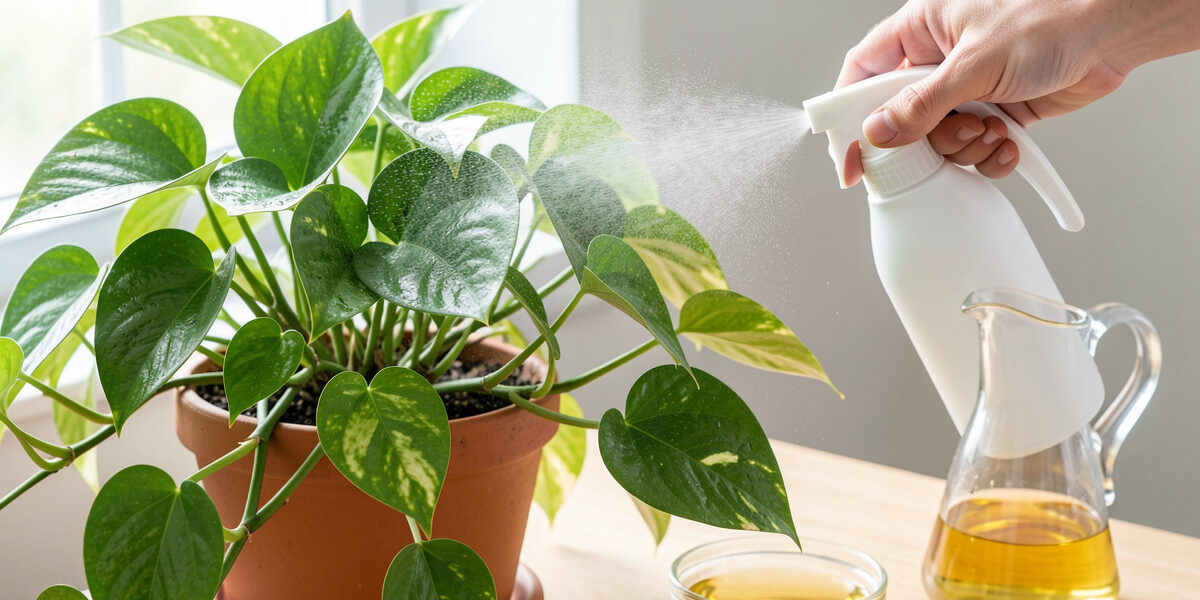
Fungus gnats are my recurring winter houseguests — overwatered indoor pots under low light are exactly what their larvae want, and neem oil is the first thing I reach for, because it deals with the larvae down in the soil rather than just swatting the adults. It’s slower than a chemical knockdown, but it breaks the whole life cycle and it’s safe to use around the kitchen. Here’s how to dilute and apply it without scorching your plants, and how to pair it with the cultural fixes that actually keep gnats gone.
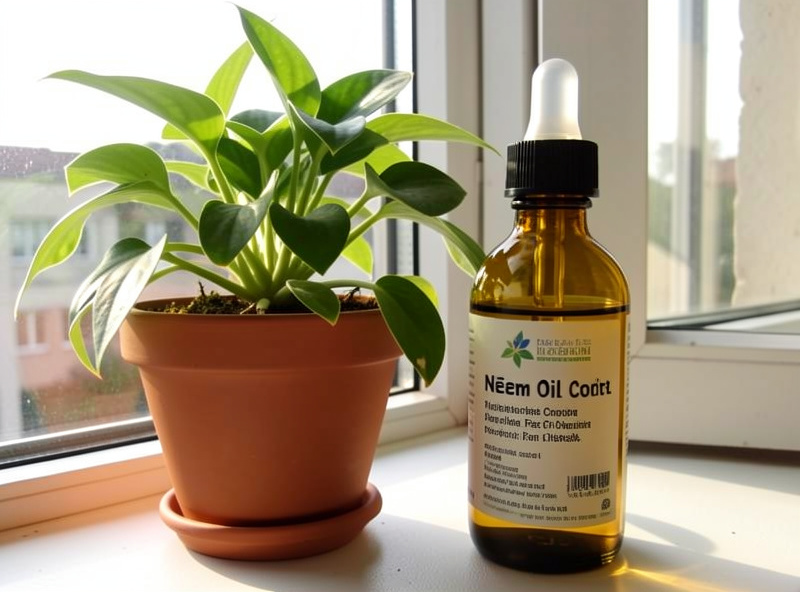
Neem oil kills fungus gnat larvae within 3-5 days of soil drench application by disrupting their molting cycle — they physically cannot mature into adults. I keep a bottle of cold-pressed neem oil concentrate in my plant cabinet for this. It’s slower than hydrogen peroxide but the residual effect prevents rebound. For the complete elimination protocol, see the fungus gnat elimination guide.
As an Amazon Associate I earn from qualifying purchases.
Why Neem Oil Is Effective Against Fungus Gnats
Neem oil is one of many effective treatments. For the complete elimination strategy, see the comprehensive fungus gnat guide.
For a complete overview of all fungus gnat identification and treatment methods, see the complete fungus gnat guide.
Neem oil has earned its reputation as one of the most versatile and effective natural treatments for fungus gnats and other houseplant pests. Derived from the seeds of the neem tree (Azadirachta indica), this organic insecticide offers multiple modes of action that make it particularly valuable for gnat control. Unlike synthetic chemicals that often target single physiological processes, neem oil disrupts pest biology in several ways simultaneously, making resistance development nearly impossible.
The effectiveness of neem oil against fungus gnats lies primarily in its active compound, azadirachtin, along with other triterpenoids and limonoids present in the oil. These compounds act as antifeedants, growth disruptors, and reproductive inhibitors that affect both adult gnats and soil-dwelling larvae. When applied properly, neem oil not only kills existing pests but also prevents future generations from establishing, providing both immediate and long-term control.
How Neem Oil Works Against Fungus Gnats
For a faster-acting chemical option, hydrogen peroxide soil drench kills larvae on contact within hours.
Multiple Modes of Action
Azadirachtin, the primary active ingredient in neem oil, works through several mechanisms simultaneously. As an antifeedant, it makes treated plants and soil unpalatable to feeding insects, causing larvae to starve rather than continuing to damage roots. As a growth disruptor, it interferes with insect hormone systems, preventing normal molting and development. As a reproductive inhibitor, it reduces egg-laying and egg viability in adult females.
This multi-pronged approach is particularly effective against fungus gnats because it targets both life stages: the soil-dwelling larvae that cause plant damage and the flying adults that perpetuate infestations through egg-laying. The National Pesticide Information Center describes exactly this action — azadirachtin reduces insect feeding and interferes with the hormone systems insects need to grow and lay eggs — and notes neem oil is practically non-toxic to birds, mammals, and bees. Unlike many treatments that only kill on contact, neem provides ongoing protection through its systemic and residual properties.
Systemic Action in Plants
When applied as a soil drench, neem oil is absorbed by plant roots and distributed throughout plant tissues. This systemic action means that any larvae feeding on roots ingest the azadirachtin along with plant sap, receiving a lethal dose even if they do not contact treated soil directly. The systemic property makes neem particularly effective for protecting root systems from hidden larval damage.
Systemic protection extends to above-ground plant parts as well, though this is less relevant for gnat control specifically. However, this property provides bonus protection against other sap-sucking pests like aphids, mealybugs, and scale insects that might also infest your plants.
Residual Protection
Neem oil provides residual protection that continues working days after application. Unlike contact insecticides that kill only insects present at the time of treatment, neem oil remains active on soil surfaces and plant tissues, affecting any gnats or larvae that contact treated areas subsequently. This residual action reduces the need for frequent reapplications while maintaining continuous protection.
The duration of residual effectiveness depends on environmental conditions. Indoors, away from rain and intense UV light, neem oil can remain active for 7-14 days. This persistence makes it practical for ongoing management while being short enough to minimize environmental accumulation.
Azadirachtin vs. Clarified Hydrophobic Neem Oil
Two main types of neem oil products exist: those containing concentrated azadirachtin and clarified hydrophobic neem oil. Azadirachtin concentrates isolate the primary active compound, providing potent insecticidal effects at low application rates. These products are specifically formulated for pest control and provide the strongest effects against fungus gnats.
Clarified hydrophobic neem oil contains lower azadirachtin concentrations but retains other neem compounds with insecticidal and fungicidal properties. While less potent for gnat control specifically, these products provide broader spectrum protection and are often preferred by organic gardeners seeking comprehensive plant care products.
Application Methods for Fungus Gnat Control
Combine neem oil treatment with DIY yellow sticky traps to catch adult gnats while the oil targets larvae in the soil.
Soil Drench Technique
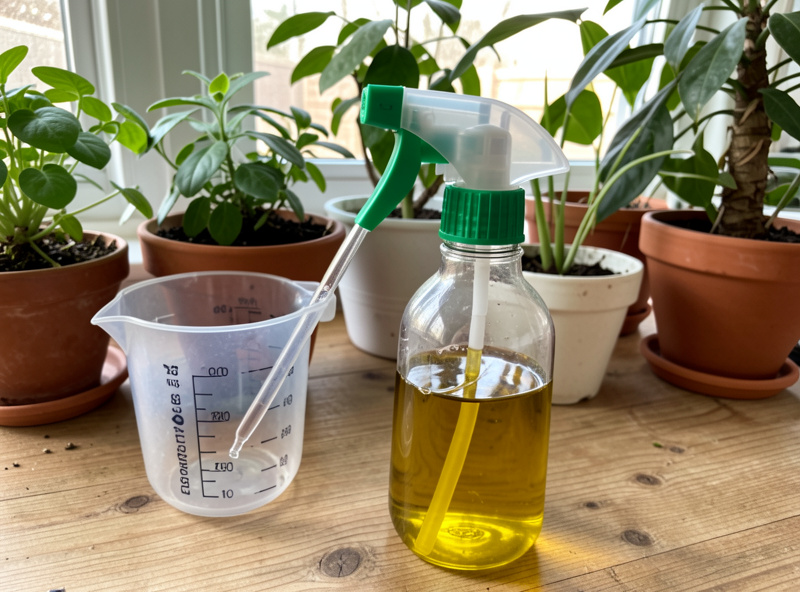
The most effective neem application for fungus gnats is the soil drench method, which targets larvae directly while providing systemic protection. Mix neem oil according to package directions, typically 1-2 tablespoons per gallon of water for clarified hydrophobic neem, or follow specific dilution rates for azadirachtin concentrates. Add a few drops of mild dish soap as an emulsifier to help the oil mix with water.
Apply the solution as a soil drench, pouring it directly onto the soil surface until liquid drains from the pot bottom. This ensures the neem penetrates the entire soil profile where larvae live, reaching pests in their primary habitat. The systemic uptake begins immediately, with effects on feeding larvae occurring within 24-48 hours.
For severe infestations, apply neem drenches every 7-10 days for three applications. This schedule targets overlapping generations, ensuring that larvae hatching from eggs after initial treatment are also affected. Continue applications until gnat populations are eliminated, typically 3-4 weeks for established infestations.
Foliar Spray Applications
While soil drenches are primary for gnat control, foliar sprays provide additional benefits by killing adult gnats that land on treated surfaces and deterring egg-laying on sprayed plants. Mix neem oil at the same dilution rates used for drenches (typically 1-2 tablespoons per gallon with emulsifier) and spray thoroughly on all plant surfaces, including leaf undersides where gnats may rest.
Foliar sprays are most effective when applied during times of peak adult activity, typically early morning or evening. The wet surfaces capture and kill adults on contact while leaving residual protection that continues working for days. Spray until leaves are thoroughly coated but not dripping.
Preventive Applications
For ongoing prevention in gnat-prone situations, apply neem oil monthly as both soil drench and foliar spray. This maintenance schedule provides continuous protection without the intensive application frequency needed for active infestations. Prevention is particularly valuable for plants that are consistently overwatered or kept in conditions favorable to gnat development.
Application Timing
Apply neem oil when plants are not under water stress, ideally in early morning or evening when temperatures are moderate. Avoid application during hot, sunny periods that might cause leaf burn when oil droplets act as magnifying lenses. Allow soil to be moderately moist but not saturated before application.
For soil drenches specifically, apply when the soil surface is slightly dry to ensure the solution penetrates effectively. Water plants normally 24 hours before neem application, then allow surface soil to dry slightly so the drench can penetrate the top layer where larvae concentrate.
Safety and Environmental Considerations
Plant Safety
Neem oil is generally safe for most plants when applied at recommended rates. However, some sensitive plants may show phytotoxicity symptoms including leaf spotting, yellowing, or wilting. Test neem on a small portion of the plant first if you are uncertain about sensitivity. Plants particularly susceptible include ferns, some palms, and certain succulents with waxy coatings.
Apply neem when plants are not under stress from drought, extreme temperatures, or recent transplanting. Stressed plants are more likely to show adverse reactions. If leaf damage occurs, discontinue use and flush soil with plain water to remove residual oil.
Human and Pet Safety
Neem oil has very low toxicity to humans and pets. It has been used for centuries in traditional medicine and as a natural pesticide without significant safety concerns. The EPA registers neem as a low-toxicity biopesticide, and it is approved for organic gardening. However, as with any pesticide, minimize direct contact and avoid inhalation of spray mist.
Wash hands after application and avoid contact with eyes. While not highly toxic, neem can cause skin irritation in sensitive individuals. Keep children and pets away from treated plants until sprays have dried completely, typically 1-2 hours after application.
Beneficial Insect Impact
One of neem oil major advantages is its selectivity against pest insects while sparing many beneficial species. Unlike broad-spectrum insecticides that kill indiscriminately, neem primarily affects insects that feed on treated plants or soil. Pollinators like bees that merely visit flowers are largely unaffected unless directly sprayed, and beneficial predators like ladybugs tolerate neem better than target pests.
However, neem can affect beneficial insects if they contact treated surfaces or consume prey that has ingested neem. Apply in evening when pollinators are inactive to minimize impact. The relatively short residual period (7-14 days) means beneficial populations can recover quickly between applications.
Environmental Persistence
Neem oil breaks down relatively quickly in the environment through UV degradation and microbial action, leaving no persistent toxic residues. This rapid degradation is both an advantage (minimal environmental impact) and a limitation (requires regular reapplication for ongoing protection). Indoors, breakdown occurs more slowly, extending residual effectiveness compared to outdoor applications.
The oil is non-toxic to birds, fish, and wildlife, making it safe for use around pets and in homes with children. This environmental profile distinguishes neem from synthetic chemical alternatives with greater ecological persistence and toxicity concerns.
Integrating Neem into Control Strategies
For a physical barrier approach, try sand on soil surface to prevent adult gnats from laying eggs.
Combining with Other Natural Methods
Neem oil integrates well with other natural gnat control methods. Combine with yellow sticky traps to capture adults while neem eliminates larvae. Use alongside physical barriers like sand or diatomaceous earth on soil surfaces. Incorporate beneficial nematodes or Bacillus thuringiensis (Bti) for enhanced biological control. For a slower but soil-friendly suppression layer, pair neem with a cinnamon soil treatment that starves larvae of the fungi they feed on.
Rotate neem applications with hydrogen peroxide soil drenches for comprehensive management. Apply hydrogen peroxide first for immediate larval kill, then follow with neem 3-5 days later for residual protection and systemic effects. This combination provides both immediate and long-term control.
For detailed hydrogen peroxide application techniques, see my guide on hydrogen peroxide for fungus gnats.
Neem with Biological Controls
Neem oil is compatible with beneficial nematodes and Bti, creating powerful combination therapies. Apply nematodes or Bti first, allowing them to establish in soil for 24-48 hours before neem application. The neem provides additional protection without harming the beneficial organisms, which are protected in the soil matrix from direct contact.
Alternatively, apply neem for immediate reduction of heavy infestations, then introduce biological controls once populations are reduced to manageable levels. This staged approach quickly brings severe infestations under control while establishing long-term biological management.
Cultural Control Integration
Neem applications should always accompany cultural control improvements. No chemical or natural treatment succeeds long-term without addressing the underlying conditions that support gnat populations. Allow soil to dry between waterings, improve drainage, and quarantine new plants while treating with neem. The single biggest long-term fix is a fast-draining mix that never stays wet enough to breed larvae — see my best soil for houseplants recipes.
For comprehensive integrated pest management strategies, see my pillar guide on how to get rid of fungus gnats.
Treating just a plant or two? A ready-to-use neem spray skips the mixing; for a whole collection, the cold-pressed concentrate above works out far cheaper per pot.
Product Selection and Quality
Choosing Quality Neem Oil
Not all neem oil products are equal. Look for cold-pressed, pure neem oil rather than solvent-extracted alternatives. Cold pressing preserves more active compounds and produces higher quality oil. Check the azadirachtin content, listed on product labels; higher concentrations (1-5%) provide stronger insecticidal effects.
Avoid products with added synthetic insecticides or adjuvants that might reduce organic acceptability. Pure neem oil or azadirachtin concentrates without additives provide the safest, most environmentally friendly option. Store neem oil in a cool, dark place to preserve potency; heat and light degrade azadirachtin over time.
Concentrated vs. Ready-to-Use Products
Concentrated neem oil products offer better value for gardeners treating multiple plants or large collections. While requiring mixing and measuring, concentrates provide flexibility in dilution rates and are more economical per application. Ready-to-use sprays offer convenience for treating occasional plants or small infestations but cost significantly more per treatment.
For serious gnat problems or extensive plant collections, invest in quality concentrates and a dedicated pump sprayer for application. The initial investment pays dividends through lower per-treatment costs and ability to adjust concentrations based on infestation severity.
Troubleshooting Neem Applications
When Neem Does Not Work
If neem treatments fail to reduce gnat populations, first verify application technique. Ensure soil drenches penetrate the full root zone, not just wetting the surface. Check that mixing ratios are correct, using enough neem per gallon of water. Verify applications are occurring frequently enough, typically every 7-10 days for active infestations.
Neem works more slowly than chemical insecticides, requiring 3-7 days to show significant effects. Be patient and consistent with applications rather than expecting immediate knockdown. If populations continue increasing after three properly timed applications, consider whether you actually have fungus gnats or a different pest requiring different treatment.
Leaf Burn and Phytotoxicity
If plants show leaf spotting, yellowing, or wilting after neem application, you may have used too strong a concentration or applied during hot, sunny conditions. Flush soil with plain water to remove excess oil, and rinse foliage to remove residue. Future applications should use lower concentrations (half strength) and be applied during cooler periods.
Some plants are naturally sensitive to oils. Test neem on a small leaf area before full application if working with unfamiliar species. Succulents with heavy waxy coatings, ferns with delicate fronds, and certain palms are commonly sensitive.
Persistent Infestations
For infestations persisting despite proper neem application, escalate treatment intensity. Increase application frequency to every 5-7 days, ensure thorough soil saturation with drenches, and combine with adult trapping using yellow sticky traps. Check for hidden breeding sites in drainage trays, self-watering reservoirs, or decorative cache pots.
Severe, widespread infestations may require rotating neem with other treatments like hydrogen peroxide or beneficial nematodes. Sometimes the most heavily infested plants must be discarded to protect the remainder of the collection from continuous reinfestation.
Related Articles
- How to Get Rid of Fungus Gnats: Complete Elimination Guide
- Hydrogen Peroxide for Fungus Gnats: Treatment Guide
- DIY Fungus Gnat Traps: Homemade Solutions That Work
- Sand on Soil for Gnats: Barrier Method Guide
- Cinnamon for Fungus Gnats: Natural Fungicide Treatment
How long does neem oil take to kill fungus gnats?
Neem oil works slowly compared to chemical insecticides, typically requiring 3-7 days to show significant population reduction. The oil disrupts feeding and reproduction rather than killing immediately. Consistent applications every 7-10 days for 3-4 weeks are necessary to eliminate established infestations.
Can I use neem oil on all my houseplants?
Neem is safe for most houseplants, but some sensitive species may show adverse reactions. Test on a small area first. Plants particularly susceptible include ferns, certain palms, and succulents with heavy waxy coatings.
How often should I apply neem oil for fungus gnats?
For active infestations, apply every 7-10 days for 3-4 applications. For prevention, monthly applications usually suffice. Adjust frequency based on infestation severity and plant response.
Can I make my own neem oil spray?
Yes, mix pure neem oil with water and a few drops of dish soap as an emulsifier. Typical dilution is 1-2 tablespoons neem oil per gallon of water. Mix thoroughly before application. Do not store diluted neem for extended periods.
Is neem oil safe for pets and children?
Neem oil has very low toxicity to mammals and is generally considered safe when used as directed. The EPA classifies it as non-toxic. Keep children and pets away from treated plants until sprays dry (1-2 hours).
Will neem oil harm beneficial insects?
Neem is more selective than broad-spectrum insecticides but can affect beneficial insects that contact treated surfaces. Apply in evening when beneficial insects are less active. The benefits of gnat control typically outweigh minimal impact on beneficials.
Can I combine neem with other treatments?
Yes, neem integrates well with other control methods. Combine with yellow sticky traps for adults, beneficial nematodes or Bti for biological control. Avoid mixing neem directly with other chemicals in the same spray tank.