Eliminate fungus gnats within one week: let soil dry 2–3 inches deep, drench with 1:4 hydrogen peroxide to kill larvae on contact, deploy yellow sticky traps for adults, and cap soil with a 1-inch horticultural sand barrier to block egg-laying.
I’ve fought this exact battle under my grow lights and across my microgreen trays more times than I can count. The first time gnats swarmed my indoor strawberry rig, I lost a full tray of seedlings to damping off before I even knew what I was dealing with. The key thing to understand is that fungus gnats aren’t just annoying — they’re a four-stage problem (egg, larva, pupa, adult) and you have to hit every stage simultaneously. This guide covers the exact protocol I use now, from the sticky traps I keep in rotation to the Bti regimen I run on my microgreen shelf.
As an Amazon Associate I earn from qualifying purchases.
What Are Fungus Gnats and Why Are They in My Soil?
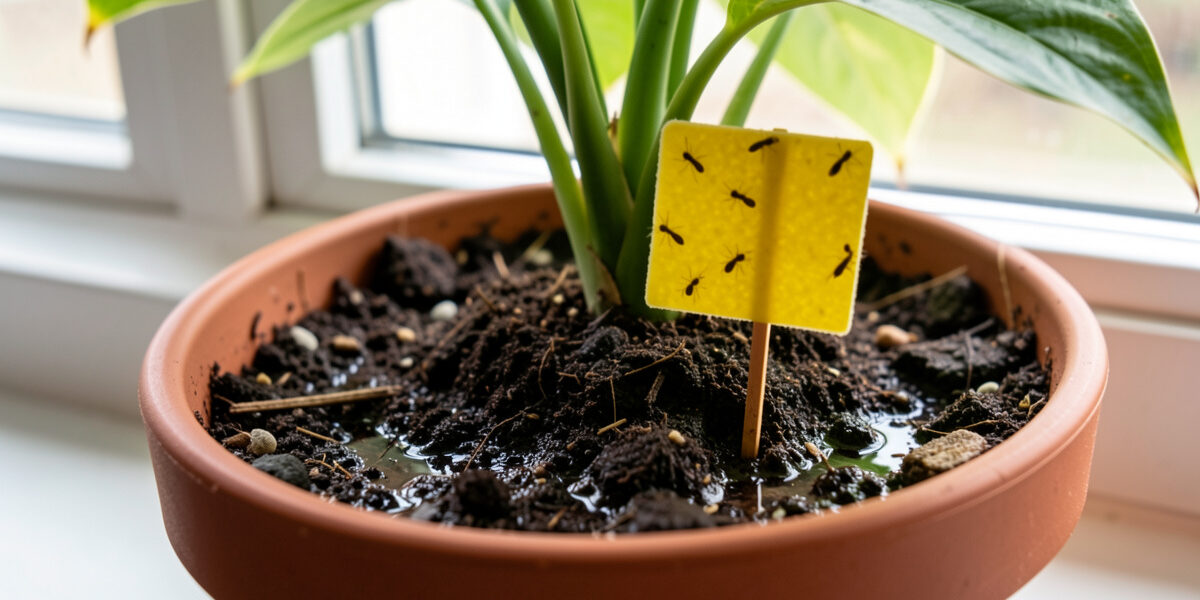
Fungus gnats are tiny black flies in the Sciaridae family that complete their entire life cycle in overwatered potting soil. Adults are barely 1/8 inch long with dark eyes, long legs, and a characteristic Y-shaped wing vein pattern that distinguishes them from fruit flies and drain flies. They don’t bite, but their larvae feed on root hairs, fungi, and decaying organic matter in the top 2–3 inches of soil — which is exactly where the damage happens.
The reason they show up in apartment setups is almost always the same: soil that stays wet too long. Under my grow lights, the combination of warm temperatures and consistently moist potting mix creates a perfect gnat nursery. Bagged potting mixes containing peat moss or composted bark frequently arrive with eggs already present. I’ve opened fresh bags of potting mix and found adults flying out within days of watering — the eggs were already in the bag. For a deeper dive into identifying the pest correctly, see the fungus gnats vs fruit flies identification guide.
Fungus Gnat Life Cycle: How Fast Do They Reproduce?
A single female fungus gnat lays 100–300 eggs over her 7–10 day adult lifespan, depositing them in the top inch of moist soil. Eggs hatch in 4–6 days into translucent white larvae with black head capsules — these are the root-feeding stage that causes the damage. Larvae feed for 12–14 days before pupating in the soil for another 4–6 days, emerging as adults to restart the cycle. The full generation takes roughly 3–4 weeks under typical indoor temperatures of 70–75°F.
What makes control difficult is the overlap. In one pot you can have eggs, larvae, pupae, and adults simultaneously — which is why treatments that only target one stage fail. Under my microgreen lights, a population that started as two adults hovering near a tray became thousands within three weeks because I was only using sticky traps and ignoring the larvae. The sticky traps caught hundreds of adults, but eggs kept hatching underneath.
Overwatering is the accelerator. Soil that stays saturated between waterings supports the fungal growth larvae eat. The same potting mix that’s perfect for germinating seeds — high in compost and organic matter — is also perfect for gnat larvae. I’ve learned to let my microgreen and seedling trays dry at the surface between waterings even when it feels counterintuitive, because a dry top inch breaks the egg-laying chain.
How to Tell Fungus Gnats From Fruit Flies (Quick Visual Check)
Hold still and watch where the insect lands. Fungus gnats hover near and land on potting soil. Fruit flies land on produce, compost bins, or anything sweet. That one behavior difference identifies them correctly more than 95% of the time without magnification. Under a lens, fungus gnats have long dangling legs, dark bodies, and translucent wings with that Y-shaped vein pattern — they look like miniature mosquitoes. Fruit flies are stockier with red eyes and rounder bodies.
Shore flies are a third lookalike common in greenhouses and grow rooms. They have shorter antennae and a heavier, dark body — they’re associated with algae growth on wet surfaces, not plant roots. The practical difference is treatment: fruit fly problems need a different approach (cleaning drains and removing rotting produce), while shore flies indicate excess standing water or algae. For a complete side-by-side breakdown, see the fungus gnats vs fruit flies guide.
To confirm larvae are present, scrape back the top inch of soil from a suspected pot and look with a bright light. The larvae — tiny white maggots with distinct black heads — writhe when exposed. If you’re seeing adults AND finding larvae, that’s an active breeding infestation, not just a few hitchhikers.
How to Prevent Fungus Gnats Before They Start
University extension programs, including the UC Statewide IPM Program (UC IPM) guidelines, recommend integrated control combining cultural methods (drying soil, bottom watering), physical barriers (sand/DE caps), and biological controls (Bti, nematodes) as the standard protocol for fungus gnat management in container plants — the same layered approach this guide covers.
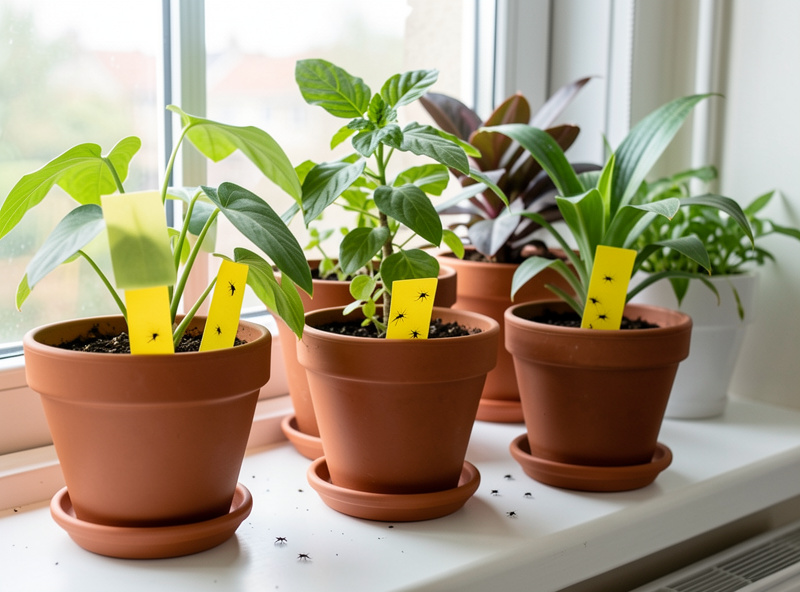
The single most effective prevention is letting the soil surface dry 2–3 inches deep between waterings. In my indoor setup, that means watering every 5–7 days for most houseplants in 6-inch pots, and every 2–3 days for the microgreen trays once they’re past the blackout period. Bottom watering — setting pots in a tray of water and letting them wick moisture up through drainage holes — keeps the soil surface bone-dry while roots get what they need. I use this method on all my houseplants and it eliminated about 70% of my gnat problems before I added any other control.
Start with sterile potting mix — not garden soil, not reused potting mix from infested pots. I’ve had good results with sterile potting mixes that specifically state they’re pasteurized. Let bagged mix dry out completely before use if it’s been sitting; a sealed bag retains enough moisture for eggs to survive for weeks. Store unused soil in sealed containers, not the opened bag.
A 1-inch layer of coarse horticultural sand, perlite, or fine poultry grit on the soil surface creates a physical barrier adult females can’t penetrate to lay eggs. The gritty texture also prevents larvae from reaching the surface to pupate. This is the simplest fix I know: it costs under $5 per plant, takes 30 seconds to apply, and works immediately. For the full protocol, see the sand on soil for gnats barrier guide.
Quarantine every new plant for 2–3 weeks before it joins your collection. I keep new arrivals on a separate shelf in the kitchen until I’m sure they’re clean. One infested plant from a big-box store can seed gnats into 20 healthy plants within a week. Check the soil surface of every new plant with a flashlight twice during quarantine — once in early morning when adults are most active.
7 Proven Methods to Kill Fungus Gnats (Comparison Table)
No single method eliminates fungus gnats alone because the life stages live in different zones. The most effective protocol combines at least three methods that target adults, larvae, and eggs simultaneously. Here is how each method compares when I’ve tested them side by side in my own setup:
| Method | Targets | Speed | Cost | Best For | Limitation |
|---|---|---|---|---|---|
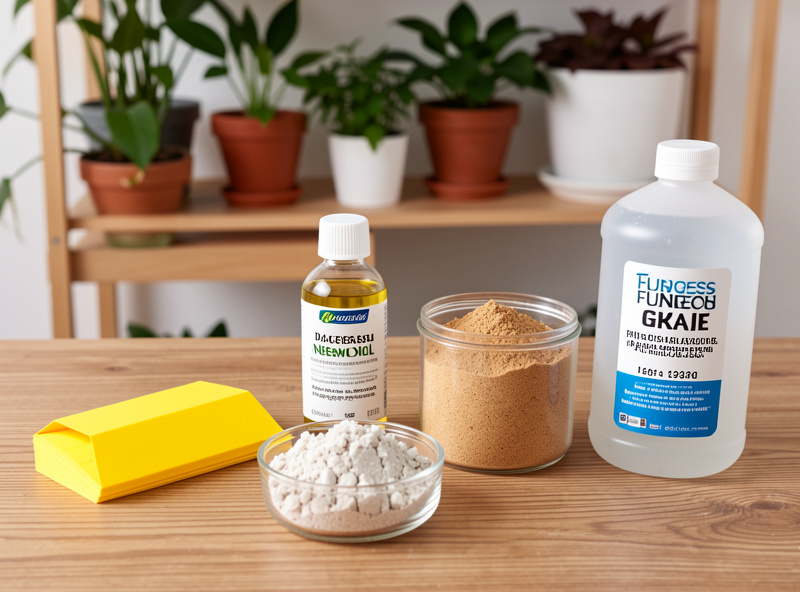
| Hydrogen Peroxide Drench (1:4) | Larvae, eggs | Immediate (kills on contact) | $2–4 | Active infestation — first strike | Does not affect adults; repeat every 5–7 days |
| Yellow Sticky Traps | Adults | 1–2 days to see reduction | $6–12 per pack | Monitoring + adult knockdown | Zero effect on larvae; must pair with soil treatment |
| Bti (Mosquito Bits/Dunks) | Larvae | 3–5 days | $10–15 | Ongoing prevention; large collections | Needs reapplication every 5–7 days; breaks down in soil |
| Beneficial Nematodes (S. feltiae) | Larvae | 48–72 hours | $15–25 | Heavy infestations; greenhouse scale | Requires moist soil; refrigerate before use; live product |
| Neem Oil Soil Drench | Larvae, eggs, fungi | 1–2 weeks | $8–15 | Organic, multi-purpose | Slower action; can smell; avoid on stressed plants |
| 1-inch Sand/Cover Barrier | Egg-laying, larvae emergence | Immediate physical block | $4–8 per bag | Prevention on all pots | Does not kill existing larvae below; must pair with drench |
| Cinnamon Powder (ground) | Fungi (larval food source) | 1–2 weeks | $2–4 | Mild cases; seedlings | Indirect — starves larvae, doesn’t kill them directly |
| Diatomaceous Earth (food grade) | Larvae, emerging adults | 2–4 days | $6–10 | Dry-soil plants (succulents) | Ineffective when wet; must reapply after watering |
The Multi-Pronged Elimination Protocol (What I Actually Do)
When I find gnats in my indoor setup — which still happens occasionally, usually after bringing home a new plant or starting a fresh batch of microgreens — I run the same protocol every time. It kills active infestations in about one week and prevents rebound:
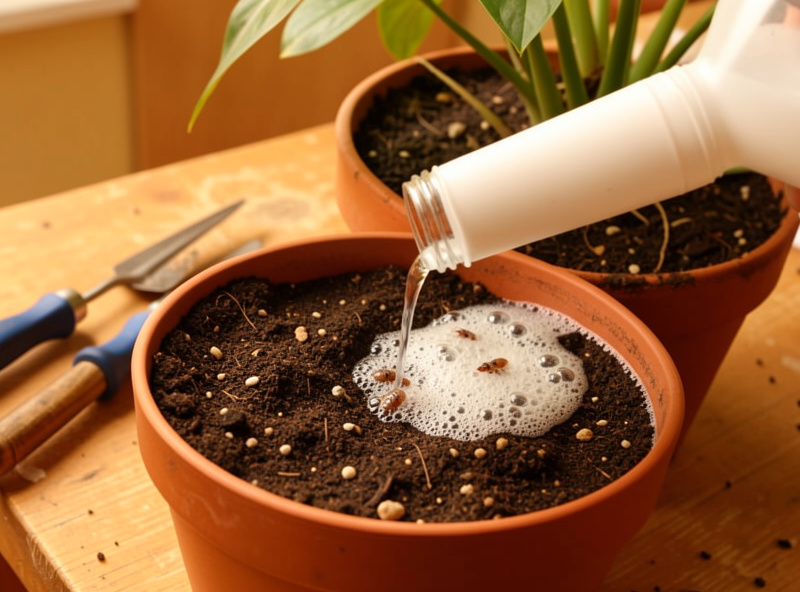
Day 1: Stop watering. Let the top 2–3 inches of soil go bone-dry in every pot. Deploy yellow sticky traps horizontally at soil level in every pot showing adult activity. Mix 1 part 3% hydrogen peroxide with 4 parts water and drench all infested pots until liquid drains from the bottom — the fizzing sound is larvae dying on contact.
Day 3: If using Bti (I keep Mosquito Bits in my supply cabinet for this), soak 1 tablespoon per gallon of water for 30 minutes, strain, and water plants normally with the Bti-infused water. Bti bacteria kill larvae when ingested but won’t harm plants or people.
Day 5: Apply a 1-inch cap of coarse horticultural sand to the soil surface of each treated pot. This blocks remaining adults from laying new eggs and prevents any surviving larvae from reaching the surface. Replace sticky traps if they’re covered.
Day 7: Repeat the hydrogen peroxide drench if you’re still seeing larvae. By now adult numbers on sticky traps should be dropping sharply. If they’re not, add beneficial nematodes as a soil drench — they penetrate larvae that Bti misses.
Days 14–21: Continue monitoring with fresh sticky traps. Water only when soil is dry 2 inches deep. The sand barrier stays in place permanently on my most vulnerable plants — I don’t remove it. For more peroxide application details, read the hydrogen peroxide for fungus gnats treatment guide.
Treating Severe Infestations: When Nothing Else Works
If you’ve been fighting gnats for months and they keep coming back, the problem is usually deeper than the top inch of soil. I had one infestation in my indoor strawberry rig that survived three rounds of peroxide drench — turned out the potting mix itself was the problem. It was a cheap bagged mix heavy on uncomposted bark that stayed soggy at the root zone even when the surface felt dry. I repotted everything into a faster-draining mix (roughly 40% coco coir, 30% perlite, 30% compost) and the gnats were gone within days.
For severe cases, combine beneficial nematodes (Steinernema feltiae) with Bti at the same time. The nematodes actively hunt larvae through the soil while Bti bacteria kill them through ingestion — two different kill mechanisms on the same target. Apply nematodes as a soil drench according to package instructions, keep soil moist for 3–4 days after application so they survive, then add Bti to your next watering. I’ve used S. feltiae nematodes on my worst tray infestations and they cleared larvae within 48 hours where Bti alone couldn’t keep up.
Sometimes the right call is to sacrifice the most heavily infested plants to save the collection. If a plant has larvae throughout the entire root ball and the plant is already declining, repotting it in fresh sterile soil is faster and cheaper than treating it through multiple cycles. I’ve learned not to be precious about a $5 plant that’s seeding gnats into a $500 grow-light setup.
Fungus Gnats in Seedlings, Microgreens, and Indoor Grow Setups
Seedling trays and microgreen flats are gnat magnets because they require consistently moist soil during the germination window. Under my LED bar, a 10×20 tray of pea shoots at day 3 is basically a fungus gnat resort — warm, wet, and packed with organic matter. I treat seedling trays differently than established houseplants because the plants are too fragile for harsh drenches.
For seedlings: use sterile seed-starting mix (not potting soil), bottom-water from day one, and cap the surface with a very thin layer of vermiculite — enough to cover the soil but not enough to block germination. If gnats appear, let the surface dry as much as the seedlings can tolerate and sprinkle food-grade diatomaceous earth on the soil surface. DE’s microscopic sharp edges shred larvae and adults on contact, but it must stay dry to work — reapply after every watering.
For microgreens: I run humidity domes during the blackout period (days 1–4) and that trapped humidity is gnat heaven. The fix is simple — remove domes the moment seeds germinate, add a small fan for air circulation over the trays, and place one yellow sticky trap per tray. For the full cinnamon protocol that works particularly well on seedling setups, see the cinnamon for fungus gnats guide.
My indoor strawberry rig taught me a specific lesson: gnat pressure increases dramatically in setups that combine grow lights, warm temperatures, and plants that want consistent moisture. Everbearing strawberries in vertical stacked pots under 14-hour LED cycles never get the soil-surface dry-down that a windowsill pothos gets. The solution for high-moisture setups is permanent preventive layers — sand barriers stay on permanently, Bti goes into every third watering as a maintenance dose, and sticky traps are rotated monthly.
Organic and Natural Control Options I’ve Actually Tested
I’ve run neem oil, cinnamon, and hydrogen peroxide side by side to see what actually works in a real apartment setup. Neem oil as a soil drench works — azadirachtin disrupts larval feeding and molting — but it takes 1–2 weeks to see results and the smell lingers. Cold-pressed neem oil concentrate mixed at 1 teaspoon per quart of water with a few drops of castile soap as emulsifier makes an effective drench. I use it as a follow-up treatment after the initial peroxide strike, not as the first line. For full neem protocol details, see the neem oil for fungus gnats treatment guide.
Cinnamon works differently than most people think. Ground cinnamon doesn’t kill gnats — it kills the fungi in the soil that larvae feed on. Sprinkle it on the soil surface, work it into the top inch, and over 1–2 weeks the fungal food source diminishes enough that larvae starve. It’s gentle enough for seedlings and I keep a jar of plain ground cinnamon (the cheap bulk kind, not the fancy baking spice) in my plant toolkit for mild early infestations.
Apple cider vinegar traps with a drop of dish soap catch adult gnats and fruit flies alike, but they address roughly 10% of an infestation — the adults you can see. Useful as a monitoring tool to confirm activity, but they’re not a treatment. I keep one ACV trap near my plant shelf as an early-warning system, not a control method.
For those who prefer the DIY route, my complete guide covering DIY fungus gnat traps walks through step-by-step construction for every trap type.
Long-Term Prevention: Keeping Gnats Gone for Good
Once the infestation is cleared, prevention comes down to three habits I’ve baked into my weekly plant care routine. First, the finger test before every watering: if the top 2 inches of soil feel damp, the plant doesn’t get water. Second, I check the yellow sticky traps on my plant shelf every Sunday — a sudden spike in adult counts tells me something changed (new plant, overwatering, broken sand barrier) before I see damage. Third, Bti goes into the watering can once a month as a maintenance dose for all plants in the grow-light zone.
Air circulation makes a bigger difference than most people realize. A small USB fan running 8 hours a day over my microgreen shelf dries the soil surface faster and makes it harder for weak-flying adults to settle and lay eggs. Combined with bottom watering, it reduced my gnat pressure to near zero on plants that used to need monthly treatment.
For the complete houseplant-specific approach — including which species are most vulnerable and how to adapt treatment for different pot sizes — see the fungus gnats in houseplants guide. That article covers the identification and treatment differences between small pots, large floor plants, and humidity-loving species like ferns and calatheas that can’t tolerate the dry-down method.
Common Mistakes I’ve Made Fighting Fungus Gnats
I’ve made every mistake in the book, starting with thinking sticky traps alone would solve the problem. For three weeks I swapped fresh yellow traps every few days, catching hundreds of adults, while the larvae population underneath tripled because the soil stayed wet the whole time. Sticky traps are a monitoring tool first and a control tool second — they show you how bad the infestation is, but they cannot break the breeding cycle by themselves.
Another mistake: using hydrogen peroxide at full 3% strength without dilution. I burned the roots off a tray of basil seedlings doing this — the plants wilted within 24 hours and never recovered. Always mix at 1:4 (one part peroxide, four parts water). The fizzing should be gentle, not aggressive.
The third mistake I see a lot — and I did this too — is treating one plant while ignoring the ones next to it. Fungus gnats are weak fliers, but they can hop from pot to pot easily. If you have five plants on a shelf and only treat the one with visible adults, you’re treating 20% of the problem. Every plant within a 6-foot radius of an infested pot gets the same treatment. For the full nematode protocol on large collections, check the houseplant fungus gnat elimination guide.
Which Plants and Setups Attract Fungus Gnats Most
After years of running everything from succulents to microgreens indoors, I can predict which pots will get gnats before the first adult ever shows up. The rule is simple: the wetter and more organic the mix, and the longer it stays damp, the higher the risk. Moisture-loving foliage plants that want a consistently damp root zone — ferns, calatheas, peace lilies, and most tropical aroids — are the repeat offenders, because the care they need is exactly the condition gnat larvae thrive in. Seed trays and microgreen flats are worse still, since they must stay moist through germination. At the opposite end, succulents, cacti, and anything I let dry hard between waterings almost never get them; the top inch is bone dry long enough to break the egg-laying chain on its own.
Container and mix choices matter just as much as the plant. A peaty, compost-heavy mix that holds water at the surface is a gnat magnet; a fast-draining blend with plenty of perlite and a gritty top layer is not. Deep pots that stay wet at depth, saucers left full of standing water, and self-watering planters run too wet all tilt the odds toward an infestation. The single biggest lever, across every plant I grow, is still whether the surface inch dries out between waterings — get that right and even the vulnerable species stay clean.
A Weekly Monitoring Routine That Catches Problems Early
The composters and growers who never get overrun are not lucky — they catch infestations at two adults instead of two hundred. My routine takes about five minutes on the same day each week. First, I check every yellow sticky trap on the plant shelf: a jump from a stray gnat or two to a dozen tells me something changed — a new plant, an overwatered pot, a sand barrier that got disturbed — before I ever see damage. Second, I do the finger test on each pot and only water the ones whose top two inches have gone dry. Third, on any pot that has caught adults, I scrape back the surface with a chopstick and look for the tiny black-headed larvae under a bright light.
That early-warning habit is what turns fungus gnat control from a recurring crisis into a non-event. A single infested plant caught in week one is a thirty-second sand cap and a peroxide drench; the same plant ignored for a month is a shelf-wide breeding operation that takes three weeks of layered treatment to clear. The monitoring is boring, which is exactly why it works — it forces you to act while the numbers are still small enough that a single control does the whole job.
Fungus Gnat Control Through a Nordic Winter
Fungus gnats are the most persistent houseplant pest I deal with through a Nordic winter, because the dry indoor air from radiators draws them to the only consistent source of moisture in the apartment: the potting soil. From November through February, when everything on the balcony is frozen and all my growing has moved indoors under the bar, the gnats concentrate on whatever is being watered. A yellow sticky trap at soil level in each pot catches the adult fliers within days, and the larvae are controlled by letting the top inch of soil dry completely between waterings. The combination of sticky traps and dry-down periods clears an infestation in two to three weeks without a single spray or drench.
The winter twist is that low light slows plant growth, so pots use less water and stay damp longer than they would in summer — exactly the condition gnats want. I compensate by watering less often and by leaning harder on bottom watering so the surface inch stays dry even when the root zone is moist. A small fan run over the indoor shelf a few hours a day does more than it looks like it should: it dries the surface faster and makes it harder for weak-flying adults to settle and lay. Through the darkest months, that combination of restraint and airflow is what keeps a windowsill jungle from turning into a gnat nursery.
Frequently Asked Questions
How long does it take to eliminate fungus gnats?
With consistent treatment, most infestations can be controlled within 2-3 weeks. Complete elimination requires 4-6 weeks to ensure all life stages are addressed and no eggs remain to hatch. Persistence is essential, as the rapid life cycle means populations can rebound quickly if treatment lapses.
Can fungus gnats damage my plants?
Yes, while adults are merely nuisance pests, larvae feed on plant roots and can cause significant damage, particularly to seedlings and young plants. Severe infestations stunt growth, cause yellowing, and can kill vulnerable plants. Established plants usually tolerate light infestations but suffer under heavy larval pressure.
Are fungus gnats the same as fruit flies?
No, though they are often confused. Fungus gnats are attracted to moist soil and fungi, while fruit flies are attracted to decaying fruit and sweet substances. Fungus gnats have dark eyes and slender bodies, while fruit flies have red eyes and rounder bodies.
What is the fastest way to get rid of fungus gnats?
The fastest elimination combines multiple approaches simultaneously: allow soil to dry completely, apply hydrogen peroxide soil drench to kill larvae immediately, deploy yellow sticky traps to capture adults, and apply beneficial nematodes or Bti for ongoing larval control. This multi-pronged attack addresses all life stages at once.
Can I prevent fungus gnats entirely?
While complete prevention is difficult, you can minimize risk significantly through proper watering practices, using sterile potting mix, quarantining new plants, and maintaining barriers like sand layers on soil surfaces. Prevention is far easier than elimination, making these practices well worth the effort.
Do home remedies work for fungus gnats?
Many home remedies provide partial control. Vinegar traps catch some adults but do not affect larvae. Apple cider vinegar with dish soap catches both gnats and fruit flies. Hydrogen peroxide drenches and cinnamon applications are among the most effective DIY treatments.
Related Articles
- Fungus Gnats vs Fruit Flies: Identification and Difference Guide
- Hydrogen Peroxide for Fungus Gnats: Treatment Guide
- DIY Fungus Gnat Traps: Homemade Solutions That Work
- Neem Oil for Fungus Gnats: Natural Treatment Guide
- Sand on Soil for Gnats: Barrier Method Guide
- Fungus Gnats in Houseplants: Complete Identification and Elimination Guide