Why Hydrogen Peroxide Works Against Fungus Gnats
Hydrogen peroxide is one part of a complete strategy. See our full fungus gnat elimination guide for all methods.
For a complete overview of all fungus gnat identification and treatment methods, see our complete fungus gnat guide.
Hydrogen peroxide has emerged as one of the most effective, affordable, and environmentally friendly treatments for fungus gnat infestations in houseplants. This common household chemical, typically found in medicine cabinets at 3% concentration, offers a powerful weapon against the soil-dwelling larvae that actually cause plant damage, while being completely safe for plants, pets, and humans when used properly.
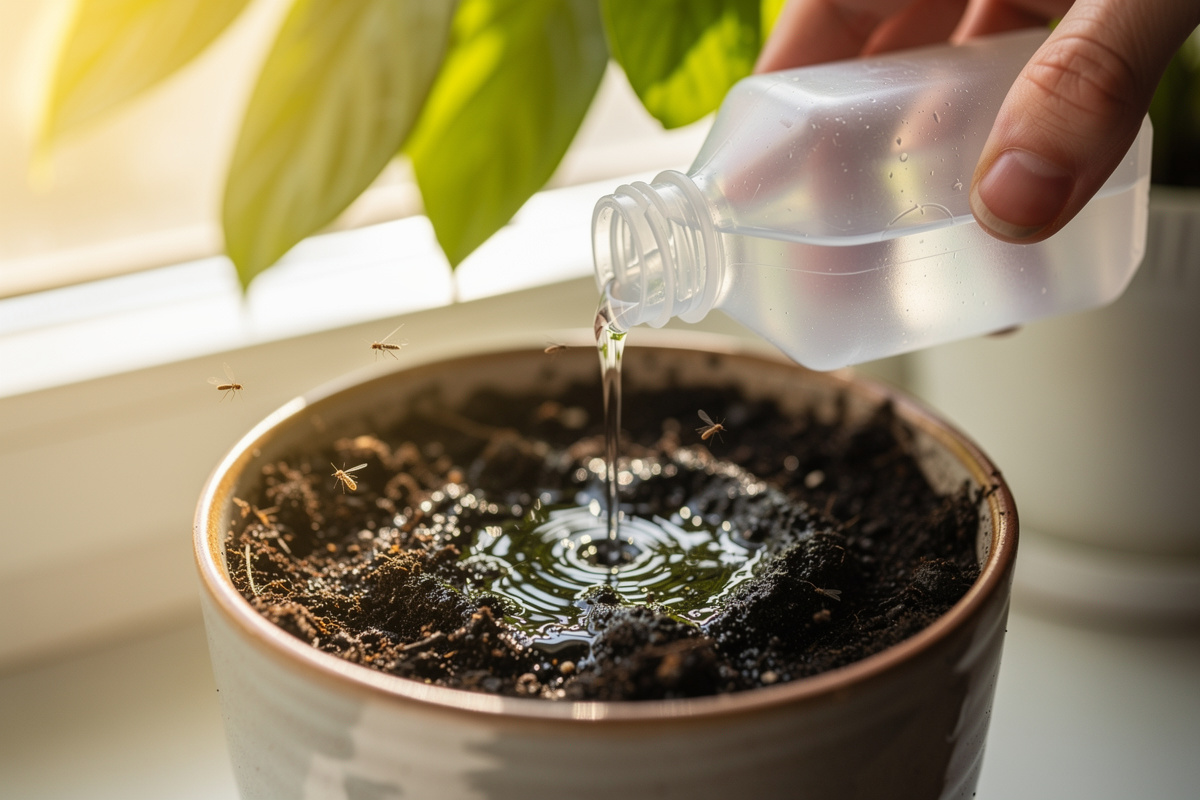
The effectiveness of hydrogen peroxide against fungus gnats lies in its dual action: it kills larvae on contact through oxidation while simultaneously adding oxygen to the soil. When the liquid comes into contact with organic matter, it breaks down rapidly, releasing oxygen in a visible fizzing reaction that both kills pests and aerates soil. This oxygenation benefits plant root health while eliminating the larvae that damage those roots.
How Hydrogen Peroxide Kills Fungus Gnat Larvae
The Science of Oxidation
Hydrogen peroxide (H2O2) is a powerful oxidizing agent that works by destroying the cellular structure of soft-bodied insects like fungus gnat larvae. When the solution contacts larvae, the oxidation process damages their external membranes and internal tissues, killing them within minutes of contact. This physical mode of action means pests cannot develop resistance, unlike chemical insecticides where resistance is increasingly common.
The oxidation reaction is visible as fizzing and bubbling when hydrogen peroxide contacts soil organic matter. This is not just a visual indicator of the chemical working; it is the actual chemical reaction releasing oxygen and creating the oxidative environment lethal to larvae. The more fizzing you observe, the more organic matter and potential larvae are being affected.
Oxygenation Benefits
Beyond killing pests, hydrogen peroxide oxygenates soil as it breaks down into water (H2O) and oxygen (O2). This oxygen release creates aerobic conditions in the root zone, beneficial for plant health. Many cases of root rot and poor plant performance stem from anaerobic (oxygen-depleted) soil conditions that hydrogen peroxide treatment helps correct.
The additional oxygen stimulates root respiration and nutrient uptake, potentially improving plant vigor even beyond pest elimination. This dual benefit, pest control plus soil health improvement, makes hydrogen peroxide uniquely valuable among treatment options.
Speed of Action
Hydrogen peroxide works immediately upon contact, unlike biological controls or some chemical treatments that require ingestion or extended exposure. The instant oxidation means larvae are killed during the application process, providing immediate reduction in the damaging population. This rapid action is particularly valuable for severe infestations where plant health is deteriorating quickly.
While adults in flight are not directly affected by soil drenches, killing larvae interrupts the life cycle, preventing the next generation from developing. Combined with yellow sticky traps for adult capture, hydrogen peroxide treatment breaks the reproduction cycle within a single generation.
Preparing and Applying Hydrogen Peroxide
After killing larvae with peroxide, prevent reinfestation with sand on soil surface to block new egg-laying.
Choosing the Right Concentration
Standard 3% hydrogen peroxide, available at any pharmacy or grocery store, is the ideal concentration for houseplant treatment. Higher concentrations (10% or 35% food grade) are available but must be diluted significantly before use and are unnecessary for gnat control. The 3% solution is effective, safe, and economical for this application.
Avoid using “stabilized” hydrogen peroxide products containing additives, perfumes, or other ingredients. Pure 3% hydrogen peroxide is all that is needed. Check expiration dates; while hydrogen peroxide does not spoil, it loses potency over time as it naturally decomposes into water and oxygen. Fresh product provides best results.
Mixing the Solution
The standard mixing ratio for fungus gnat treatment is 1 part 3% hydrogen peroxide to 4 parts water. This creates a 0.6% solution that is highly effective against larvae while being completely safe for plants. For severe infestations, some gardeners use a stronger 1:3 ratio (0.75%), but the standard 1:4 dilution works well for most situations.
Use room-temperature water for mixing. Cold water can slow the chemical reaction, while hot water accelerates decomposition before application. Mix fresh solution for each treatment rather than storing mixed product, as hydrogen peroxide begins breaking down immediately when diluted.
Example measurements for common application volumes:
- 1 cup water + 1/4 cup hydrogen peroxide = 1.25 cups treatment solution
- 1 quart water + 1 cup hydrogen peroxide = 5 cups treatment solution
- 1 gallon water + 1 quart hydrogen peroxide = 5 gallons treatment solution
Application Method
Apply the hydrogen peroxide solution as a soil drench, pouring it directly onto the soil surface until liquid begins draining from the bottom of the pot. This ensures the solution penetrates the entire soil profile where larvae live, reaching pests in the top 2-3 inches of soil where they are most concentrated.
Use enough solution to saturate the soil completely. For a 6-inch pot, this typically requires 2-3 cups of solution. Larger pots need proportionally more. The goal is thorough saturation, not just surface wetting. You should see the solution draining from the pot bottom, carrying away dead larvae and oxygenating the root zone.
What to Expect During Application
Upon application, you will immediately observe fizzing and bubbling as the hydrogen peroxide contacts soil organic matter and any larvae present. This reaction indicates the chemical is working. The fizzing may continue for several minutes as the hydrogen peroxide penetrates soil and reacts with organic material throughout the root zone.
A slight chemical smell is normal during application but dissipates quickly as the hydrogen peroxide breaks down. The solution may foam slightly on the soil surface. Some gardeners report seeing dead larvae brought to the surface by the fizzing action, though this is not always visible.
Treatment Schedule and Frequency
Monitor treatment effectiveness with DIY sticky traps placed near affected plants.
Initial Treatment Application
Apply the hydrogen peroxide drench to all infested plants as soon as you identify a gnat problem. Do not wait for the infestation to worsen; early treatment prevents population explosion and plant damage. Treat every plant showing gnat activity, even if only a few adults are visible, as this indicates larvae are present in soil.
Water plants normally the day before treatment so soil is moderately moist but not saturated. This ensures the hydrogen peroxide penetrates effectively without being diluted by excess existing moisture. Allow the top inch of soil to remain slightly dry as this is where larvae concentrate.
Follow-up Treatments
Repeat hydrogen peroxide treatments every 5-7 days for a total of 3-4 applications. This schedule targets newly hatched larvae from eggs that survived initial treatment or were laid after the first application. Because the chemical breaks down quickly, it provides no residual protection, making repeated applications essential for complete elimination.
The treatment schedule aligns with the fungus gnat life cycle. Eggs hatch in 4-6 days, so weekly treatments catch each new generation before they can mature and reproduce. Continue treatments for at least two weeks after you stop seeing adult gnats to ensure complete elimination of all life stages.
Combining with Other Control Methods
For maximum effectiveness, combine hydrogen peroxide treatments with yellow sticky traps to capture adult gnats. While hydrogen peroxide kills larvae, it does not affect flying adults. The traps reduce the adult population and prevent egg-laying while the soil treatments eliminate larvae. This dual approach breaks the life cycle more quickly than either method alone.
Consider adding a 1-inch layer of coarse sand or diatomaceous earth to the soil surface after the final hydrogen peroxide treatment. This physical barrier prevents new adults from accessing soil to lay eggs, protecting against reinfestation while plants recover.
For comprehensive integrated pest management strategies, see our guide on how to get rid of fungus gnats.
Safety Considerations and Precautions
Plant Safety
Hydrogen peroxide at 3% concentration diluted 1:4 is completely safe for virtually all houseplants when applied as directed. The solution breaks down into water and oxygen within minutes, leaving no harmful residues. Even sensitive plants like ferns, African violets, and orchids tolerate this treatment well.
Avoid applying to extremely dry, water-stressed plants, as the oxidation reaction can stress already compromised tissues. Water plants normally 24 hours before treatment. Similarly, avoid treating plants suffering from root rot or other serious health issues until underlying problems are addressed.
Some gardeners report that repeated applications in quick succession can cause minor leaf tip burn on sensitive plants. If you observe any plant stress, increase the interval between treatments to 10-14 days or dilute the solution slightly more (1:5 ratio).
Human and Pet Safety
Standard 3% hydrogen peroxide is safe for household use and presents minimal risk when applied to plants. Avoid contact with eyes, and wash hands after handling. The chemical can cause temporary skin bleaching (whitening) if spilled on skin, but this is harmless and resolves within hours.
Pets may be curious about the fizzing reaction during application. Keep pets away from treated plants until the fizzing subsides and the solution has drained through (usually 30-60 minutes). Once drained, treated plants pose no risk to pets or children.
Environmental Safety
Hydrogen peroxide is environmentally benign, breaking down into pure water and oxygen with no toxic residues. Unlike chemical insecticides that persist in soil and potentially harm beneficial organisms, hydrogen peroxide provides targeted pest control without environmental persistence. Excess solution draining from pots is harmless to surrounding surfaces, though it may bleach fabrics or discolor wood if spilled in concentrated form.
Advantages Over Alternative Treatments
For a more organic approach, neem oil soil drench provides similar larval control with natural ingredients.
Compared to Chemical Insecticides
Hydrogen peroxide offers several advantages over synthetic chemical insecticides for gnat control. It is immediately effective rather than requiring ingestion or extended contact time. It leaves no toxic residues that could affect pets, children, or beneficial insects. Pests cannot develop resistance to its physical oxidation mode of action. It is significantly less expensive than commercial insecticides.
Chemical alternatives like pyrethrins or systemic insecticides may provide longer residual protection but at the cost of potential toxicity and environmental concerns. Hydrogen peroxide provides immediate, targeted action without these drawbacks, making it ideal for indoor use on houseplants.
Compared to Biological Controls
While beneficial nematodes and Bacillus thuringiensis (Bti) are excellent biological controls, hydrogen peroxide offers immediate results that biological methods cannot match. Nematodes and Bti require time to establish and work through the system, while hydrogen peroxide kills larvae during the application process. The chemical also provides soil oxygenation benefits that biological controls do not offer.
However, biological controls provide ongoing protection as long as conditions support the beneficial organisms, while hydrogen peroxide requires repeated applications. Many gardeners use both approaches: hydrogen peroxide for immediate knockdown of heavy infestations, followed by biological controls for ongoing management.
For more information on biological control options, see our guides on neem oil for fungus gnats and other natural treatments.
Compared to Physical Barriers
Sand barriers and diatomaceous earth provide physical prevention but do not eliminate existing infestations. Hydrogen peroxide actively kills larvae already present in soil, making it essential for treating active problems rather than just preventing new ones. However, combining hydrogen peroxide treatment with subsequent barrier application provides both immediate elimination and long-term prevention.
For detailed barrier techniques, see our guide on sand on soil for gnats prevention.
Troubleshooting and Problem Solving
Treatment Not Working
If hydrogen peroxide treatments do not seem effective, first verify you are using fresh 3% concentration and correct dilution (1:4 ratio). Old hydrogen peroxide that has been open for months may have lost potency. Ensure you are applying enough solution to thoroughly saturate soil, not just wetting the surface.
Check whether you are treating frequently enough. Single applications rarely eliminate established infestations due to overlapping generations. Continue weekly treatments for at least 3-4 weeks even if you see improvement, to catch hatching eggs from subsequent generations.
Verify that you actually have fungus gnats rather than a different pest. If flies persist despite treatment, you may have fruit flies or shore flies requiring different control strategies. See our guide on fungus gnats vs fruit flies for proper identification.
Plant Stress After Treatment
Minor leaf yellowing or temporary wilting immediately after treatment is normal and resolves within 24-48 hours as plants adjust. If plants show continued stress, dilute the solution further (1:5 or 1:6 ratio) and increase the interval between treatments to 10-14 days. Ensure plants are otherwise healthy and not suffering from overwatering, nutrient deficiency, or disease.
Persistent Infestations
For infestations that persist despite proper hydrogen peroxide treatment, consider whether you are addressing all potential breeding sites. Check that drainage trays are emptied promptly, saucers do not hold standing water, and any decorative outer pots allow proper drainage. Examine less obvious locations like self-watering containers, cache pots, or plant stands where moisture accumulates.
Severe, widespread infestations may require discarding heavily infested plants that serve as reservoirs reinfecting treated specimens. Sometimes starting fresh with new soil and treated plants is more effective than trying to salvage severely infested collections.
Integration with Other Remedies
Cinnamon Combination
Cinnamon powder works as a natural fungicide, eliminating the fungal growth that feeds gnat larvae. Combining hydrogen peroxide treatments with subsequent cinnamon application addresses both the larvae and their food source. Apply hydrogen peroxide first to kill existing larvae, then once soil dries slightly, work cinnamon into the top inch of soil to suppress fungi.
For detailed cinnamon application techniques, see our guide on cinnamon for fungus gnats.
Systemic Treatment Integration
For valuable plants with severe infestations, consider combining hydrogen peroxide with systemic insecticide treatments. Apply hydrogen peroxide first to provide immediate larval reduction, then apply systemic insecticide according to label directions for ongoing protection. The hydrogen peroxide provides immediate relief while the systemic establishes for long-term control.
Will hydrogen peroxide hurt my plants?
No, when properly diluted (1 part 3% hydrogen peroxide to 4 parts water), the solution is safe for virtually all houseplants. It breaks down into water and oxygen within minutes, leaving no harmful residues.
How often should I apply hydrogen peroxide for fungus gnats?
Apply every 5-7 days for a total of 3-4 treatments to catch all life stages. This schedule aligns with the gnat life cycle, targeting newly hatched larvae before they can mature and reproduce.
Can I use hydrogen peroxide as a preventive treatment?
While hydrogen peroxide is excellent for treating active infestations, it provides no residual protection, making it impractical for ongoing prevention. For prevention, focus on proper watering and physical barriers like sand layers.
What concentration of hydrogen peroxide should I use?
Use standard 3% hydrogen peroxide available at pharmacies. Mix 1 part hydrogen peroxide with 4 parts water for a 0.6% solution that effectively kills larvae while being safe for plants.
How do I know if the treatment is working?
Visible fizzing during application indicates the chemical is reacting with organic matter and larvae. You should see reduced adult gnat activity within a few days. Complete elimination typically requires 2-3 weeks of consistent treatment.
Can I use hydrogen peroxide with other treatments?
Yes, hydrogen peroxide integrates well with other control methods. Combine with yellow sticky traps for adults, beneficial nematodes or Bti for biological control. Avoid mixing directly with other chemicals in the same application.