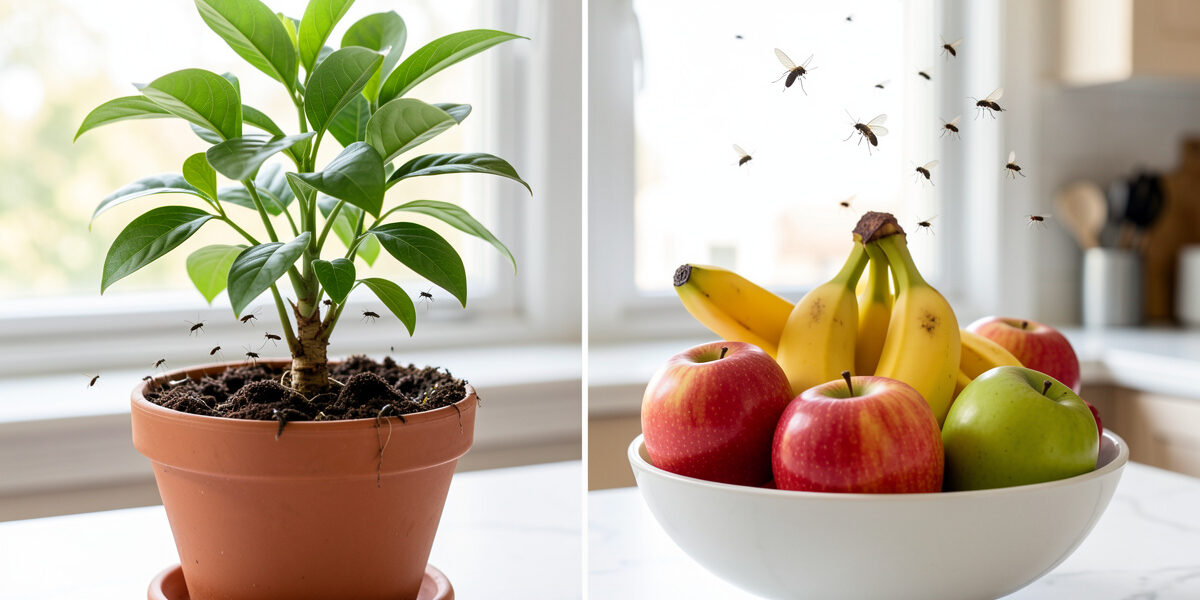
Fungus gnats and fruit flies are the two pests I get asked about most by other apartment growers — and mixing them up means you waste weeks on the wrong treatment. The fastest field check is eye color: fruit flies have bright red eyes, while fungus gnats have dark eyes that blend into their black bodies. If the insect is hovering above wet potting soil, it’s almost certainly a fungus gnat. If it’s circling a fruit bowl or the compost bin, it’s a fruit fly. Get this wrong and you’ll be spraying neem oil on rotten bananas while gnat larvae keep hatching from your plant pots.
I learned this the hard way in my own setup. When I first started growing microgreens under my LED bar, I assumed every tiny fly near the kitchen was the same pest. I spent two weeks cleaning drains and throwing out fruit — zero impact on the swarm hovering above my seedling trays. The moment I switched to a hydrogen peroxide soil drench and yellow sticky traps at soil level, the population crashed within days. Proper identification isn’t academic — it’s the difference between killing the pest and killing your patience.
As an Amazon Associate I earn from qualifying purchases.
Once you’ve confirmed you have fungus gnats, follow the complete elimination guide to get rid of them. For a full overview of identification and treatment, see the complete fungus gnat guide.
Physical Appearance Comparison
Size and Body Shape
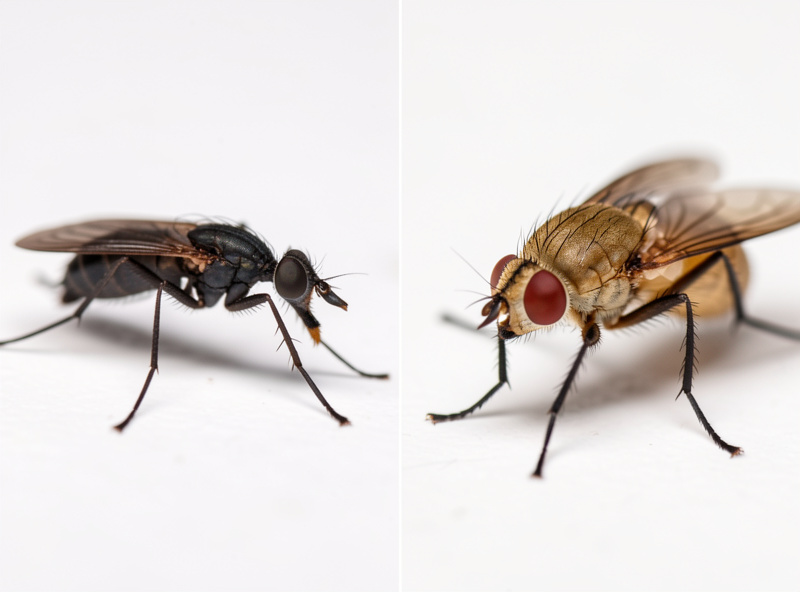
Fungus gnats are small, delicate insects measuring approximately 1/8 inch (3-4mm) in length. They have slender, elongated bodies that resemble tiny mosquitoes, with a distinct narrow waist between thorax and abdomen. Their long, spindly legs dangle noticeably during flight, giving them a gangly appearance disproportionate to their body size. The overall silhouette is mosquito-like but smaller and darker.
Fruit flies are slightly larger, typically 1/8 to 3/16 inch (3-5mm), with a more robust, rounded body shape. They appear humpbacked with a rounded thorax that curves over the head, giving them a compact, sturdy appearance compared to the delicate build of fungus gnats. Their legs are shorter and more proportional to their body, not dangling excessively during flight.
Eye Characteristics — The 30-Second Field Test
One of the most distinctive identifying features is eye color. Fruit flies have prominent, bright red eyes that are immediately noticeable and create a striking contrast with their tan or brown bodies. Even from a distance, the red eye coloration is often visible. Under my grow lights, I’ve used a handheld magnifier to confirm larvae in soil, and the same tool makes eye color identification instant — if the eyes are red, it’s a fruit fly, period.
Fungus gnats have dark eyes that blend with their overall dark coloration. Their eyes are small, black or dark brown, and do not stand out as a distinctive feature. When observing a small fly near your plants or fruit bowl, eye color is the quickest way to determine which pest you have: red eyes equal fruit flies, dark eyes suggest fungus gnats. I keep a small sticky trap in every tray — if adults are landing on the yellow card at soil level, it’s gnats; if they’re ignoring the card and heading for the kitchen, it’s fruit flies.
Coloration and Markings
Fungus gnats are typically dark gray to black in coloration, appearing as tiny dark specks when flying. Some species show slightly lighter gray areas, but overall they are dark insects that blend into shadows and soil. Their wings are clear but appear dark when folded over the body. When at rest, the wings display a distinctive Y-shaped or H-shaped vein pattern that can be seen with magnification.
Fruit flies display more varied coloration, ranging from tan and light brown to darker brown shades. They often have distinctive dark bands or stripes across the abdomen, creating a striped or patterned appearance. Their wings are clear and iridescent, reflecting light differently than the darker wings of fungus gnats.
Wing Characteristics
Fungus gnat wings are relatively long compared to their body, extending past the abdomen when at rest. The wing venation creates a distinctive Y-shaped pattern that is a key diagnostic feature. The wings fold tent-like over the body when at rest, and the insects hold their wings in this roof-like position while walking on surfaces.
Fruit fly wings are shorter relative to body size and do not extend far beyond the abdomen. When at rest, fruit flies hold their wings flat or slightly overlapping rather than in the tent-like position of fungus gnats. The wing veins are less prominent, and the overall wing appearance is clear and unpatterned.
Behavioral Differences
Flight Patterns
Fungus gnats are weak, hesitant fliers that stay close to the soil surface or areas where they emerged. Their flight is erratic and bobbing, with the insects appearing to hop through the air rather than fly purposefully. They rarely fly more than a few feet from their breeding site and prefer to stay within a few inches of the ground or soil surface. When disturbed, they flutter briefly before settling again quickly. In my microgreen setup, I can spot a gnat by how it hovers in place near the soil — fruit flies never do this.
Fruit flies are more agile and faster fliers with a darting, purposeful flight pattern. They quickly move between food sources, flying in direct paths rather than the erratic bobbing of gnats. When disturbed, they scatter quickly and may fly some distance before settling. If the fly zips directly toward your face or across the room in a straight line, it’s a fruit fly — gnats don’t have the flight strength for that.
Activity Patterns
Fungus gnats are most active during dawn and dusk periods, with reduced activity during bright midday conditions. They prefer humid, shaded environments and are frequently seen around potted plants, near drains, or in damp areas of the home. Their activity increases significantly after watering plants when soil moisture is highest and adults emerge from the soil.
Fruit flies are active throughout the day whenever food sources are available, showing no particular preference for specific times. They are attracted to light and may congregate near windows.
Habitat and Breeding Sites
Fungus gnats live in plant soil. For treating infested houseplants, see my houseplant fungus gnat guide.
Where Fungus Gnats Breed
Fungus gnats require consistently moist, organic-rich environments for reproduction. Their primary breeding site is the soil of potted plants, particularly those that are overwatered or contain peat moss, compost, or inadequately composted bark. The top 2-3 inches of soil provide ideal conditions where females lay 100-300 eggs that hatch into root-feeding larvae.
Beyond houseplants, fungus gnats breed in any location providing their required conditions: greenhouse benches, damp organic matter, compost piles, and areas with decaying plant material. Drain areas with accumulated organic debris can support populations, as can poorly maintained aquariums or water features with decaying vegetation. In my apartment, I’ve found them breeding in the saucer under a self-watering planter that had accumulated a thin layer of organic sludge — anywhere there’s wet organic matter, gnats will find it.
Where Fruit Flies Breed
Fruit flies require fermenting organic matter for reproduction. Their breeding sites center on overripe or decaying fruits and vegetables, whether in bowls on counters, compost bins, or garbage disposals. A single overripe banana can support a significant population.
Other common fruit fly breeding sites include wine glasses with residual liquid, beer cans or bottles, drains with organic buildup, garbage cans with food waste, recycling bins with unwashed containers, and mops or sponges with food residue. Any location where fermentation occurs can potentially support fruit fly populations.
Life Cycle Comparison
Fungus Gnat Development
Fungus gnats progress through complete metamorphosis with four distinct stages: egg, larva, pupa, and adult. Females lay eggs in moist soil where fungi are growing. Eggs hatch in 4-6 days into legless white larvae with black heads that feed on fungi, decaying matter, and plant roots for 12-14 days. Larvae then pupate in the soil for 4-6 days before adults emerge. The entire cycle takes approximately 3-4 weeks under favorable indoor conditions, which is why one missed treatment window means starting over.
Fruit Fly Development
Fruit flies also undergo complete metamorphosis but with a much faster cycle. Females lay up to 500 eggs on fermenting food sources, with eggs hatching in 24-30 hours into tiny larvae that feed on yeast and bacteria. Larval development takes only 4-6 days before pupation, which lasts another 4-6 days. Adults emerge ready to reproduce immediately, with the entire cycle completing in about ten days under optimal conditions — far faster than fungus gnats. Cornell Integrated Pest Management notes a single female can lay as many as 500 eggs and that the whole cycle can run in ten days at optimum temperatures.
Control Strategy Differences
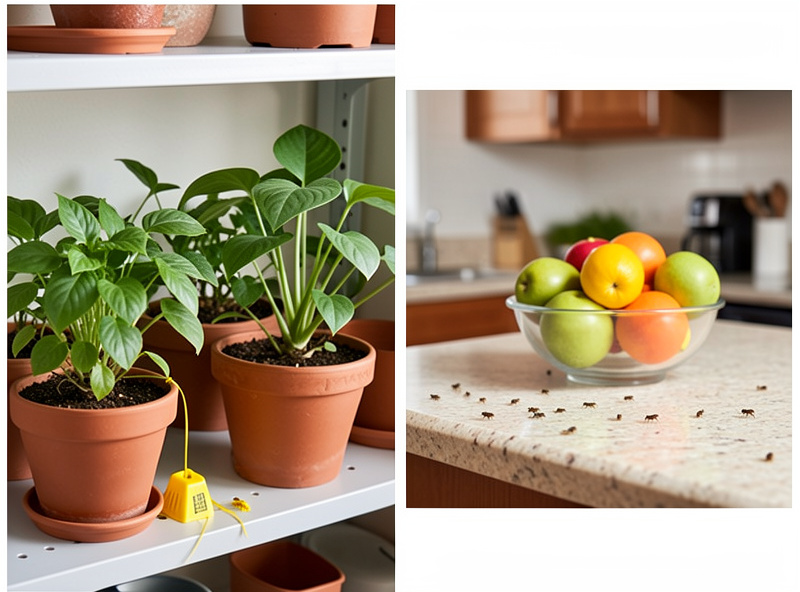
For fungus gnats, DIY sticky traps are the easiest first step to reduce adult populations.
Controlling Fungus Gnats
Effective fungus gnat control requires addressing both soil-dwelling larvae and flying adults. Cultural controls are paramount: allowing soil to dry between waterings, improving drainage, and using barriers like sand or diatomaceous earth on soil surfaces. Biological controls including beneficial nematodes and Bti target larvae in soil. Yellow sticky traps capture adults for monitoring and knockdown.
For comprehensive fungus gnat control strategies, see my guide on how to get rid of fungus gnats.
Controlling Fruit Flies
Fruit fly control centers entirely on eliminating breeding sites and attractants. Remove all overripe or damaged fruits and vegetables immediately. Clean drains thoroughly to remove organic buildup. Vinegar traps with dish soap capture adults but do not address breeding sites — sanitation is the real fix.
Quick 30-Second Identification Guide
For a physical barrier prevention method, sand layer on soil stops fungus gnats specifically.
Visual Cues Checklist
Use this checklist to identify which pest you have:
- Eye color: Red eyes = Fruit flies; Dark eyes = Fungus gnats
- Body shape: Rounded, humpbacked = Fruit flies; Slender, mosquito-like = Fungus gnats
- Leg length: Short, proportional = Fruit flies; Long, dangling = Fungus gnats
- Overall color: Tan to brown = Fruit flies; Dark gray to black = Fungus gnats
- Wing position at rest: Flat or overlapping = Fruit flies; Tent-like = Fungus gnats
Behavioral Cues
- Flight pattern: Fast, darting, purposeful = Fruit flies; Weak, bobbing, erratic = Fungus gnats
- Location: Around fruit, wine, drains = Fruit flies; Around plants, soil, damp areas = Fungus gnats
- Activity time: Consistent throughout day = Fruit flies; Dawn and dusk peaks = Fungus gnats
- Distance traveled: Long distances from site = Fruit flies; Stay close to breeding site = Fungus gnats
Environmental Context
Consider where you see the pests:
- Kitchen and food areas: Likely fruit flies
- Near houseplants: Likely fungus gnats
- Both locations: You may have both pests simultaneously
- After watering plants: Confirms fungus gnats
- After leaving fruit out: Confirms fruit flies
How can I tell if I have fungus gnats or fruit flies?
The quickest identification is eye color: fruit flies have distinctive red eyes while fungus gnats have dark eyes. Body shape also differs, with fruit flies appearing rounded and humpbacked while fungus gnats are slender and mosquito-like. Check where you see them: fruit flies cluster around food while fungus gnats stay near plants.
Can I have both fungus gnats and fruit flies at the same time?
Yes, it is common to have both pests simultaneously. Each requires different control strategies: fungus gnats need soil treatment and plant care changes while fruit flies require sanitation and removal of breeding sites. Treat both problems concurrently for best results.
Do fungus gnats eat fruit like fruit flies?
No, fungus gnats do not eat fruit or human food. They feed on fungi and organic matter in soil. Their presence near plants or damp areas, not food, confirms identification.
Can fruit flies damage my houseplants?
Fruit flies do not damage plants. They feed on fermenting organic matter and do not interact with living plant tissue. If you have plant damage, you have fungus gnats or other plant pests.
Why is it important to know which pest I have?
Control strategies differ dramatically. Fungus gnats require soil treatments, plant watering changes, and biological controls targeting larvae. Fruit flies need sanitation, breeding site elimination, and removal of attractants. Proper identification ensures effective, targeted treatment.
Which pest is easier to eliminate?
Fruit flies are usually easier to eliminate because control centers on simple sanitation. Fungus gnats require ongoing management of soil conditions and may need multiple treatment applications. However, both can be controlled effectively with proper identification.