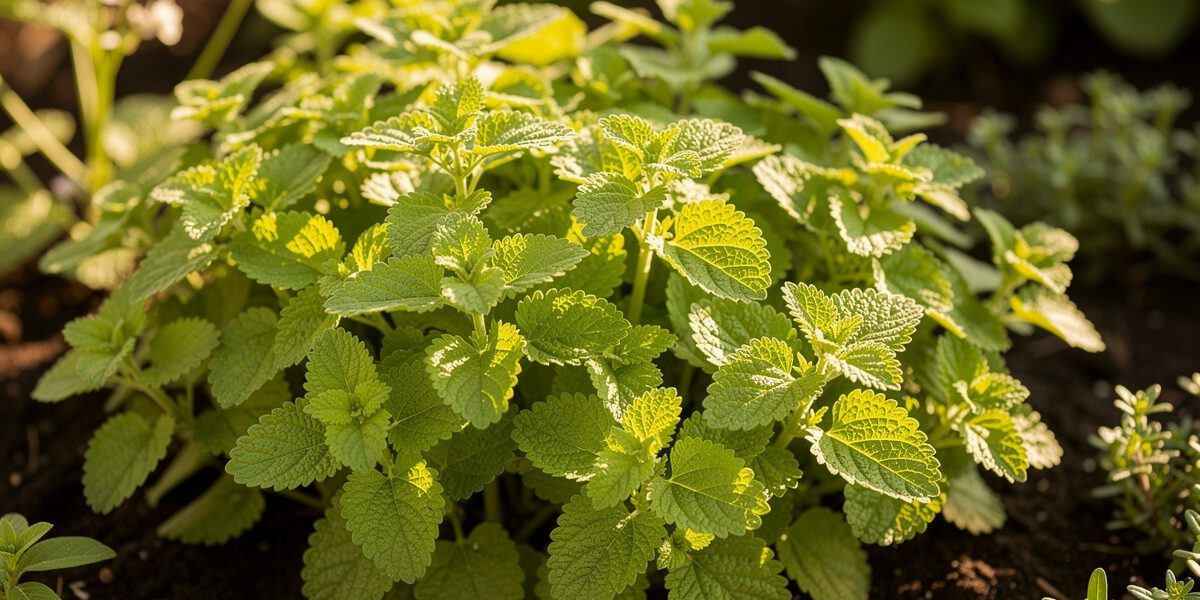
Lemon balm (Melissa officinalis) is the easiest perennial herb on the calendar — hardy from zone 3 through 9, tolerant of part shade, drought, and neglect. On my balcony it shrugs off the short-season weather that stresses basil and cilantro, producing from May through first frost with almost no input. The catch is that it self-seeds aggressively, with a single mature plant dropping enough seed to colonize 6 feet of bed in two seasons. The growing technique is simple; the containment strategy is what separates a useful tea-and-cocktail herb from a weed problem you regret. This guide covers the full lemon balm lifecycle plus the practical approach to keeping the plant where you want it — and a handful of ways I use it beyond the tea cup.
As an Amazon Associate I earn from qualifying purchases.
Lemon Balm Botany and Growing Habits
Lemon balm is a hardy herbaceous perennial in the Lamiaceae (mint) family, native to southern Europe and the Mediterranean. Mature plants reach 18 to 30 inches tall and 18 to 24 inches wide in a dense bushy mound. The leaves are heart-shaped, lightly toothed, and emit a strong lemon scent when crushed — the source of the plant’s culinary value.
Three traits separate lemon balm from related mints (peppermint, spearmint): it spreads primarily by self-seeding rather than underground runners, it tolerates significantly more shade than peppermint, and the dried leaves retain flavor better than fresh mint family relatives. The self-seeding habit is the practical concern — peppermint runners are obvious and contained by a 12 inch root barrier, while lemon balm seedlings appear randomly across the garden in year two and are easy to miss until they are well established — it reseeds readily and can naturalize if the flower heads are left to mature (NC State Extension plant toolbox).
For the broader perennial herb planning context, see Herb Garden: Complete Outdoor Growing Guide; lemon balm fits the moisture-tolerant perennial section of the herb bed.
Site Selection: Where Lemon Balm Thrives
Lemon balm is forgiving across a wide range of conditions, but the species has clear preferences:
- Sun: 4 to 6 hours of direct sun ideal. Tolerates 3 hours minimum but produces less leaf and stems become floppy. Full sun (8+ hours) accelerates summer bolt and leaf scorch in zones 7+.
- Soil: Average garden loam, pH 6.5 to 7.5. Lemon balm tolerates clay, sand, and rocky soil — it is genuinely one of the least picky herbs.
- Moisture: Even moisture preferred. Tolerates short drought once established but goes flat-flavored and floppy if dry for more than 10 days.
- Drainage: Required. Lemon balm tolerates wet soil better than Mediterranean herbs but still rots in standing water.
The single best lemon balm site for most gardens is the moist-side perennial bed (per the parent herb garden guide), under partial shade from a neighboring plant or building. Hot afternoon sun in zones 7+ scorches leaves and weakens flavor; morning sun with afternoon shade keeps the plant productive into late summer.
Planting Lemon Balm: Transplant or Seed
Both methods work, but timeline differs significantly:
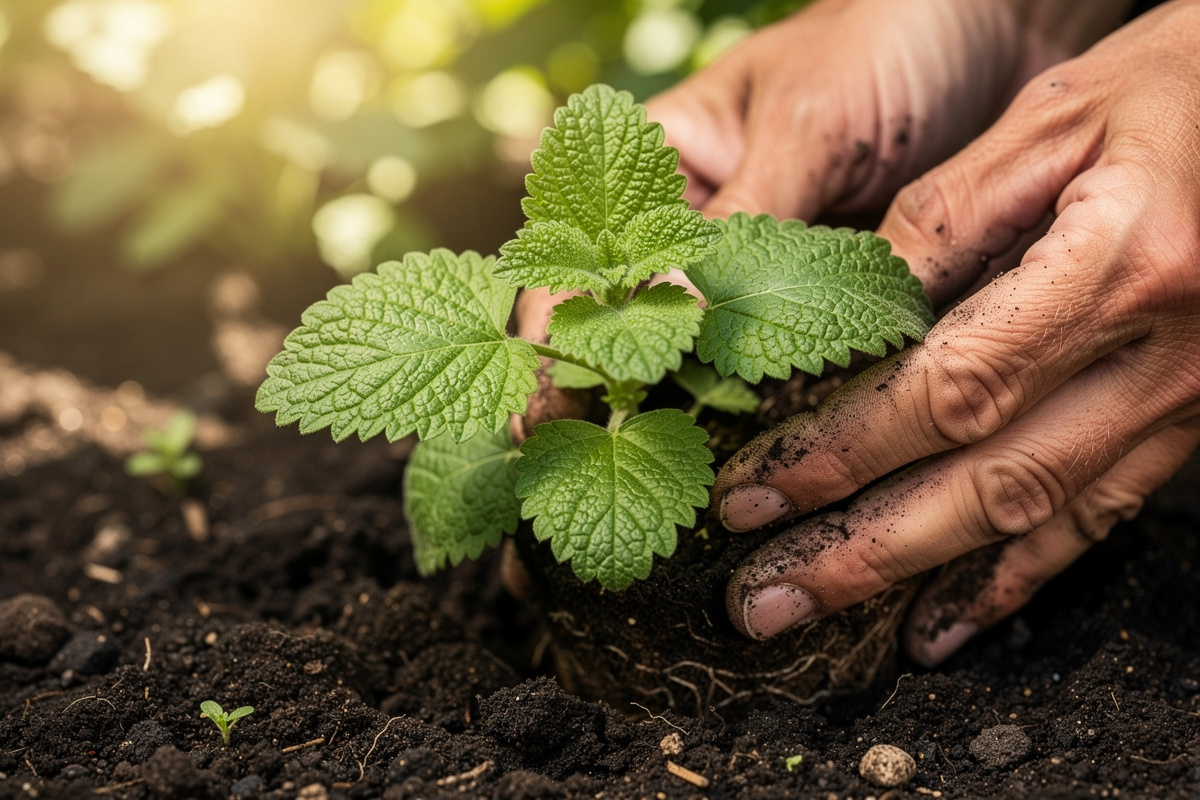
- Transplant from nursery (recommended): Buy a 4 inch potted lemon balm in spring for $4 to $7. The plant is harvestable within 6 weeks and well-established by end of season one.
- Seed: Direct sow after last frost or start indoors 6 to 8 weeks before. Germination takes 14 to 21 days at 65 to 70 degrees F. Surface-sow only — lemon balm seed needs light to germinate; do not bury. Plants reach harvestable size at 12 to 14 weeks.
- Division (free if you know someone with established lemon balm): Dig a clump in early spring, split into 4 to 6 inch sections each with roots and shoots, transplant immediately. The fastest way to get a productive plant.
Containment Strategy: The Critical Decision
A single uncontained lemon balm plant produces 1,000+ seeds annually, with germination rates of 15 to 30%. Year two yields 50 to 100 volunteer seedlings within a 6 foot radius. Three approaches to containment, ranked by reliability:
- Container only (most reliable): Plant in a 12+ inch pot. Self-seeds limited to the pot itself or a small skirt around the base. Best for gardens where you want one productive plant and zero spread.
- In-ground with aggressive deadheading: Plant in the bed but remove flower stalks before seed sets — typically late June through early August in northern zones. Cut entire flowering stems back to the next leaf node. Effective if you maintain weekly attention through summer.
- In-ground with no containment: Acceptable in informal cottage-garden style if you welcome volunteers. Pull unwanted seedlings in spring before they establish — they pull easily until 4 inches tall.
The single rule that tips the balance: if you ever leave the garden unattended for 3+ weeks during summer (vacation, work travel), use container only. Three weeks of unattended flowering produces enough seed to define the next 5 years of your herb garden.
Watering and Feeding
Lemon balm is a moderate feeder. The schedule:
- Water: 1 inch per week in-ground, 1.5 inches per week in containers. Allow top inch of soil to dry between waterings — even moisture is better than constant wetness.
- Mulch: 2 inches of straw, shredded leaves, or finished compost. Keep mulch 2 inches back from the plant base to prevent crown rot.
- Fertilizer: Light. One side-dress of balanced 5-5-5 organic fertilizer in early spring is enough for an established plant. Skip mid-season feeding — over-fertilized lemon balm grows lush stems with weak flavor.
- Compost top-dress: 1 inch of compost annually in early spring as the only feeding for established plants.
The Mid-Summer Hard Cut
The single most useful technique for lemon balm productivity is the mid-summer hard cut. Without it, the plant flowers in July, drops seed, and goes dormant by August. With it, you get a fresh second flush of high-quality leaves that lasts into October.
- Timing: Late June or early July, just as flower buds appear or flowering begins.
- Cut: Remove all top growth back to 4 to 6 inches above the soil. The plant looks shockingly bare for 7 to 10 days.
- Recovery: New shoots emerge within a week. Within 3 weeks, the plant has refilled and produces a second flush of larger, more flavorful leaves through the rest of summer.
- Benefit: Doubles or triples annual leaf yield AND prevents the seed-drop that creates the volunteer problem.
The first time you do this is unsettling — the plant goes from full and bushy to almost-bare in 30 seconds with shears. By year two it becomes routine. Pair the cut with a 1 inch compost top-dress and a deep watering to accelerate regrowth.
Harvesting Lemon Balm Leaves
Lemon balm rewards frequent harvesting. The rules:
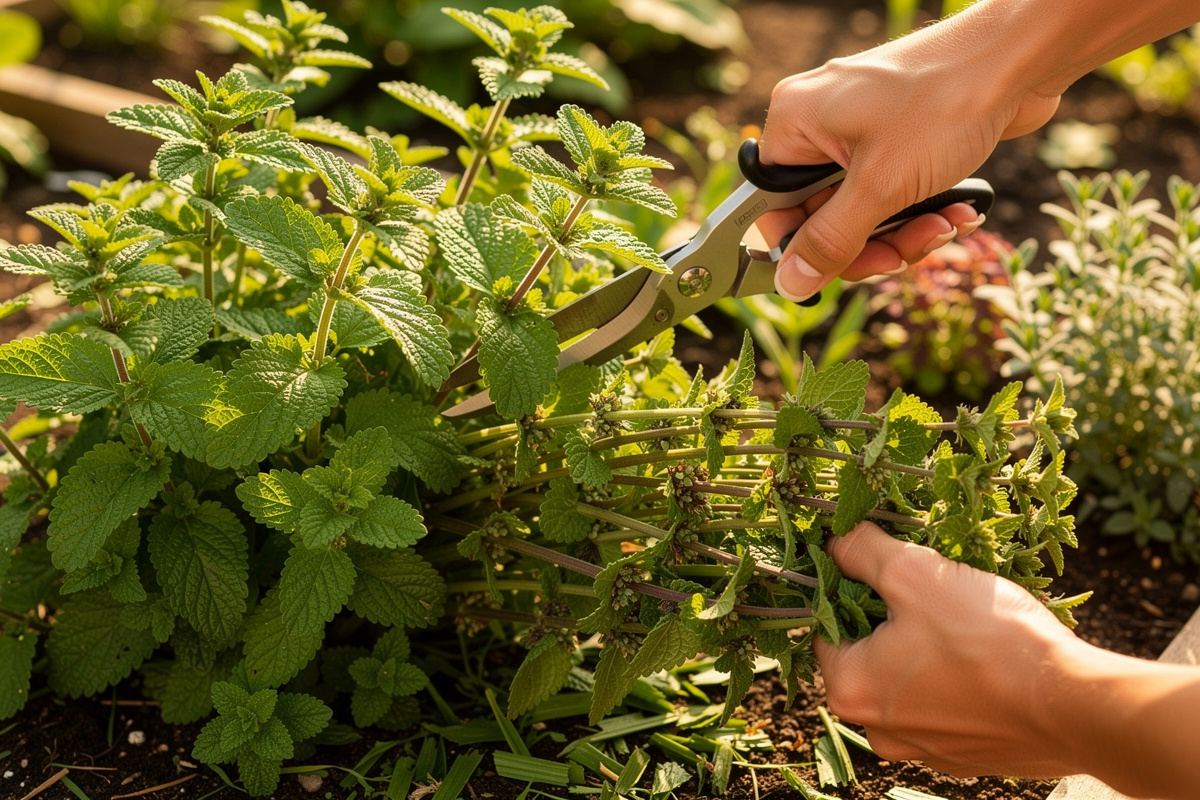
- Harvest from week 6 of year one onward. Snip individual stems or pinch leaves from the outer plant first.
- Take no more than one-third of the plant in a single cut. The plant rebounds quickly from this level; heavier harvests stress it.
- Time of day: Morning after dew dries. Essential oils peak overnight; afternoon harvest captures roughly 60% as much flavor.
- Flavor declines after flowering. Pinch flower buds before they open, or do the mid-summer hard cut, to maintain peak leaf flavor through fall.
Fresh leaves last 4 to 5 days refrigerated wrapped in damp paper towel. For longer storage, dry leaves on a screen in a warm dark space for 7 to 10 days, then crumble into airtight glass. Dried lemon balm keeps flavor for 12 to 18 months — better than most mint-family herbs.
Common Uses Beyond the Tea Cup
In my kitchen, lemon balm earns its spot in more than just hot water. Here are the preparations I reach for most:
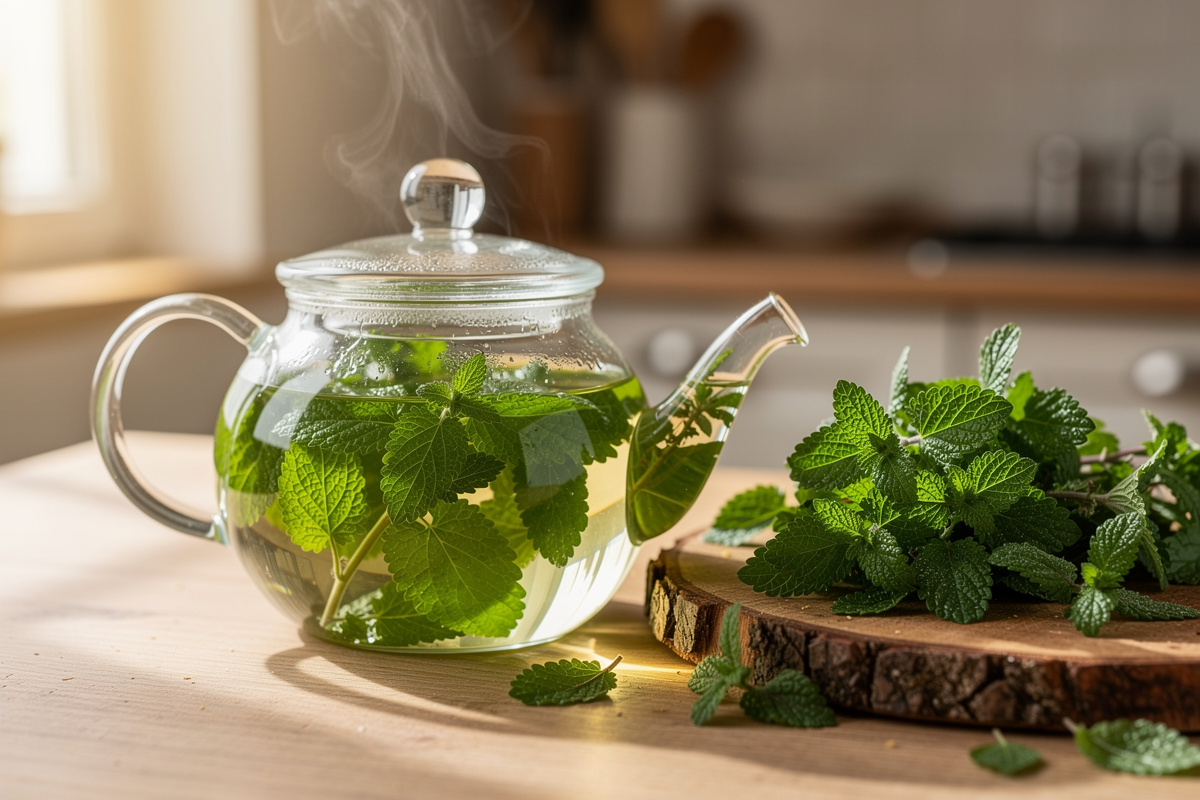
Lemon balm’s culinary applications go beyond herbal tea (the most common use). Practical applications:
- Fish and seafood: Stuffed into whole fish before grilling. The lemon scent complements white fish particularly well.
- Cocktails and infused water: Substitute for mint in mojitos, gin and tonic, or pitchers of cucumber water.
- Salad greens: Young leaves chopped finely add a lemony note to green salads, especially with mild lettuces.
- Herbal vinegar and oil infusions: Pack a quart jar half-full with leaves and cover with white wine vinegar or olive oil; steep 4 weeks; strain.
- Pollinator and pest plant: Lemon balm flowers attract bees and butterflies; the foliage repels mosquitoes when crushed (rub a leaf on skin for 1-2 hour protection).
Overwintering and Long-Term Care
Lemon balm is one of the hardiest herbs on the list:
- Zones 3-9 in-ground: Reliable overwintering with no protection. Plants die back fully after first hard frost; new growth emerges from the crown in early spring.
- Late fall cleanup: Cut dead growth back to 2 inches above the soil after first hard frost. Apply 2 inches of mulch over the crown in zones 3-5.
- Division every 3 to 4 years: Older clumps lose vigor in the center. Dig the entire clump in early spring, divide into 4 to 6 inch sections, replant the strongest pieces and discard the woody center.
- Container plants in cold zones: Move to a sheltered location (unheated garage, sunny window in cool room). Water once monthly; the plant goes nearly dormant.
Lemon balm shares overwintering and division habits with other Lamiaceae perennials. For closely related species, see Planting Peppermint: Containment and Runner Control, the more aggressive cousin, and Oregano Planting: Mediterranean Perennial Setup for a contrasting drier-soil perennial.
Common Mistakes That Limit Lemon Balm Productivity
Five common mistakes:
- Skipping the mid-summer hard cut. Plants flower, drop seed, go dormant, and produce half the leaf they could. The hard cut doubles annual yield.
- Planting in full sun in zones 7+. Hot afternoon sun scorches leaves and triggers early flowering. Morning sun with afternoon shade is the better placement.
- Not deadheading flowers. Self-seeding produces 50 to 100 volunteer seedlings in year two. Either remove flower stalks weekly through summer or grow in a container only.
- Heavy fertilization. Over-fed lemon balm grows lush but flavor weakens. One spring side-dress is enough.
- Letting clumps decline past year four. Without division, the center of the clump dies out and outer growth becomes scraggly. Divide every 3 to 4 years to maintain vigor.
Frequently Asked Questions
Does lemon balm spread like mint?
Yes, but differently. Lemon balm spreads primarily by self-seeding rather than underground runners. A single uncontrolled plant produces over 1,000 seeds annually with 15-30% germination, leading to 50-100 volunteer seedlings in a 6-foot radius by year two. Container growing or aggressive flower deadheading prevents the spread.
How much sun does lemon balm need?
Four to six hours of direct sun is ideal. The plant tolerates 3 hours minimum but produces less leaf. Full sun (8+ hours) accelerates summer bolt and scorches leaves in zones 7+. Morning sun with afternoon shade is the best placement in warmer climates.
When should I cut back my lemon balm?
Hard cut in late June or early July just as flower buds appear. Remove all top growth back to 4 to 6 inches above the soil. The plant rebounds within 3 weeks with a fresh flush of larger, more flavorful leaves that produce through fall. This single technique doubles annual yield and prevents seed drop.
Can lemon balm survive winter outdoors?
Yes in USDA zones 3-9 with no protection beyond a 2-inch mulch layer over the crown after first hard frost. Plants die back fully after frost and re-emerge from the crown in spring. Container plants in cold zones move to an unheated garage or cool sheltered location.
How do I dry lemon balm leaves?
Cut whole stems in the morning after dew dries. Strip leaves from stems and lay in a single layer on a screen in a warm (70-80 degrees F) dark well-ventilated space. Leaves dry in 7 to 10 days. Crumble and store in airtight glass jars away from light. Dried lemon balm keeps full flavor for 12 to 18 months.
Does lemon balm repel mosquitoes?
Crushed leaves rubbed on skin provide 1 to 2 hours of mild mosquito protection due to citronellal content. The whole standing plant does not significantly repel mosquitoes from a garden area — only the crushed leaves release effective concentrations. The effect is real but short-lived compared to commercial repellents.
How is lemon balm different from peppermint?
Lemon balm is in the same family but spreads by seed rather than runners, tolerates more shade, and has lemon-citrus rather than menthol flavor. Peppermint requires a root barrier or container to prevent invasive runner spread; lemon balm requires deadheading or container to prevent self-seeded volunteers. Both are zone 3-hardy perennials.