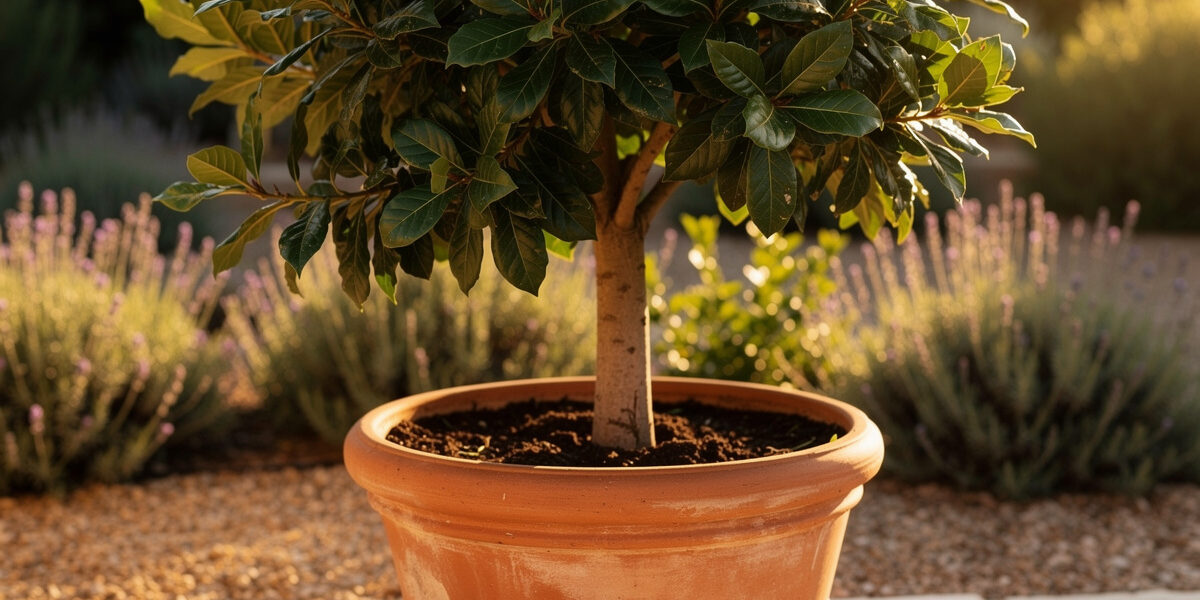
Bay laurel (Laurus nobilis) is the slowest-growing herb most home gardeners ever attempt — 6 to 12 inches of new growth per year, with a 3 to 5 year wait before a young plant produces enough leaves for regular kitchen use. The reward is a 20+ year productive plant that supplies a household indefinitely. Two facts dictate every other bay decision: the species is hardy only in USDA zones 8 to 11 in-ground (containerized everywhere else), and the leaves you actually want to cook with come from the second flush each summer rather than the early spring growth. This guide covers how to grow bay leaves successfully whether you have year-round outdoor weather or a 5-month winter that forces container life.
Bay laurel (Laurus nobilis) is the slowest herb most of us ever grow — and one of the most worthwhile, because a single plant supplies a kitchen with bay leaves for 20 years. It’s also tender, which is the whole story for a cold-climate grower like me: bay won’t survive a hard winter outdoors, so I grow it the way it’s grown all over the chilly north — in a large pot I can wheel indoors before the first frost and back out in spring. Start with a young plant rather than seed (seed takes years), give it sun, and protect it from cold — a frost fleece covers you on surprise cold nights — and it’ll outlive most of the garden. Here’s everything bay needs.
A quick note: some links below are affiliate links — if you buy through them I may earn a small commission at no extra cost to you. I only point to things I’d use myself. Details on my disclaimer page.
Bay Laurel Botany and Why It Grows So Slowly
Bay laurel is a slow-developing evergreen tree native to the Mediterranean basin. Unrestricted in zone 9-11 ground, the species reaches 30 to 40 feet over 30 years. Container or pruned in-ground specimens stay at 4 to 8 feet indefinitely. The slow growth has two practical implications: a transplant from a 1-gallon nursery pot is a 3-year head start over a seed-grown plant, and the cooking-grade aromatic compounds in bay leaves take 18 to 24 months to develop fully. Leaves harvested from a young first-year plant taste flat compared to leaves from year three onward.
For the broader herb cluster context including how bay laurel fits among Mediterranean perennials in a mixed bed, the parent guide is Herb Garden: Complete Outdoor Growing Guide.
Climate and Hardiness: Where Bay Survives Outdoors
Bay laurel hardiness defines the entire growing strategy:
- Zones 8b-11: In-ground year-round with no protection. Sustained temperatures below 20 degrees F damage foliage; a single 15-degree night kills young plants. Mature plants tolerate brief dips to 10 degrees F.
- Zones 7-8a: In-ground possible against a south-facing wall with thermal mass. Mulch heavily and accept that severe winters cause foliage damage requiring a hard prune in spring.
- Zones 3-6: Container only. Move the pot indoors or to an unheated garage when temperatures drop below 30 degrees F.
- Zones 11-12 (subtropical/tropical): In-ground year-round. The plant grows faster but leaf flavor is sometimes less concentrated than in cooler zones. Provide afternoon shade if summer temperatures regularly exceed 95 degrees F.
The cold-hardiness ceiling is the single most important factor in bay laurel success. Container growing is not a compromise — for most North American gardeners, it is the right answer regardless of zone, because it gives portability for the inevitable cold snap.
Starting Bay: Transplant vs Cuttings vs Seed
Three propagation methods, with very different timelines:
- Nursery transplant (recommended for nearly all home gardens): A 1 to 3 gallon potted plant from a specialty nursery costs $25 to $80 and is typically 18 to 36 months old. This is a 3-year head start over seed and the only path to a usable kitchen plant within 2 years.
- Semi-hardwood cuttings: Take 6 inch tip cuttings in late summer when the year’s new growth is starting to firm. Strip lower leaves, dip in rooting hormone, root in seed-starting mix under humidity for 8 to 12 weeks. Success rate is moderate (40 to 60%) and the rooted cutting is still 18 to 24 months from kitchen-usable size.
- Seed (cheapest, slowest, hardest): Fresh seed only — bay loses viability fast. Cold stratify 90 days, then germinate at 70 degrees F for 30 to 90 days. From germination to a kitchen-usable plant takes 4 to 5 years. Not recommended unless you have access to a friend’s mature plant for fresh seed.
For a single household, one transplanted bay laurel is enough — a mature plant produces 2 to 3 cups of dried leaves annually, which exceeds typical kitchen demand.
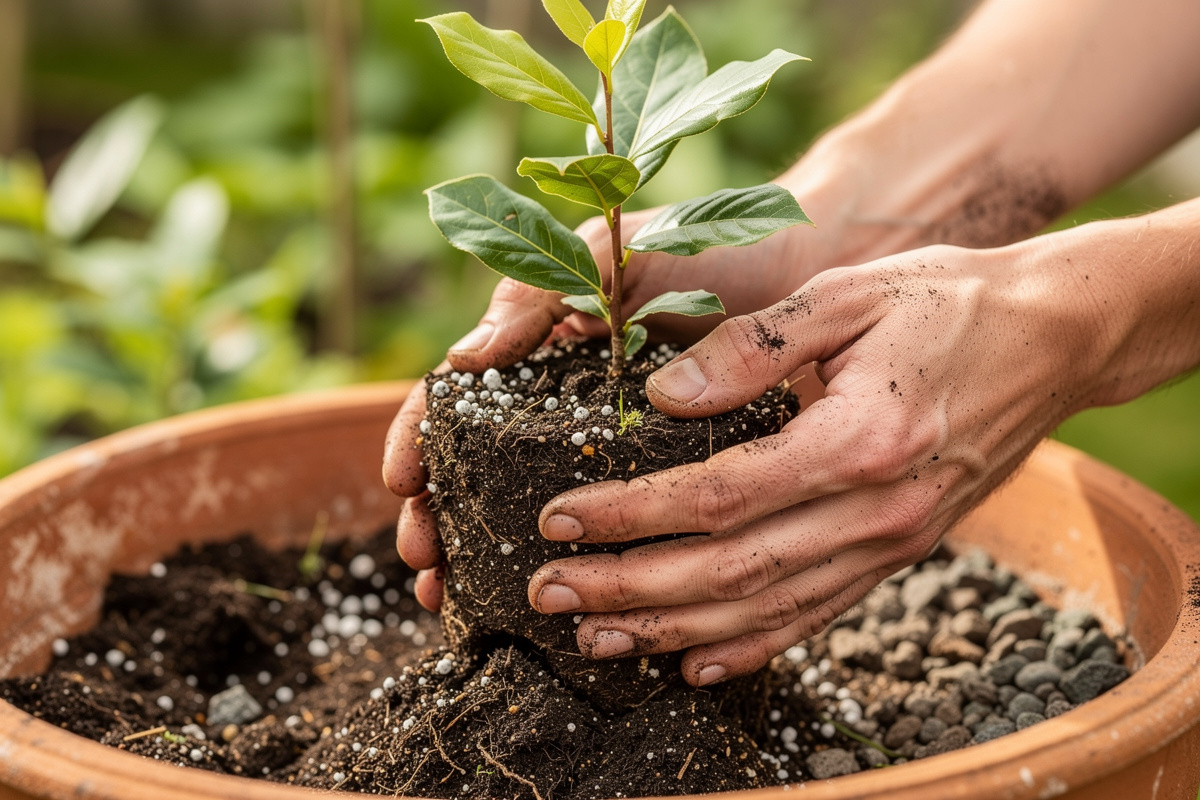
Container Setup for Bay Laurel
Container growing is the default for zones 3-7. The setup specifications:
- Container size: 16 inch minimum diameter and depth for the first 3 years. Bump up to 20-24 inches as the plant matures. Final size for a long-lived specimen is 24 to 30 inches.
- Material: Glazed ceramic or thick plastic — terracotta is acceptable but dries fast and stresses the plant in summer heat. Drainage holes are non-negotiable.
- Soil mix: Standard potting mix amended with 20% coarse sand or pumice for drainage. Do not use moisture-retentive mixes designed for moisture-loving plants.
- Wheels or pot mover: Mature bay in a 24 inch pot weighs 80 to 120 pounds. A wheeled saucer or pot dolly turns the seasonal indoor-outdoor move from a back-injury into a 5 minute job.
For the broader container herb framework, see Growing Herbs Indoors: Complete Container Guide; bay shares container needs with other Mediterranean perennials covered there.
Light, Water, and Feeding Through the Year
Bay laurel preferences shift seasonally more than most herbs:
- Spring (active growth): 6 to 8 hours direct sun. Water deeply once per week in-ground; every 4 to 5 days in containers. Apply 1 inch of compost top-dress or one feeding of balanced 5-5-5 fertilizer.
- Summer (heat): Same sun. In zones 9+, provide afternoon shade above 95 degrees F. Water 1.5 inches per week; containers may need every 2 to 3 days during peak heat.
- Fall (slowing growth): Reduce water to once every 10 days. Stop fertilizing 6 weeks before first expected frost.
- Winter (dormancy or near-dormancy): Indoor or sheltered containers — water once every 2 to 3 weeks. Light watering only; the plant nearly stops drinking. Keep at 50-60 degrees F for natural dormancy. No fertilizer.
The most common bay laurel killing mistake: bringing a container indoors to a warm bright location for winter and watering on the same schedule as summer. The combination of warm temperatures and frequent watering forces the plant out of dormancy without enough light, and the resulting weak growth attracts scale insects. A cool unheated garage at 35 to 50 degrees F with one watering per month is genuinely better than a heated sunroom.
Pruning and Shaping Bay Trees
Bay tolerates pruning extremely well — it is a traditional topiary species. Prune to control size, encourage branching, and force the second-flush leaves that have peak culinary flavor:
- Annual shaping (late spring): After new growth begins, cut back the previous year’s growth by one-third on the most vigorous branches. This forces lateral branching and a denser plant.
- Mid-summer light prune: Pinch growing tips of new shoots in mid-July. This forces a second flush of growth that produces the highest-quality cooking leaves.
- Hard renewal pruning (every 4 to 6 years): Remove the oldest 1 to 2 main branches at the base to stimulate new growth from the crown. Bay regrows strongly from old wood, unlike sage or rosemary.
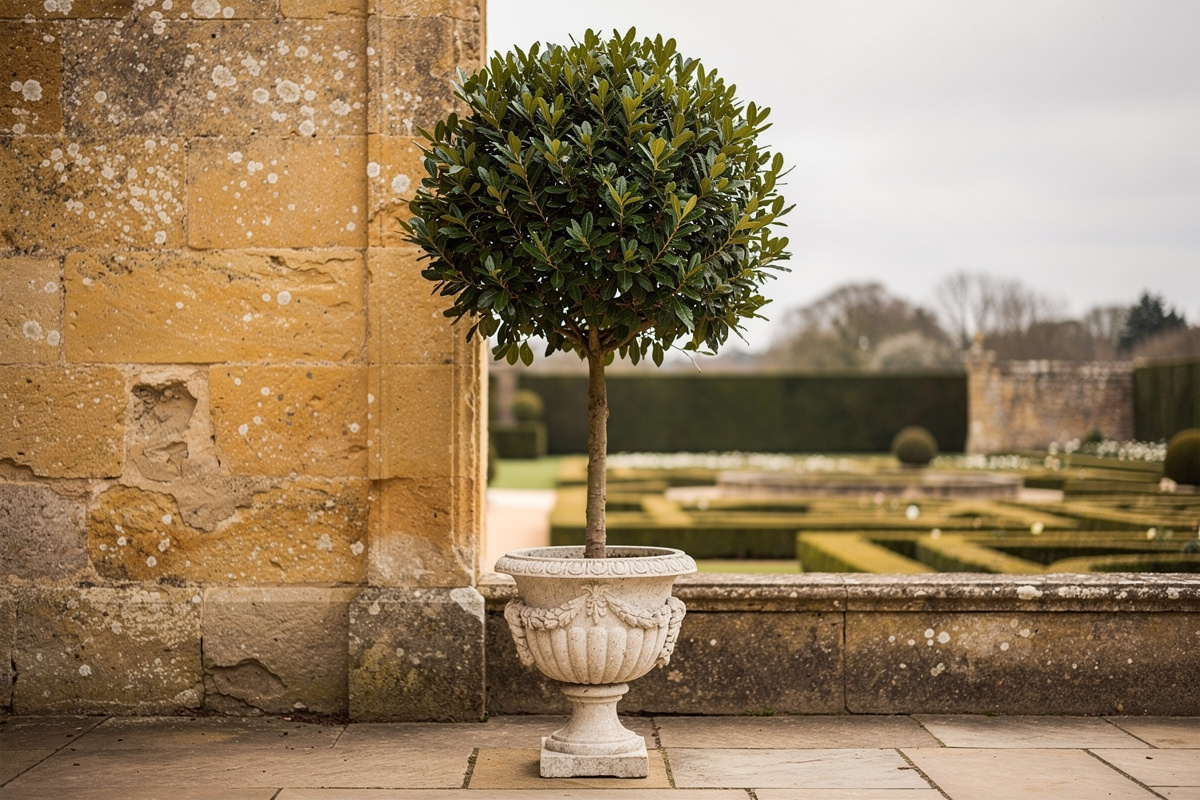
- Topiary shaping: Bay can be trained as a standard, ball, pyramid, or spiral. The training takes 2 to 3 years from a young plant. Use sharp bypass pruners and prune in late spring and again in late summer.
For a simpler perennial herb pruning rhythm without the topiary potential, see Growing Sage: Mediterranean Perennial Herb Guide.
Harvesting and Drying Bay Leaves
Fresh bay leaves and dried bay leaves are different culinary ingredients. Fresh leaves are softer, more astringent, and dominate dishes if not used carefully. Dried leaves mellow after 2 to 4 weeks of curing and produce the rounded eucalyptus-clove flavor most recipes call for.
- When to harvest: Year-round in zones 9+, late spring through fall in cooler zones. Peak flavor leaves come from the second flush of growth (July-August in northern zones).
- How to harvest: Pick individual leaves from the lower 2/3 of the plant. Take mature leaves (deep glossy green, leathery), not new soft growth. Take no more than 25% of foliage in a single harvest.
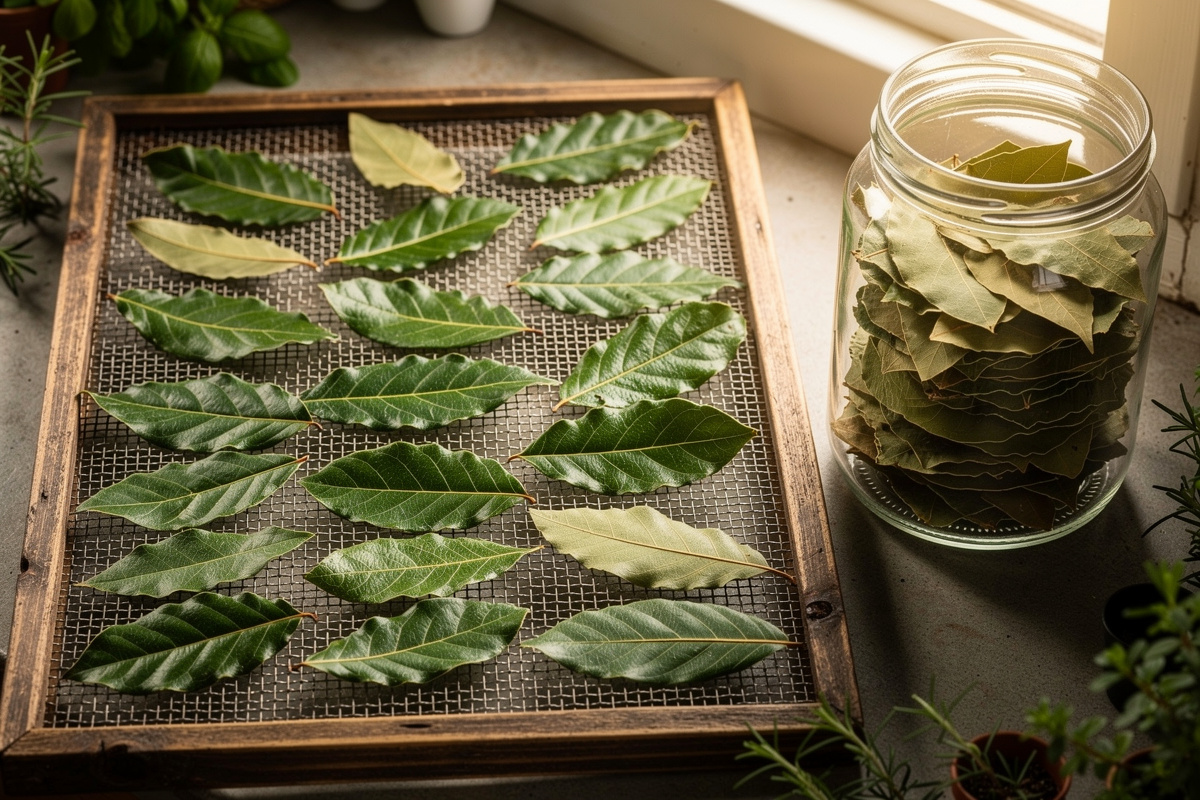
- Drying process: Lay leaves in a single layer on a screen or mesh tray in a dark, warm (70-80 degrees F), well-ventilated space. They dry in 7 to 10 days. Press dried leaves flat under a heavy book for 24 hours before storage to preserve appearance.
- Storage: Airtight glass jars in a cool dark cabinet. Dried bay keeps full flavor for 12 to 18 months; flavor weakens noticeably after that even though leaves stay visually intact.
Bay Sucker, Scale, and Other Common Problems
Bay laurel is largely pest-resistant but has two specific vulnerabilities:
- Bay sucker (psyllid): Tiny insects that cause leaves to curl and yellow at edges. Worst on stressed or container plants. Treatment: prune off affected leaves, improve plant vigor with proper watering and feeding, spray neem or insecticidal soap weekly until clear.
- Scale insects: Brown bumps on stems and leaf undersides. Most common on indoor-overwintered plants. Treatment: scrape off with a fingernail or soft brush, then spray with horticultural oil. Severe infestations require pruning the affected stems entirely.
- Yellowing leaves with no insects: Almost always overwatering. Check drainage, reduce watering frequency, ensure container is not sitting in a saucer of standing water.
- Leaf drop in winter: Normal if mild and gradual. Sudden mass leaf drop indicates either dramatic temperature change (cold draft, sudden warm room) or root rot from waterlogged soil.
Common Mistakes That Kill Bay Laurel
Five recurring mistakes account for most failed bay laurels:
- Planting in zone 6 or colder and treating as in-ground perennial. First serious cold snap kills the plant. Use a container that can move indoors.
- Overwatering, especially in containers. Bay tolerates short drought far better than soggy soil. When in doubt, skip the watering.
- Bringing winter container indoors to a warm bright room. Forces weak winter growth and invites scale. A cool unheated space at 35-50 degrees F is better.
- Heavy fertilization expecting fast growth. Bay grows slowly regardless of inputs. Excess nitrogen produces weak floppy growth that suckers and scale love.
- Harvesting too young. Leaves from a first-year plant taste flat. Wait until year 3 minimum for kitchen-quality leaves; leaves from years 5+ have the deepest flavor.
Frequently Asked Questions
How long does it take to grow bay leaves from seed?
From seed to a kitchen-usable plant takes 4 to 5 years. Bay seed needs 90 days cold stratification, then 30 to 90 days germination at 70 degrees F. Most home gardeners skip seed entirely and start with a 1 to 3 gallon nursery transplant, which gives a usable plant within 2 years.
Can I grow bay laurel in cold climates?
Yes, in containers. Bay laurel is hardy only in USDA zones 8b through 11 in-ground. Anywhere colder, grow in a 16 inch or larger container that you can move to an unheated garage or sheltered location when temperatures drop below 30 degrees F. The plant tolerates 35 to 50 degree F dormancy reliably.
How big does a bay tree grow?
Unrestricted in zone 9 to 11 ground, bay laurel reaches 30 to 40 feet over 30 years. Container or pruned in-ground specimens stay at 4 to 8 feet indefinitely. Growth rate is 6 to 12 inches per year, slower than nearly any other culinary herb.
When should I harvest bay leaves for cooking?
Harvest mature deep-green leaves from the lower two-thirds of the plant. Peak flavor comes from the second flush of summer growth (July to August in northern zones, year-round in zones 9 plus). Take no more than 25% of foliage in a single harvest. Wait until year three of growth before regular kitchen harvest — younger leaves taste flat.
How do I dry fresh bay leaves?
Lay leaves in a single layer on a screen or mesh tray in a dark, warm (70 to 80 degrees F), well-ventilated space. They dry in 7 to 10 days. Press dried leaves flat under a heavy book for 24 hours before storage. Store in airtight glass jars in a cool dark cabinet for up to 18 months of full flavor.
Why are my bay leaves curling and yellowing?
Most often bay sucker (a small psyllid insect). Prune affected leaves, improve plant vigor with proper watering and feeding, and spray neem or insecticidal soap weekly until clear. If no insects are visible, yellowing is usually overwatering — check drainage and reduce watering frequency. Sudden mass leaf drop in winter indicates cold draft or root rot.
What size pot does a bay tree need?
16 inch diameter and depth minimum for the first 3 years. Bump up to 20 to 24 inches as the plant matures. Final container size for a long-lived specimen is 24 to 30 inches. Use thick plastic or glazed ceramic with drainage holes — terracotta dries too fast in summer heat.