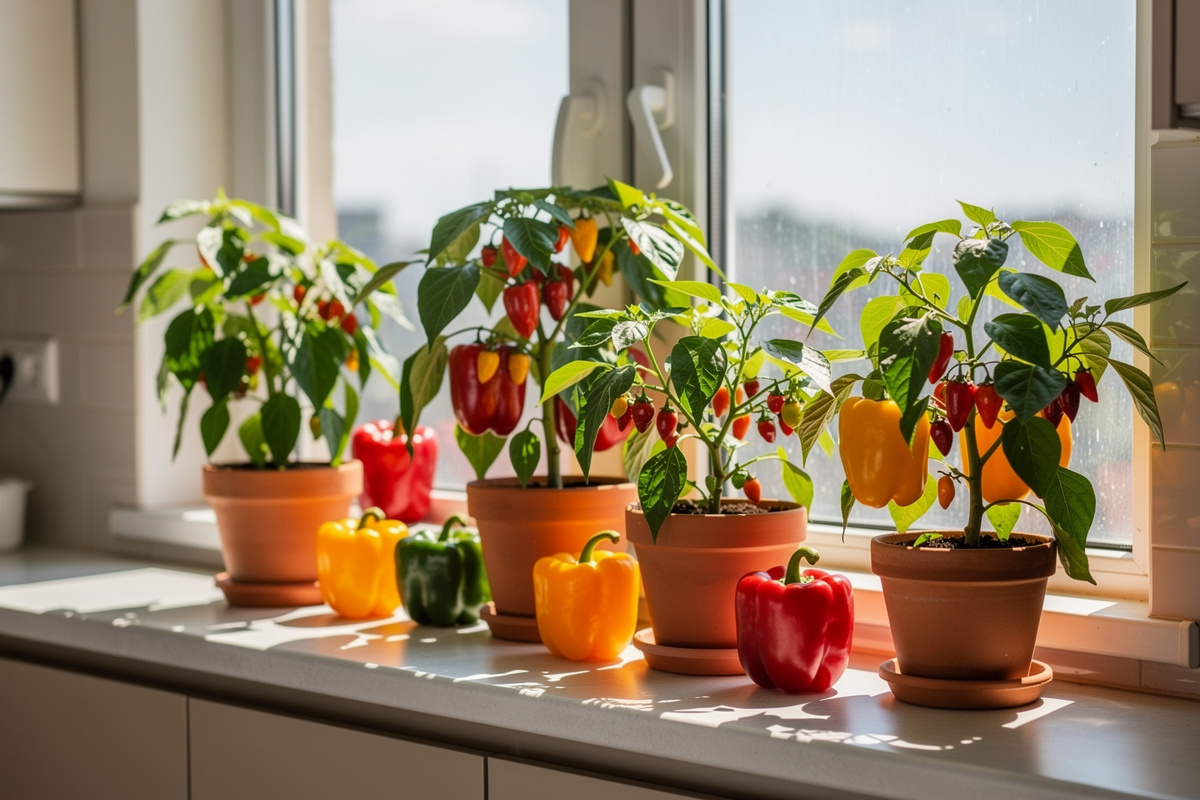
Peppers are one of the most rewarding things I grow indoors — and up here, where the outdoor season barely gives a pepper time to ripen before frost, the indoor shelf is where they actually perform. Whether you want sweet bells for salads or fiery habaneros for hot sauce, every pepper variety thrives in a container with the right light, warmth, and care. Indoor growing sidesteps the Nordic frost problem entirely, extends the season year-round, and hands you full control over heat and humidity — the two things peppers care about most.
Peppers share grow-light and container requirements with several other indoor crops — tomatoes, cucumbers, and strawberries all thrive under the same LED panels and 14-16 hour photoperiods that peppers need. See my LED lights for growing plants indoors guide for fixture setup and spectrum, and my complete indoor growing guide for the full crop list.
This guide covers everything from choosing varieties and containers to pollination, feeding, and troubleshooting — so you can harvest peppers from your windowsill, grow shelf, or spare room no matter the season.
Best Pepper Varieties for Indoor Growing
For lighting requirements, see grow lights for peppers.
Not every pepper performs equally indoors. Compact varieties with shorter days-to-maturity tend to outperform large garden types in limited light and space. Here are the top picks by category.
Sweet Peppers
- Mini Bell Mix — Compact plants (12-18 inches) producing bite-sized sweet bells in red, orange, and yellow. Matures in 60-70 days.
- Lunchbox — Snack-sized sweet peppers, heavy yielding, excellent flavor. 70-80 days.
- Shishito — Thin-walled, mild pepper popular for blistering. Compact habit suits containers well. 60-75 days.
Hot Peppers
- Thai Chili — Extremely productive, compact plants covered in upward-pointing 2-3 inch fruits. 70-80 days. 50,000-100,000 SHU.
- Habanero — Needs more light than milder varieties, but produces well indoors under grow lights. 90-120 days. 100,000-350,000 SHU.
- Jalapeño — The classic hot pepper. Medium-sized plants that adapt well to 5-gallon containers. 70-80 days. 2,500-8,000 SHU.
- Cayenne — Prolific producers of long, slender fruits perfect for drying. 70-85 days. 30,000-50,000 SHU.
Ornamental (Edible) Peppers
- NuMex Twilight — Stunning color progression from purple to yellow to orange to red, all on one plant. Edible but very hot.
- Black Pearl — Dark foliage with glossy black fruits that ripen red. Compact and decorative.
| Variety | Type | Plant Height | Days to Harvest | Heat Level | Indoor Rating |
|---|---|---|---|---|---|
| Mini Bell Mix | Sweet | 12-18 in | 60-70 | None | ★★★★★ |
| Shishito | Sweet/Mild | 18-24 in | 60-75 | None-Mild | ★★★★★ |
| Thai Chili | Hot | 12-18 in | 70-80 | High | ★★★★★ |
| Jalapeño | Hot | 18-24 in | 70-80 | Medium | ★★★★☆ |
| Cayenne | Hot | 18-30 in | 70-85 | High | ★★★★☆ |
| Habanero | Very Hot | 24-36 in | 90-120 | Very High | ★★★☆☆ |
| Lunchbox | Sweet | 18-24 in | 70-80 | None | ★★★★☆ |
| NuMex Twilight | Ornamental | 10-16 in | 80-90 | Very High | ★★★★★ |
Containers and Soil Setup
For container options, check best vegetables for urban gardens.
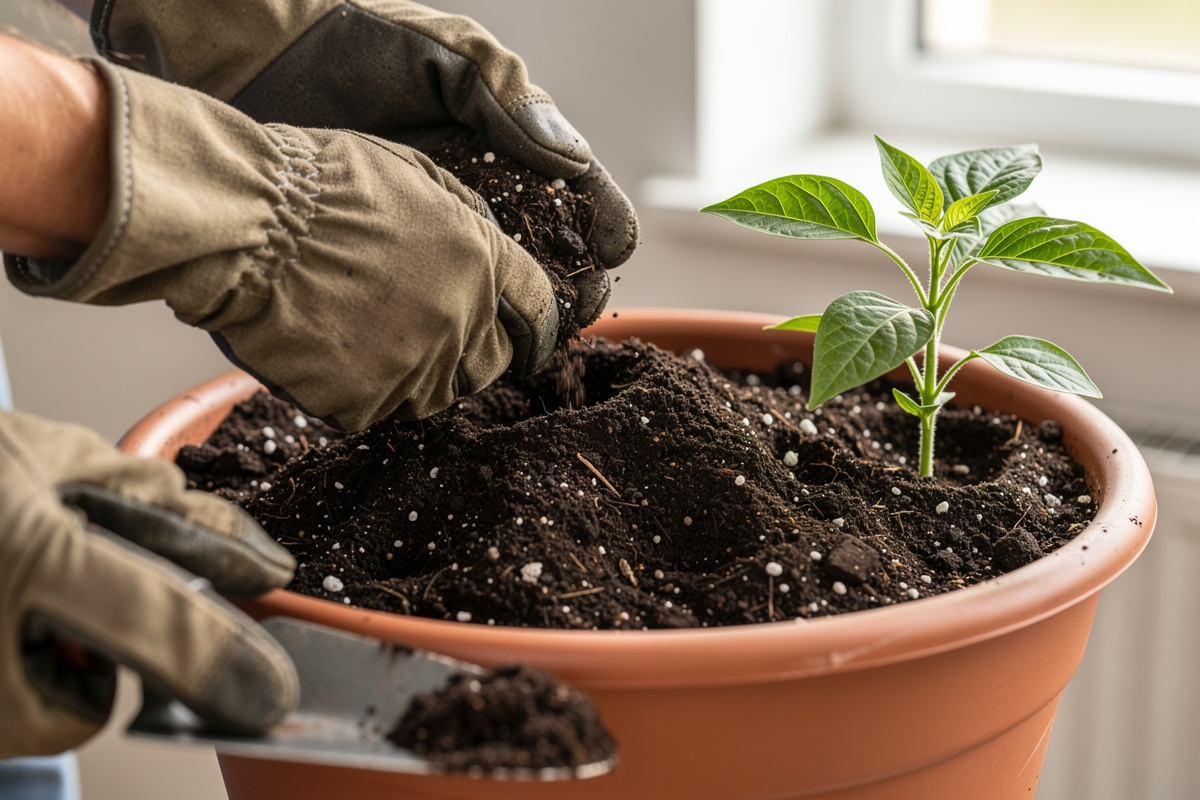
Container choice directly affects root development, water retention, and ultimately how many peppers your plant produces. Get this wrong and even the best variety will underperform.
Container Size
Most pepper plants need a minimum 3-gallon (12-inch) pot. Larger varieties like habanero and jalapeño do better in 5-gallon containers. Small ornamental and Thai chili types can manage in 2-gallon pots.
Always choose containers with drainage holes. Peppers hate sitting in waterlogged soil — root rot is the number one killer of indoor pepper plants. If you like decorative pots without holes, use a plastic nursery pot inside the decorative one and empty the saucer after watering.
Best Soil Mix for Indoor Peppers
Use a well-draining potting mix, not garden soil. Garden soil compacts in containers and harbors pests. A good indoor pepper mix combines:
- 60% high-quality potting mix (peat or coco coir based)
- 20% perlite (for drainage and aeration)
- 20% compost or worm castings (for slow-release nutrients)
Peppers prefer slightly acidic soil with a pH between 6.0 and 6.8. Most commercial potting mixes fall in this range, but if you notice poor growth despite adequate light and water, test your pH with an inexpensive soil meter. For a deeper dive into soil selection, see our guide to vegetables for urban gardens which covers soil fundamentals.
Starting Peppers from Seed
Peppers are slow starters. Most varieties take 7-21 days to germinate and another 8-12 weeks before they are ready to transplant into their final containers. Cornell’s home-gardening guide lists pepper germination at 70-95°F with no germination below 55°F and roughly 7-10 days to emergence at 85°F soil — useful reference numbers. Start seeds 10-12 weeks before you want producing plants.
Germination Steps
- Pre-soak seeds in warm water (not hot) for 8-12 hours to soften the seed coat and speed germination.
- Fill seed trays with moist seed-starting mix. Press seeds 1/4 inch deep, one per cell.
- Cover loosely with plastic wrap or a humidity dome to retain moisture. Pepper seeds need warmth more than light to germinate.
- Maintain 80-85°F (27-29°C) soil temperature. A seedling heat mat is almost essential — peppers germinate poorly below 70°F. Ohio State University Extension makes the same call, noting that because pepper seeds need 70-80°F soil to germinate, an external heat source like a seedling mat is usually required indoors (Ohioline pepper factsheet). Hot pepper varieties like habanero need consistent warmth and may take 14-28 days.
- Remove the cover once seedlings emerge and place them under grow lights for peppers immediately. Seedlings that stretch for light become leggy and weak.
- Transplant to final containers when seedlings have 4-6 true leaves (not the initial seed leaves). Harden off gradually if moving from a warm germination area to a cooler room.
Buying Transplants vs Starting from Seed
Garden centers sell pepper transplants in spring, but variety selection is limited — usually just jalapeño, bell, and maybe habanero. Starting from seed gives you access to hundreds of varieties and is significantly cheaper. A packet of 25+ seeds costs less than a single transplant.
Light Requirements
Learn about grow lights for tomatoes — similar requirements apply to peppers.
Light is the single biggest factor determining whether your indoor peppers produce fruit or just foliage. Peppers are sun-loving plants that need 14-16 hours of bright light daily during the growing season.
Can You Grow Peppers on a Windowsill?
A south-facing window provides 4-6 hours of direct sun on clear days — enough to keep a pepper plant alive but not enough for heavy fruiting. If a sunny windowsill is all you have, choose compact varieties like Thai chili or NuMex Twilight that tolerate lower light, and expect smaller harvests. For serious indoor pepper production, supplemental grow lights are a necessity, not a luxury.
Grow Light Basics for Peppers
Full-spectrum LED panels rated at 200-400 PPFD at canopy level deliver the light intensity peppers need to flower and fruit. Position lights 12-18 inches above the plant canopy and run them on a timer for 14-16 hours per day. We cover specific fixtures, spectrum details, and setup tips in our dedicated grow lights for peppers guide.
Temperature and Humidity
Avoid common gardening mistakes when growing peppers indoors.
Peppers are tropical plants that prefer consistent warmth. Indoor environments naturally provide stable temperatures, which is actually an advantage over outdoor growing where cold nights can stunt growth.
- Ideal daytime temperature: 70-85°F (21-29°C)
- Ideal nighttime temperature: 60-70°F (16-21°C)
- Minimum temperature: 55°F (13°C) — growth stops below this
- Ideal humidity: 50-70%
Avoid placing pepper plants near cold drafts, heating vents, or air conditioning outlets. Temperature fluctuations cause blossom drop — the plant sheds its flowers before they can set fruit.
If your home is dry in winter (below 40% humidity), group plants together on a pebble tray filled with water to raise local humidity. A small humidifier near your grow area also works. Do not mist pepper leaves directly — wet foliage invites fungal problems.
Watering and Feeding
Watering Schedule
Peppers prefer consistent moisture but never soggy soil. The best approach is to water when the top inch of soil feels dry. Stick your finger in — if it feels dry to the first knuckle, water thoroughly until it drains from the bottom holes. Empty saucers after 30 minutes.
Overwatering causes yellowing lower leaves, wilting (even though soil is wet), and root rot. Underwatering causes wilting, flower drop, and bitter-tasting fruit.
Fertilizer Schedule
Peppers are moderate feeders that need different nutrients at different growth stages:
| Growth Stage | Fertilizer Type | NPK Ratio | Frequency |
|---|---|---|---|
| Seedling (0-4 weeks) | Half-strength balanced | 10-10-10 | Every 2 weeks |
| Vegetative (4-8 weeks) | Higher nitrogen | 10-5-5 | Every 1-2 weeks |
| Flowering/Fruiting | Higher phosphorus & potassium | 5-10-10 | Every 1-2 weeks |
| Heavy production | Calcium supplement | Cal-Mag | Every 2-3 weeks |
Calcium deficiency causes blossom end rot — dark, sunken spots on the bottom of developing peppers. A calcium-magnesium supplement prevents this common problem. If you are growing tomatoes indoors alongside your peppers, they share the same calcium requirements and feeding schedule.
Pollination Indoors
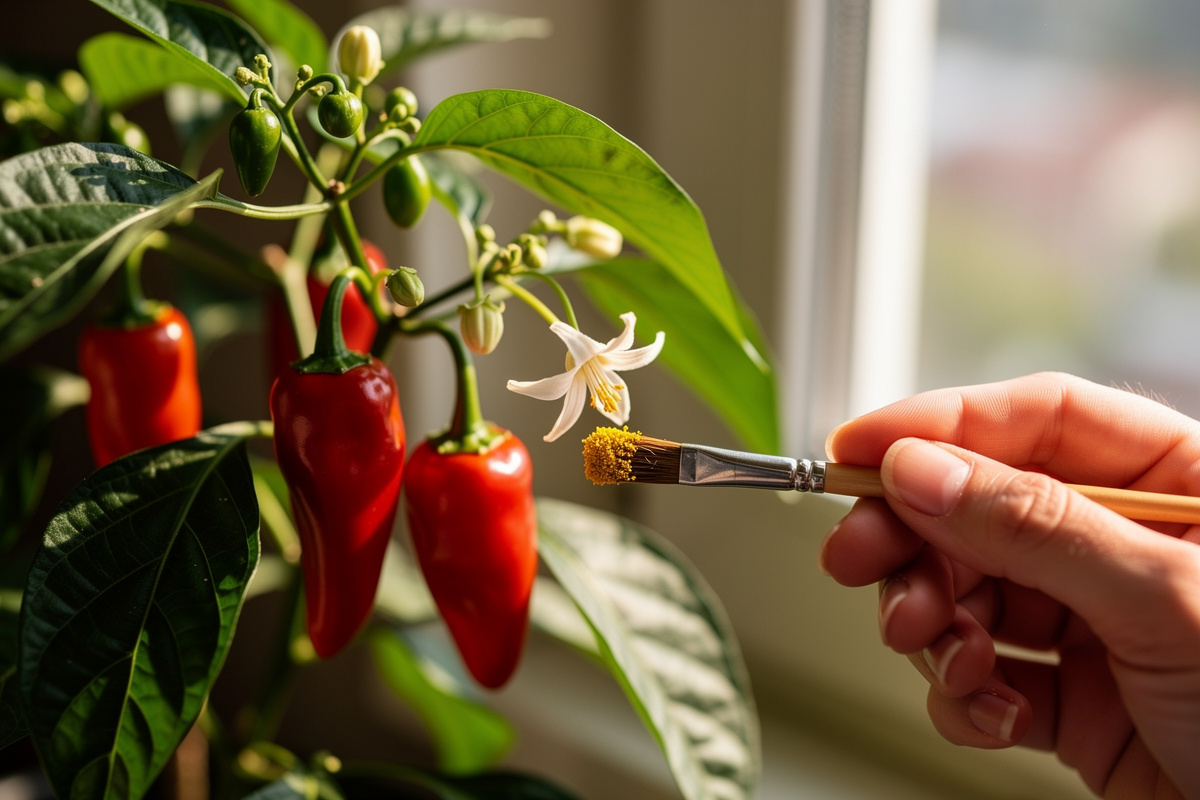
Outdoors, wind and insects handle pollination. Indoors, you need to step in. Pepper flowers are self-fertile (each flower has both male and female parts), so you do not need multiple plants — but the pollen needs physical agitation to transfer.
Three Pollination Methods
- Shake the plant — Gently grasp the main stem and give it a shake once a day when flowers are open. This mimics wind and is often enough for good fruit set.
- Use a small paintbrush or cotton swab — Dab the center of each open flower, moving from flower to flower. This directly transfers pollen and is the most reliable method for hot peppers that have sticky pollen.
- Use a small fan — Point an oscillating fan at your pepper plants for 30-60 minutes daily. The vibration and air movement helps pollen release.
Pollinate during midday when flowers are fully open. If your indoor setup also includes lettuce or herbs, they do not need pollination — only fruiting crops like peppers and tomatoes require it.
Pruning and Training
Strategic pruning increases yields and keeps plants manageable in limited indoor space.
Early Pruning
When seedlings reach 8-10 inches tall, pinch off the growing tip (the topmost set of leaves). This forces the plant to branch out sideways instead of growing tall and leggy. The result is a bushier plant with more flowering sites and more peppers.
Removing Early Flowers
It is tempting to let the first flowers develop, but removing all flowers until the plant is 12-15 inches tall redirects energy into root and branch development. You will get more peppers in the long run by delaying the first fruit set by 2-3 weeks.
Ongoing Maintenance
- Remove any yellowing or damaged lower leaves — they drain energy and block airflow.
- Trim branches that grow inward toward the center of the plant to improve light penetration.
- If a branch is heavy with fruit, support it with a small stake or clip to prevent snapping.
Common Problems and Solutions
| Problem | Symptoms | Cause | Solution |
|---|---|---|---|
| Blossom drop | Flowers fall off without setting fruit | Temperature swings, low humidity, poor pollination | Stabilize temp 70-85°F, hand-pollinate, increase humidity |
| Leggy growth | Tall, thin stems with few leaves | Insufficient light | Add grow lights, reduce light distance, extend photoperiod |
| Yellow leaves (lower) | Oldest leaves turn yellow and drop | Overwatering or nitrogen deficiency | Let soil dry between waterings, feed with balanced fertilizer |
| Blossom end rot | Dark sunken spots on fruit bottoms | Calcium deficiency, inconsistent watering | Add Cal-Mag supplement, water consistently |
| Aphids | Tiny green/white insects on new growth | Pest infestation | Spray with diluted neem oil or insecticidal soap |
| Fungus gnats | Small flies around soil surface | Overwatering, moist soil surface | Let top inch dry, add sand layer. See our fungus gnat elimination guide |
| Leaf curl | Leaves curling inward | Overwatering, calcium deficiency, or pest damage | Check soil moisture, inspect for pests, add Cal-Mag |
Harvesting Indoor Peppers
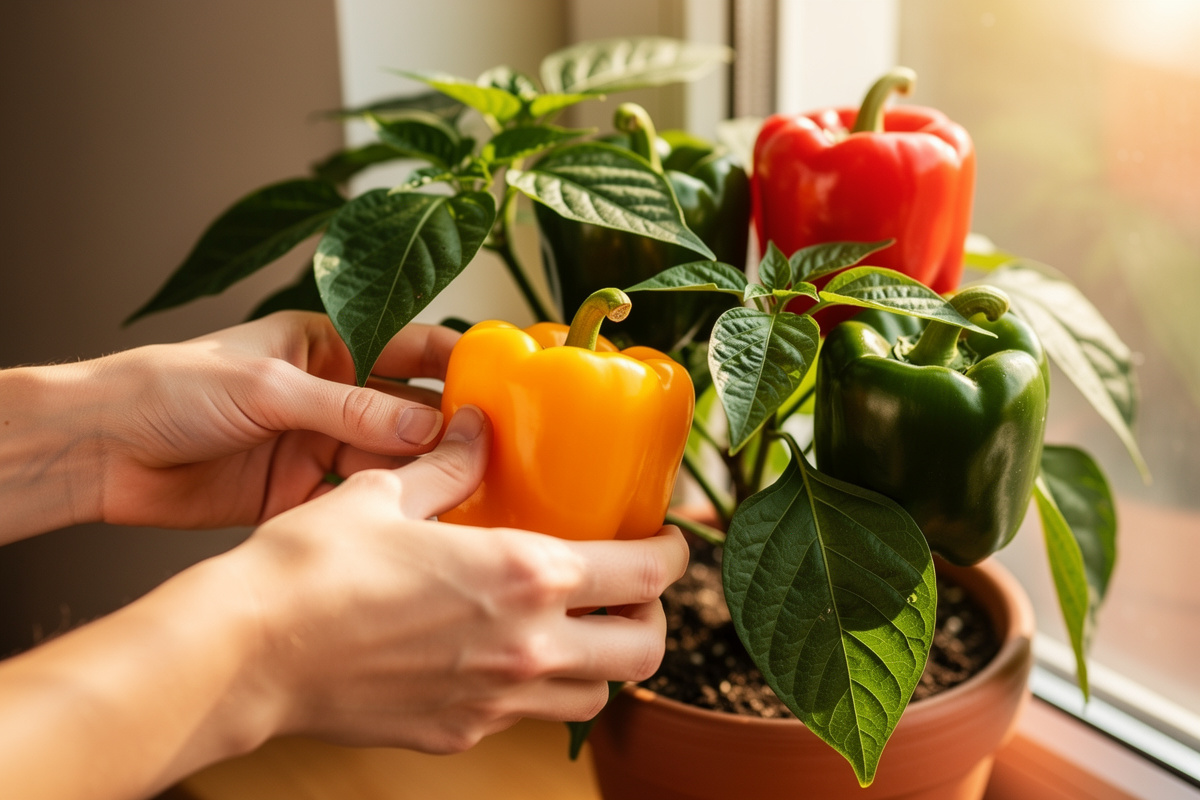
Most peppers are ready to harvest 60-90 days after transplanting (or 120-150 days from seed). You can pick peppers at any stage — green peppers are simply unripe versions of the final color.
When to Pick
- Sweet peppers: Wait until they reach full color (red, yellow, or orange) for maximum sweetness and flavor. Green bells are fine but less sweet and less developed.
- Hot peppers: Heat level increases as the pepper ripens. For maximum heat, wait until fully colored. For milder flavor, pick green.
- All peppers: Use sharp scissors or pruning snips to cut the stem 1/2 inch above the fruit. Pulling peppers off by hand can damage the branch.
Continuous Harvest
The more you pick, the more the plant produces. Leaving ripe peppers on the plant signals it to slow down production. Harvest every 2-3 days during peak production to keep the plant fruiting.
Storage
Fresh peppers keep 1-2 weeks in the refrigerator. For longer storage, peppers freeze well (slice and freeze flat on a tray, then transfer to bags), or dry hot peppers in a dehydrator or by stringing them up in a warm, airy spot.
Year-Round Indoor Pepper Growing Calendar
One of the biggest advantages of indoor growing is eliminating seasons. With grow lights and consistent temperatures, you can harvest peppers 365 days a year. Here is how to structure a continuous pepper supply:
| Month | Action | Notes |
|---|---|---|
| January | Start seeds for spring plants | Use heat mat, 80-85°F soil temp |
| February-March | Transplant seedlings to final containers | Begin fertilizing after 2 weeks |
| April-May | First flowers appear, begin pollinating | Remove early flowers for stronger plants |
| June-August | Peak harvest season | Pick every 2-3 days, feed weekly |
| September | Start second round of seeds | Overlap with existing plants |
| October-November | First plants may slow down | Prune and rejuvenate, or replace with new seedlings |
| December | Second generation plants begin producing | Maintain 14-16 hour light schedule |
Related Articles
- Grow Lights for Peppers: Indoor Lighting Guide — detailed fixture recommendations and setup
- Growing Tomatoes Inside — peppers and tomatoes share similar care requirements
- Grow Lights for Tomatoes — light spectrum and intensity carry over to pepper growing
- How to Grow Lettuce Inside — an easier starter crop for new indoor gardeners
- How to Get Rid of Fungus Gnats — the most common indoor growing pest
A Quick Note on Self-Pollination Indoors
Peppers are self-fertile — each flower carries both male and female parts — but “self-fertile” does not mean “no help needed” indoors. What it does mean is that you do not need two plants or a brush-and-transfer routine the way some crops demand. In practice a small oscillating fan aimed at the plants for 15-20 minutes a day during flowering is usually enough to dislodge pollen, and tapping the main stem gently each morning when flowers are open catches the rest. The compact ornamental-edible types from the NuMex line are particularly forgiving indoors because they set fruit over a wide range of conditions — but they still benefit from that daily nudge of air or vibration.
How long does it take to grow peppers indoors from seed?
Most pepper varieties take 120-150 days from seed to first harvest when grown indoors. Germination takes 7-21 days, seedlings need 8-12 weeks to reach transplant size, and fruiting begins 60-90 days after transplanting. Hot peppers like habanero take longer, while fast varieties like Thai chili can produce in as few as 100 days.
Do indoor pepper plants need to be pollinated by hand?
Yes. Without wind or insects indoors, pepper flowers will not set fruit unless you help. The easiest methods are shaking the plant daily, using a small paintbrush to transfer pollen between flowers, or pointing an oscillating fan at the plants for 30-60 minutes per day.
What size pot do I need for indoor peppers?
Most pepper plants need a minimum 3-gallon (12-inch diameter) pot. Larger varieties like jalapeño, cayenne, and habanero perform better in 5-gallon containers. Small ornamental and Thai chili peppers can grow in 2-gallon pots.
Why are my indoor pepper plants dropping flowers?
Blossom drop in indoor peppers is usually caused by temperature fluctuations (below 60°F or above 90°F), low humidity (below 40%), poor pollination, or nutrient imbalance. Stabilize temperatures between 70-85°F, increase humidity, hand-pollinate daily, and feed with phosphorus-rich fertilizer.
Can I grow peppers indoors without grow lights?
You can grow peppers on a bright south-facing windowsill, but expect smaller harvests. Peppers need 14-16 hours of light daily for strong fruit production, and most windows provide only 4-6 hours of direct sun. Without grow lights, choose compact varieties like Thai chili or NuMex Twilight.