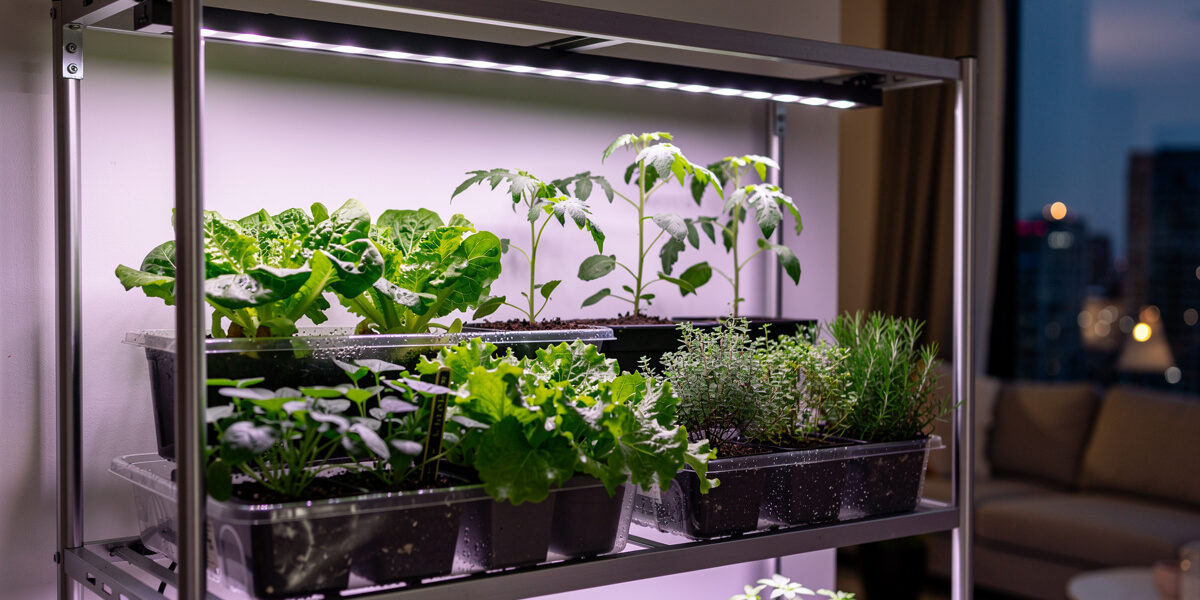
Growing plants indoors is how I keep fresh herbs, leafy greens, and the occasional cherry tomato on the table through a Swedish winter, when the balcony is frozen and the windowsill gives maybe four hours of weak light. With the right grow lights, containers, and a little discipline, you can harvest lettuce in 30 days, fruit a compact tomato on a shelf, and keep basil steps from the stove regardless of what the weather is doing outside. Indoor growing needs no outdoor space, sidesteps the short Nordic season entirely, and runs without the slug, bird, and frost problems that wipe out my balcony crops most years. For the gear checklist that supports every method below, see my indoor gardening essentials guide. For specific easy-care picks ranked by water and light tolerance, see my indoor plants for beginners guide.
Modern full-spectrum LED grow lights are what made all of this realistic for an apartment — they run on a fraction of the electricity the old fluorescent and HID rigs burned, generate far less heat, and last for years. Compact dwarf varieties bred specifically for container growing make it possible to harvest tomatoes, peppers, and strawberries from a single shelf unit. Whether you are working with one sunny windowsill or a dedicated grow room, indoor gardening delivers fresh food year-round regardless of outdoor weather or season.
This guide covers every aspect of indoor growing: seed starting, crop-specific guides for tomatoes, peppers, herbs, lettuce, and strawberries, grow light selection and positioning, and the techniques that separate a productive indoor garden from a disappointing one. Each section links to a deeper guide for the crop or topic.
Why Grow Plants Indoors?
Indoor growing offers advantages that outdoor gardening simply cannot match. You control every variable — light intensity and duration, temperature, humidity, watering schedule, and nutrient delivery. This control translates to predictable harvests, faster growth cycles, and the ability to grow crops that would never survive in your local climate.
The most compelling benefit is year-round production. While outdoor gardens sit dormant for 4-6 months in most climates, indoor gardens produce continuously. Fresh basil in January. Lettuce in February. Tomatoes in March. This consistent supply of ultra-fresh produce reduces grocery spending and eliminates the days-long gap between harvest and the table that costs store-bought produce its freshness, texture, and flavor.
Up here in the Nordics, year-round production is the whole point. My outdoor season runs roughly late May to September if I am lucky — five months, with late frosts that can hit into June and early ones that can end things in August. The other seven months the balcony is dark, cold, and useless for growing. Indoor growing reclaims those seven months. It is also the only way I get reliably ripe tomatoes and peppers; outside, a cold wet summer leaves them green and useless come October. The shelf under my LED bar produces more consistent harvests than my outdoor containers ever have, precisely because I control the inputs the climate usually steals from me.
Indoor growing also eliminates the majority of pest and disease problems that plague outdoor gardens. Without soil-borne pathogens, wind-blown spores, and outdoor insect populations, indoor gardens require minimal pest management. The controlled environment means no herbicides, no fungicides, and no synthetic pesticides — just clean food grown in clean conditions.
Getting Started with Indoor Growing
Every successful indoor garden starts with three fundamentals: adequate light, appropriate containers, and quality growing medium. Getting these three elements right eliminates 80% of the problems that cause indoor growing failures.
Light: The Non-Negotiable Foundation
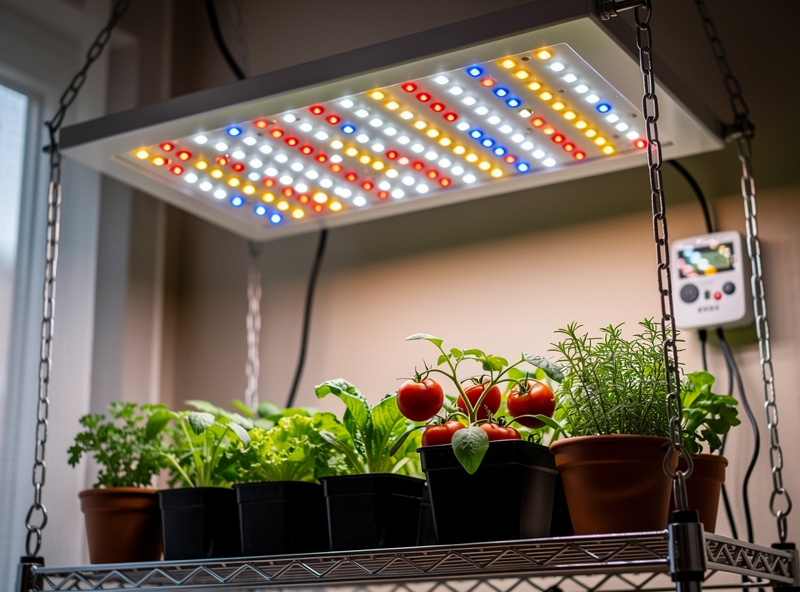
Light is the single most important factor in indoor growing success. Without sufficient intensity and the right spectrum, plants become leggy, pale, and unproductive. A south-facing window provides approximately 100-200 PPFD (Photosynthetic Photon Flux Density) — enough for low-light herbs but insufficient for fruiting crops. Tomatoes need 300-500 PPFD, peppers need 250-400 PPFD, and even lettuce performs best at 150-250 PPFD. DLI — Daily Light Integral, the total photons a plant receives over a day — is the metric that actually predicts whether a crop will produce, and Purdue Extension’s greenhouse bulletin is the clearest explanation of how it is measured and why it beats raw wattage when you are planning a setup (Measuring Daily Light Integral in a Greenhouse).
LED grow lights solve this problem efficiently. A 100W full-spectrum LED panel costs $40-60, covers a 2×2 foot area, and uses approximately $7 per month in electricity running 14 hours daily. This single investment transforms any corner, shelf, or closet into a productive growing space. For detailed guidance on selecting and positioning grow lights, see my comprehensive grow lights for vegetables guide.
Containers and Growing Medium
Container selection affects root health, watering frequency, and ultimately plant productivity. Fabric pots provide superior aeration and prevent root circling. Plastic pots retain moisture longer and are lighter. Self-watering containers reduce watering frequency and provide consistent moisture — ideal for herbs and lettuce. Whatever container you choose, ensure it has drainage holes to prevent waterlogged soil.
Potting mix is equally critical. Never use garden soil indoors — it compacts in containers, drains poorly, and may contain fungus gnat eggs and soil-borne pathogens. Use a high-quality, soilless potting mix formulated for containers. These mixes combine peat moss or coco coir with perlite and vermiculite for optimal drainage and aeration. For a detailed comparison of potting soils and their performance with different crops, see my potting soil guide.
Starting from Seed Indoors
Starting plants from seed indoors gives you access to thousands of varieties unavailable as transplants, costs a fraction of buying seedlings, and lets you time your harvests precisely. Seeds germinate under modest light (100-200 PPFD) and only need strong lighting once they develop their first true leaves.
The seed starting process involves selecting quality seeds, using a sterile seed-starting mix, maintaining consistent moisture and warmth (70-75°F), and providing 14-16 hours of light daily. Once seedlings develop 2-3 true leaves, they can be transplanted into larger containers under stronger lighting. For complete seed starting instructions, see my growing plants from seed indoors guide.
Growing Tomatoes Indoors
Tomatoes are the most popular indoor fruiting crop and the most rewarding when done correctly. The key is choosing compact varieties bred for container growing and providing adequate light intensity. Standard indeterminate tomato varieties grow too large for indoor spaces, but dwarf varieties like Tiny Tim, Micro Tom, and Patio Princess stay under 18 inches while producing abundant fruit.
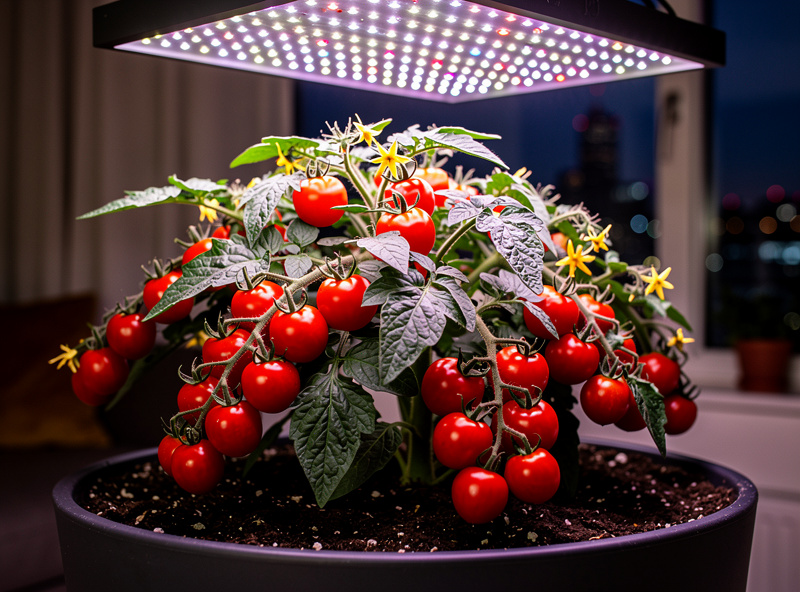
Indoor tomatoes need 300-500 PPFD of light for 14-16 hours daily, temperatures between 65-80°F, consistent watering, and hand pollination (gently shaking flower clusters daily to transfer pollen). With these conditions met, you can harvest cherry tomatoes 70-90 days from seed and continue producing for 4-6 months from a single plant.
For the complete indoor tomato growing protocol, see my growing tomatoes inside apartment guide.
Tomato Grow Light Selection
Tomatoes have the highest light requirements of any common indoor crop. A 150-200W LED panel positioned 10-14 inches above the canopy provides the 300-500 PPFD that tomatoes need for flowering and fruiting. Smaller lights produce vegetative growth but few or no fruits. For detailed light selection and positioning guidance, see my grow lights for tomatoes guide.
Stage-by-Stage Tomato Lighting
Tomato light requirements change as the plant develops. Seedlings need 100-200 PPFD at 16 hours daily. Vegetative growth benefits from 200-300 PPFD. Flowering and fruiting require 300-500 PPFD. Adjusting light height and intensity at each stage optimizes growth while minimizing electricity costs. The stage-by-stage breakdown lives in my grow lights for tomatoes guide, including exact hanging heights for each growth phase.
Starting Tomato Seeds Indoors
Starting tomato seeds indoors 6-8 weeks before your planned transplant date (or for permanent indoor growing) gives you access to hundreds of varieties and saves significant money compared to buying seedlings. Tomato seeds germinate in 5-10 days at 70-80°F and grow rapidly under adequate light. For detailed seed starting instructions specific to tomatoes, see my starting tomato seeds indoors guide.
Growing Peppers Indoors
Peppers are excellent indoor crops that thrive in container environments. Compact varieties like Apache, Numex Twilight, and Chili Chin produce abundant fruit on plants that stay under 18 inches. Peppers need slightly less light than tomatoes (250-400 PPFD) but benefit from warm temperatures (70-85°F) and consistent watering.
Indoor peppers produce continuously once they begin fruiting, with individual plants yielding 20-50 peppers over a 4-6 month production period. Hot peppers generally produce more fruit indoors than sweet bell peppers, which require more light and space. Like tomatoes, peppers need hand pollination — gently shaking the plants daily when flowers are open.
For complete indoor pepper growing instructions, see my growing peppers indoors guide. For specific lighting requirements, see my grow lights for peppers guide.
Growing Herbs Indoors
Herbs are the easiest and most immediately rewarding indoor crop. Basil, mint, cilantro, parsley, chives, and oregano all thrive in containers with modest light requirements (150-250 PPFD). A single LED panel can grow 6-8 herb pots simultaneously, providing a continuous supply of fresh herbs that would cost $30-50 per month at the grocery store.
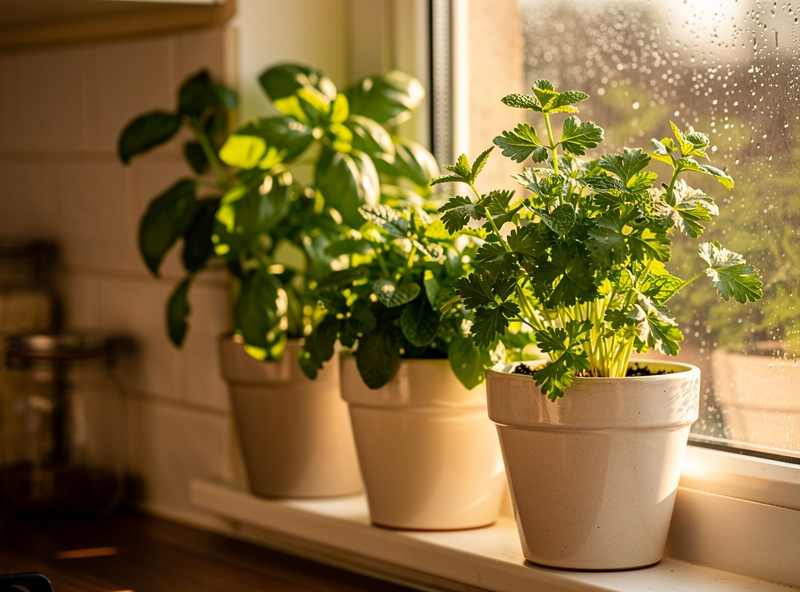
The key to productive indoor herb growing is regular harvesting. Pinching basil tops prevents flowering and encourages bushy growth. Cutting cilantro and parsley at the base stimulates regrowth. Mint grows aggressively and benefits from regular pruning. Most herbs produce continuously for 3-6 months before needing replacement.
For detailed instructions on growing every common herb indoors, see my growing herbs indoors guide.
Growing Lettuce Indoors
Lettuce is the fastest-producing indoor vegetable, with harvest-ready leaves in 30-40 days from seed. Cut-and-come-again varieties provide multiple harvests from a single planting — cut outer leaves at the base and the plant continues producing new growth for 3-4 additional harvests. Lettuce needs only 150-250 PPFD, making it one of the most electricity-efficient indoor crops.
Indoor lettuce has several advantages over outdoor growing: no bolting from summer heat, no slug damage, no soil-borne diseases, and year-round production. Varieties like Black Seeded Simpson, Buttercrunch, and Red Sails perform particularly well indoors. For complete lettuce growing instructions, see my growing lettuce inside guide.
Growing Strawberries Indoors
Strawberries are a premium indoor crop that rewards patience with exceptional fruit quality. Day-neutral varieties like Albion, Seascape, and Tristar produce fruit continuously under indoor conditions rather than in a single seasonal burst. Indoor strawberries taste dramatically better than store-bought because they are harvested at peak ripeness rather than being picked green for shipping.
Indoor strawberries need 250-350 PPFD, temperatures between 60-75°F, and consistent moisture. Plants begin producing 90-120 days from planting and continue for 6-12 months with proper care. Each plant yields 1/2 to 1 pound of fruit over its production period. For complete indoor strawberry growing instructions, see my growing strawberries indoors guide.
Essential Indoor Growing Tips
Success with indoor growing comes down to mastering a few key practices that separate productive gardens from disappointing ones.
Air Circulation
Indoor environments lack the natural air movement that strengthens plant stems and prevents fungal diseases. A small USB fan running on low provides sufficient air circulation for a shelf-sized growing area. Air movement strengthens stems through mechanical stimulation (thigmomorphogenesis), reduces humidity around leaves that promotes mold, and ensures CO2 reaches leaf surfaces for photosynthesis.
Watering Discipline
Overwatering is the most common indoor growing mistake. Containers without drainage holes, watering on a schedule rather than by need, and using soil that retains too much moisture all lead to root rot and fungus gnat infestations. Check soil moisture before every watering — insert your finger 2 inches into the soil and water only when it feels dry. Bottom watering (placing pots in a tray of water for 30 minutes) keeps the soil surface dry while hydrating roots, reducing fungus gnat risk.
For anyone who travels or simply forgets, a self-watering container or a wicking reservoir solves the consistency problem — the plant draws water from a reservoir as it needs it, so the surface stays dry (frustrating fungus gnats) while the roots stay evenly moist. I run 3D-printed wicking inserts in several of my shelves for exactly that reason: they cut my winter watering to twice a week even with the lights drying the air out, and they stop the wet-surface fungus-gnat cycle that ruins seedling flats. The same capillary principle is what makes bottom-watering seed trays work — give the roots water from below and keep the top dry.
Nutrient Management
Potting mix provides nutrients for approximately 4-6 weeks. After that, plants need supplemental feeding. Use a balanced liquid fertilizer (such as 10-10-10 or 20-20-20) diluted to half strength every 2 weeks for leafy crops, or a bloom-formula fertilizer (higher phosphorus) for fruiting crops during flowering. Over-fertilizing causes salt buildup that damages roots — flush containers with plain water monthly to leach excess salts.
Pest Prevention
Indoor gardens face fewer pests than outdoor gardens, but fungus gnats, aphids, and spider mites can still appear. Prevention is easier than treatment: quarantine new plants for 2 weeks, inspect regularly, maintain good air circulation, and avoid overwatering. For comprehensive fungus gnat prevention and elimination, see my fungus gnats in houseplants guide.
Indoor Crop Comparison
Choosing what to grow indoors depends on your light setup, space, and goals. Here is how the most popular indoor crops compare.
| Crop | Light Needed | Days to Harvest | Difficulty | Yield per Plant |
|---|---|---|---|---|
| Lettuce | 150-250 PPFD | 30-40 days | Beginner | 3-4 harvests |
| Herbs (basil, mint) | 150-250 PPFD | 21-28 days | Beginner | Continuous |
| Peppers (compact) | 250-400 PPFD | 70-90 days | Intermediate | 20-50 fruits |
| Strawberries | 250-350 PPFD | 90-120 days | Intermediate | 0.5-1 lb |
| Tomatoes (dwarf) | 300-500 PPFD | 70-90 days | Advanced | 1-3 lbs |
Recommended starting sequence: Begin with lettuce and herbs to build confidence and see quick results. Add peppers once you have mastered light positioning and watering. Attempt tomatoes and strawberries after you have a reliable grow light setup and consistent environmental control.
Setting Up Your Indoor Grow Light System
The grow light setup you choose determines everything about your indoor garden’s productivity. Getting this right from the start saves money, space, and frustration. Here is how to build an effective system regardless of your budget or space constraints.
Budget Setup: Under $100
A functional indoor garden for under $100 is entirely possible with smart choices. Start with a single 100W full-spectrum LED panel ($40-60), a 2-tier wire shelving unit ($30-40), a mechanical timer ($5), and basic pots with potting mix ($15). This setup provides approximately 4 square feet of growing area across two tiers, enough for 8-12 herb pots or 4-6 lettuce heads. Position the LED panel on the top tier to light the shelf below, or use two smaller panels (one per tier) for more even coverage.
This budget setup produces enough lettuce and herbs to save $20-40 per month on grocery costs, meaning it pays for itself within 3-5 months. Focus on leafy crops first — they need less light and produce faster than fruiting crops.
Mid-Range Setup: $100-300
The mid-range tier adds significant capability. A 200W quantum board LED panel ($80-120) covers a 3×3 foot area with enough intensity for both leafy and fruiting crops. A 4-tier wire shelving unit ($50-70) provides 16 square feet of growing area. LED light bars mounted under each shelf ($40-60 for a set of 4) provide more even light distribution than a single panel. Add digital timers ($15) and self-watering containers ($30-50) for a system that runs with minimal daily attention.
This setup can simultaneously grow herbs on the top tier, lettuce on the middle tiers, and a dwarf tomato or pepper plant on the bottom tier. Monthly production value: $40-80 in fresh produce.
Premium Setup: $300-600
The premium tier is for serious indoor food production. A 2×4 foot grow tent ($80-120) with reflective mylar walls increases light efficiency by 15-25%. Two 200W LED bar systems ($200-300) provide uniform, intense lighting across the entire growing area. Automated watering systems ($50-100), climate control with inline fans ($40-80), and shelving optimized for the tent dimensions complete the system.
This setup produces enough vegetables and herbs to significantly reduce grocery spending — $80-150 per month in fresh produce value. It can grow tomatoes, peppers, lettuce, herbs, and strawberries simultaneously with professional-quality results.
Environmental Control for Indoor Gardens
Beyond light, three environmental factors determine indoor growing success: temperature, humidity, and air circulation. Getting these right creates the stable conditions that plants need for consistent, productive growth.
Temperature Management
Most vegetables and herbs thrive at 65-75°F (18-24°C) during the day and 60-65°F (15-18°C) at night. This range matches typical indoor home temperatures, which is one reason indoor growing works so well in residential spaces. However, grow lights generate heat that can push temperatures above the ideal range, especially in enclosed spaces like grow tents or small closets.
Monitor temperature with a simple digital thermometer placed at plant canopy level. If temperatures exceed 80°F, increase air circulation, raise the light further from plants, or add a small fan. In winter, indoor temperatures may drop below 60°F at night — most vegetables tolerate this but growth slows. A small space heater set to 65°F maintains optimal growing temperatures without significant energy cost.
Humidity Control
Indoor humidity typically ranges from 30-50% in most homes, which is suitable for most vegetables and herbs. Seedlings benefit from higher humidity (60-70%) during their first 1-2 weeks — a clear plastic dome or humidity tray provides this. Once plants are established, average home humidity is fine.
High humidity above 70% promotes fungal diseases and fungus gnat breeding. If your growing area runs humid, increase air circulation with a fan and avoid overwatering. Low humidity below 30% causes rapid soil drying and leaf tip burn on sensitive plants like lettuce. A small humidifier or placing water trays near the growing area raises humidity modestly.
Air Circulation
Air movement is the most overlooked aspect of indoor growing. Outdoor plants experience constant wind that strengthens stems, dries leaf surfaces, and replenishes CO2 around leaves. Indoor plants in still air develop weak, leggy stems and are more susceptible to fungal diseases.
A small USB fan or oscillating desk fan running on low provides sufficient air circulation for a shelf-sized growing area. Position the fan to blow across the plants, not directly at them. The goal is gentle movement that causes leaves to flutter slightly — not a wind tunnel that stresses plants. Run the fan continuously or on a timer synchronized with your light schedule.
Common Indoor Growing Mistakes and How to Avoid Them
Most indoor growing failures stem from the same handful of mistakes. Knowing what to avoid saves weeks of frustration and dead plants.
Mistake 1: Insufficient Light
The most common failure is assuming a windowsill or decorative plant light provides enough intensity for food production. A south-facing window delivers 100-200 PPFD — enough for herbs but insufficient for tomatoes, peppers, or strawberries. Decorative “grow lights” from home decor stores often produce less than 50 PPFD. Always verify actual light output with a PPFD meter or the manufacturer’s published specifications before buying.
Mistake 2: Overwatering
Indoor containers dry more slowly than outdoor gardens because there is no wind and typically less direct sun. Watering on a fixed schedule rather than checking soil moisture leads to waterlogged soil, root rot, and fungus gnat infestations. Always check soil moisture before watering — insert your finger 2 inches into the soil or use a moisture meter. Water only when the top 2 inches feel dry.
Mistake 3: Wrong Varieties
Standard outdoor varieties grown indoors become massive, leggy, and unproductive. Choose compact, dwarf, or bush varieties bred for container growing. For tomatoes: Tiny Tim, Micro Tom, Patio Princess. For peppers: Apache, Numex Twilight. For cucumbers: Bush Pickle, Salad Bush. These varieties stay under 18-24 inches and fruit prolifically in containers.
Mistake 4: No Pollination
Fruiting crops grown indoors will flower but not set fruit without pollination. Outdoors, wind and insects handle this automatically. Indoors, you must replicate the process. Gently shake tomato and pepper plants daily when flowers are open, or use a battery-powered toothbrush to vibrate flower clusters. This simple 30-second daily habit is the difference between abundant harvests and zero fruit.
Mistake 5: Skipping the Learning Curve
Starting with tomatoes and expecting immediate success sets you up for disappointment. Tomatoes are the most demanding indoor crop — they need the most light, the most attention, and the most precise environmental control. Start with lettuce and herbs to build confidence, learn your light system, and dial in your watering schedule. Once you have consistent success with easy crops, graduate to peppers and then tomatoes.
Year-Round Indoor Growing Calendar
One of the greatest advantages of indoor growing is the ability to produce food on your schedule, not nature’s. Here is how to plan your indoor garden for continuous production throughout the year.
Winter (December-February)
Winter is peak indoor growing season. Cool indoor temperatures (60-68°F) are ideal for lettuce, spinach, kale, and herbs. Run grow lights for the full recommended photoperiod since natural daylight is minimal. Start tomato and pepper seeds indoors in late January for transplant into larger containers by March. This timing gives you fruiting plants ready for harvest by April-May.
Spring (March-May)
As outdoor gardening season approaches, use your indoor setup to start seeds for outdoor transplant. Tomato, pepper, and eggplant seedlings started indoors in March are ready for outdoor planting after the last frost. Continue growing leafy greens and herbs indoors — they thrive while outdoor gardens are still being prepared.
Summer (June-August)
Summer is the best time to focus on fruiting crops indoors. Warm indoor temperatures and abundant natural light (even with grow lights running) create ideal conditions for tomatoes and peppers. If you have outdoor garden space, reduce indoor leafy green production since outdoor gardens are now productive. Use the freed-up indoor space for heat-loving crops that benefit from the summer warmth.
Fall (September-November)
As outdoor gardens wind down, ramp up indoor production. Start new batches of lettuce and herbs to replace summer crops. Transplant outdoor herbs indoors before the first frost — basil, parsley, and chives transition well to indoor containers. Begin planning next year’s indoor growing schedule based on what worked and what did not during the current year.
Frequently Asked Questions
Can you really grow vegetables indoors year-round?
Yes. With adequate LED grow lights (150-500 PPFD depending on crop), proper containers, and quality potting mix, you can grow lettuce, herbs, peppers, tomatoes, and strawberries indoors 365 days a year regardless of outdoor conditions.
How much electricity do indoor grow lights use?
A 100W LED panel running 14 hours daily uses about 1.4 kWh per day, costing approximately $7 per month at average US electricity rates. This single panel can grow 6-8 herb pots or 4 lettuce heads simultaneously.
What is the easiest vegetable to grow indoors?
Lettuce is the easiest indoor vegetable. It needs only 150-250 PPFD, matures in 30-40 days, and produces multiple harvests from a single planting. Herbs like basil and mint are equally easy and provide continuous harvests.
Do indoor plants need special soil?
Yes. Use soilless potting mix formulated for containers, never garden soil. Potting mix provides proper drainage, aeration, and is free of pathogens and pest eggs. Garden soil compacts in containers and causes root rot.
How do you pollinate indoor plants?
Fruiting crops like tomatoes and peppers need hand pollination indoors since there are no wind or insects. Gently shake flower clusters daily when flowers are open, or use a battery-powered toothbrush to vibrate flowers at the right frequency.
Can I grow tomatoes indoors in an apartment?
Yes. Compact dwarf tomato varieties like Tiny Tim and Micro Tom stay under 18 inches and produce abundant fruit in 5-gallon containers. You need a 150-200W LED panel positioned 10-14 inches above the plants.
Related Indoor Growing Guides
Explore the rest of the indoor growing library for detailed instructions on every crop and technique:
- Growing Tomatoes Inside: The Complete Indoor Apartment Guide
- Grow Lights for Tomatoes: Indoor Growing Guide
- Starting Tomato Seeds Indoors: Complete Guide
- Growing Peppers Indoors: Complete Container Guide
- Grow Lights for Peppers: Indoor Lighting Guide
- Growing Herbs Indoors: Complete Container Guide
- How to Grow Lettuce Inside: Container Guide
- Growing Strawberries Indoors: Complete Container Guide
- Growing Plants from Seed Indoors: Complete Starter Guide
Related Articles
A few more guides that round out an indoor setup: