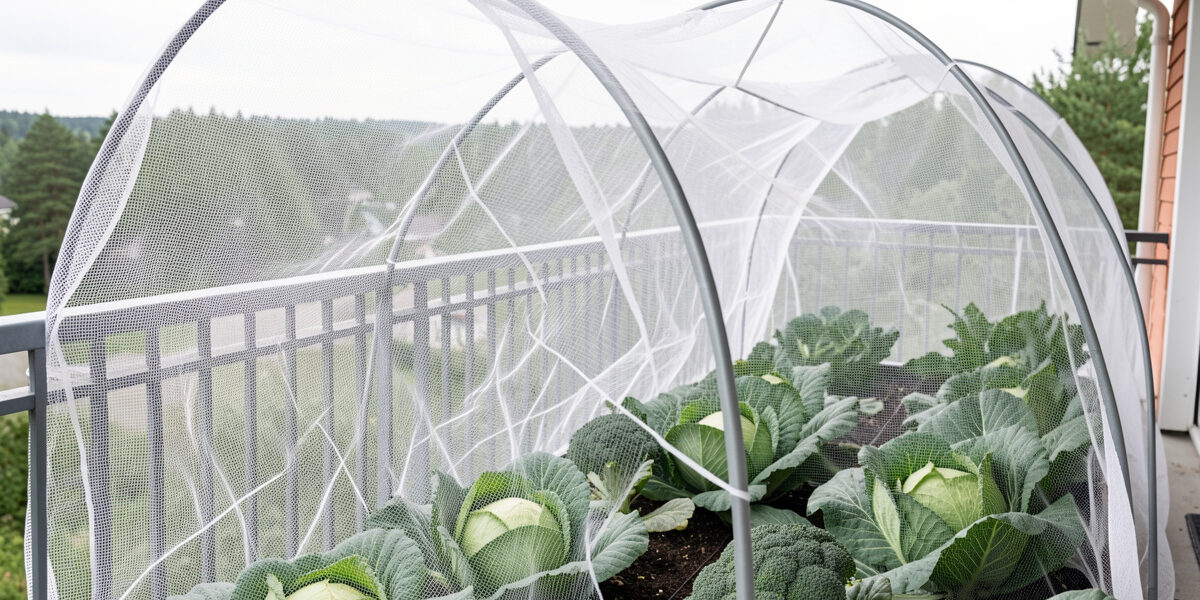
The most effective brassica pest control in containers is exclusion: fine insect netting over the pots from the day you transplant stops cabbage white butterflies, moths, and root fly laying on the plants in the first place. On a balcony you’ll still get aphids and flea beetle, but netting from day one prevents the caterpillar damage that ruins most container brassicas.
People assume a balcony is too high up for pests, and it simply isn’t — I’ve watched cabbage white butterflies quarter a third-floor balcony hunting for exactly these plants, and aphids drift in on the wind from streets away. The good news is that an isolated pot is actually easier to defend than a row in open ground, because you can put a physical barrier around the whole thing. This guide is the container-specific approach: exclusion first, then how to deal with each pest when one gets through, and an honest note on why the companion-planting advice written for big gardens does little for a single pot.
Exclusion First: Netting Is the Whole Game
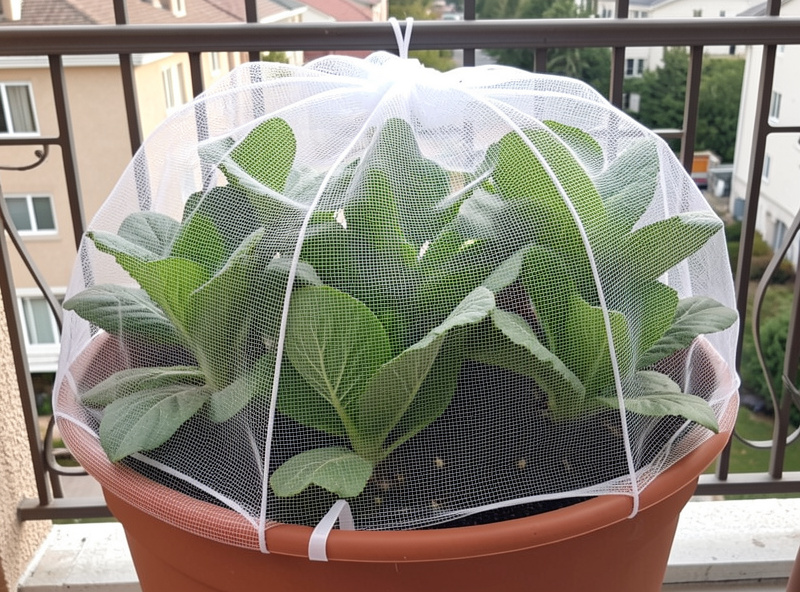
Cover brassica pots with fine insect mesh (roughly 0.8 mm) from transplant day, draped over hoops or a frame so it doesn’t rest on the leaves, and tucked in around the pot rim. This single step blocks the cabbage white butterfly, cabbage moth, and cabbage root fly from reaching the plant to lay eggs — the four worst brassica pests, stopped before they start.
Netting beats every spray and every picking routine because it prevents the problem instead of reacting to it. The mesh has to be fine enough to stop a butterfly (ordinary bird netting won’t), held off the foliage so the cabbage whites can’t simply lay through it where leaves touch the mesh, and sealed around the base so root fly can’t get to the soil. I keep a few lengths of fine insect mesh netting on hoops that drop straight over the pots. As an Amazon Associate I earn from qualifying purchases. The same exclusion-first thinking governs the whole container brassica system — it’s far less work to keep pests off than to fight them once they’re established on a plant you’ve tended for months.
The Pests You’ll Meet and How to Stop Them
Container brassicas face a predictable cast: cabbage white caterpillars, mealy cabbage aphids, flea beetle, cabbage root fly, whitefly, and the occasional slug. Each has a clear control, and most are managed by netting plus a quick weekly inspection of the leaf undersides where eggs and colonies hide. The table below is my working reference for what to do about each one.
| Pest | Sign | Container control |
|---|---|---|
| Cabbage white caterpillars | Chewed leaves, green/yellow caterpillars, clusters of eggs under leaves | Netting from transplant; rub off egg clusters; hand-pick; Bt if severe |
| Mealy cabbage aphid | Grey-white waxy colonies in growing tips and sprouts | Blast with water, squash colonies, encourage ladybirds; net to slow arrival |
| Flea beetle | Tiny shot-holes peppering young leaves | Netting, keep plants growing fast, water well; worst in warm dry spells |
| Cabbage root fly | Wilting, stunted plants; maggots at the roots | Collar around the stem base or net sealed to the rim; biological nematodes |
| Whitefly | Clouds of tiny white flies when plant is disturbed | Netting, yellow sticky traps, strip lower leaves; tolerate light numbers |
| Slugs & snails | Holes, slime trails, seedlings vanishing | Raise pots, copper tape on rims, hand-pick at night; less common up high |
Cabbage white caterpillars are the headline pest: the butterfly lays clusters of yellow eggs on the leaf undersides, and the caterpillars that hatch can strip a young plant in a couple of days and bore into a cabbage head where you can’t reach them. If some get through the netting, rub off any egg clusters you find and hand-pick the caterpillars — on a few balcony pots that’s entirely manageable. For a bad outbreak, a Bacillus thuringiensis (Bt) product is the targeted biological option that hits caterpillars without harming bees. The Almanac cabbage-worm guide is a useful visual reference for telling the imported cabbageworm from the cabbage looper if you are unsure what you are picking off.
Aphids, Flea Beetle, and Root Fly Up Close
Mealy cabbage aphids form grey, waxy colonies tucked into growing tips and — on Brussels sprouts — down inside the sprouts where they’re hard to reach. Catch them early with a weekly check, blast colonies off with water or squash them, and the problem stays small. Let them establish over a long season and they distort the growing point and weaken the whole plant.
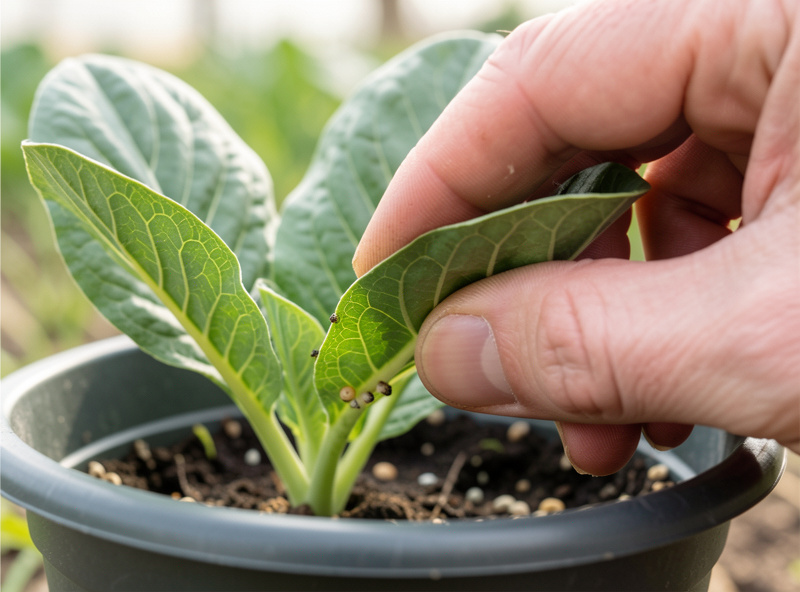
Flea beetle is the one netting handles almost incidentally: the tiny beetles chew shot-holes in young leaves, worst in warm dry weather, and a covered, well-watered plant growing fast usually outpaces the damage. It’s mostly a cosmetic problem on established plants — ugly but rarely fatal — though it can check a small seedling, so net from the start. Cabbage root fly is the sneaky one: the adult lays at the soil surface beside the stem, and the maggots eat the roots, so the first sign is a plant wilting for no obvious reason. In a container you have two good defences — a collar (a disc of card or rubber around the stem base) that stops the fly laying at the soil, or netting sealed right down to the pot rim. Watering-can-applied biological beneficial nematodes are the rescue option if maggots are already in the mix. Keeping the soil surface and pots clean of debris, the same hygiene that keeps a compost system healthy, gives pests fewer places to start.
Why Companion Planting Underperforms in Pots
Most companion-planting advice — interplant with aromatic herbs to confuse pests, grow a trap crop nearby — assumes a garden bed with room for a diverse planting. A single brassica in an isolated pot can’t host a meaningful companion scheme, and the few centimetres of soil around it won’t support the “confusion” effect those big-garden trials rely on.
I’m not against companion planting where there’s space for it, but on a balcony of separate pots it mostly doesn’t translate, and leaning on it instead of netting is how people lose a crop. A pot of marigolds next to your cabbage looks nice and won’t hurt, but it isn’t a substitute for a physical barrier against a butterfly that will fly straight past it to lay on the brassica. Encouraging beneficial insects — ladybirds and hoverflies that eat aphids — is the one “companion” idea that does carry over, because those predators will find an aphid colony on a balcony if you don’t blast it off first; a few pollinator and beneficial-insect plants nearby genuinely help with aphids. But for the egg-laying pests, exclusion does the heavy lifting. Net first, inspect weekly, hand-deal with the few that get through, and reserve sprays for genuine outbreaks.
A Simple Weekly Routine
The whole system comes down to one habit: once a week, lift the netting and check the undersides of the leaves and the growing tips for eggs, caterpillars, and aphid colonies, dealing with anything you find on the spot. Five minutes a week of inspection prevents almost every serious container brassica pest disaster, because you catch problems while they’re still small and local.
Pests escalate when they’re left unseen — a few aphids become a colony, a cluster of eggs becomes a leaf full of caterpillars — so the inspection matters more than any product. While you’re in there, strip yellowing lower leaves (they harbour pests and slow airflow), make sure the netting still isn’t resting on the foliage, and check the soil surface for slug damage. Keep the plants growing strongly with steady water and feeding, because a vigorous brassica shrugs off minor pest damage that would cripple a stressed one. Do that, and pest control on a balcony becomes a quiet five-minute weekly job rather than a crisis.
Frequently Asked Questions
What is the best pest control for brassicas in containers?
Fine insect netting (about 0.8 mm mesh) over the pots from transplant day, held off the leaves and sealed around the pot rim. It physically blocks cabbage white butterflies, cabbage moth, and root fly from laying on the plants, which prevents the caterpillar and maggot damage that ruins most container brassicas.
How do I stop cabbage white caterpillars on balcony brassicas?
Net the pots from the day you transplant so the butterfly cannot lay eggs. If some get through, check leaf undersides weekly, rub off the yellow egg clusters, and hand-pick caterpillars. For a heavy outbreak, a Bacillus thuringiensis (Bt) product targets caterpillars without harming bees.
Do cabbage white butterflies really reach high balconies?
Yes. Cabbage whites actively hunt for brassicas and will find rooftop and high balcony pots, methodically searching a space for host plants. Height is no protection, which is why netting from day one is essential rather than optional on a balcony.
Does companion planting work for brassicas in pots?
Mostly no. Companion planting assumes a garden bed with room for diverse planting and trap crops, which an isolated pot cannot provide. The exception is growing a few flowers nearby to attract aphid-eating ladybirds and hoverflies. For egg-laying pests, netting does the real work.
How do I deal with aphids inside Brussels sprouts?
Mealy cabbage aphids hide in growing tips and inside the sprouts, so check weekly and blast or squash colonies before they establish. Over a long season they multiply fast, so early and regular inspection is key. Encouraging ladybirds and hoverflies helps keep numbers down.
What causes my container brassica to wilt suddenly?
Sudden wilting in a brassica often means cabbage root fly maggots eating the roots. Prevent it with a collar around the stem base or netting sealed to the pot rim so the fly cannot lay at the soil surface. Watering-can-applied beneficial nematodes can rescue an infested pot.