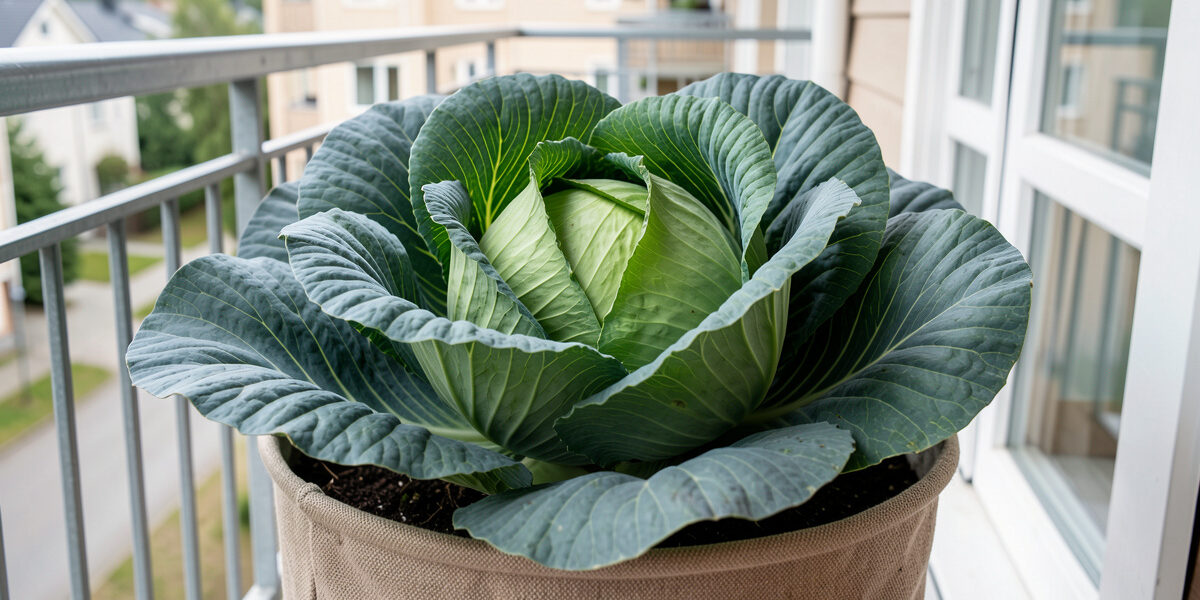
Cabbage is the most forgiving head-forming brassica to grow in a container, and on a balcony it wants a 15–20 litre pot at least 30 cm deep, one plant per pot, and steady moisture. It tolerates a missed watering far better than cauliflower, shrugs off frost, and a touch of autumn cold actually firms and sweetens the head — which makes it ideal for a short cold-climate season.
If you want a brassica that rewards a beginner, this is the one. Cabbage doesn’t button at the first dry day the way cauliflower does, it doesn’t need blanching, and it’s about the hardiest thing in the whole family — I’ve left cabbages out through hard Swedish frosts that flattened everything around them. The two things that go wrong in a pot are heads that split from inconsistent watering near maturity, and the inevitable cabbage white caterpillars. Both are easy to manage once you know they’re coming.
Pot Size and Why Cabbage Forgives You
Give each cabbage a 15–20 litre pot at least 30 cm deep, one plant per container. Cabbage builds a wide root system to support a dense head, but it’s less fussy than cauliflower about perfect conditions — it tolerates a brief dry spell, a cold night, and a slightly cramped root run without immediately bolting or buttoning. That tolerance is what makes it the beginner’s brassica.
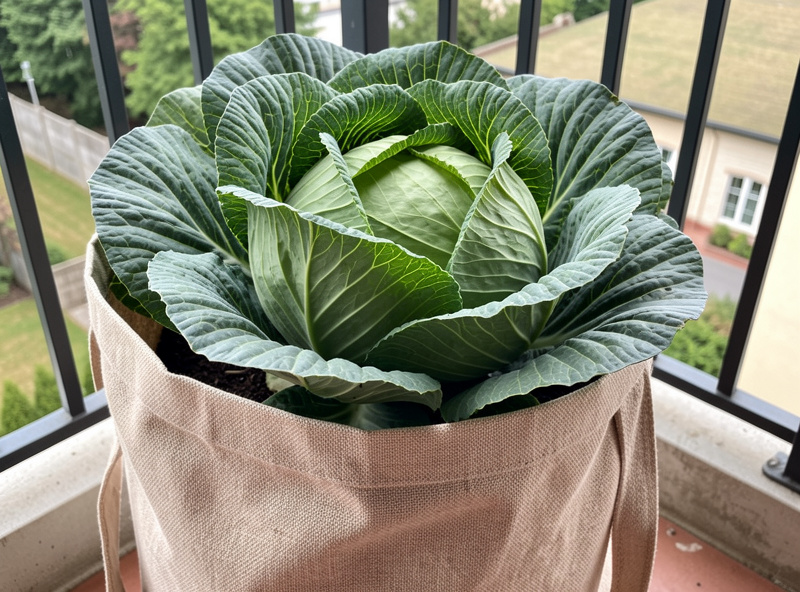
I run cabbage in 18-litre fabric bags and in the balcony raised beds, and it’s the crop I worry about least. The bigger soil volume holds moisture more evenly, which matters most as the head fills, but a cabbage will forgive the occasional lapse that would wreck a cauliflower. Choose the head size to the pot: a compact summer cabbage or a pointed sweetheart type suits a smaller container, while a big storage drumhead wants the full 20 litres. The heavy-feeder rules from the container brassicas guide all apply — rich free-draining mix, steady feeding — cabbage is just more relaxed about you getting them exactly right. For the fabric pots themselves, breathable fabric grow bags air-prune the roots and warm the mix faster in spring than glazed pots. As an Amazon Associate I earn from qualifying purchases.
If you’re using a balcony raised bed rather than individual pots, give each cabbage about 35–45 cm of space all round — closer spacing gives smaller heads, which is actually a fair trade if you’d rather have several compact cabbages than one giant. I sometimes plant a bed tight on purpose for a run of single-portion summer cabbages. What you can’t do is cram them: a cabbage starved of root room and light by its neighbours will make a loose, leafy non-head and sulk, the same way a single plant does in too small a pot. Space generously and the heads firm up properly.
Choosing a Cabbage Type for the Balcony
Cabbage types are timed to different seasons, so pick by when you want to harvest. Summer and pointed “sweetheart” cabbages are fast and compact — the best balcony starters. Autumn and savoy types are bigger and frost-hardy. Storage drumheads and red cabbage are the long-season, big-pot options that pay off if you’ve got the space and want a head that keeps.
| Type | Season | Head size | Container fit |
|---|---|---|---|
| Pointed / sweetheart | Early summer | Small, conical | Excellent (small pots) |
| Summer ballhead | Summer | Medium | Excellent |
| Savoy | Autumn–winter | Medium, crinkled | Good, very hardy |
| Storage drumhead | Late autumn | Large, dense | Needs 20 L+ |
| Red cabbage | Autumn | Medium–large | Needs 20 L+ |
For a first balcony cabbage I’d grow a pointed summer type: it crops fast inside a short season, the conical head sits happily in a smaller pot, and it’s sweet and tender straight off the plant. Savoy is my pick for stretching the season into the cold — the crinkled leaves take frost beautifully. Red cabbage and big storage drumheads are the same crop that ends up shredded into the sauerkraut crock; the growing and the fermenting are two stages of the same kitchen project.
Watering to Prevent Split Heads
The classic container cabbage failure is a head that splits open, and it’s almost always caused by a heavy drink after a dry spell — the inside grows faster than the skin can stretch. Keep moisture steady, especially as the head firms up, and you’ll avoid it. A self-watering setup that holds even moisture from below is the simplest insurance.
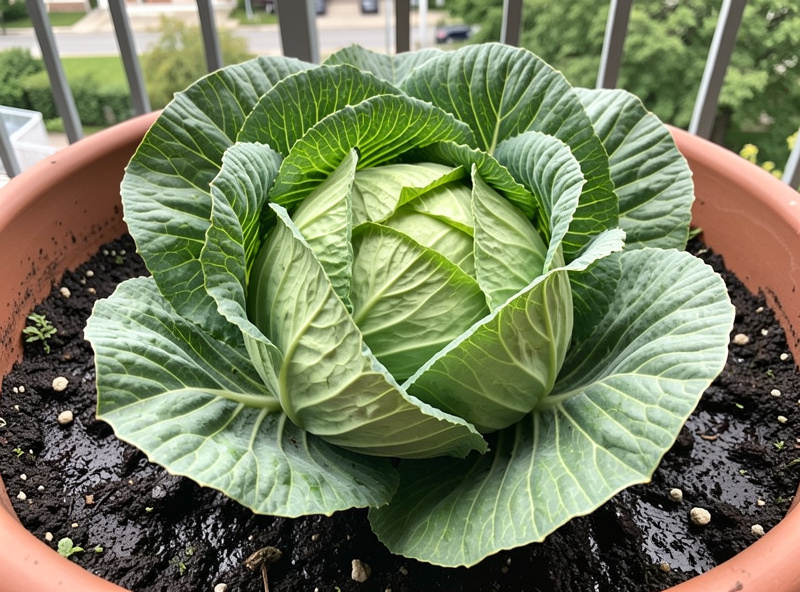
Splitting is purely a water-consistency problem: let a maturing cabbage dry out, then soak it — or let a dry spell break with heavy rain — and the sudden surge of water swells the interior leaves until the head bursts. I run my cabbages on a self-watering insert for exactly this reason, because the even moisture from a reservoir removes the feast-and-famine swing that causes the split. If you’re hand-watering, the trick is little and often as the head matures rather than letting it swing. A handy field fix if a mature head is about to split and rain is coming: give the plant a quarter-turn twist to snap some roots and slow its water uptake, which buys you a few days to harvest. Stick to a sensible watering schedule by growth stage and splitting rarely happens.
Feeding and Harvest
Cabbage is a heavy feeder like the rest of the family: a balanced-to-nitrogen feed builds the leaf frame, easing back as the head forms. Harvest when the head feels firm and solid to a squeeze, cutting low with a sharp knife. Leave the stump and outer leaves in the pot and a summer cabbage will often push two or three small secondary heads for a bonus crop.
I top-dress with worm castings at transplant and follow with a liquid feed through the leafy growth, then let the plant firm its head without pushing soft growth — the full schedule is in the fertilizing brassicas guide. On harvest, the squeeze test is reliable: a head ready to cut feels dense and unyielding, not spongy. Once you’ve taken the main head, score a shallow cross in the top of the remaining stump and keep it watered and fed — the secondary mini-cabbages that form are small but genuinely worth having from a pot you’d otherwise clear. For the storage types, cut with a few wrapper leaves on and keep them somewhere cold and airy.
Frost Tolerance and Cold-Climate Timing
Cabbage is one of the hardiest vegetables you can grow, and many types are improved by frost — the cold converts starches to sugars and firms the head. Start indoors 4–6 weeks before the last frost for a summer crop, or sow autumn and savoy types a little later to mature into the first frosts, which up north is when they’re at their best.
This frost-hardiness is exactly why cabbage suits a cold climate so well: where a tender crop is finished by the first hard night, a savoy or storage cabbage is just hitting its peak. I time the autumn and winter types deliberately to mature as the cold sets in, and they’ll stand in the pot through frosts that would destroy anything tender, sweetening as they go. The RHS cabbage guide breaks down the sowing and harvest timing for each cabbage season, which is the framework I shift earlier for a northern climate. Row covers or a balcony hoop house extend the standing season further still, letting a hardy cabbage hold in good condition well into the cold months. The main job through all of this is keeping the cabbage whites off — covered next.
The One Pest You Will Definitely Get
Whatever else happens, cabbage white butterflies will find your cabbage — even on a high balcony. The single best defence is fine insect netting over the pot from transplant day, blocking the butterfly from laying eggs. Without it, caterpillars hatch and bore into the head, and once they’re inside a tight cabbage they’re nearly impossible to remove.
I’ve watched cabbage whites work a third-floor balcony methodically, so height is no protection. Netting from day one is the rule; it’s far easier to exclude the butterfly than to deal with caterpillars later. Aphids that nest in the folds of the outer leaves are the other regular, and a strong jet of water or squashing colonies by hand keeps them down. The full container pest routine — netting, root fly collars, and why companion planting does little for an isolated pot — is in the brassica pest control guide.
Frequently Asked Questions
What size container does cabbage need on a balcony?
Give each cabbage a 15-20 litre pot at least 30 cm deep, one plant per container. A compact summer or pointed cabbage suits the smaller end, while a big storage drumhead or red cabbage wants the full 20 litres to build a dense head.
Is cabbage easy to grow in containers?
Yes, cabbage is the most forgiving head-forming brassica for pots. It tolerates a missed watering far better than cauliflower, needs no blanching, and is extremely frost-hardy. The main things to manage are split heads from uneven watering and cabbage white caterpillars.
Why did my container cabbage head split open?
Splitting is caused by a sudden surge of water after a dry spell, which swells the inner leaves faster than the skin can stretch. Keep moisture steady as the head firms up. If a mature head is about to split before rain, give the plant a quarter-turn twist to break some roots and slow its uptake.
Can I get a second crop from one cabbage plant?
Often yes. After cutting the main head, leave the stump and outer leaves in the pot, score a shallow cross in the top of the stump, and keep it watered and fed. A summer cabbage will frequently push two or three small secondary heads for a bonus harvest.
Does cabbage survive frost in a container?
Cabbage is one of the hardiest vegetables and many types are improved by frost, which converts starches to sugars and firms the head. Savoy and storage types in particular stand through hard frosts and are at their best in cold weather, making cabbage ideal for a short cold-climate season.