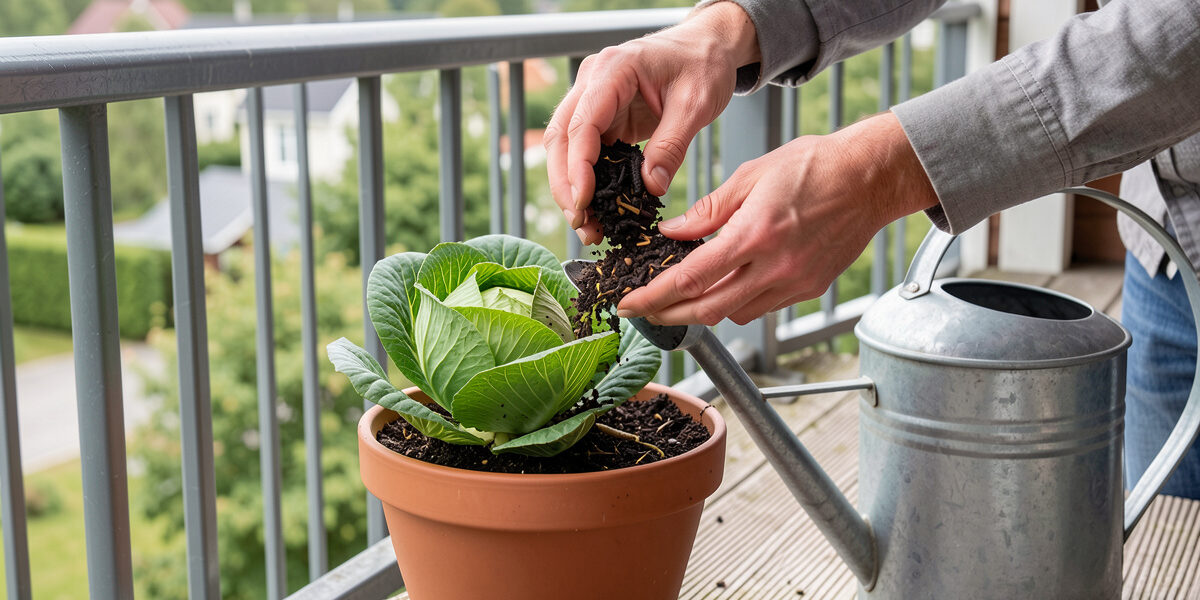
Container brassicas are heavy feeders growing in a finite pot of soil that nutrients leach out of every time you water, so they need more deliberate feeding than the same plants in open ground. Build fertility into a rich mix at planting, then layer on a nitrogen-leaning liquid feed while they build leaf, easing toward potassium as heads, curds, and sprouts form.
Feeding is the half of container brassica growing that people quietly get wrong. They fill a pot, plant a cabbage, and treat it like a houseplant — and then wonder why it pales and makes a token head by midsummer. A brassica in a pot is one of the hungriest things you can grow in a small space, and the container works against you: there’s only so much soil, and every watering rinses soluble nutrients out the bottom. Get the feeding rhythm right and the difference is dramatic. This guide is the schedule I run across the whole container brassica family, from transplant to harvest.
Why Pots Need More Feeding Than Beds
A container holds a fixed, limited volume of soil and nutrients, and frequent watering — which brassicas demand — leaches those nutrients out through the drainage holes faster than in ground. So a potted brassica runs out of food sooner and needs topping up regularly, where the same plant in a garden bed can draw on a much larger reserve and the surrounding soil life.
This leaching is the core reason container feeding is its own skill. Every time water runs out the bottom of the pot it carries dissolved nitrogen and potassium with it, so a mix that started rich is steadily stripped over the season. A garden bed buffers this with volume and a living soil web; a 15-litre pot can’t. The practical upshot is that you feed container brassicas little and often through the growing season rather than relying on a single dose at planting. It’s the same reason I lean on a self-watering setup — bottom-watering from a reservoir leaches far less than pouring water through the top, so the feed you give stays in the mix longer.
What Brassicas Want at Each Stage
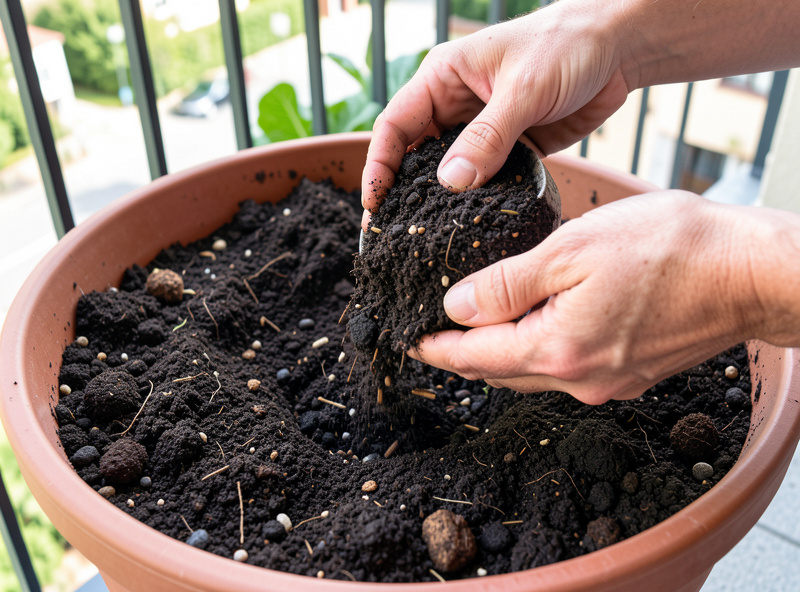
Brassicas want plenty of nitrogen early to build their leaf frame, then a shift toward potassium as they form heads, curds, or sprouts. Too much nitrogen late gives soft, loose growth — blown sprouts, leafy non-hearting cabbages — so the trick is feeding hard for leaf early, then easing the nitrogen and keeping potassium up through the cropping phase.
| Stage | Nutrient focus | What to apply |
|---|---|---|
| At transplant | Balanced base + slow organic | Compost and worm castings worked into the mix; a balanced organic granule |
| Leaf-building (first 4–6 weeks) | Nitrogen-leaning | Liquid feed every 1–2 weeks; a high-nitrogen organic feed |
| Head / curd / sprout forming | Ease nitrogen, raise potassium | Switch to a balanced or tomato-type potassium feed; keep it steady |
| Long-season crops (sprouts, storage cabbage) | Sustained moderate feeding | Continue fortnightly feed; top-dress with castings mid-season |
The nitrogen-then-potassium arc is the single most useful thing to understand about feeding brassicas. Early on you want lush leaf, because the size of the leaf frame sets the size of the eventual head — this is when nitrogen earns its keep. But once the plant switches to forming the bit you eat, surplus nitrogen becomes a liability: it pushes soft growth that blows sprouts open, loosens cabbage hearts, and makes plants more aphid-prone. Potassium, by contrast, supports firm, well-formed heads and curds. A potassium-rich “tomato” type feed is a convenient way to make that shift without buying a separate product — the same bottle I use for feeding tomatoes does the job for heading brassicas.
Build Fertility Into the Mix First
The best container feeding starts before you plant: a mix rich in compost and worm castings gives a slow, steady baseline of nutrition and trace elements that a bottle of liquid feed can’t fully replace. I work a couple of generous handfuls of worm castings into every brassica pot at planting and top-dress again at heading — brassicas respond to that biological feed beautifully.
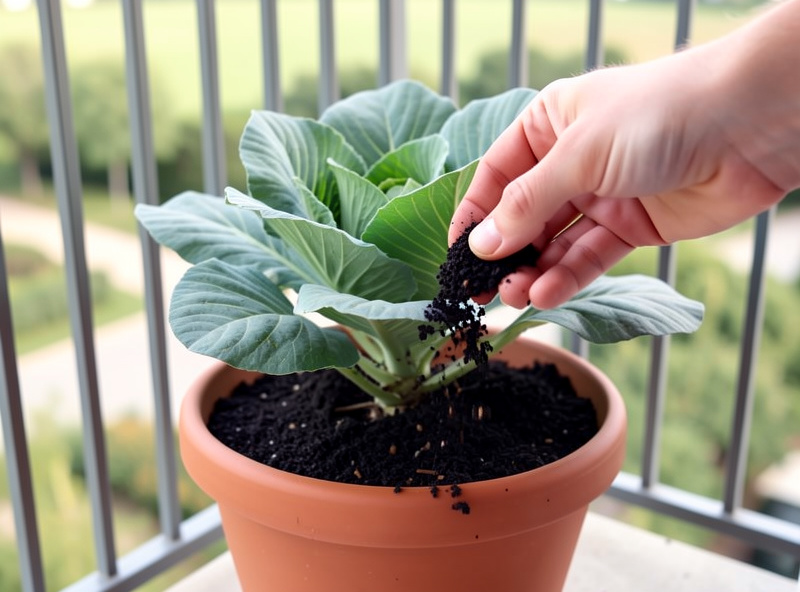
A living mix does two things a salt fertiliser can’t: it releases nutrients slowly as the plant needs them rather than in a flush that leaches away, and it supplies the trace elements — boron, molybdenum, magnesium — whose absence shows up in brassicas as browning cauliflower curds, distorted leaves, and yellowing. My base is compost or coir for structure, worm castings and aged garden compost for fertility, and perlite for drainage. The compost loop and the worm bin in my kitchen feed straight back into these pots; the same home compost that breaks down the kitchen scraps becomes the slow fertility under the next cabbage. Building this base means the liquid feeding on top is a top-up, not the whole supply, which is a far more stable way to feed a hungry plant. For a convenient bagged option to mix in, an organic vegetable fertiliser granule works well alongside the castings. As an Amazon Associate I earn from qualifying purchases.
Liquid Feeding Through the Season
Through the active growing season, give container brassicas a liquid feed every one to two weeks, watered into already-damp soil so it doesn’t scorch dry roots. A diluted general or high-nitrogen feed suits the leaf-building phase; switch to a balanced or potassium-rich feed as heads form. Always follow the dilution on the bottle — stronger is not better and can burn roots.
The regular liquid feed is what compensates for leaching over the season. I feed fortnightly as a default, more often in peak summer when fast-growing plants in warm weather drink and feed heavily, and I always water it onto damp mix — feeding a bone-dry pot risks scorching the roots and most of it runs straight through anyway. Organic liquid options like diluted seaweed or a nettle/comfrey brew work well and add trace elements; a balanced synthetic feed works too if you prefer, just at the recommended strength. Don’t overdo it: a brassica swamped in high-nitrogen feed grows soft, sappy, and pest-prone, and over-feeding is as real a problem as under-feeding. Steady, moderate, regular beats occasional and heavy every time.
Reading the Plant: Deficiency Signs
Brassicas tell you what they’re short of. Overall pale, yellowing older leaves usually mean nitrogen shortage — common in containers late in the season. Purpling leaves can signal phosphorus shortage or simply cold roots in spring. Browning cauliflower curds and hollow stems point to boron, and yellowing between leaf veins suggests magnesium. Reading these early lets you correct before the crop suffers.
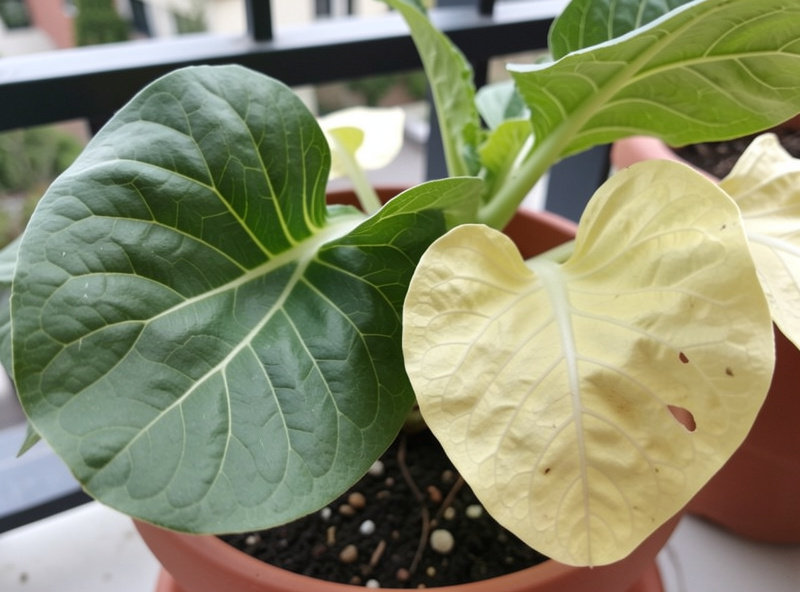
The most common one you’ll see in a pot is nitrogen hunger: the lower, older leaves yellow and the whole plant looks pale and stalls, because the leached container has run dry of available nitrogen and the plant is cannibalising old leaves to feed new growth. A liquid nitrogen feed corrects it within days. Purpling is worth reading carefully — in cold spring weather it’s often just chilled roots that can’t take up phosphorus, and it resolves as the soil warms, rather than a true deficiency to chase. The trace-element problems (boron, magnesium) are far rarer if you’ve built the mix with compost and castings, which is the best argument for doing so. If a deficiency has you second-guessing, the RHS grow-your-own guide for the cabbage family is a sound reference to cross-check the symptom against before you reach for a bottle. When in doubt, a balanced organic feed and patience fixes more than aggressive dosing of a single nutrient, which can throw the balance off and lock out others.
Organic or Synthetic?
Both work, but for container brassicas I favour an organic-led approach — compost, castings, and organic liquid feeds — because it builds the soil life that releases nutrients steadily and supplies trace elements, where synthetic salts give a fast hit that leaches quickly and can burn if over-applied. A synthetic feed is a perfectly good top-up; it just works best over an organic base.
This isn’t dogma — a balanced synthetic feed at the right dilution grows a fine cabbage. But in the specific case of a small pot that leaches hard and can’t lean on a wider soil web, the slow-release, trace-element-rich quality of a living organic mix genuinely earns its place. It buffers your feeding mistakes, holds nutrients against leaching, and keeps the roots in a healthier medium over a long season. My own setup runs almost entirely on the compost-and-worm-bin loop with organic liquid feeds layered on, and the brassicas are the better for it. Whichever route you take, the principles hold: build a fertile base, feed nitrogen for leaf and potassium for heads, little and often, onto damp soil.
Frequently Asked Questions
How often should I fertilize brassicas in containers?
Feed container brassicas a liquid feed every one to two weeks through the growing season, more often in peak summer. Pots hold limited soil and frequent watering leaches nutrients out, so potted brassicas need topping up far more regularly than the same plants in a garden bed.
What is the best fertilizer for container brassicas?
Start with a mix rich in compost and worm castings for a slow, trace-element baseline, then add a nitrogen-leaning liquid feed while the plant builds leaf, switching to a balanced or potassium-rich (tomato-type) feed as heads, curds, or sprouts form. Organic-led feeding suits leach-prone pots best.
Why are the leaves on my container cabbage turning yellow?
Pale, yellowing older leaves usually mean nitrogen shortage, which is common in containers late in the season because watering leaches nitrogen out and the plant cannibalises old leaves. A liquid nitrogen feed corrects it within a few days. Build compost and castings into the mix to reduce it.
Can you over-fertilize brassicas in pots?
Yes. Too much nitrogen, especially late, produces soft sappy growth: blown loose sprouts, leafy cabbages that fail to heart, and more aphid problems. Always follow the dilution on the bottle, feed onto damp soil, and ease off nitrogen once heads begin to form.
Should I switch fertilizer when brassicas start forming heads?
Yes. Feed nitrogen-leaning while the plant builds its leaf frame, then shift toward potassium as heads, curds, or sprouts form. A potassium-rich tomato-type feed supports firm, well-formed heads, while surplus nitrogen at this stage loosens them and pushes soft growth.
Are worm castings good for container brassicas?
Very. Worm castings give a slow, steady release of nutrients and trace elements that brassicas respond to well, and they hold nutrition against the leaching that strips pots. Work a couple of handfuls into the mix at planting and top-dress again as heads form.