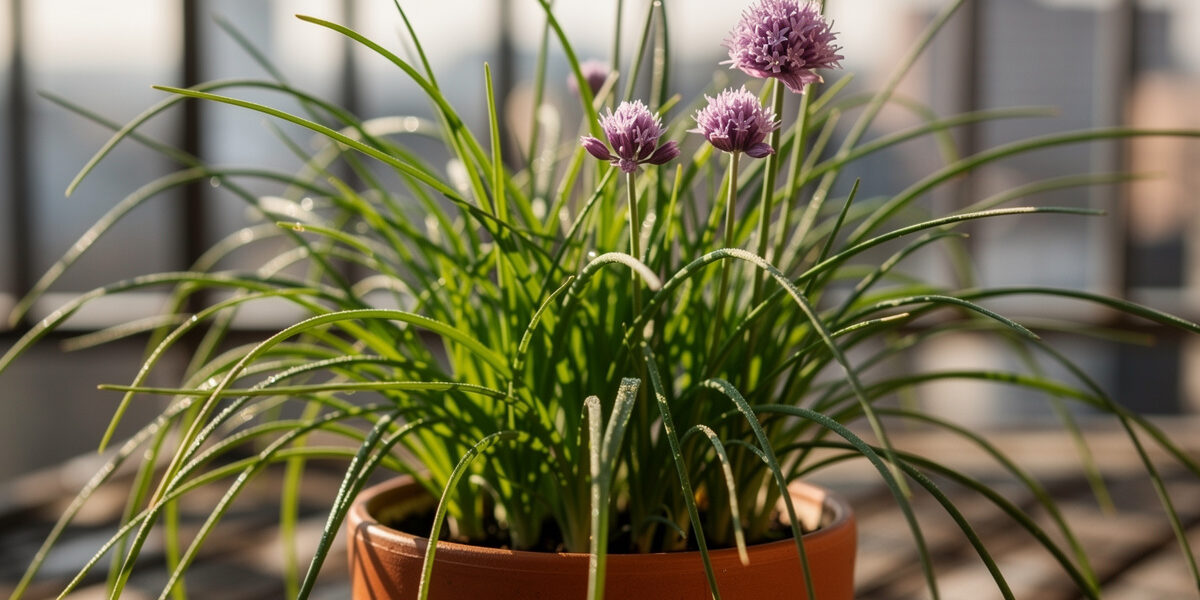
Chives are the herb that asks the least and gives the most. They are a hardy perennial that comes back every spring, survives a Nordic winter outdoors, and forgives almost every mistake a beginner can make. Snip what you need, and the clump simply regrows from the base.
If basil is the diva and rosemary the fussy one, chives are the dependable workhorse of the herb shelf. A single clump can crop for years, divide into more plants for free, and keep producing in conditions that would see off most tender herbs. Here is how I grow them and keep a clump productive season after season.
Why Chives Are the Easiest Herb to Grow
Chives are a cold-hardy perennial onion relative that tolerates frost, partial shade, and irregular watering, then regrows from the base after every cut. That combination of toughness and cut-and-come-again habit makes them the most forgiving herb for a beginner or a busy grower.
They die back in winter and reappear reliably every spring, which is exactly the behaviour you want in a cold climate where tender herbs are a yearly replacement. I have clumps that have come back for years with almost no attention beyond the occasional water and a spring tidy. Because they grow from a clump of small bulbs rather than a single stem, harvesting never really sets them back; you are mowing a lawn that wants to be cut. For anyone nervous about killing herbs, chives are where I tell them to start alongside parsley.
Starting Chives From Seed or Division
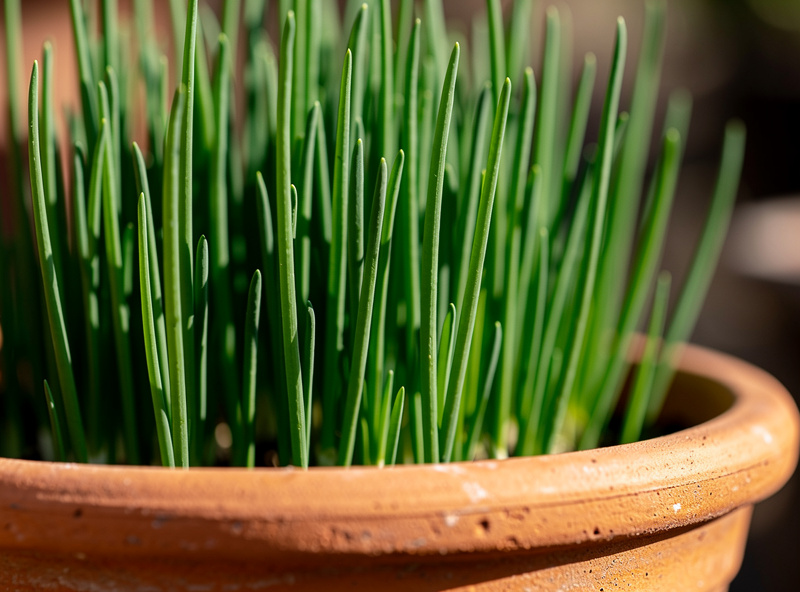
You can grow chives from seed or from a divided clump. Seed is cheap and reliable but slow, taking a season to bulk up, while dividing an existing clump gives you instant established plants. Both work well, so the choice depends on whether you have a plant to split.
From seed, I sow a pinch into a pot, keep it moist and warm, and thin lightly; chives do not mind a bit of crowding and actually look better grown as a dense clump. Division is even easier: lift a mature clump in spring, pull it apart into smaller bunches, and replant each one. That is how a single supermarket pot of chives becomes three or four established plants in an afternoon. I divide mine every few years anyway, because an old congested clump grows thin and tired in the middle and division rejuvenates it.
Light, Soil, and Water
Chives grow best in four to six hours of sun but tolerate partial shade, in ordinary moisture-retentive container soil kept reasonably moist. They are not fussy about drainage like the Mediterranean herbs, and they handle lower light better than most, which suits a darker apartment window.
I grow them in a standard fertile container mix, not the gritty fast-draining blend I use for rosemary, and I keep them watered without obsessing over it. They prefer steady moisture for the lushest leaves but bounce back from a missed watering far better than basil ever would. A spot with a few hours of direct light keeps a clump dense and upright; in deep shade they grow but get floppy. Indoors over winter they appreciate a bright window or the edge of a grow light, though a clump that has died back outdoors will often just rest until spring rather than crop, which is normal.
Harvesting Chives Correctly
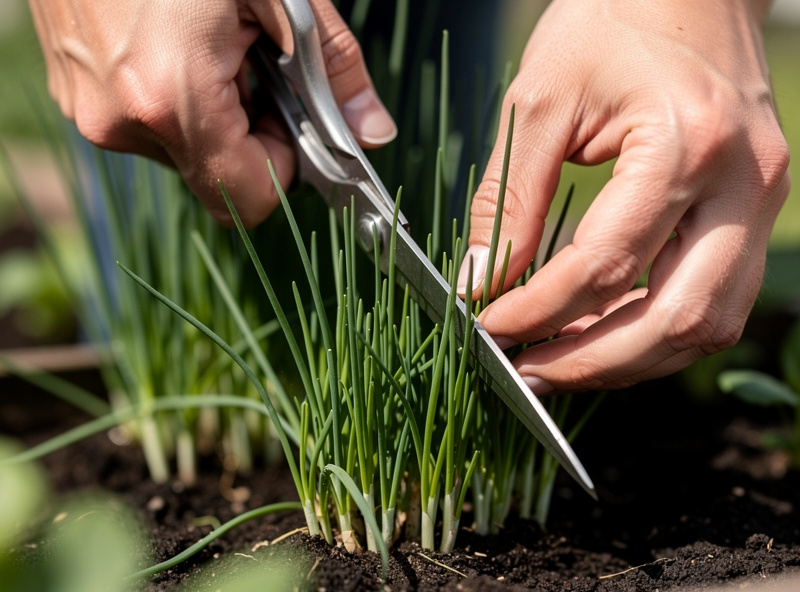
Harvest chives by cutting the hollow leaves about 2-3 cm above the soil with scissors, taking from the outside of the clump. Cutting low like this encourages fresh regrowth from the base, whereas just snipping the tips leaves blunt, browning ends that look untidy and produce less.
I shear handfuls right down rather than trimming the tips, because the clump regrows quickly and clean low cuts keep it tidy and vigorous. Take no more than about a third of the clump at once so it can recover, and rotate which side you cut. The more you harvest this way, the better the plant looks, which is the opposite of how tip-snipping leaves it. Fresh chives do not dry or store especially well, so I cut what I need and let the rest keep growing in the pot as living storage.
The Flowers Are a Bonus
Chives produce round purple flowers in early summer that are edible, attractive, and good for pollinators. You can let them bloom for the colour and the bees, or snip the flower buds early to keep the plant focused on leaf production. Either choice is valid depending on what you want.
I usually let a few flower because they look lovely on the balcony and the bees work them hard, and the blooms themselves are edible with a mild oniony bite that is nice scattered over a salad. The trade-off is that flowering pushes the plant toward seed and the leaves near the flower stalks turn tougher, so if I want maximum tender leaf I cut the buds off early. There is no wrong answer; it is just deciding whether you are growing chives for the kitchen, for the bees, or for both.
Chives vs Garlic Chives
There are two common types: common chives with hollow round leaves and an onion flavour, and garlic chives with flat leaves and a mild garlic taste. They grow almost identically, so many people keep both for the different flavours they bring to the kitchen.
| Feature | Common Chives | Garlic Chives |
|---|---|---|
| Leaf shape | Hollow, round | Flat, solid |
| Flavour | Mild onion | Mild garlic |
| Flowers | Purple, early summer | White, late summer |
| Hardiness | Very hardy perennial | Hardy perennial |
| Best use | Garnish, eggs, potatoes | Stir-fries, dumplings |
I grow both because they cover different jobs in the kitchen and neither asks for anything special. Garlic chives are slightly slower to establish but just as tough once they settle in, and their later white flowers extend the display after the common chives have finished.
A Little Gear Goes a Long Way
Chives need almost nothing, but a couple of items make growing and harvesting them easier. As an Amazon Associate I earn from qualifying purchases; these are items I genuinely use, at no extra cost to you.
- A packet of chive seeds grows a clump that crops for years from a one-time sowing.
- A pair of sharp herb scissors makes the clean low cuts that keep a clump regrowing tidily.
Frequently Asked Questions
Do chives come back every year?
Yes. Chives are a hardy perennial that dies back in winter and regrows from the base every spring, surviving frost and cold-climate winters outdoors. A single clump can crop for many years with minimal care, making them one of the most reliable herbs.
How do you cut chives so they keep growing?
Cut the hollow leaves about 2-3 cm above the soil with scissors, taking from the outside of the clump and no more than a third at once. Low cuts encourage fresh regrowth from the base, while snipping only the tips leaves blunt, browning ends.
Can you grow chives indoors?
Yes. Chives tolerate lower light than most herbs and grow on a bright window or under a grow light. A clump that has died back outdoors over winter may simply rest until spring rather than crop, which is normal perennial behaviour, not a problem.
Should I let my chives flower?
It is your choice. The purple flowers are edible and great for pollinators, but flowering toughens nearby leaves and pushes the plant toward seed. Let a few bloom for colour and bees, or snip the buds early to keep the plant focused on tender leaf.
What is the difference between chives and garlic chives?
Common chives have hollow round leaves and a mild onion flavour, while garlic chives have flat solid leaves and a mild garlic taste. They grow almost identically as hardy perennials, so many growers keep both for the different flavours in the kitchen.