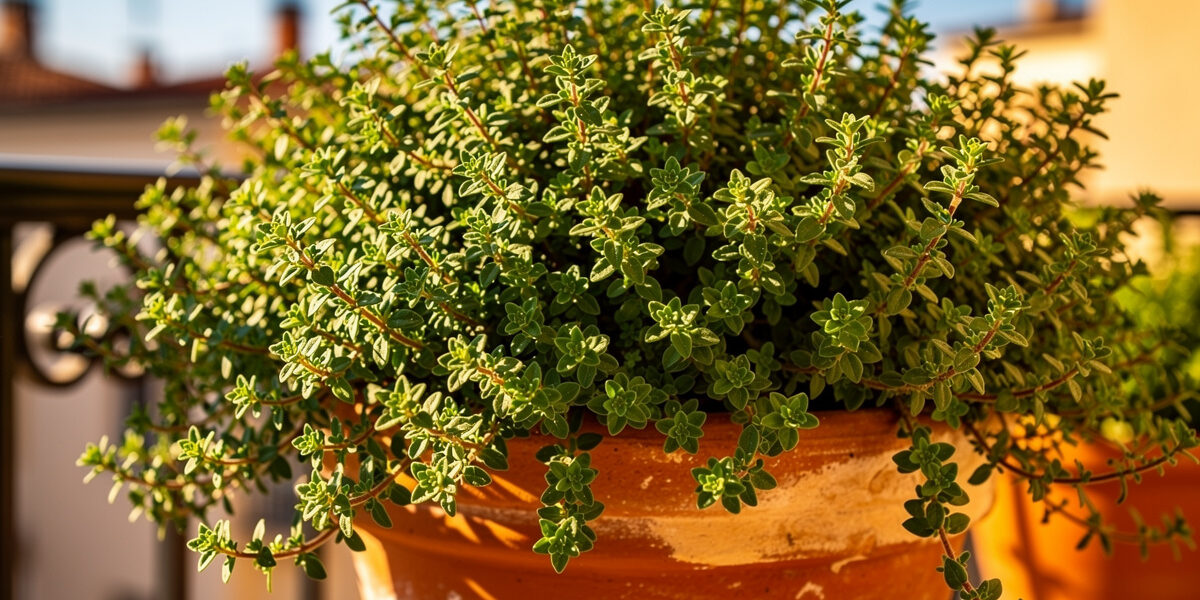
Culinary thyme is a tough little Mediterranean shrub that thrives on neglect. Give it sun, sharp drainage, and a pot you let dry out between waterings, and it will crop for years with almost no input. The classic mistake is treating it like a leafy herb and drowning it in rich, wet soil.
This guide is about common cooking thyme, the upright kitchen workhorse, rather than the low creeping thyme grown as ground cover or the lemon thyme grown for its citrus note. Those are close relatives with their own roles; here I am focused on the variety you actually want in a stew. Here is how I grow and keep it through a Nordic year.
What Culinary Thyme Wants
Thyme needs full sun, gritty fast-draining soil, and a dry-between-waterings routine. As a Mediterranean perennial it stores water in its woody stems and small tough leaves, so it tolerates drought far better than wet feet. Overwatering in heavy soil is what kills potted thyme, not lack of attention.
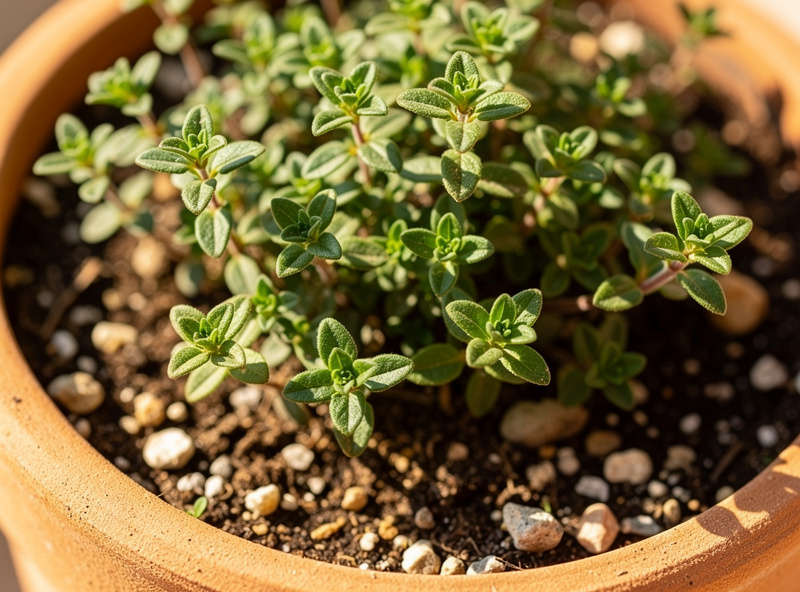
I grow thyme in the same gritty mix I use for rosemary: roughly two parts container soil to one part perlite or coarse grit, in a pot that drains freely. Rich, moisture-retentive soil, the kind parsley loves, is exactly wrong here; it holds water around the roots and rots them. Thyme actually develops better flavour grown a little hard and dry, with concentrated essential oils, than pampered in damp luxury. On the balcony it takes the sunniest spot, and indoors it needs the brightest window or a grow light to stay compact rather than sprawling and weak.
Starting Thyme: Seed, Cutting, or Plant
Thyme can be grown from seed, but it is slow and fiddly, so most growers start from a nursery plant or a cutting. A cutting from semi-woody growth roots readily in a few weeks and gives you a true copy of the variety, which is the route I recommend for reliable results.
Seed thyme germinates unevenly and seedlings inch along for months before they amount to anything, which tries the patience of most growers. If you want one plant for the kitchen, a single healthy nursery thyme is the easiest start, and once established you can propagate from it freely. To take a cutting, I snip a short length of non-flowering semi-woody stem, strip the lower leaves, and root it in a gritty cutting mix. That way one good plant quietly becomes several, the same approach that works for rosemary and sage.
Watering and Feeding (Less Is More)
Water thyme only when the top of the soil is properly dry, then water thoroughly and let it drain. It needs far less water than leafy herbs, and it rarely needs feeding; lean conditions suit it and produce stronger flavour. Heavy feeding gives soft, sappy growth with weaker aroma.
I lift the pot to judge weight rather than watering on a schedule, because thyme in gritty soil dries unpredictably and a soggy pot is its main enemy. Indoors over winter, when growth slows right down, I water even less. I almost never feed it; an annual top-up of fresh mix or a very dilute feed once or twice in the growing season is plenty. This restraint runs counter to the instinct to nurture a plant with water and food, but with thyme, holding back is the whole skill. A slightly stressed thyme is a flavourful, healthy thyme.
Pruning to Stop It Going Woody
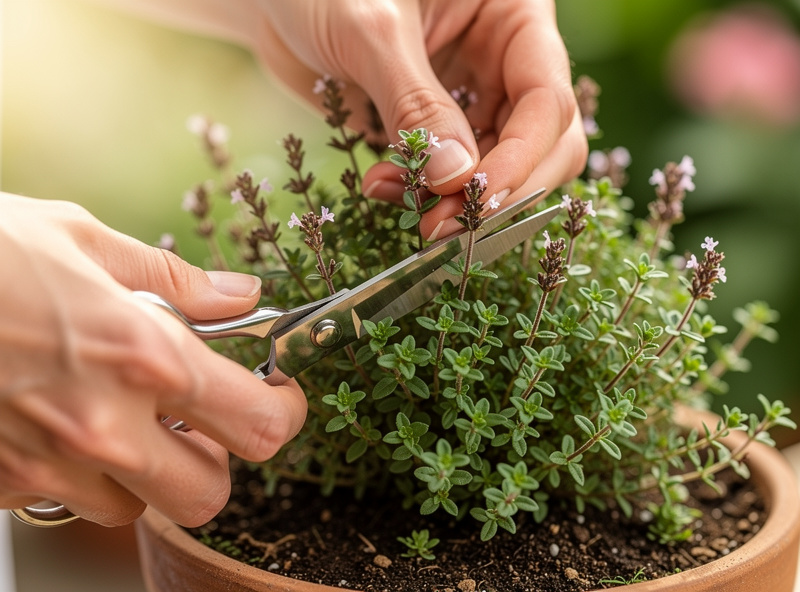
Thyme tends to go woody and bare at the base over time, so a light prune after flowering each year keeps it bushy and productive. Trim the soft green growth back by a third, never cutting hard into the old bare wood, which is slow or unwilling to resprout. Regular harvesting doubles as pruning.
Left unpruned, a thyme plant sprawls, the centre goes bald and twiggy, and you end up cropping from a smaller and smaller patch of green. I give mine a tidy clip each year after the flowers fade, always staying in the green growth above the woody base. Every harvest is a small prune too, so cropping regularly keeps the plant dense almost by accident. After three or four years a thyme can get irretrievably woody, at which point I simply replace it from a cutting I have already rooted, so there is never a gap.
Overwintering Thyme in a Cold Climate
Common thyme is hardier than rosemary and survives many cold-climate winters outdoors with sharp drainage and shelter, though wet cold, not cold alone, is the real danger. In the harshest zones, bringing a pot indoors under a light is the safe option, the same as for rosemary.
The thing that kills potted thyme in a Nordic winter is usually a waterlogged, frozen pot rather than the cold itself, so drainage and a sheltered spot off the cold ground matter more than wrapping. Mine come through milder winters on the balcony in gritty pots raised off the slab, while in a hard winter I move one indoors to the grow shelf as insurance. It rests rather than crops in the dark months, which is normal, and I keep it on the dry side until spring. This wet-cold caveat is the part most warm-climate growing guides never mention.
Choosing a Thyme Variety
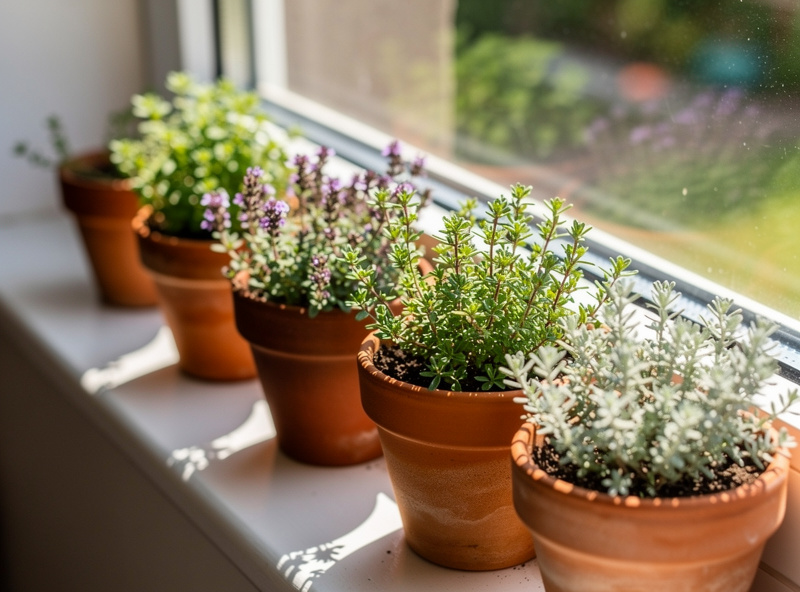
Common thyme is the standard culinary type, but several close relatives suit different kitchens and growing spots. They all share the same gritty-soil, full-sun, dry-side care, so the choice comes down to flavour and habit rather than any difference in how you grow them.
| Variety | Habit | Flavour | Best For |
|---|---|---|---|
| Common / English thyme | Upright, bushy | Classic savory | All-round cooking |
| French thyme | Upright, refined | Sweeter, milder | Delicate dishes |
| Lemon thyme | Spreading | Citrus note | Fish, chicken |
| Creeping thyme | Low ground cover | Mild, aromatic | Edging, not main crop |
For the kitchen I lean on common or French thyme as the productive upright croppers, and keep lemon thyme alongside for its citrus lift. Creeping thyme is lovely tumbling over a pot edge but is grown more for looks and ground cover than for filling the spice jar.
Harvesting and Using Thyme
Harvest thyme any time during the growing season by snipping whole sprigs from the green growth, taking up to a third of the plant at once. Flavour is strongest just before the plant flowers, when the essential oils peak, but useful leaf is available almost year-round on an established plant.
I cut whole stems rather than stripping leaves on the plant, then run my fingers down the stem in the kitchen to release the tiny leaves. Thyme holds its flavour through long cooking better than soft herbs, which is why it goes into the pot early in stews and roasts rather than at the end. The woody stems themselves are aromatic, so I often drop a whole sprig into a slow dish and fish it out later. Unlike basil or chives, thyme also dries exceptionally well, keeping much of its punch, so a late-season harvest is the easiest of all the herbs to put away for winter cooking. The preserving herbs guide covers the drying, freezing, and oil-packing methods that keep a surplus thyme harvest usable for months.
Common Thyme Problems
Nearly every thyme problem traces back to too much water or too little light. Root rot from soggy soil and a leggy, sprawling habit from a dim windowsill are the two failures I see again and again, and both are prevented by the same gritty-soil, bright-spot setup.
Yellowing, blackening stems and a sour smell at the base mean the roots are drowning, so ease off the water and check drainage before anything else. A plant that grows long, weak, and pale is reaching for light and needs a brighter position or a grow light. A woody, bald centre is age rather than disease and is the cue to take cuttings and start a fresh plant. Pests are rarely a serious issue outdoors, though indoors over a dry winter I keep an eye out for the usual sap-suckers and rinse the foliage if I spot any. Get the water and light right and thyme is one of the most trouble-free plants on the shelf.
Gear Worth Having
Thyme needs almost nothing, but drainage gear pays off. As an Amazon Associate I earn from qualifying purchases; these are items I genuinely use, at no extra cost to you.
- A terracotta pot breathes and helps the soil dry out, which is exactly what thyme wants.
- A bag of horticultural grit sharpens drainage so the roots never sit wet.
- A small pack of starter thyme plants skips the slow, fiddly seed stage entirely.