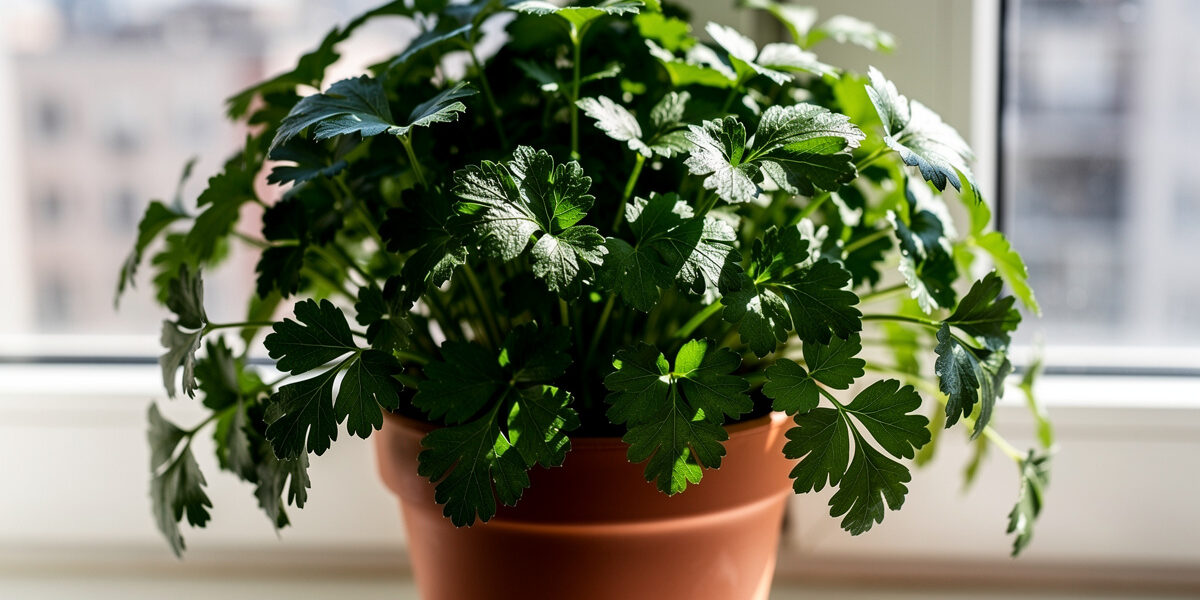
Parsley is the herb I tell every nervous beginner to start with. It is slow off the line but genuinely hard to kill once up, it crops for a full year as a biennial, and it shrugs off the cold that flattens basil. The only real hurdle is germination, which tests your patience before the plant rewards it.
Where basil sprints and bolts, parsley plays a long game. A single sowing in spring can feed you from early summer right through to the following spring if you treat it well, which makes it one of the best-value herbs for a small space. Here is how I get it going and keep it productive through a Nordic year.
The Slow Germination Problem
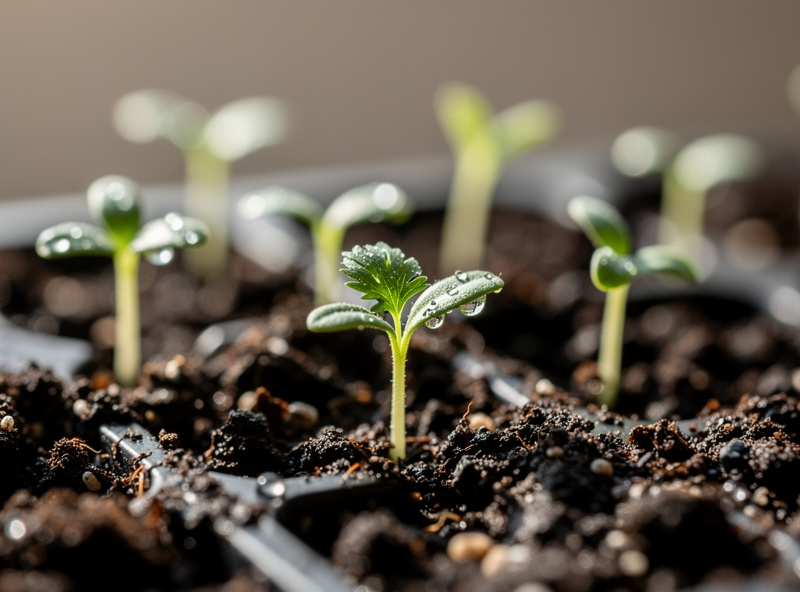
Parsley is famously slow to germinate, often taking three to four weeks, because its seed coat contains compounds that delay sprouting. Soaking the seed overnight in warm water before sowing speeds things up noticeably and is the single most useful trick for getting parsley started.
The slow start catches people out; they assume the sowing failed and give up just before it would have come good. I soak the seed overnight, sow into a moist mix, and then simply wait, keeping the surface from drying out the whole time. Warmth helps, so a spot around 18-21°C is ideal for germination. Once you have done it once and seen how long it really takes, the patience comes easily. After that initial wait, parsley is one of the most trouble-free herbs you can grow.
Light, Soil, and Containers
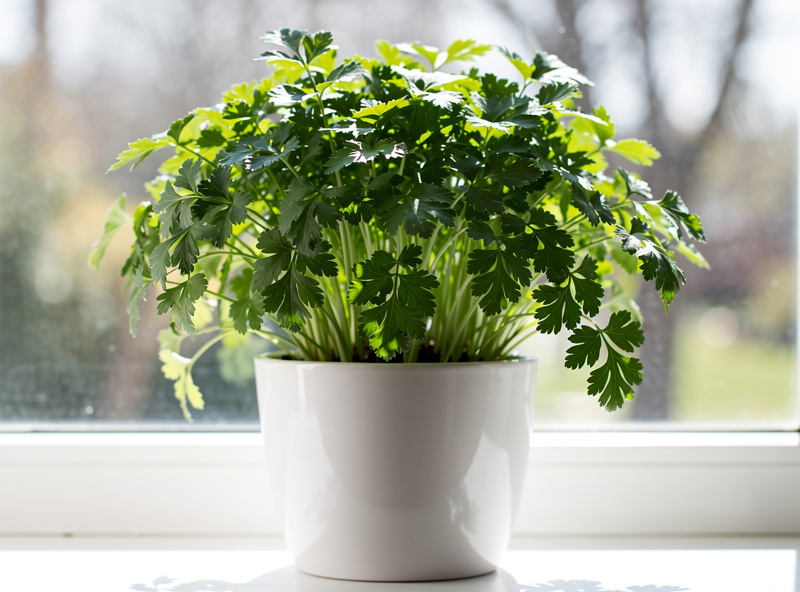
Parsley grows well in four to six hours of sun or under a grow light, in a deep pot with rich, moisture-retentive but well-drained soil. It has a long taproot, so a container at least 20-25 cm deep suits it far better than a shallow tray. Steady moisture keeps the leaves tender.
Because it tolerates lower light better than basil or rosemary, parsley is a reliable performer on an east or west window and under the edge of a grow light. I grow it in a deeper pot to give the taproot room, in a fertile container mix that holds moisture without going soggy. Unlike the Mediterranean herbs that demand gritty fast-draining soil, parsley actually likes a richer, more moisture-retentive medium, which is worth remembering if you grow several herbs together. It is one of the more forgiving herbs on light, which is exactly why it suits a darker Nordic apartment.
Flat-Leaf vs Curly Parsley
The two main types are flat-leaf (Italian) parsley and curly parsley. Flat-leaf has a stronger, cleaner flavour preferred for cooking, while curly is milder and more decorative. Both grow the same way, so the choice is about how you intend to use the leaves rather than any difference in care.
| Feature | Flat-Leaf (Italian) | Curly |
|---|---|---|
| Flavour | Stronger, cleaner | Milder, grassy |
| Best use | Cooking, sauces | Garnish, decoration |
| Texture | Flat, tender | Frilly, sturdy |
| Ease of washing | Easier | Traps grit |
| Care | Identical | Identical |
I grow mostly flat-leaf because I cook with it constantly, but a pot of curly earns its place for garnish and because it looks good on the windowsill. If you only have room for one, flat-leaf is the more useful kitchen herb.
Watering and Feeding
Keep parsley evenly moist, watering when the top couple of centimetres of soil dry out, and feed lightly every few weeks during active growth. As a leafy herb it appreciates a bit more nitrogen than the woody Mediterranean herbs, which keeps the foliage lush and green rather than thin and pale.
Parsley is thirstier than rosemary or sage, so I water it more often and never let it wilt hard, which makes the leaves tough and the stems stringy. In a deep pot it holds moisture well, and a self-watering setup keeps it even. Pale, slow growth usually means it wants feeding, so a dilute balanced liquid feed perks it up. That said, it is hard to go badly wrong; parsley is far more tolerant of imperfect watering than the herbs that rot at the first sign of wet feet.
Harvesting for a Year of Leaves
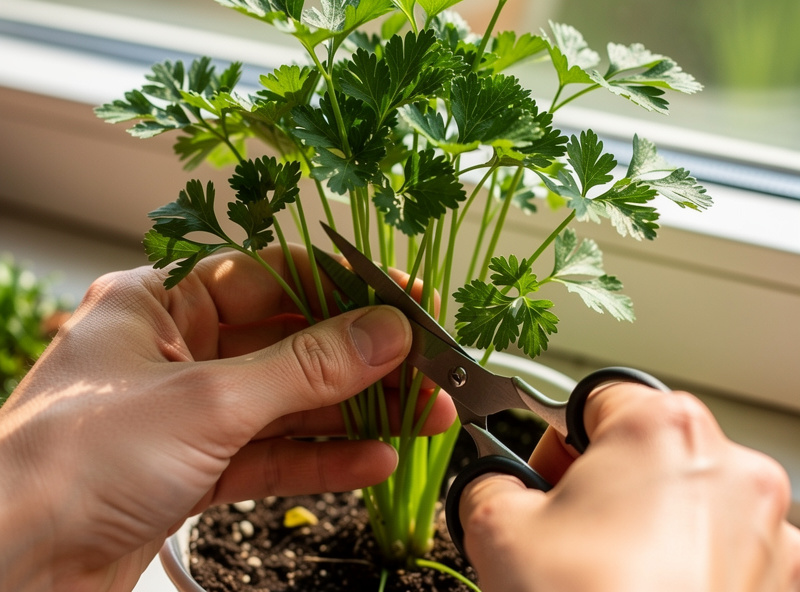
Harvest parsley from the outside in, cutting whole outer stems at the base while leaving the central growing point intact. This outer-stem method keeps the plant producing new growth from the centre, and regular picking actually encourages more leaves rather than exhausting the plant.
Never just shear the tops; cut entire stems low down so the plant keeps pushing fresh growth from the crown. Done this way, a healthy parsley plant crops for months. Because it is a biennial, it grows leaves the first year and flowers the second, so the year you sow is your main harvest year. When it eventually sends up a flower stalk in its second spring, leaf production drops and it is time to sow a replacement; like cilantro, you can let it flower and collect seed if you want.
Overwintering and the Biennial Cycle
Parsley is hardy and survives light frost, often staying green into winter and reviving in spring, which makes it one of the few herbs that keeps giving in a cold climate. Brought indoors or kept in a sheltered spot, an established plant can supply leaves through much of the dark season.
I keep a pot going on the balcony as long as the weather allows and move one indoors under the bar for winter picking. Its frost tolerance is a real advantage up north, where most tender herbs are long gone by October. The catch is the biennial clock: in its second spring the plant prioritises flowering over leaf, so I always sow a fresh batch each year to keep a young, leafy plant in rotation. Plan for that cycle and parsley becomes a near year-round herb.
Gear for Easy Parsley
Parsley needs very little, but depth and steady moisture help most. As an Amazon Associate I earn from qualifying purchases; these are items I genuinely use, at no extra cost to you.
- A pack of flat-leaf parsley seeds gives you the stronger-flavoured cooking type at a fraction of supermarket cost.
- A deep self-watering planter suits the taproot and keeps moisture even for tender leaves.
- A bottle of balanced liquid fertiliser keeps this leafy feeder lush and deep green.
Frequently Asked Questions
Why is my parsley taking so long to germinate?
Parsley naturally germinates slowly, often three to four weeks, because the seed coat contains germination-delaying compounds. Soak the seed overnight in warm water before sowing, keep it moist at 18-21C, and be patient. Many people give up just before it sprouts.
How do you harvest parsley so it keeps growing?
Cut whole outer stems at the base while leaving the central growing point intact. This outer-stem method keeps the plant producing from the centre, and regular picking encourages more leaves rather than exhausting the plant. Never just shear the tops.
Is flat-leaf or curly parsley better?
Flat-leaf Italian parsley has a stronger, cleaner flavour preferred for cooking, while curly is milder and more decorative for garnish. Both grow identically, so choose by use. If you only have room for one, flat-leaf is the more useful kitchen herb.
Can parsley survive winter?
Yes. Parsley is hardy and tolerates light frost, often staying green into winter and reviving in spring. An established plant kept sheltered or brought indoors under a light can supply leaves through much of the cold season, unlike tender herbs.
Why did my parsley start flowering?
Parsley is a biennial: it grows leaves the first year and flowers the second. Once it bolts in its second spring, leaf production drops sharply. Sow a fresh batch each year so you always have a young, leafy plant in rotation.
Does parsley need full sun?
No. Parsley grows well in four to six hours of sun or under a grow light and tolerates lower light better than basil or rosemary. That makes it one of the most reliable herbs for a darker apartment window or the edge of a grow shelf.