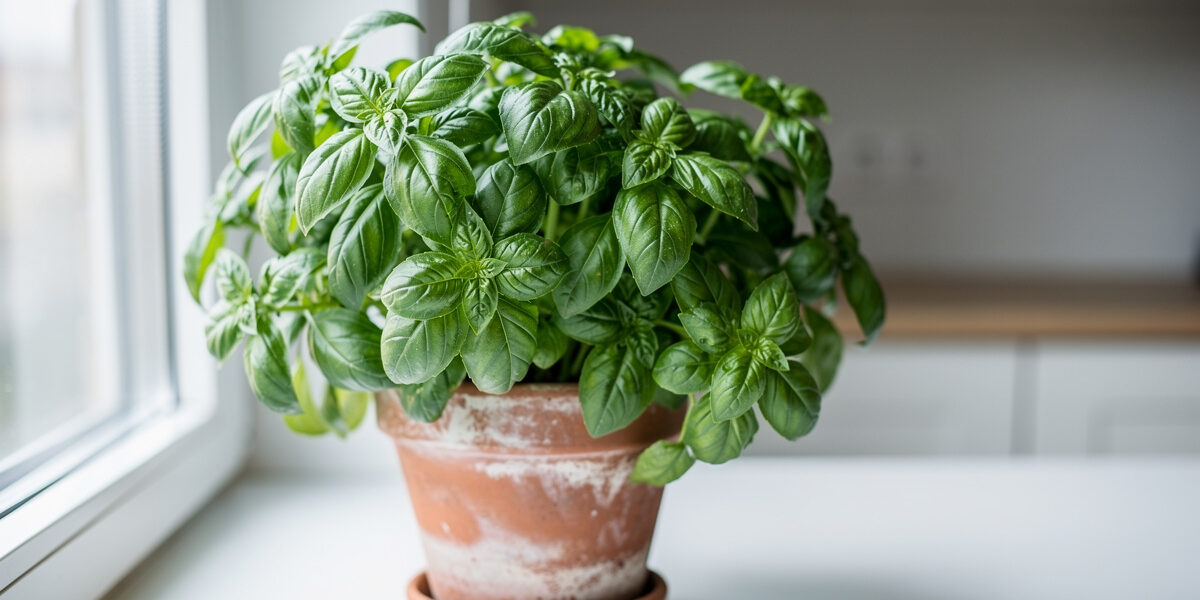
Basil is the herb that taught me how unforgiving a Swedish windowsill can be. Grow it warm, bright, and pinched often and you get bushy plants that crop for months; let it sit cold, wet, or unharvested and it bolts to seed or rots at the stem in a week. The fix is mostly about heat and light, not green thumbs.
I have killed more basil than any other herb on my shelf, and every failure came down to the same handful of mistakes. This is the growing routine I run now under the LED bar and on the brightest window I own, written for the apartment grower who does not have a Mediterranean summer to lean on.
What Basil Actually Needs to Thrive
Basil wants three things in surplus: warmth above 18°C (65°F), six or more hours of strong light, and steady pinching. Starve it of any one and growth stalls, leaves shrink, and the plant rushes to flower. It is a tender annual that treats a cold draft as an emergency.
The Nordic problem is that our “warm windowsill” often runs 14-16°C at night near the glass, especially in spring and autumn. Basil notices. On my shelf I keep it on the warmest interior window or directly under the LED bar I run for seedlings, where the canopy temperature stays in the low twenties. If your kitchen is genuinely warm, a south window can carry it through high summer, but for most of the year here, supplemental light earns its keep. I treat basil like the heat-lover it is, not like a hardy perennial herb such as sage.
Starting Basil from Seed
Basil germinates fast and cheap: surface-sow onto moist mix, barely cover, keep it at 20-25°C, and most varieties pop in 5-10 days. Bottom heat helps in a cool apartment. I sow a small pinch every few weeks rather than one big tray, because basil ages out and a fresh sowing always tastes better than a tired old plant.
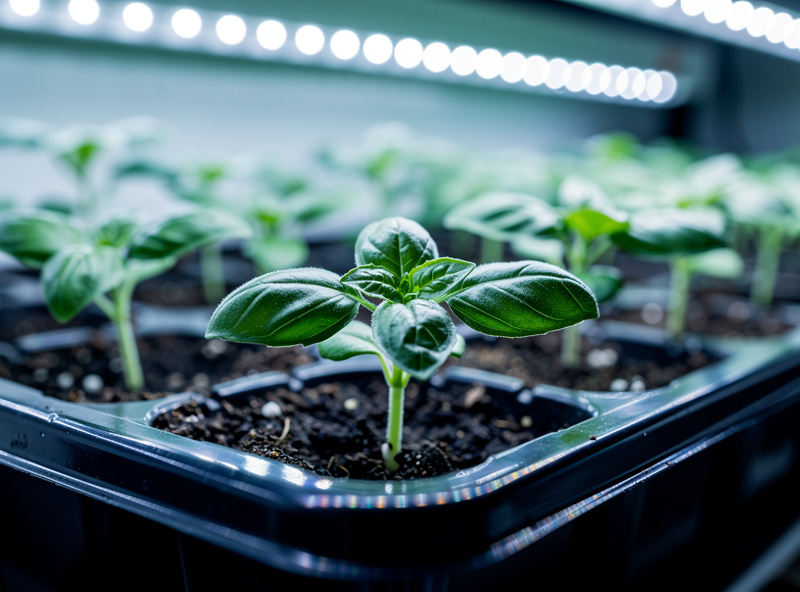
Use a light seed mix, not heavy bagged potting soil, which compacts and holds too much water around the fine roots. I sow into small cells or a shallow tray, then prick out the strongest seedlings once they have two sets of true leaves. Damping off is the main early killer here, so I keep airflow moving and never let the surface stay soggy. If you would rather skip the seed stage, a supermarket basil pot can be split and potted on, but those plants are forced and crowded and rarely last; treat them as a short-term crop.
Light, Warmth, and the Window Problem
Basil needs at least six hours of direct sun or 12-14 hours under a decent grow light to stay compact. Below that it stretches, the internodes get long and leggy, and the plant topples. Light is the single biggest lever you have indoors.
On a bright south window in June here, basil is happy. From October to March it is not even close, which is exactly the gap my grow lights fill. I run basil under the same full-spectrum LED bar as my microgreens, keeping the canopy 20-30 cm below the light for 12-14 hours a day. The difference between windowsill and bar in the dark months is the difference between a leggy survivor and a plant you can actually cook from. Cheap blurple panels work in a pinch, but I judge a light by coverage and the plants under it, not the wattage on the box.
Watering and Feeding Without Killing It
Basil likes evenly moist soil but hates wet feet. Water when the top 2 cm of mix feels dry, water thoroughly until it drains, and never leave the pot standing in a saucer of water. Overwatering causes more basil deaths than drought does, because the roots suffocate and rot.
In my setup the plants on a windowsill dry out faster than the ones under the bar, so I check by weight and finger rather than on a schedule. A self-watering pot or one of the wicking inserts I print takes the guesswork out and keeps the moisture even, which basil rewards with steadier growth. For feeding, basil is a moderate feeder: a dilute balanced liquid feed every couple of weeks in active growth is plenty. Too much nitrogen gives you huge soft leaves with washed-out flavour, so I go light. If you are unsure whether a wilting plant is thirsty or drowning, the signs of overwatering are worth learning before you reach for the watering can.
Pinching and Pruning for a Bushy Plant
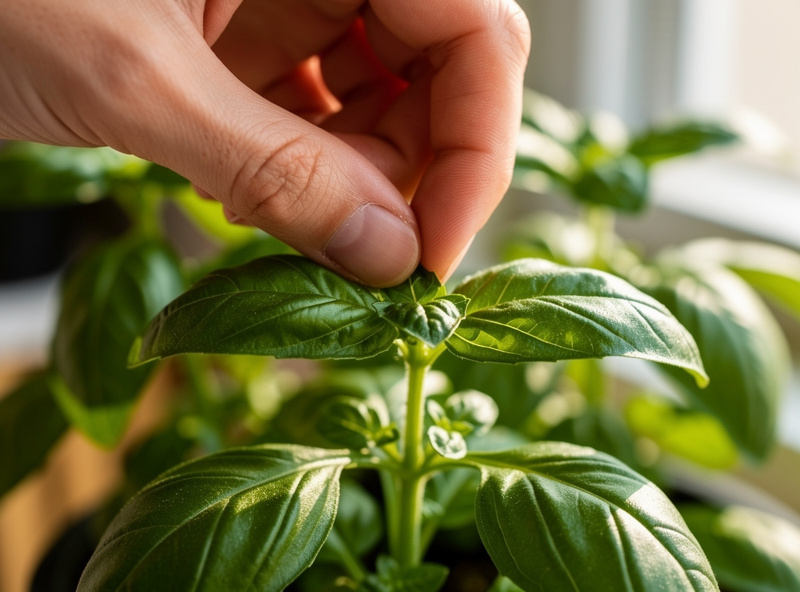
The single best thing you can do for basil is pinch out the growing tip above a leaf pair once the plant has four to six true leaves. Each cut forces two new branches, and repeated pinching turns a single stem into a dense, productive bush. Unpinched basil grows tall, sets flowers, and quits.
I pinch hard and often, taking the top set of leaves every week or two even when I do not need them for the kitchen. Always cut just above a pair of leaves, because that node is where the new shoots come from. The more you harvest correctly, the more the plant gives you. For the exact cut height, timing signals by species, and tool choices that apply across all culinary herbs, the harvesting herbs guide has the full breakdown. Once you see flower buds forming, pinch them off immediately; a flowering basil plant diverts everything into seed and the leaves turn bitter.
Stopping Basil from Bolting
Bolting is basil flowering and going to seed, and it is mostly triggered by heat stress, long days, and neglected pinching. Once a plant bolts in earnest, leaf flavour declines and growth slows. You cannot fully reverse it, but you can delay it for weeks by pinching every flower bud the moment it appears.
Indoors under lights I get less heat-driven bolting than an outdoor grower in a hot summer, but long light hours can still push it. My approach is simple: harvest constantly, never let buds open, and start a fresh sowing before the old plant gives up so I always have a young vigorous plant coming on. Basil is an annual; planning for replacement is part of growing it well, not a failure. When you have more leaf than you can use fresh, the preserving herbs guide covers drying, freezing, and oil-packing methods that keep a big harvest useful through the winter.
Choosing a Basil Variety
Sweet Genovese is the classic large-leaf pesto basil and the one I grow most, but the family is wide and worth exploring once you have the basics down. Different types suit different uses and growing conditions, and some are noticeably tougher on a windowsill than others.
| Variety | Leaf & Flavour | Best Use | Indoor Notes |
|---|---|---|---|
| Sweet Genovese | Large, classic sweet | Pesto, tomato dishes | Needs strong light to stay compact |
| Greek / bush basil | Tiny leaves, compact | Garnish, pots | Best windowsill habit, slow to bolt |
| Thai basil | Anise-scented, sturdy | Stir-fries, curries | Tolerant, handles warmth well |
| Purple / Dark Opal | Striking colour, clove note | Vinegars, garnish | Slower, slightly fussier |
| Lemon / lime basil | Citrus notes | Fish, dressings | Bolts fast, sow often |
If you only have a dim window, Greek bush basil is the most forgiving because its naturally compact habit hides legginess that would ruin a Genovese plant. Thai basil is the toughest of the lot and shrugs off conditions that make sweet basil sulk.
Gear I Reach For With Basil
Basil does not need much kit, but a few things genuinely move the needle indoors. As an Amazon Associate I earn from qualifying purchases; the links below are gear I actually use for growing herbs and cost you nothing extra.
- A full-spectrum LED grow light is the one upgrade that carries basil through a dark Nordic winter.
- A pack of sweet basil seeds costs less than a single supermarket pot and lasts for dozens of sowings.
- A small self-watering herb planter keeps the moisture even so the roots never sit wet.
Frequently Asked Questions
Why is my basil getting tall and leggy?
Leggy basil is starved of light. It needs six or more hours of direct sun or 12-14 hours under a grow light. Below that the stem stretches between leaves. Move it brighter and pinch the top to force branching.
How often should I pick basil?
Harvest every one to two weeks once the plant has four to six true leaves, always cutting just above a leaf pair. Frequent correct picking forces new branches and keeps the plant bushy and productive rather than tall and flowering.
Can I grow basil indoors all year?
Yes, but in low-light months you need a grow light. A south window carries basil through summer, while October to March indoors requires 12-14 hours of supplemental LED to keep plants compact and cropping rather than stretched and weak.
Why did my basil flower so fast?
Basil bolts to flower under heat stress, long days, and infrequent harvesting. Pinch out every flower bud as it appears and harvest constantly to delay it, and start a fresh sowing so you always have a young plant coming on.
How much should I water basil?
Water when the top 2 cm of mix feels dry, soak thoroughly until it drains, and never leave the pot in standing water. Basil hates wet feet, and root rot from overwatering kills more plants than drought ever does.