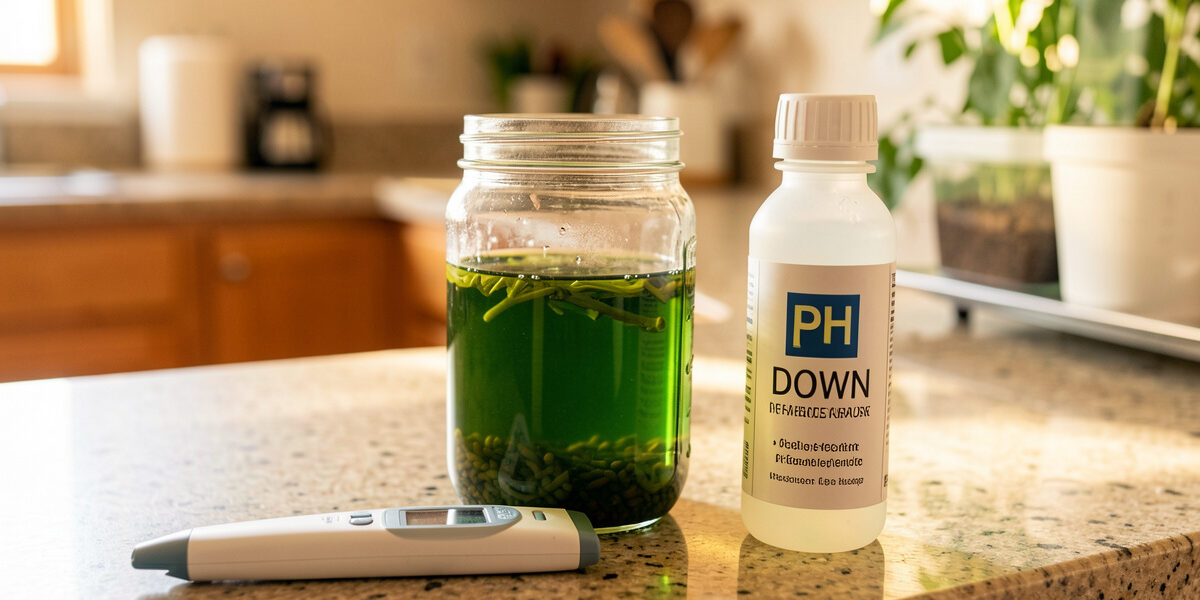
For hydroponic vegetables, keep the nutrient solution’s pH between about 5.5 and 6.5 — most leafy greens are happiest around 5.8 to 6.2 — because outside that band the plant physically cannot absorb the food dissolved right next to its roots. pH is the quiet gatekeeper of hydroponics: you can mix a perfect nutrient solution and still starve your lettuce if the pH is wrong. It is also the single easiest thing to fix once you own a cheap meter and a bottle of adjuster.
I ignored pH for my first two grows and could not understand the pale, stalled plants sitting in reservoirs full of nutrients. A five-euro pH pen and a bottle of pH Down solved it overnight, and the plants greened up within days. Once you have seen that, you never skip it again. Here is what pH actually does in a hydroponic system, the ranges that matter for the vegetables you will grow, and how to read and adjust it without overthinking it.
Why Does pH Matter So Much in Hydroponics?
pH controls nutrient availability: each element a plant needs is only soluble and absorbable within a certain pH window, and the sweet spot where the most nutrients are available at once sits in the high fives to low sixes. Drift outside that and elements “lock out” — they are present in the water but chemically unavailable, so the plant shows deficiency symptoms in a full reservoir.
This is why pH problems masquerade as nutrient problems. A plant yellowing between the veins or going pale all over looks hungry, so the instinct is to add more food — but if the cause is a locked-out pH, stronger solution just pushes toward root burn without fixing the real issue. In soil, the soil buffers pH and holds a reserve of nutrients, so a gardener can get away with never measuring it. Hydroponics has no soil and no buffer, so the solution’s pH is exposed and it drifts as the plant feeds. That lack of a buffer is exactly why hydroponic growers obsess over a number that soil gardeners ignore, and it ties directly to how you mix your hydroponic nutrients — the two are inseparable halves of feeding the plant. Cornell’s Controlled Environment Agriculture program publishes the same nutrient-availability curves at commercial scale, and the shape of the curve is exactly why growers land on 5.5–6.5 rather than any wider range.
What Is the Best pH for Hydroponic Vegetables?
The broad target for most hydroponic vegetables is 5.5 to 6.5, with leafy greens like lettuce, spinach, and herbs happiest at the lower end around 5.5 to 6.0, and fruiting crops such as tomatoes a touch higher. If you grow only greens — which is the sensible choice for a Nordic apartment — aiming for a steady 5.8 covers you comfortably.
Different crops have slightly different preferences, but the overlap is generous enough that a single target near 5.8 to 6.0 keeps a mixed shelf of greens perfectly healthy. Here are the working ranges I aim for with the common passive-hydroponics crops:
| Crop | Target pH range | Notes |
|---|---|---|
| Lettuce | 5.5 – 6.0 | Very forgiving of small drift |
| Spinach | 6.0 – 6.5 | Prefers the higher end |
| Basil / soft herbs | 5.5 – 6.5 | Wide, easy window |
| Pak choi / kale | 5.5 – 6.5 | Undemanding |
| Tomato (advanced) | 5.8 – 6.3 | Slightly higher than greens |
Do not chase decimals. Anywhere inside these ranges is fine, and a pH that wanders a little within the band over a grow is normal and harmless. It is only when it drifts well outside — up into the sevens or down into the low fives — that plants suffer.
How Do You Measure Hydroponic pH?
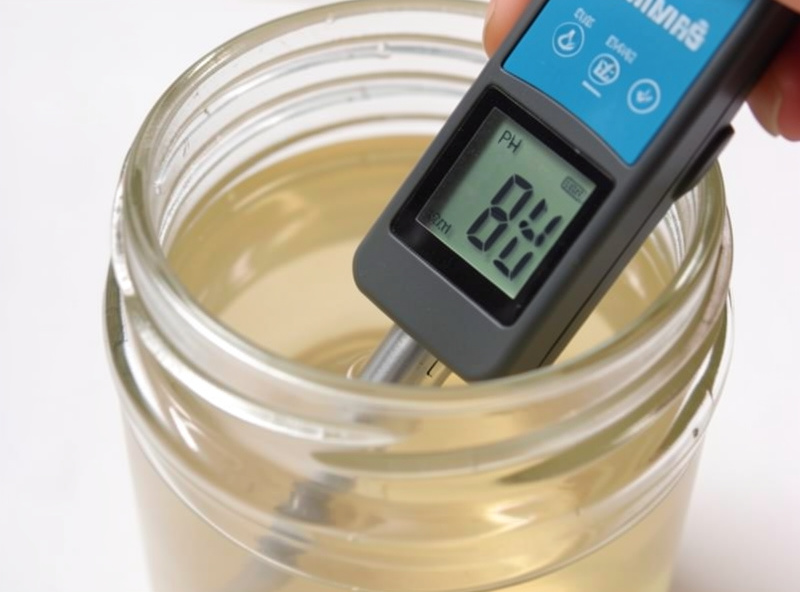
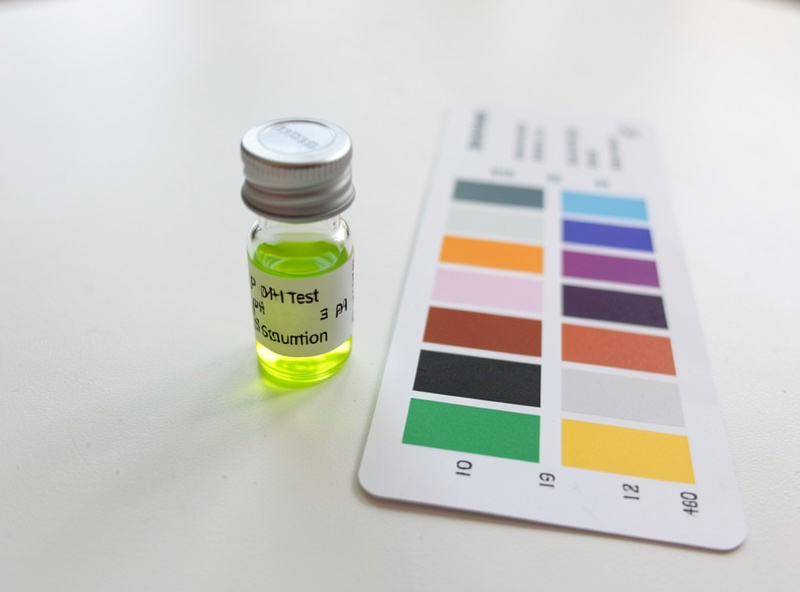
You measure pH with either a digital pH pen or a liquid drop-test kit; the pen gives a fast, precise number, while the drops give a colour you match against a chart. For a beginner, either works, but a cheap digital pen is the tool I reach for because it takes two seconds and removes the guesswork of reading a colour.
Digital pens need a little care: they must be calibrated against buffer solutions when new and occasionally after, and the probe should be rinsed and kept from drying out, or the readings drift. A drop-test kit is cheaper, has nothing to calibrate or break, and is genuinely accurate enough for growing lettuce — its only downside is squinting at a colour against a chart in poor winter light, which I find harder than reading a digit. Whichever you choose, measure after mixing your nutrients, because the nutrients shift pH themselves, and there is no point adjusting water you are about to change. A basic digital pH meter with calibration solution costs very little and pays for itself in the first rescued crop.
As an Amazon Associate I earn from qualifying purchases.
How Do You Lower or Raise pH in a Nutrient Solution?
You lower pH with a few drops of pH Down (usually a food-safe phosphoric acid) and raise it with pH Up (a potassium hydroxide base), adding tiny amounts, stirring, and re-measuring until you land in range. The golden rule is to adjust in small increments — a little goes a long way, and it is far easier to nudge pH down again than to overshoot and fight it back.
In practice, most tap-water-and-nutrient mixes come out slightly high and need a small dose of pH Down to settle into the high fives, which is exactly why pH Down is the one adjuster I always keep and pH Up is the one I rarely reach for. Add a few drops, stir well, wait a moment, and measure again — never dump in a capful and hope. My early overshoot mistake was adding acid impatiently, watching the number crash into the low fives, then chasing it back up with base, ping-ponging around the target instead of creeping up to it. Patience gets you there in two or three small additions. Once the reservoir is set at planting in a single-charge Kratky grow, you largely leave it — the plant will drift the pH a little as it feeds, but a fast leafy crop finishes before that becomes a problem.
How Often Should You Check pH in a Kratky Setup?
In a single-charge passive setup you mainly need to get the pH right once, at mixing, because you fill the reservoir and leave it. Unlike a circulating system where you top up and test regularly, the pure Kratky method is set-and-forget — a correctly mixed jar carries a fast crop to harvest without intervention.
That said, I do a spot-check on any plant that looks off. If a lettuce pales or stalls, my first move is a pH reading before I touch anything else, because a locked-out pH is the most common reason a healthy-looking reservoir grows an unhealthy plant. For longer or larger grows, or if you top a reservoir up, a check every week or two catches drift before it hurts. But for a jar of lettuce mixed correctly and left alone, one good reading at the start is usually all it takes. The forgiving nature of leafy greens — that wide, easy pH window — is a big part of why they are the right crop to learn on, as covered in the Kratky lettuce guide and the overall Kratky method for beginners walkthrough.
What If Your pH Keeps Drifting?
Persistent pH drift usually traces to your water or an un-conditioned growing medium rather than to anything the plant is doing. Hard tap water, common in parts of the Nordic region, carries dissolved minerals that stubbornly push pH up and resist adjustment, and fresh rockwool leaches alkalinity until it is properly soaked.
If your pH will not settle, check those two before anything else. Hard water can be cut with filtered or collected rainwater to make it more manageable; rockwool should be conditioned in pH-adjusted water before it holds a seed. A reservoir that started perfect but climbed over a week may simply be a plant selectively stripping nutrients and shifting the balance, which is normal near the end of a grow and a sign the crop is nearly done rather than a fault to fix. The point is not to achieve a frozen, unchanging number — solutions breathe and shift — but to keep the pH inside that generous 5.5 to 6.5 band where your vegetables can eat. Do that, mix a complete nutrient, and passive hydroponics rewards you with fresh greens on a windowsill in the darkest part of the year. It is the same non-circulating chemistry Bernard Kratky documented through the University of Hawaii’s College of Tropical Agriculture and Human Resources, just running on a kitchen counter instead of a research bench.
Related Reading
- Hydroponic Nutrients Explained for First-Timers
- The Kratky Method for Beginners: Passive Hydroponics
- Growing Lettuce With the Kratky Method
- Rockwool vs Clay Pebbles vs Coir Plugs
What is the best pH for hydroponic vegetables?
Most hydroponic vegetables do best between about 5.5 and 6.5. Leafy greens like lettuce and herbs prefer the lower end around 5.5 to 6.0, while fruiting crops such as tomatoes like it slightly higher. Aiming for a steady 5.8 keeps a mixed shelf of greens healthy.
Why does pH matter in hydroponics?
Each nutrient element is only absorbable within a certain pH window, and the widest availability sits in the high fives to low sixes. Outside that band, elements lock out and the plant shows deficiency symptoms even in a full reservoir. Hydroponics has no soil buffer, so pH is exposed and must be managed.
How do you lower pH in a hydroponic reservoir?
Add a few drops of pH Down, usually a food-safe phosphoric acid, then stir and re-measure, repeating in small increments until you land in range. Adjust gradually rather than in one large dose, because it is much easier to creep up to the target than to overshoot and correct back.
Do you need a pH meter for hydroponics?
You need some way to measure pH, but it can be a cheap digital pen or an inexpensive liquid drop-test kit. A pen gives a fast, precise number and needs occasional calibration, while drops are cheaper and accurate enough for growing lettuce. Skipping measurement entirely is the real mistake.
How often should you check pH in a Kratky setup?
In a single-charge Kratky grow you mainly need to set the pH correctly once at mixing, then leave the sealed reservoir alone. A fast leafy crop finishes before drift becomes a problem. It is still worth a spot-check on any plant that looks pale or stalled, since pH lockout is a common cause.
Why does my hydroponic pH keep rising?
Persistent upward drift usually comes from hard tap water carrying dissolved minerals, or from un-conditioned rockwool leaching alkalinity. Cut hard water with filtered or rainwater and soak rockwool in pH-adjusted water before use. Some late rise is also normal as a plant strips nutrients near harvest.