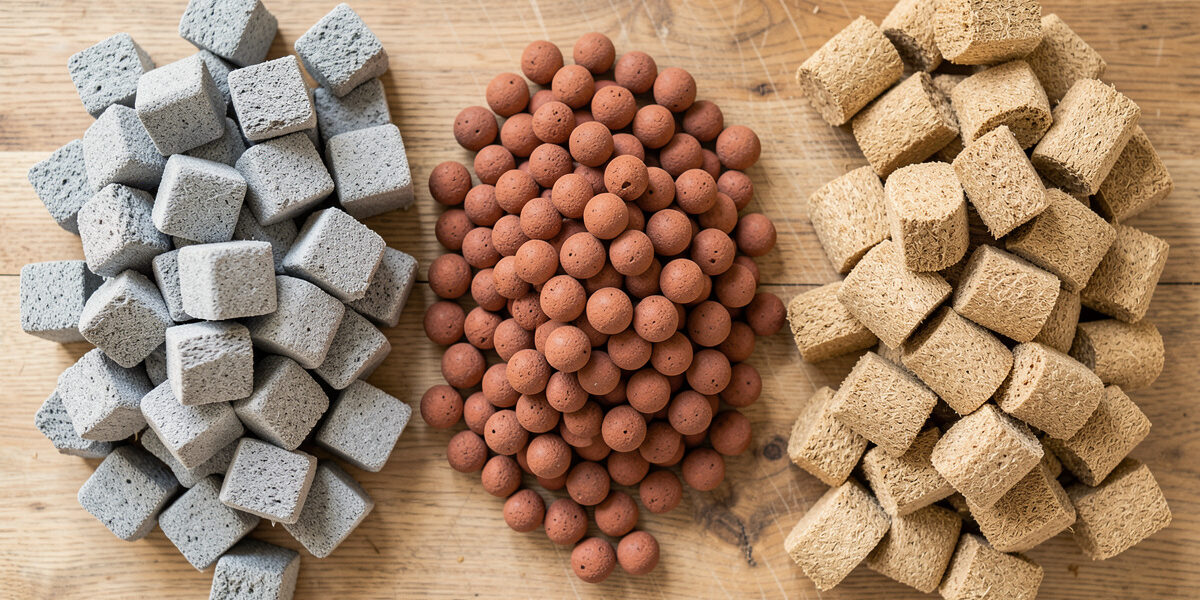
For starting seeds in passive hydroponics, rockwool holds the most water and roots seedlings fastest, clay pebbles drain and aerate best and last for years, and coir plugs sit in the middle as a renewable, forgiving option. There is no single winner — I use all three, for different jobs, and choosing well is one of those small decisions that quietly decides whether a seedling establishes in days or sulks for weeks. This is what each one actually does in a Kratky jar.
The growing medium is the material inside your net cup, and in hydroponics it does not feed the plant — it only holds the seedling upright and manages the balance of water and air around the young roots. That last part is everything. Too much water-holding and a seedling damps off; too little and it dries out before its roots reach the solution. Here is how the three common media compare, and which I reach for when.
What Is Rockwool and When Should You Use It?
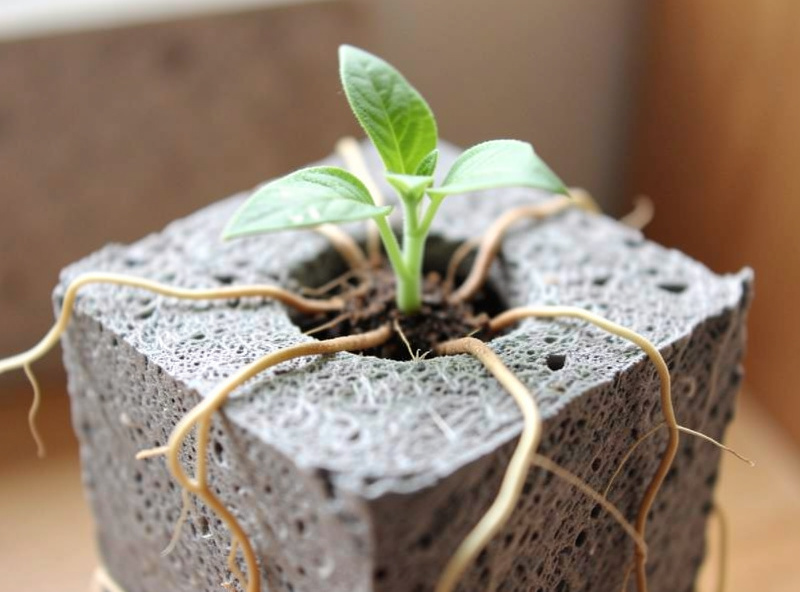
Rockwool is a fibrous medium spun from molten basalt rock, sold as cubes and plugs, and it is the classic hydroponic seed-starting material because it holds a lot of water while still keeping some air, so seeds germinate fast and reliably. For starting seeds destined for a Kratky jar, it is my default — nothing roots a lettuce seed quite as dependably.
The one thing you must know about rockwool is that it comes out of the bag with a high pH and needs conditioning before use: soak the cubes in pH-adjusted water (around the low-to-mid fives) before you sow, or the alkalinity will stall your seedlings. Skip that soak and you get the pale, stuck seedlings I got the first time I used it straight from the pack, before I understood why. Once conditioned, it is superb. Its downsides are that it is not reusable, the loose fibres irritate skin and lungs so you wet it and handle it carefully, and it is not biodegradable, which bothers me enough that I use it only where its reliability earns its place — starting seeds. For that job it is hard to beat. Cornell’s Controlled Environment Agriculture program lists rockwool among the standard commercial seed-starting substrates for exactly this water-and-air balance, which matches what I see on a much smaller shelf.
What Are Clay Pebbles and Why Do Growers Love Them?
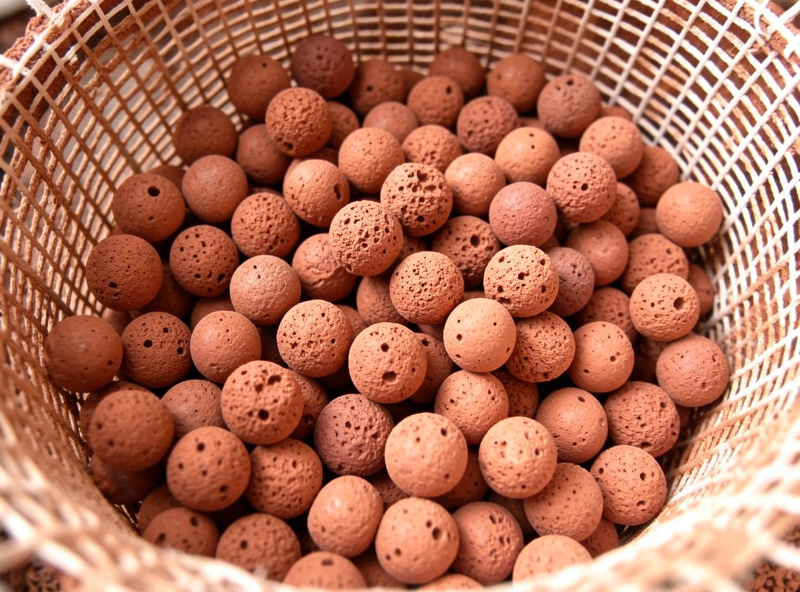
Clay pebbles — expanded clay aggregate, often sold as LECA or by the brand name Hydroton — are lightweight fired-clay balls that drain freely and hold lots of air, and their great virtue is that they are inert, reusable, and last for years. They are what I fill the rest of a net cup with, around a seedling, and what I use when I want maximum aeration at the root zone.
Pebbles do not hold much water themselves, so on their own they are better for systems that flood and drain or for supporting a plant whose roots have already reached the solution, rather than for germinating a seed that needs constant moisture. In a Kratky cup I nest a rockwool-started seedling into a collar of pebbles: the rockwool keeps the seed moist, the pebbles steady the plant and block light from reaching down into the cup. The best part is longevity — rinse them, and a bag of clay pebbles serves grow after grow for years, which makes their slightly higher upfront cost the cheapest option over time. The only nuisance is the dusty first rinse; new pebbles shed a fine clay powder you want to wash off before use.
What About Coir Plugs?
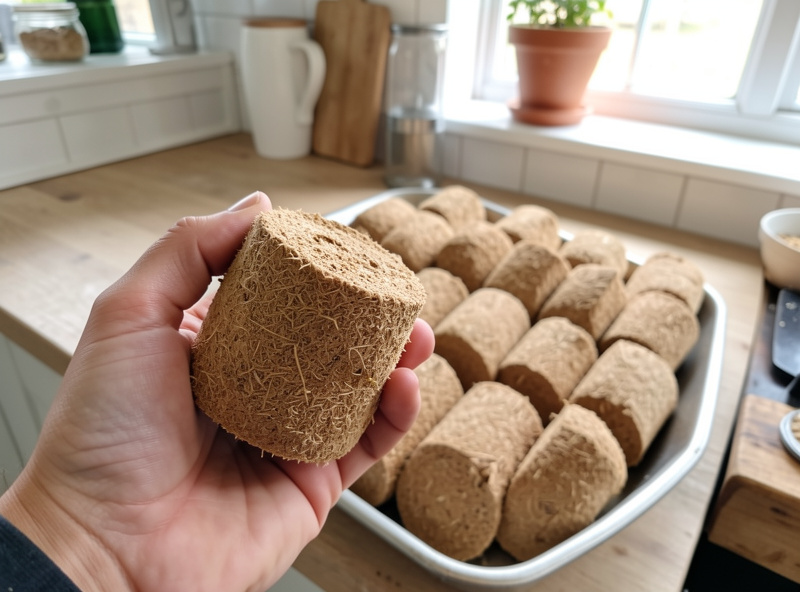
Coir plugs are made from processed coconut husk, and they land neatly between rockwool and pebbles: they hold good moisture like rockwool but are renewable and pleasant to handle, and they biodegrade, which is the main reason I reach for them over rockwool when I can. For starting seeds they are genuinely good, with a friendly texture that neither dries out fast nor stays waterlogged.
The one caveat with coir is quality and salt content. Cheap, poorly processed coir can carry sea salts that need rinsing out, and low-grade product varies batch to batch. Good coir plugs, pre-rinsed and buffered, are excellent and my preferred sustainable choice for seed starting. Coir also holds a little more nutrient than fully inert media, which is a minor plus. It is the medium I recommend to anyone uneasy about rockwool’s fibres or its landfill footprint — it does most of the same job with none of the itch, and it comes from a renewable crop rather than mined rock.
Rockwool vs Clay Pebbles vs Coir: The Direct Comparison
Here is the head-to-head that matters for a passive-hydroponics grower, based on how each behaves in my own jars and cups:
| Property | Rockwool | Clay pebbles | Coir plugs |
|---|---|---|---|
| Water holding | High | Low | Medium-high |
| Aeration | Medium | High | Medium |
| Reusable | No | Yes, for years | No |
| Seed starting | Excellent | Poor alone | Very good |
| Prep needed | pH soak first | Rinse dust off | Rinse if salty |
| Sustainability | Mined, not biodegradable | Inert, long-lived | Renewable, biodegrades |
Read across the table and the logic falls out: start seeds in rockwool or coir, support and aerate with clay pebbles, and combine them rather than picking one for every job. That combination is what I run in almost every Kratky cup on my shelf, and it lines up with the same root-zone air-and-water split the University of Hawaii’s College of Tropical Agriculture and Human Resources documented in the original Kratky research.
Which Growing Medium Should a Beginner Choose?
If you want one medium to start with, choose clay pebbles plus a small pack of rockwool or coir plugs — the pebbles are your reusable workhorse and the plugs are how you germinate seeds. That two-item kit covers every crop in the passive-hydroponics cluster and, because the pebbles last for years, it is close to a one-time purchase.
My actual recommendation to a first-timer: buy a bag of clay pebbles you will use forever and a small tray of coir plugs to start seeds, and skip rockwool entirely unless you specifically want its germination reliability and do not mind the fibres. A bag of clay pebbles for hydroponics is inexpensive and effectively permanent. Whichever you pick, the medium slots into the net cup that sits in your reservoir, feeds on the nutrient solution you mix, and grows the lettuce that got you into this — the whole system is covered in the Kratky method for beginners guide. Get the medium right and your seedlings start strong, which is more than half the battle in passive growing.
As an Amazon Associate I earn from qualifying purchases.
Do Growing Media Change Your pH or Nutrients?
Two of the three do, at least at the start. Rockwool arrives alkaline and will push your solution’s pH up until it is conditioned, and fresh coir can carry salts and a little buffering capacity that nudge the early chemistry. Clay pebbles are genuinely inert once rinsed and leave your solution alone, which is another quiet reason growers lean on them.
This matters because a new grower chasing a drifting pH reading will often blame the nutrients when the real culprit is un-soaked rockwool leaching alkalinity into the jar. I condition rockwool in pH-adjusted water before it ever touches a seed precisely so the medium is neutral by the time the plant depends on it. Coir I rinse until the runoff is clear, then treat as effectively inert. With clay pebbles I do nothing but wash off the clay dust. If your reservoir pH will not settle in the first week, look at your medium before you second-guess your nutrient mix — the interaction between medium and solution is real, and it is covered from the water side in hydroponic pH for vegetables.
How Much Growing Medium Do You Need Per Net Cup?
A single 2 inch net cup takes only a small handful of medium — a rockwool cube plus enough clay pebbles to fill the gaps and hold the seedling steady. This is why a modest bag of pebbles lasts so long: each cup uses very little, and because you reuse the pebbles, the same bagful services dozens of grows before it looks tired.
The mistake here is over-packing. Cram a net cup solid with tightly wedged medium and you choke off the air and root movement the passive method needs; the roots want room to escape the cup and dangle into the solution. I fill loosely enough that I could nudge a pebble with a fingertip, snug enough that the plant does not wobble. Larger 3 inch cups and mesh baskets naturally need more, which is worth factoring in when you buy — a shelf of tub-grown kale gets through more pebbles than a row of jar lettuces. Even so, the running cost of medium in passive hydroponics is close to nothing once you own a reusable bag, which is a large part of why growing salad this way feels almost free after the first setup.
Related Articles
- The Kratky Method for Beginners: Passive Hydroponics
- Best Net Cups and Baskets for Small-Space Hydroponics
- Hydroponic Nutrients Explained for First-Timers
- Growing Lettuce With the Kratky Method
Is rockwool or clay pebbles better for hydroponics?
They do different jobs. Rockwool holds more water and roots seedlings fastest, so it is better for starting seeds. Clay pebbles drain, aerate, and are reusable for years, so they are better for supporting established plants. Many growers use both together in one net cup.
Do you need to soak rockwool before using it?
Yes. Rockwool comes out of the bag with a high pH, so you should soak the cubes in pH-adjusted water in the low-to-mid fives before sowing. Skipping this conditioning step leaves the medium too alkaline and stalls seedlings even when everything else is correct.
Can you reuse hydroponic growing media?
Clay pebbles are reusable for years, needing only a rinse between grows. Rockwool and coir plugs are single-use because they break down and hold old roots. This makes clay pebbles the most economical choice over time despite a slightly higher upfront cost.
Is coir a good hydroponic medium?
Yes. Coir plugs hold good moisture like rockwool but are renewable, biodegradable, and pleasant to handle, which makes them a strong sustainable choice for seed starting. The main caveat is quality: cheap coir can carry sea salts that need rinsing out before use.
What growing medium is best for the Kratky method?
A common and reliable setup is a seedling started in rockwool or a coir plug, nested into a collar of clay pebbles inside the net cup. The plug keeps the seed moist while the pebbles steady the plant and block light from reaching down into the cup.