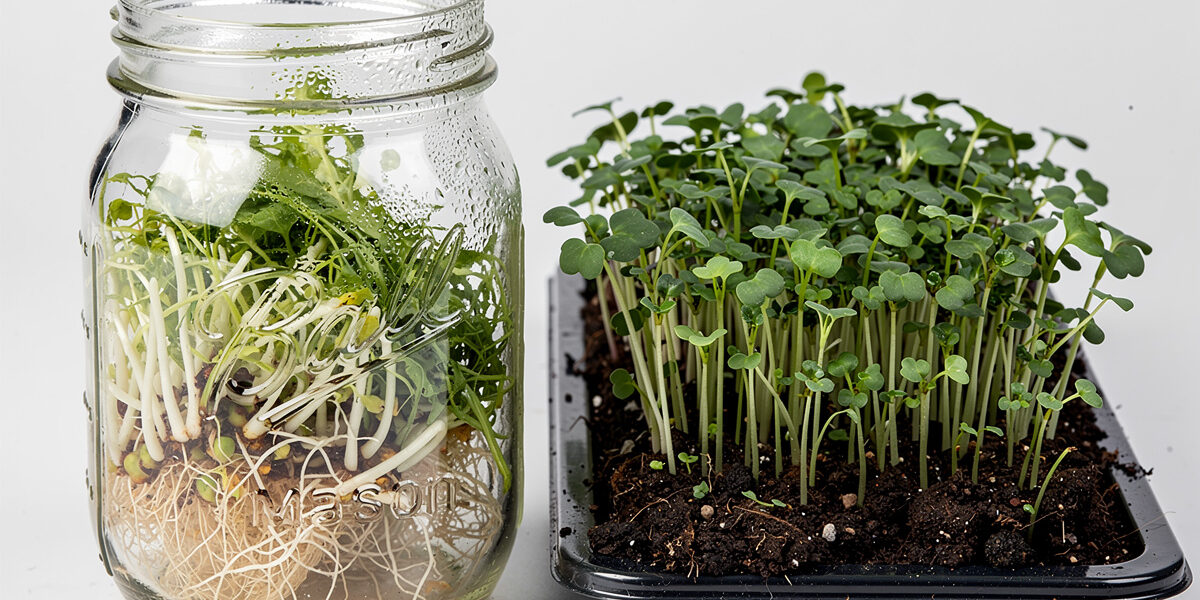
Sprouts grow in standing water for 3 to 7 days and are eaten whole, root included. Microgreens grow in soil or fiber for 7 to 21 days and are cut above the soil line. The difference matters for flavor, food safety, and cost — sprouts have been linked to roughly 50 documented foodborne illness outbreaks between 1996 and 2018, while microgreen outbreaks are extremely rare.
On my kitchen counter, I run both: a tiered sprouter for alfalfa and broccoli sprouts that I start every 2 days, plus three 1020 trays of microgreens under the LED bar for salads and sandwiches through the week. They fill different slots in the kitchen, and after running both side by side through two Swedish winters, here are the eight differences that actually matter.
Quick Answer: Which Should You Grow?
Grow microgreens if you want bold, leafy flavor, longer storage, and lower foodborne illness risk — they suit households eating salads, sandwiches, and garnishes. Grow sprouts if you want the fastest cycle (3 to 7 days), the highest yield-to-seed ratio, and minimal equipment — they suit a $20 setup that fits in a kitchen cabinet. Most home growers eventually run both: sprouts for daily smoothie additions, microgreens for plate work.
1. Growing Medium: Water vs Soil
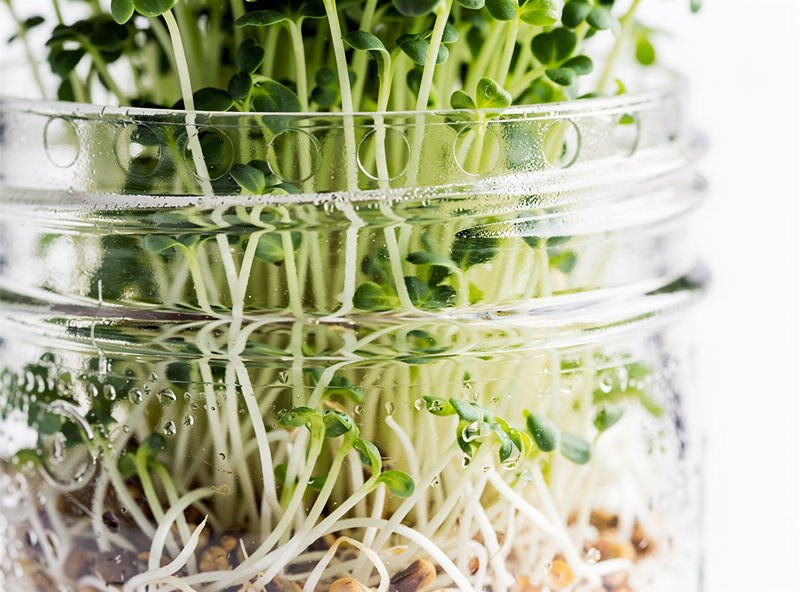
Sprouts grow in nothing but water. Seeds are soaked overnight, drained, and rinsed twice daily in a jar, bag, or tiered tray. The seed itself supplies all the energy needed for the 3 to 7 day cycle. There is no growing medium, no soil, no fiber pad.
Microgreens require a medium — soil, coco coir, hemp mat, or hydroponic pad — to anchor roots and supply moisture for the longer 7 to 21 day cycle. Soil-grown microgreens are the standard at home; commercial microgreen producers often switch to hemp or jute mats for cleaner harvests and food-safety compliance.
This single difference cascades through every other decision: harvest method, flavor profile, food safety, and cost. When I first started, I tried sprouting microgreen seeds in a jar — it works for about 3 days before the seedlings tangle into an unharvestable knot. The medium is not optional for microgreens; it is what separates a cuttable canopy from a slimy wad.
2. Time to Harvest: 3-7 Days vs 7-21 Days
Sprouts are the fastest food crop in the world. Mung bean and alfalfa sprouts harvest in 3 to 4 days. Lentils, broccoli, and clover sprouts harvest in 5 to 7 days. The cycle is so short that home growers often run continuous batches — start a new jar every 2 days for daily harvests.
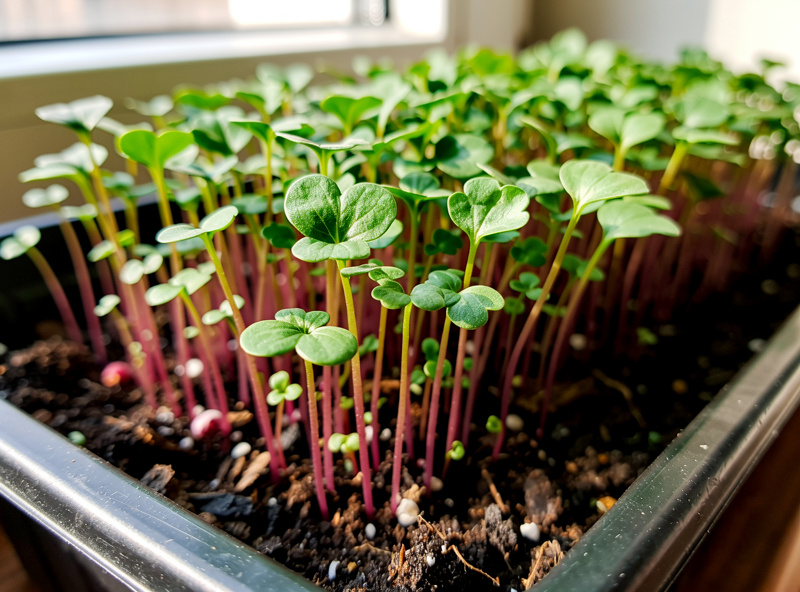
Microgreens take 7 to 21 days. Radish is the fastest at 8 days. Sunflower and pea shoots take 10 to 14. Cilantro and basil are slowest at 18 to 21. The longer cycle is the cost of growing the plant past the seed-leaf stage to the first true leaf, where the flavor intensifies and the leaves develop the color and structure that make them a centerpiece on the plate.
For a deeper view on each side, see the Microgreens complete setup guide and the Sprouting Seeds at Home guide. If you are setting up your first tray, the microgreens trays guide covers 1020 selection, drainage, and stacking — the three equipment decisions that determine whether your first tray succeeds or molds.
3. Edible Parts: Root + Seed vs Stem + Leaves
Sprouts are eaten whole. The root, stem, seed coat, and emerging seed leaves all go in the salad or sandwich. This is why sprout flavor is often described as “earthy” or “raw seed-like” — the seed coat dominates.
Microgreens are cut just above the soil line at harvest. Only the stem, cotyledons (seed leaves), and any first true leaves are eaten. The root and seed coat are discarded with the medium. The flavor is closer to the mature plant — radish microgreens taste like mature radish but sharper, broccoli microgreens taste like mature broccoli but more concentrated, and sunflower shoots are nutty enough to carry a salad on their own.
4. Flavor Profiles and Kitchen Use
Sprouts and microgreens taste fundamentally different and that dictates where each one goes in the kitchen.
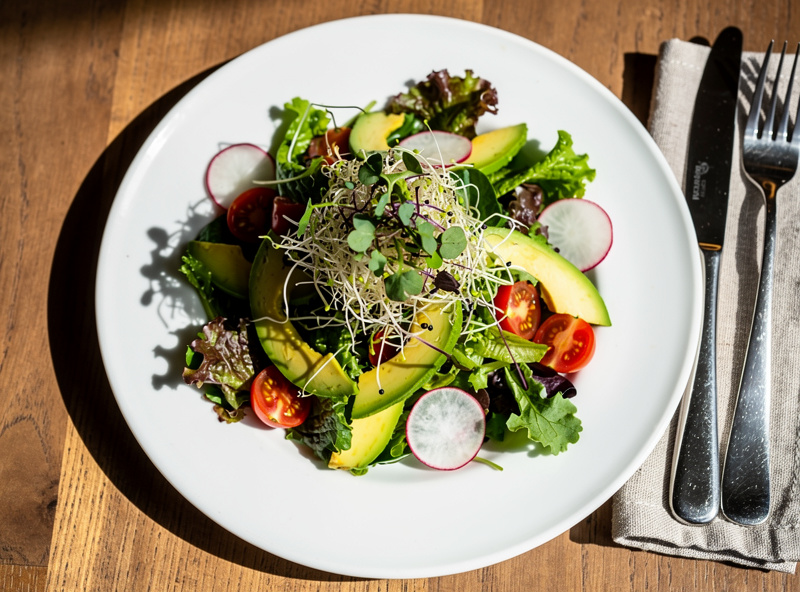
Sprouts taste like the seed they came from — earthy, slightly raw, with the seed coat giving a distinctive chew. Alfalfa is grassy and mild, mung bean sprouts are crisp and neutral, radish sprouts carry a peppery punch. Texture is crunchy with a noticeable seed hull presence. They work best in stir-fries, pad thai, spring rolls, and smoothies where the crunch adds texture without competing for the lead flavor.
Microgreens taste like a concentrated version of the mature plant. Radish microgreens are sharper and more peppery than mature radish. Pea shoots taste like fresh garden peas in leaf form. Sunflower shoots are nutty and substantial enough to anchor a salad. Cilantro microgreens are noticeably more pungent than mature cilantro — a little goes a long way. Texture is leafy and tender, closer to lettuce than to a sprout. Chefs favor microgreens for plate work because of the color, leaf shape, and concentrated flavor that holds up against other ingredients.
| Attribute | Sprouts | Microgreens |
|---|---|---|
| Primary flavor | Earthy, seed-like, mild | Concentrated version of mature plant |
| Texture | Crunchy, seed hull present | Tender, leafy, lettuce-like |
| Best kitchen uses | Stir-fries, smoothies, spring rolls, pad thai | Salads, sandwiches, garnish, plate work |
| Flavor intensity | Subtle, background | Bold, forward |
| Best for cooking | Stir-fry (1-2 min), soup topping | Raw only — heat wilts them instantly |
| Chef preference | Low (texture, not appearance) | High (color, leaf shape, flavor punch) |
5. Food Safety: The Real Difference
This is the difference that matters most for first-time growers, immunocompromised eaters, pregnant women, and anyone serving young children or older adults.
Sprouts grow in warm (65 to 75°F), high-moisture conditions — the ideal environment for E. coli, Salmonella, and Listeria. Roughly 50 outbreaks of foodborne illness were linked to sprouts between 1996 and 2018, including major recalls of alfalfa, mung bean, and clover sprouts, and health authorities advise that high-risk groups (children, pregnant women, elderly, immunocompromised) avoid raw sprouts entirely (Virginia Cooperative Extension sprout safety).
Microgreens grow in drained soil or fiber media that does not pool water, and they are cut at harvest, not pulled with roots. The combination of better drainage and a non-water-immersion harvest method has resulted in no documented widespread outbreaks linked to microgreens.
For home growers, this practical difference shows up in tray cleaning protocols and storage. Sprouts must be rinsed in clean water 2 to 3 times daily and refrigerated immediately after harvest. Microgreens can sit in a humidity dome on a counter for 14+ days with no rinsing, and their post-harvest shelf life is 5 to 10 days versus 2 to 5 for sprouts. (University of Maryland Extension microgreens guide)
6. Equipment and Setup Cost
Sprouts win on minimum cost. A wide-mouth quart Mason jar plus a sprouting jar with screen lid is the entire setup ($10 to $18 total). I keep two quart jars in rotation on the counter — one draining, one rinsing — and the footprint is smaller than a coffee mug. Tier sprouters with stacking trays cost $25 to $50 and handle 3 to 4 varieties simultaneously.
Microgreens require trays ($1 to $8 each), a growing medium ($0.30 to $1 per tray), and a light source for days 4 to harvest. A working starter setup using a complete microgreens kit costs $35 to $60 (single tray with shop light) or $120 to $200 (4-tray rack with LED grow bar). As an Amazon Associate I earn from qualifying purchases. On my shelf the cost per tray has settled around $1.20 including seed and coir — I buy coir bricks in bulk and seed by the pound, which brings the per-tray cost below what you would pay buying individual packets.
| Setup | Sprouts Cost | Microgreens Cost |
|---|---|---|
| Minimum (1 jar/tray) | $10-$15 | $35-$60 |
| Mid-tier (3-4 batches) | $25-$50 | $120-$200 |
| Per-batch consumable cost | $0.50-$1.50 | $0.80-$3.00 |
| Shelf life of harvest | 2-5 days | 5-10 days |
7. Yield per Seed
Sprouts have a higher yield-to-seed ratio. One ounce of mung bean seed produces 12 to 16 ounces of mung bean sprouts. One ounce of broccoli sprout seed produces 8 to 10 ounces of sprouts.
Microgreens have a lower yield ratio because the plant is using the seed energy plus nutrients from the medium to grow taller and develop more leaf material. One ounce of radish seed produces 8 to 10 ounces of radish microgreens. One ounce of sunflower seed produces 10 to 14 ounces of sunflower shoots.
However, microgreens win on volume per square foot — a 10×20 inch tray produces 8 to 16 ounces of microgreens, while the same surface area in a sprouting tray would yield more weight but less leafy bulk for plate use.
8. Flavor Profile
Sprouts taste like the seed they came from — earthy, slightly raw, often peppery (mustard, radish) or mild (alfalfa, mung). Texture is crunchy with a noticeable seed coat.
Microgreens taste like a concentrated, more vibrant version of the mature plant. Radish microgreens are sharper than mature radish. Pea shoots taste like fresh garden peas. Cilantro microgreens are noticeably more pungent than mature cilantro. Texture is leafy and tender — closer to lettuce than to a sprout.
Chefs strongly favor microgreens for plate work because of color, leaf shape, and concentrated flavor. Home growers often use sprouts for smoothies and stir-fry, microgreens for salads and sandwich tops. For specific microgreen variety choices, see the Best Microgreens to Grow guide.
The Hybrid Approach: Run Both
I run both, and they fill different slots in the kitchen. A continuous sprout cycle (new Mason jar every 2 days) supplies daily smoothie additions and quick stir-fry toss-ins — alfalfa and broccoli sprouts go into breakfast smoothies, mung bean sprouts go into pad thai on weeknights. A weekly microgreen tray supplies salads, sandwiches, and dinner garnish. The two systems sit on opposite sides of the same counter and neither interferes with the other.
Combined cost for a household running both: $50 to $80 startup, $5 to $12 per week consumables. Combined yield: 1 to 1.5 lbs of fresh sprouts per week + 8 to 14 ounces of microgreens per week. That replaces $20 to $40 in store-bought equivalents — and the flavor and crunch of something harvested 10 minutes ago is not something a clamshell at Whole Foods can match.
The tray side benefits from reading the broader Indoor Growing complete guide, especially the lighting and ventilation sections. If you are curious about running microgreens without soil, the hydroponic microgreens guide covers the mat-and-wicking-tray approach that some growers prefer for a cleaner kitchen setup.
Which Is Easier for Beginners?
Sprouts have the smallest failure surface — the only thing you can do wrong is forget to rinse for 24+ hours, which leads to a slimy mess in the jar (recoverable: dump, rinse, restart). I killed my first jar of mung beans this way, left them unrinsed over a weekend, and the smell on Monday morning was enough to teach the lesson permanently. The cycle is short enough that one bad batch teaches you the rules immediately.
Microgreens have more failure modes (over-watering, mold, leggy growth from poor lighting, uneven germination), but each tray is a longer cycle so a beginner can correct mid-cycle. The forgiving species (radish, sunflower, pea) succeed even with mediocre technique — my first radish tray under a $20 shop light produced a perfectly edible harvest despite every timing mistake I made.
Recommendation: start sprouts in your first week to learn rinse discipline. Start microgreens in week 2 with radish to learn watering discipline. By week 4, you’ll know which one fits your kitchen and your eating habits. The microgreens harvest guide covers cutting, washing, and storing your trays correctly so the week 2 effort does not go to waste.
Frequently Asked Questions
Are microgreens safer than sprouts?
Yes. Sprouts have been linked to roughly 50 documented foodborne illness outbreaks between 1996 and 2018 because they grow in standing water at warm temperatures. Microgreens grow in drained soil or fiber and are cut at harvest, not pulled with roots, eliminating most contamination paths. The FDA advises immunocompromised people to avoid raw sprouts but does not issue similar warnings for microgreens.
Can you eat sprouts and microgreens raw?
Microgreens are routinely eaten raw in salads, sandwiches, and as garnish. Sprouts are also eaten raw but carry higher contamination risk. The FDA recommends that pregnant women, young children, elderly, and immunocompromised people avoid raw sprouts entirely or cook them to 165°F internal temperature.
Which tastes better: sprouts or microgreens?
Depends on the dish. Sprouts are crunchy and mild — best in stir-fries, pad thai, and smoothies where they add texture without flavor. Microgreens deliver concentrated, bold flavor similar to the mature plant — radish microgreens are peppery, sunflower shoots are nutty, and pea shoots taste like fresh garden peas. For salads and plate work, microgreens win. For cooking and crunch, sprouts win.
Can I grow microgreens with sprouting seeds?
Sometimes. Untreated sprouting seeds work for many microgreens — broccoli sprout seed grows broccoli microgreens. But sprouting seeds are sold in smaller quantities at higher per-ounce cost. Buy bulk microgreen seeds from True Leaf Market, Johnny’s, or Sprout People for better economics.
How long do microgreens vs sprouts last after harvest?
Microgreens dried before harvest and stored at 36 to 40°F last 5 to 10 days. Sprouts last 2 to 5 days refrigerated. Both must be kept dry — wet harvest cuts shelf life by 50 percent in either case.
Are microgreens or sprouts cheaper to grow?
Sprouts are cheaper per batch — about $0.50 to $1.50 per cycle in seeds with no soil, no light, no trays. Microgreens cost $0.80 to $3.00 per tray including soil, but yield more leafy volume per square foot.