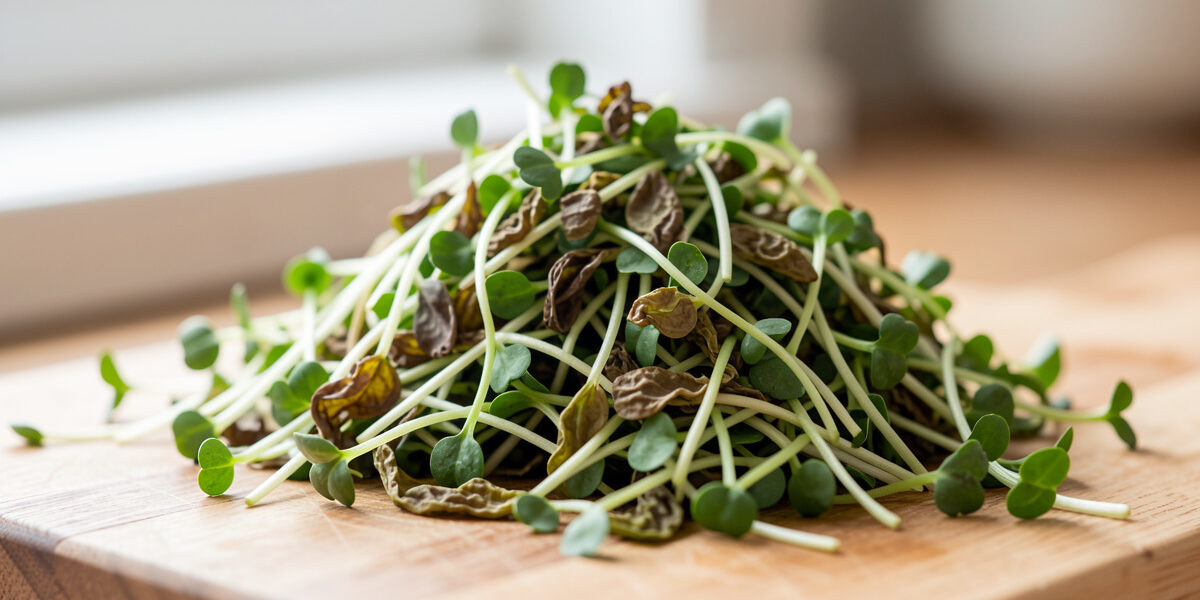
Microgreens wilt after cutting for two main reasons: they were harvested warm and wet, or they were overgrown and hollow-stemmed by the time you cut them. Crisp, long-lasting greens come from cutting cool, cutting dry, and cutting on time — before the crop passes its window. A limp harvest usually revives in a 10-minute ice-water bath, then stores for days if you dry and chill it properly.
Nothing is more deflating than growing a beautiful tray for ten days and watching the cut greens flop into a sad wet pile within the hour. I’ve done it — left a tray of pea shoots two days too long because life got in the way, cut it warm in the afternoon, and lost half of it to wilt no matter how I stored it. The fix turned out to be less about storage tricks and more about when and how I cut. Get the harvest itself right and the storage takes care of itself; get the harvest wrong and no container saves you.
Why Do Microgreens Wilt After Cutting?
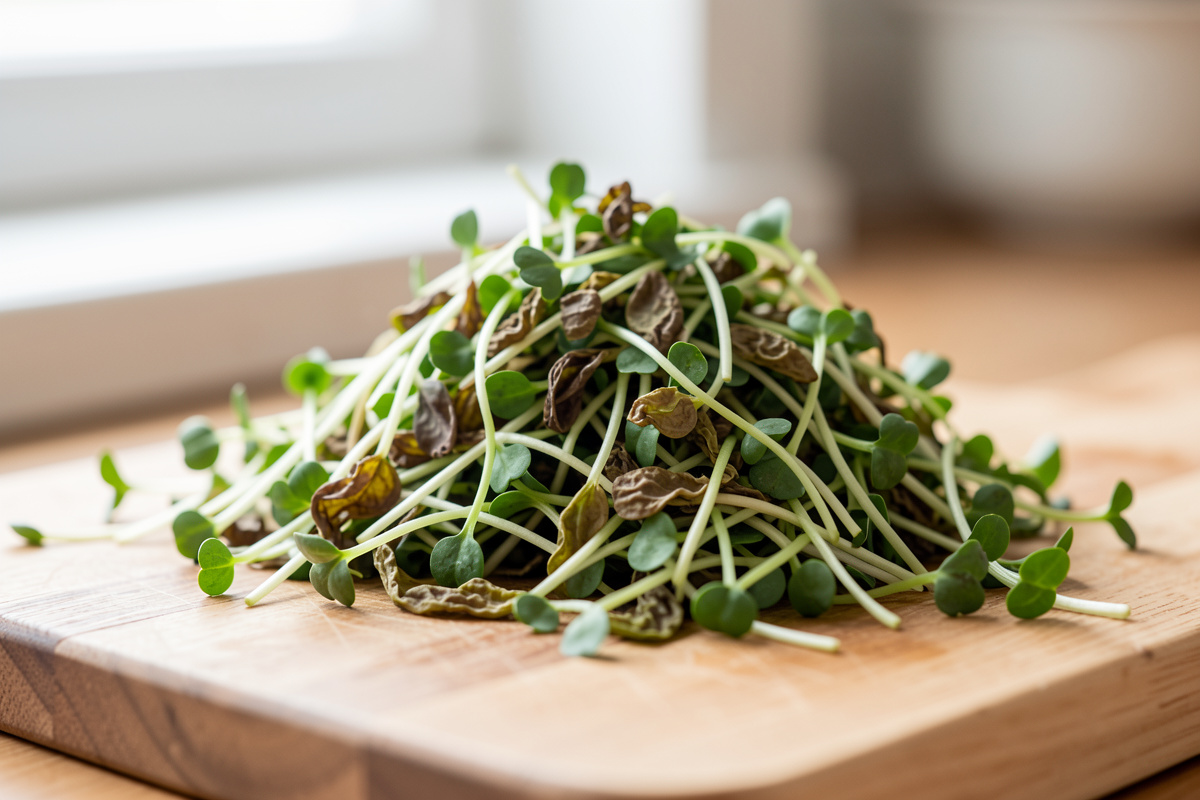
Microgreens wilt after cutting because they lose water faster than a cut stem can hold it, and warmth, surface wetness, and overgrowth all accelerate that loss. A crop cut warm is already transpiring hard; wet foliage traps heat and rots rather than staying crisp; and an overgrown crop has hollow, fibrous stems that can’t hold turgor. Cool, dry, and on-time cutting keeps the cells full and firm.
The underlying thing is turgor pressure — the water inside plant cells that keeps them rigid. A living, rooted microgreen replaces water constantly; a cut one can’t, so it’s on a countdown from the moment the scissors close. Everything that raises the rate of water loss brings the wilt forward. Heat drives transpiration, so a tray cut in the warm afternoon wilts faster than one cut in the cool morning. And a crop past its prime has already started converting tender stem tissue to fibrous, hollow structure, which simply can’t stay turgid once cut. This is one branch of the wider microgreens troubleshooting guide, and it’s the one that happens after all the growing is done — which is why it stings.
Note the distinction from a tray that flops before cutting: that’s usually legginess from weak light or, worse, damping off collapsing the stems. This article is specifically about crisp greens that go limp after harvest — a handling problem, not a growing one.
Was the Crop Overgrown When You Cut It?
Overgrown microgreens wilt fast because their stems hollow out and go fibrous past the ideal harvest window. Most microgreens are best cut at the first true leaf stage, when stems are tender and full; peas and sunflowers hold a bit longer. Cut past that window and the crop looks bigger but stores worse, wilting quickly and tasting tougher.
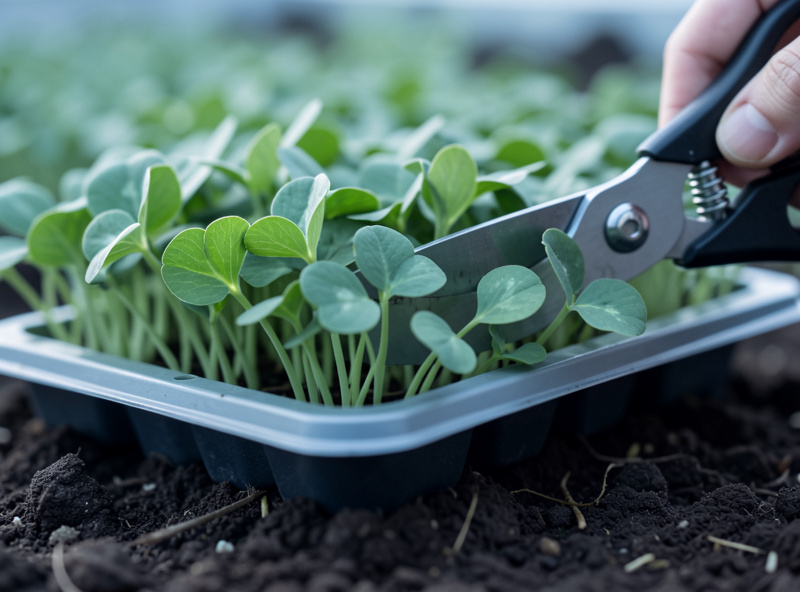
Timing is the lesson I learned the expensive way with peas. There’s a real sweet spot — tender-crisp, full-stemmed, at or just after first true leaves for most crops — and it doesn’t last forever. Leave a tray “just another couple of days” to bulk up and the stems shift from tender to fibrous, then start to hollow. Hollow stems can’t hold turgor, so they collapse the moment you cut them, and no ice bath fully brings them back. Bigger is not better past that point; you’re trading crispness and shelf life for a heavier but worse harvest.
Reading the window comes with practice, but the cues are reliable: cotyledons fully open, first true leaves just emerging, stems still springy rather than stiff. When a tray hits that, I cut it, even if I’m busy — because waiting costs more than harvesting a day early. If you want the full harvest technique end to end, my guide on how to harvest, wash, and store microgreens covers stage-by-crop timing. And if a crop keeps racing past the window before you can cut it, that’s a scheduling problem worth fixing — succession-sowing smaller trays more often beats one giant tray you can’t use in time.
How Should You Cut Microgreens to Keep Them Crisp?
Cut cool, cut dry, and cut clean. Harvest in the morning when the shelf is cool and the plants are most turgid, after holding off water for several hours so the foliage is dry. Use sharp scissors or a clean knife and cut high, above the soil line, so you get clean stems without soil or damp lower debris that speeds spoilage.
Each of those matters for a specific reason. Cool: morning-harvested greens are fully turgid and transpiring slowly, so they enter storage with a full tank of water. Cutting in a warm afternoon means the plants are already stressed and losing water fast. Dry: I stop watering a tray several hours before I cut it, because wet foliage going into a container traps moisture, warms up, and turns to slime rather than staying crisp. Surface-dry greens store far better. Clean and high: cutting well above the medium keeps soil, root mat, and the damp lower stems out of your harvest, and those are exactly the bits that rot first and drag the rest down with them.
Sharp tools help more than you’d think. A clean, sharp cut seals faster and bruises less than a crushing snip from dull scissors, and bruised tissue leaks and spoils. I keep a dedicated pair of harvest scissors and a pair of stainless harvest scissors sharp for the job. It’s a small thing that adds up across a lot of trays.
As an Amazon Associate I earn from qualifying purchases.
Can You Revive Wilted Microgreens?
Usually, yes. A short ice-water bath rehydrates limp-but-fresh microgreens: dunk them in cold water for about 10 minutes, then spin or pat them thoroughly dry. The cold water restores turgor to cells that have lost water but aren’t damaged, and the drying step is essential — greens stored wet rot fast, undoing the rescue.
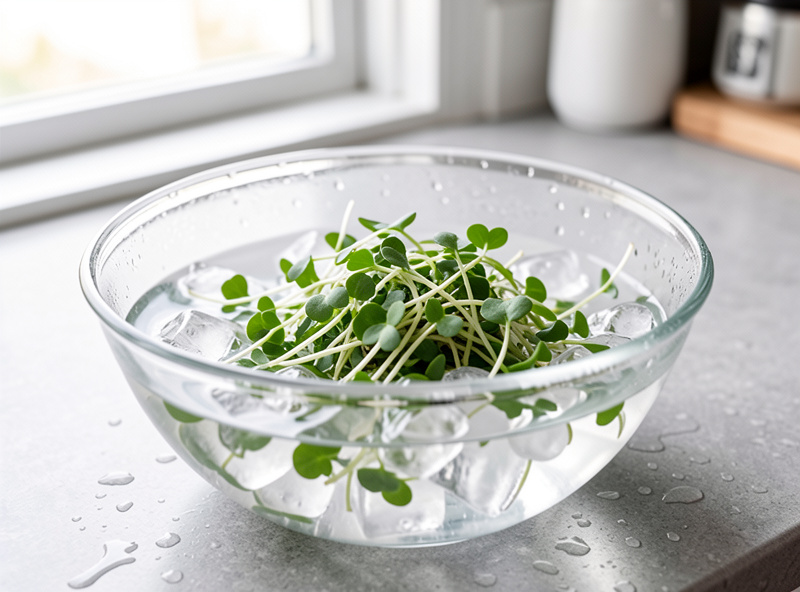
This is my standard rescue for a tray that came out a little floppy — cut cool but maybe a touch overgrown, or handled warm. Ten minutes in cold water and they perk up visibly, standing back to crisp. The critical, most-skipped step is drying afterward. Wet greens in a tub in the fridge slime within a day; the same greens spun dry keep for the better part of a week. A salad spinner is the tool here, followed by a gentle roll in a clean towel or paper towel.
The honest limit: an ice bath revives wilt, not decay. Greens that wilted because they were overgrown and hollow-stemmed only partly recover, and greens that are actually going off — sour smell, slimy patches — are past saving and shouldn’t be eaten. The bath buys back turgor in fresh tissue; it can’t reverse spoilage. Here’s how the common storage outcomes actually shake out:
| How They Were Cut / Stored | Typical Result | What To Do |
|---|---|---|
| Cut cool and dry, spun, in a lined tub in the fridge | Crisp for the better part of a week | Nothing — this is the target |
| Cut warm, stored damp | Limp and slimy within a day | Ice bath and dry only if not yet slimy |
| Overgrown, hollow-stemmed at cut | Floppy, partial recovery at best | Eat soon; cut earlier next time |
| Fresh but wilted from handling | Revives fully | 10-minute ice bath, spin dry, chill |
How Do You Store Microgreens So They Stay Crisp?
Store cut, dry microgreens in a breathable but lined container in the fridge — a tub or bag with a dry paper towel to absorb excess moisture, kept cold. The two rules are dry and cold: surface moisture is the enemy that turns greens to slime, and cold slows the water loss and respiration that cause wilt. Done right, most microgreens hold crisp for five days or more.
My routine is simple and it works across crops. Cut cool and dry, ice-bath only if needed, spin thoroughly, then pack loosely into a container lined with a dry paper towel that wicks away any residual moisture. Loose, not crammed — packed-tight greens bruise and trap humidity. Into the coldest reasonable part of the fridge, not the door. That paper towel is doing quiet work; if it dampens, swap it. This connects straight to the full harvest, wash, and store workflow, but the headline is that everything downstream depends on cutting cool, dry, and on time.
Circle back to prevention, because it beats every rescue: a crop cut at the right stage, in the cool morning, off dry foliage, stored dry and cold, barely wilts at all. The ice bath is there for the days you get it wrong, not a step you should need every harvest. Nail the timing and the technique and “my microgreens wilt after cutting” stops being a problem you have. For a non-commercial reference on microgreen food-safety and post-harvest handling, the University of Minnesota Extension microgreens growing guide is worth a look, alongside the crop notes in Johnny’s guide to growing microgreens.
Why do my microgreens wilt right after I cut them?
They lose water faster than a cut stem can replace it. Cutting warm, cutting off wet foliage, or cutting an overgrown crop with hollow stems all speed the wilt. Cut in the cool morning, off dry foliage, at the right stage, and they stay crisp far longer.
How do you revive wilted microgreens?
Give them a 10-minute bath in cold or ice water, then spin or pat them thoroughly dry. The cold water restores turgor to fresh cells that lost water. Drying afterward is essential, since greens stored wet quickly turn slimy and undo the rescue.
What is the best time of day to harvest microgreens?
Morning, when the shelf is cool and the plants are fully turgid. Hold off watering for several hours beforehand so the foliage is dry at cutting. Cool, dry, morning-cut greens enter storage with a full water reserve and stay crisp much longer than afternoon-cut ones.
Do overgrown microgreens wilt faster?
Yes. Past the ideal harvest window, stems go fibrous and hollow and can no longer hold turgor, so they collapse when cut and store poorly. Cut most microgreens at first true leaves; peas and sunflowers hold slightly longer. Bigger past that point means worse, not better.
How long do cut microgreens last in the fridge?
Cut cool and dry, spun, and stored in a lined container in the coldest part of the fridge, most microgreens stay crisp for five days or more. Surface moisture is the main thing that shortens that, so a dry paper towel in the container to absorb moisture helps a lot.