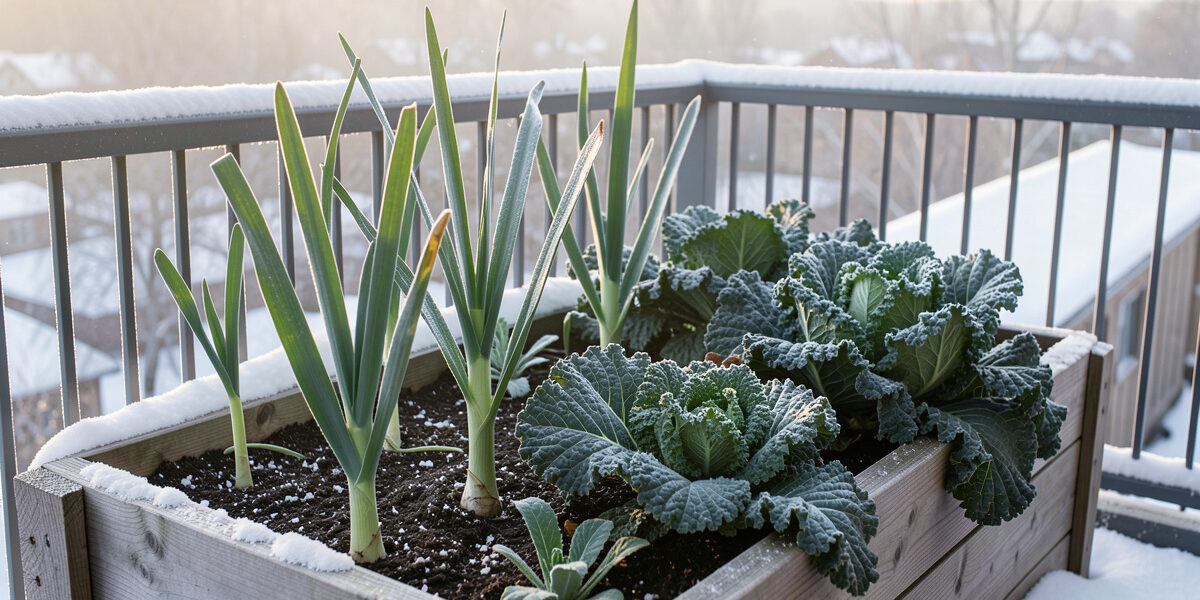
Overwintering is the quiet half of season extension that nobody puts on a seed packet. It isn’t about pushing growth through the dark months — almost nothing grows when you’re down to four usable daylight hours in January. It’s about keeping a plant alive through winter so you can crop from it on the milder days, or get a running start in spring while everyone else is still starting seeds indoors. Some crops do this on their own toughness. Some do it only if you protect the roots. And a few you have to lift and bring inside, with honestly mixed results. After enough Nordic winters of leaving things out to see what comes back, I’ve stopped guessing and sorted my crops into three piles: what holds, what holds if I help it, and what I lift.
What overwintering actually means
There are two different prizes here, and it’s worth being clear which one you’re after with each crop. The first is a standing winter harvest: leeks, kale, and parsley that you grew to size in late summer and now pull from all winter, fresh, on the days it isn’t frozen solid. They aren’t growing much — they’re holding, like food in a very cold larder that happens to be alive. The second prize is an early spring jump: garlic planted in autumn that sits dormant through winter and is weeks ahead of anything you’d plant in spring; overwintered onions and broad beans that crop earlier; chard and parsley that bolt-then-flush with the first warmth and hand you greens long before this year’s seedlings are ready.
The thing to internalise is that overwintering is a survival problem, not a growth problem. You are not trying to make the plant do anything. You’re trying to stop one specific thing from happening: the roots freezing solid in a way the plant can’t recover from. A hardy plant in the open ground shrugs off air that drops well below freezing because the soil around its roots is insulated by the whole mass of earth beneath it — ground temperature lags air temperature by a long way. Get that one fact straight and most of overwintering falls into place, because almost everything I do to protect a crop is really about protecting its roots.
What holds in the ground (or a deep protected container)
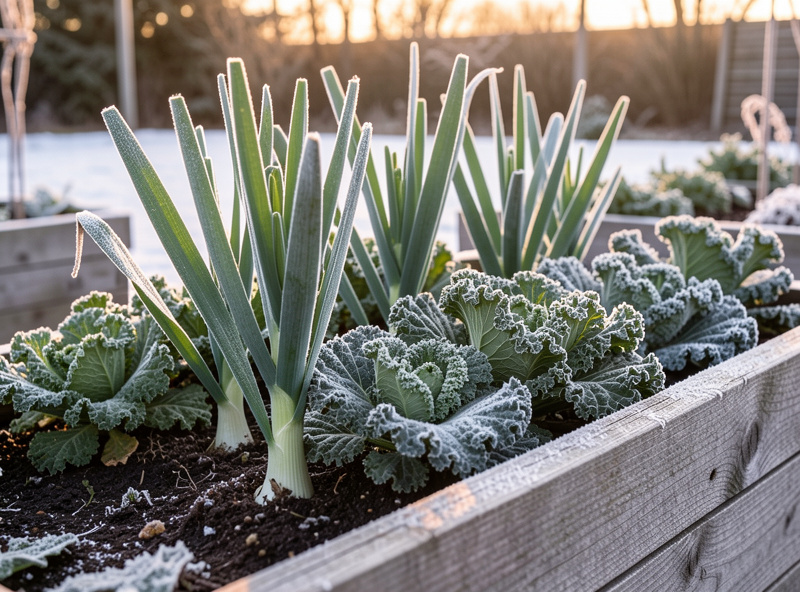
The reliable overwinterers up north are the hardy biennials and perennials — plants that are biologically built to sit through a dormant season. Leeks are the headline crop here: a good winter-hardy variety stands in the bed through hard frost and you lift them as you want them, right into spring. Kale is nearly as tough; it slows to a stop in deep winter, sulks, and then throws tender new growth the moment the light returns — that early-spring kale flush is one of the best things on the balcony. Chard is borderline: it’ll often hold under a cover and re-flush in spring, though a brutal cold snap can take it. Parsley, a biennial, frequently overwinters and then gives you a burst of leaf before it bolts to seed. Many hardy herbs — thyme, sage, chives, winter savory, sorrel — die back or sit tight and return on their own.
Then there’s the autumn-planted category, which is overwintering as a head start rather than a harvest. Garlic is the classic: cloves go in around the first frosts, root a little, sit out the winter, and crop the following summer far bigger than spring-planted garlic ever does — it genuinely needs that cold period. Overwintering onion sets and broad (fava) beans work on the same logic, established in autumn for an earlier crop than spring sowing gives. None of these are “growing” through winter in any meaningful sense; they’re banking position.
The container constraint nobody warns you about
Here is where most overwintering advice quietly falls apart for the apartment grower, because it’s written for people with in-ground beds. A plant in the open ground is insulated on all sides by earth; a plant in a pot on a balcony is exposed to freezing air on every side, including under the base. The rootball can freeze straight through — not just chill, but freeze solid like a block of ice — and that’s what actually kills overwintered container plants. The crop above the soil might be perfectly hardy. The roots, sitting in eight litres of compost surrounded by sub-zero air, are not.
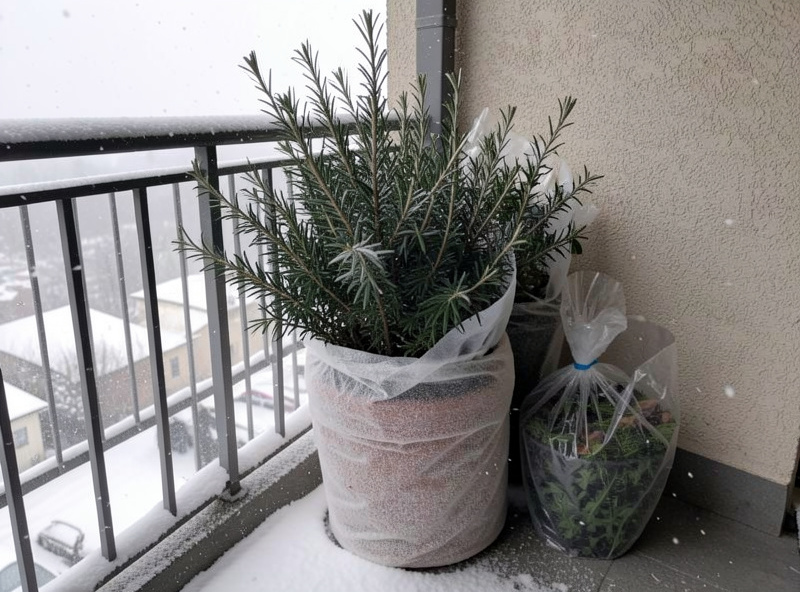
So the same leek that holds effortlessly in a raised bed can die in a small pot in the same week. The fix is to give the roots back some of the insulation the ground would have provided. I do it three ways, in order of effort. First, group the pots together against a wall — ideally a house wall that leaks a little warmth, sheltered from wind — so they insulate each other and you’re protecting a cluster instead of a row of individually exposed pots. Second, wrap the pots: hessian, bubble wrap, fleece, even bagged-up dry leaves around the outside of the container to slow heat loss from the rootball (the wrap goes on the pot, not the plant). Third, for anything genuinely tender, move it into a cold frame or up against the most sheltered corner so the rootball never freezes solid. The bigger the pot, the more thermal mass, the safer it is — a big tub overwinters far more reliably than a small one for exactly the same reason the ground does.
What to lift: tender perennials we grow as annuals
Some plants we grow as annuals up here are actually tender perennials that would live for years in a warm climate — and you can sometimes carry them over indoors instead of starting from scratch. I’ll be honest about this because the internet usually isn’t: it’s a gamble, and the results are mixed. Chilli and sweet pepper plants are the usual candidates. The theory is sound — they’re perennials — and overwintering a mature plant can give you an earlier, heavier crop next year because it’s already a year ahead. In practice, you cut the plant back hard, lift it into a pot, and keep it cool, dim, and barely watered so it sits semi-dormant rather than trying to grow in light it doesn’t have. Some come through and reward you. Some drop every leaf, sulk all winter, and either die or limp into spring weaker than a fresh seedling would have been. I treat it as a fun experiment with my best plants, not a reliable strategy — and given how cheap pepper seed is, I’d never bank a season on an overwintered plant alone.
The same lift-and-hold logic applies to a few tender herbs — a pot of rosemary or a favourite chilli pulled inside before the first hard frost — but the warning is the same: a windowsill in a Nordic January is a low-light, dry-air struggle for any plant, and “alive but miserable until March” is a common outcome. Decide honestly whether you’re saving real effort or just keeping a plant on life support for the satisfaction of it. Both are fine reasons; just don’t expect a windowsill pepper to crop through the dark.
What holds and what to lift: a quick reference
| Crop | Holds in open ground? | Container risk | Protection needed |
|---|---|---|---|
| Leeks | Yes, very hardy | Rootball freeze in small pots | None in ground; group + wrap pots |
| Kale | Yes — re-flushes in spring | Moderate | Wind shelter; wrap small pots |
| Parsley (biennial) | Often, then bolts | Moderate | Cover or cold frame in pots |
| Chard | Borderline | High | Fleece or cold frame |
| Garlic (autumn-planted) | Yes — needs the cold | Low in deep pots | Mulch; deep container |
| Hardy herbs (thyme, sage, chives) | Yes, die back and return | Moderate | Group pots against a wall |
| Peppers / chillies | No — lift indoors | N/A (brought in) | Cut back, keep cool, dim, dry |
| Rosemary / tender herbs | Risky — usually lift | High | Indoors or very sheltered |
Mulch, drainage, and the things that quietly kill overwintered crops
Two killers do more damage over a Nordic winter than cold air ever does, and both are about water. The first is waterlogging plus freeze: roots sitting in cold, sodden compost rot, and if that wet then freezes it does mechanical damage on top. This is why drainage matters more in winter than in summer — raise pots off the ground on feet or battens so they can’t sit in a frozen puddle, and ease right off the watering, because a dormant plant in cold soil barely drinks and a covered or sheltered crop loses almost no moisture. I water overwintered containers a fraction of what I’d give them in summer, and more plants die in my care from winter rot than from cold.
The second is the freeze-thaw cycle, which heaves plants and stresses roots as the ground repeatedly expands and contracts. A good mulch — straw, leaf mould, bark — over the root zone evens out those swings, keeps the soil temperature steadier, and protects against exactly the rootball-freeze problem that plagues containers. Mulch is the cheapest insurance in overwintering and the thing I most often see skipped. Pile it on hardy crops once the cold sets in, and on autumn-planted garlic it does double duty, protecting the cloves and suppressing the worst of the spring weeds.
Get the survival side right and the payoff is the part I love most: overwintered crops hand you the earliest harvest of the entire year. The first spring meal off the balcony is almost always something that came through the winter, not something I sowed in spring — kale flushing new leaf, a leek pulled in March, parsley greening up before the seed trays have even germinated. That head start is the whole reason overwintering earns its place in a short-season garden.
What does overwintering a vegetable actually mean?
It means keeping a plant alive through winter rather than growing it. You either crop from a hardy plant on mild days, like leeks and kale, or you hold it dormant so it gives you the earliest possible harvest the following spring, like autumn-planted garlic.
Why do potted plants die in winter when the same crop survives in the ground?
In open ground the roots are insulated by the whole mass of earth below. In a pot the rootball is surrounded by freezing air on every side and can freeze solid, which kills the plant even when the leaves above are perfectly hardy.
How do I protect containers from freezing over winter?
Group pots together against a sheltered wall so they insulate each other, wrap the outside of each pot with fleece, hessian, or bubble wrap, and use the biggest pots you can. More compost means more thermal mass and a rootball that is far slower to freeze.
Can I overwinter pepper and chilli plants indoors?
Sometimes. Cut the plant back hard, lift it into a pot, and keep it cool, dim, and barely watered so it sits semi-dormant. Results are genuinely mixed up north. Some plants come through stronger, others drop every leaf and limp into spring, so treat it as an experiment.
Which vegetables overwinter most reliably in a cold climate?
Hardy biennials and perennials hold best: leeks, kale, parsley, chard under cover, and many woody herbs like thyme and sage. Autumn-planted garlic and broad beans overwinter as a head start, sitting dormant through the cold for an earlier crop.
Should I water overwintered plants over winter?
Very little. A dormant plant in cold soil barely drinks, and a covered or sheltered crop loses almost no moisture, so wet compost just rots the roots or freezes around them. Far more overwintered plants die from winter rot than from cold itself.
Gear that makes overwintering reliable
Most of overwintering is technique, but two cheap bits of kit do the heavy lifting on the container side. The first is horticultural fleece — a roll of it wraps pots, drapes over standing crops on the worst nights, and packs away to nothing the rest of the time. The second, for the pots that really matter, is an insulated plant pot cover that slips over the container to keep the rootball above the killing point. Neither is glamorous, but the difference between a wrapped, grouped pot and a bare exposed one is the difference between pulling leeks in March and starting over in spring.
As an Amazon Associate I earn from qualifying purchases. The fleece and pot-cover links above point to the kind of gear I use to carry containers through a Nordic winter; buying through them supports the site at no extra cost.