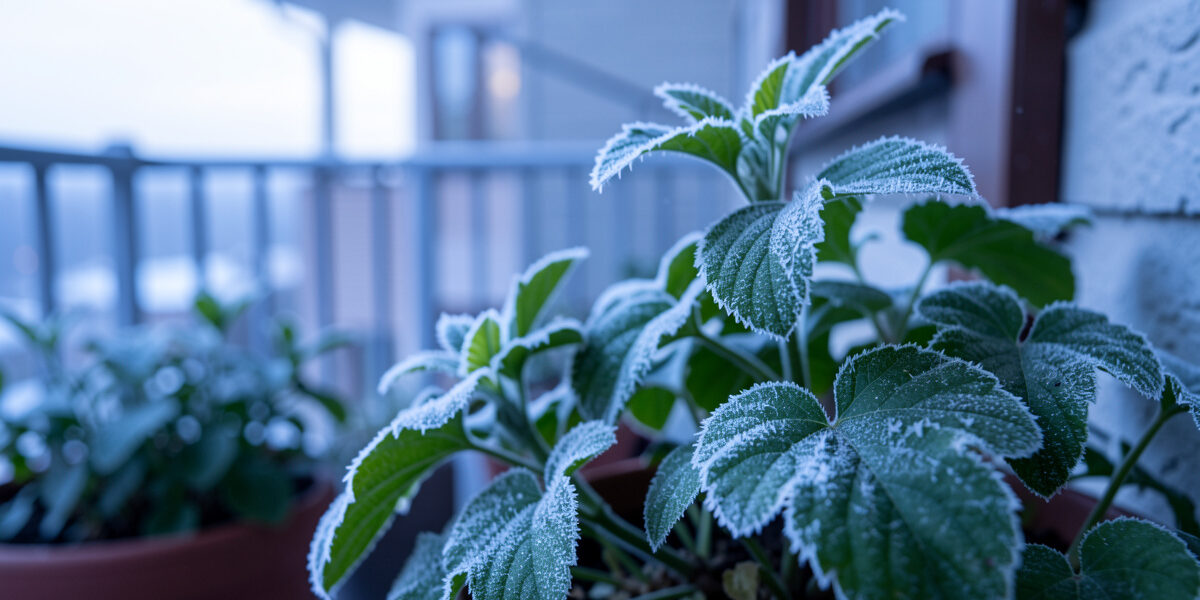
Frost protection sounds like a gear problem, and the marketing wants you to believe it is one. Buy the fleece, buy the mini-tunnel, buy the cloches, and you’re covered. But after enough Nordic springs and autumns spent watching the same plants live or die on the same balcony, I’ve landed somewhere less convenient: frost protection is maybe half equipment and half attention. The cloth in the drawer does nothing for the basil if you didn’t read the forecast the evening before and act on it. The single most valuable frost tool I own isn’t a tool at all — it’s the habit of checking the overnight low at 18:00, not at 07:00 over the wreckage.
This is the spoke I’d hand to anyone who keeps losing tender plants to a frost they “didn’t see coming.” You saw it coming. It was on the forecast. The gap was between knowing and doing, and that gap is where the whole skill lives. Let’s close it.
Frost protection is half equipment, half attention
Here’s the uncomfortable truth a lot of frost-cloth articles skip: the cloth is the easy 50%. You can own the best fleece sold and still lose everything, because protection that’s folded in a cupboard at the moment the temperature crosses zero protects nothing. The other 50% — the half nobody sells you — is the evening routine of reading the forecast, deciding which plants are at risk, and physically acting before you go to bed. On a balcony, that’s ten minutes of work. The cost of skipping it is a tray of tomato transplants gone to mush.
I run a simple rule in spring and autumn: when the forecast overnight low for my location dips toward +3°C or below, I treat it as a frost night and prepare for it. Why +3 and not 0? Because the forecast is taken at standard height, in the open, and the air right at the surface of my balcony floor — where a low tray of seedlings sits — can read two to four degrees colder than the official number. Cold air sinks and pools. A “+2°C tonight” forecast is a zero-on-the-floor night for the plants nearest the ground. Treating +3 as the trigger builds in the margin that has saved more of my plants than any single piece of equipment.
The attention half also means knowing your microclimate, because no forecast does. My balcony faces south and sits against a heated building, which means it routinely runs warmer than the open ground a few hundred metres away — and warmer than a north-facing balcony on the same building. That edge is real and worth a degree or two, but it’s also a trap: it makes you complacent right up until the one still, clear night when even the south wall can’t save an unprotected seedling. The forecast tells you the regional number. Your job is to translate it into what actually happens in your specific square of concrete.
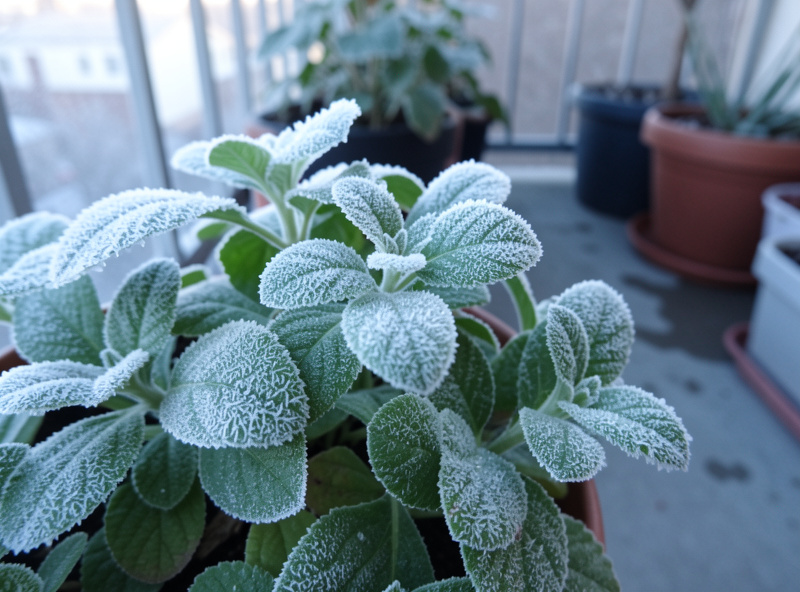
The counter-intuitive part: a clear, still, calm night is the dangerous one
If you remember one thing from this whole article, make it this, because it’s the part that catches experienced gardeners too. The night that kills your plants is not the cold, blustery, overcast one. It’s the clear, still, calm one — even when the forecast number looks milder than the windy night before.
The physics is worth understanding because once it clicks, you’ll read forecasts differently forever. During the day, the ground and your containers absorb heat. At night, that heat radiates back upward as infrared. On a cloudy night, the cloud layer acts like a blanket: it absorbs that outgoing radiation and re-emits a lot of it back down, keeping the surface relatively warm. On a clear night, there’s no blanket — the heat radiates straight out to the cold sky and keeps going, and the surface temperature drops well below the air temperature a couple of metres up. Add stillness, and there’s no wind mixing warmer air down to replace it, so cold air just keeps pooling at ground level. Clear plus still plus calm is the radiative-frost recipe, and it can put frost on your leaves on a night the thermometer at head height never officially hit zero.
This is why a flimsy cover works at all. Throwing fleece, or even an old bedsheet, over a plant on a clear night doesn’t add heat — it traps the heat the ground is radiating, the same way the cloud would. You’re manufacturing your own blanket. That’s also why the cover has to reach the ground or the container surface: if it’s tented up on a frame with open sides, the warm radiated air escapes and you lose most of the benefit. The cover protects by intercepting radiation, not by being thick.
So the practical reading rule: when the forecast shows a near-zero low and “clear” and “calm/light winds,” that’s a cover-up-tonight night, full stop, even if a colder-on-paper windy night earlier in the week passed without damage. The windy overcast night was self-protecting. The mild clear one is the assassin.
Low-tech tricks that borrow heat instead of buying it
Before any cover goes on, a lot of frost protection is just rearranging what you already have to hold onto the day’s heat. These tricks cost nothing, and on a marginal night they’re often enough on their own. On a hard-frost night they buy you a degree or two of safety margin on top of the cover.
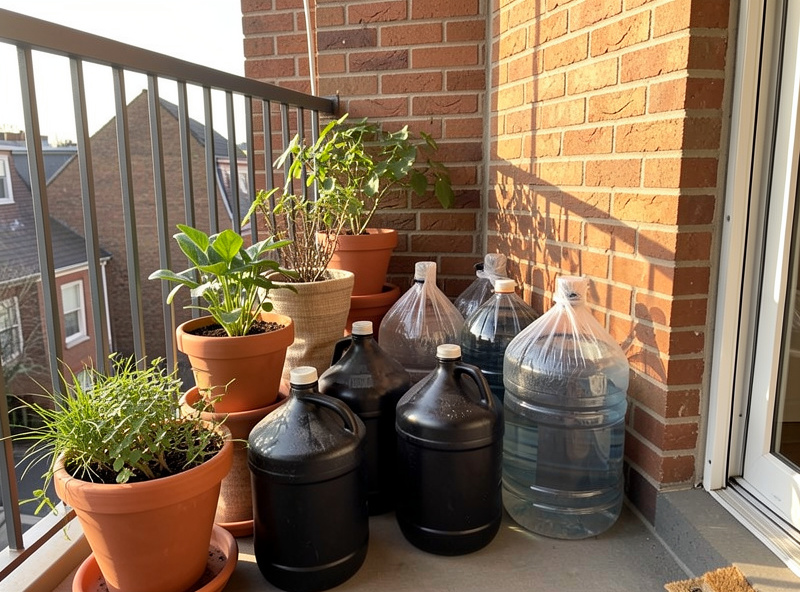
Water jugs as heat batteries. Water has a huge thermal mass — it absorbs a lot of heat during the day and releases it slowly overnight, holding the air around it warmer for hours after sunset. I keep a few dark-coloured jugs or sealed bottles filled with water tucked in among the pots on frost-risk nights. They sit in the sun all afternoon, soak up heat, and then bleed it back out through the cold hours right where the plants are. Dark containers absorb more daytime sun than clear ones. It’s the cheapest thermal mass you’ll ever deploy, and under a cover the effect is amplified because you’re trapping that released heat instead of letting it drift off.
Move containers tight against a south wall. A building wall is a giant heat battery that someone else paid to charge. A south-facing masonry wall soaks up sun all day and radiates it back at night, and a plant pushed right up against it borrows that warmth — plus it’s sheltered from the wind on at least one side. On my balcony, the difference between a pot in the open middle and a pot jammed against the building’s south wall is real and measurable on my own min-max thermometer across a cold night. If the wall is part of a heated building, even better: you’re leaking the building’s warmth into your microclimate. This is free season extension, and it’s why the same balcony can carry plants the open ground a street away can’t.
Group pots to cut heat-losing surface area. A single pot standing alone loses heat from every side. Shove a cluster of pots tight together and they shield each other — the collective mass holds heat longer, the exposed surface area per plant drops, and the pots on the inside of the huddle are buffered by the ones on the outside. I group my containers into a tight block against the wall on frost nights, put the most tender plants in the middle of the huddle, and the toughest ones on the windward edge as sacrificial outer layer. It’s the same logic as penguins crowding: surface area is where heat escapes, so minimise it.
Protecting the plants you can’t move
Containers are the easy case — you shuffle them against the wall and call it done. The harder problem is the plant that can’t move: a balcony raised bed, an established perennial in a heavy planter, something rooted where it is. Here the cover is the strategy, and the rules tighten.
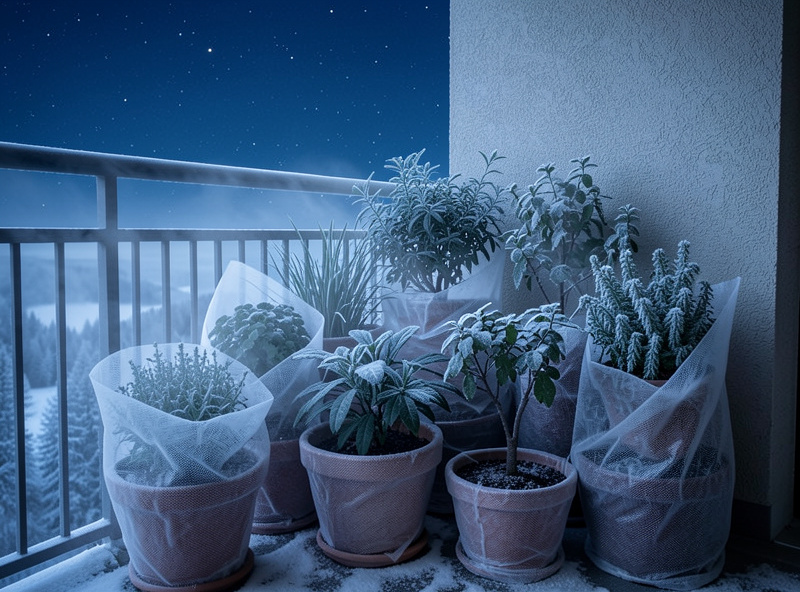
The cover has to reach all the way down to the soil or the bed edge, sealing in the ground’s radiated heat. A cover tented up with the sides open is mostly decorative on a radiative-frost night. I use a horticultural fleece — frost cloth, a few rows of stitched fabric — draped over the whole bed and weighted at the edges with whatever’s heavy and to hand, so wind can’t peel it back at 02:00. Where the foliage would otherwise press against the cloth, I float it on a couple of low hoops so the leaves aren’t touching the cover; any leaf pressed flat against frozen fabric can still freeze at that contact point.
One layer of fleece buys you a few degrees of protection — useful, real, but finite. On a genuinely hard night, two lighter layers with a small air gap between them outperform one heavy layer, because the trapped air is doing the insulating. And the cover comes off in the morning once the temperature climbs back above freezing and the sun is up — leaving fleece on through a sunny day can cook the plants underneath or, worse, leave them sitting wet and stagnant. Cover at dusk, uncover in the morning. It’s a ritual, not a set-and-forget.
For a plant in a heavy fixed planter you genuinely can’t shift, wrapping the pot matters as much as covering the top. Roots in a container are far more exposed than roots in the ground — there’s no surrounding earth to buffer them — so a pot left out in a hard frost can freeze its rootball solid while the same plant in the ground shrugs it off. Bubble wrap, hessian, or even a thick layer of fleece wrapped around the pot insulates the roots. Group those fixed planters together too, where you can, for the same surface-area reason.
The unexpected late-spring frost on tender transplants
This is the one that hurts, because it usually comes after a warm spell has lulled you into planting out. In a Nordic spring the official last-frost date is a statistical average, not a promise — a clear, calm night in late May can still drop a killing frost on tomatoes and basil you set out a week earlier when it felt like summer had arrived. Half the tender-plant deaths I’ve seen weren’t deep winter; they were a single ambush frost in spring after everything had gone outside.
If you get caught — forecast suddenly shows a near-zero clear calm night and your tender transplants are already out — the triage is straightforward. Anything in a pot comes inside, or against the warmest wall and under cover, no debate. For in-ground or fixed tender plants, water the soil lightly in the afternoon (moist soil holds and releases more heat than dry soil) and cover them before dusk while there’s still warmth to trap. A cloche, an upturned bucket, a cardboard box, a doubled bedsheet — on a one-night emergency, anything that traps radiated heat and reaches the ground will do. It doesn’t have to be pretty; it has to be on before the heat has left.
The deeper fix is to not be caught at all: in a short Nordic season, hold your most tender transplants back a week or two past the date the calendar says is “safe,” and keep a cover staged by the door through the whole risk window so acting takes two minutes, not twenty. I’d rather plant out a little late and lose a few days of growth than plant out on schedule and lose the whole plant to one clear night.
The hardening-off connection nobody mentions
Here’s a crossover that catches people, and it ties frost protection straight back to how the plant was raised: a seedling that was rushed outside too fast is dramatically more frost-vulnerable than one that was hardened off properly — even at the exact same temperature. Two identical tomato seedlings, same cultivar, same tray, can meet the same +1°C night and one shrugs while the other collapses, and the difference is whether it was hardened off.
Hardening off is the gradual toughening you do over a week or two — short stints outside building up to full days, easing the plant from coddled indoor conditions into real wind, real sun, and real temperature swings. A plant that’s been through it develops a thicker cuticle, tougher cell structure, and far more cold tolerance. A plant yanked from a warm windowsill straight into the open is soft, thin-walled, and has no margin; a marginal frost night that the hardened sibling survives can finish the rushed one. So if you’ve grown your own transplants, the frost protection actually started weeks earlier on the windowsill. Rush the hardening off and you’ve quietly lowered the temperature at which your plants will die, before you’ve put a single cover on. The cloth can’t fully buy back what a botched hardening-off threw away.
A frost-night checklist you can run in ten minutes
When the evening forecast trips the trigger, this is the order I work in. Nothing here is exotic — it’s just doing the easy things before the hard things, and doing all of them before bed instead of none of them after.
- Read the forecast at 18:00. Note the overnight low, and crucially whether it’s clear and calm. Near-zero plus clear plus still equals act tonight.
- Move everything that can move. Tender pots come inside or against the warmest wall. Toughest plants take the exposed edge.
- Group and huddle. Cluster the remaining pots tight against the south wall to cut heat loss and shield each other.
- Deploy thermal mass. Tuck water jugs that have been in the sun in among the pots to bleed heat overnight.
- Cover before dusk. Drape fleece down to the ground on what can’t move, weight the edges, float it off the foliage on hoops, and seal the sides.
- Wrap fixed pots. Insulate the rootball of any heavy planter you can’t shift.
- Uncover in the morning. Once it’s above freezing and the sun’s up, off comes the cloth so nothing cooks or sits stagnant.
None of this is hard. The whole skill is the discipline of doing it on the right night — the clear, still one — instead of waking to frost-burned leaves and wondering what happened. The forecast told you. The work was ten minutes. Frost protection lives in that gap, and once you make the evening check a habit, you stop losing plants to “surprise” frosts that were never actually a surprise.
A note on the links below: a couple of the product links in this article are affiliate links, which means I may earn a small commission if you buy through them, at no extra cost to you. I only point at gear I’d actually keep on the balcony.
The two things I’d never face a frost season without are a decent frost cloth and a way to know what the temperature actually did overnight where my plants sit. A length of proper horticultural frost cloth and plant blanket is worth keeping staged by the balcony door through the whole risk window. And because the forecast number is never the number on your floor, an outdoor min-max thermometer with a frost alarm sitting at plant height tells you what really happened overnight — and after a season of comparing it to the forecast, you’ll trust your own +3°C trigger far more than the app’s number.
Related Reading From the Cold-Season Series
- Season Extension: The Complete Nordic Guide — the hub that ties frost protection into the whole cold-season toolkit.
- Cold Frame Gardening in a Small Space — a permanent box that does the heat-trapping for you, all season.
- Mini Greenhouse for a Small Space — stepping up from a cover to an enclosed microclimate on the balcony.
- Row Covers and Cloches — the lighter-weight covers in detail, and when each one earns its place.
- Growing Tomato Seedlings — getting transplants strong and hardened off before they ever meet a frost night.
- Growing Plants From Seed Indoors — where the hardening-off story, and your frost resilience, actually begins.
At what temperature should I start protecting plants from frost?
Start preparing when the overnight forecast low dips toward plus three degrees Celsius or below. The air right at your balcony floor often reads two to four degrees colder than the official forecast, so plus three builds in a safety margin against a zero-on-the-ground night.
Why is a clear, calm night more dangerous than a cloudy windy one?
On a clear, still night, ground heat radiates straight out to the sky with no cloud blanket to trap it, and no wind mixes warmer air back down. The surface drops below the official air temperature, so frost forms even when the thermometer never officially hit zero.
Do water jugs really protect plants from frost?
Yes. Water has a large thermal mass, soaking up heat through the day and releasing it slowly overnight. Dark sealed jugs filled with water and tucked among the pots keep the surrounding air warmer for hours, and the effect is amplified under a cover that traps the released heat.
How does covering a plant with fabric stop frost damage?
A cover does not add heat. It traps the infrared heat the ground radiates overnight, acting like the cloud blanket a clear sky lacks. That is why the cover must reach the ground to seal in that warmth, rather than being tented up with open sides.
Why are some seedlings more frost-vulnerable than others?
A seedling rushed outside without hardening off is far softer and thinner-walled than one toughened gradually over a week or two. At the same temperature, the unhardened plant can collapse while its hardened sibling shrugs off the cold, so frost resilience starts weeks earlier indoors.