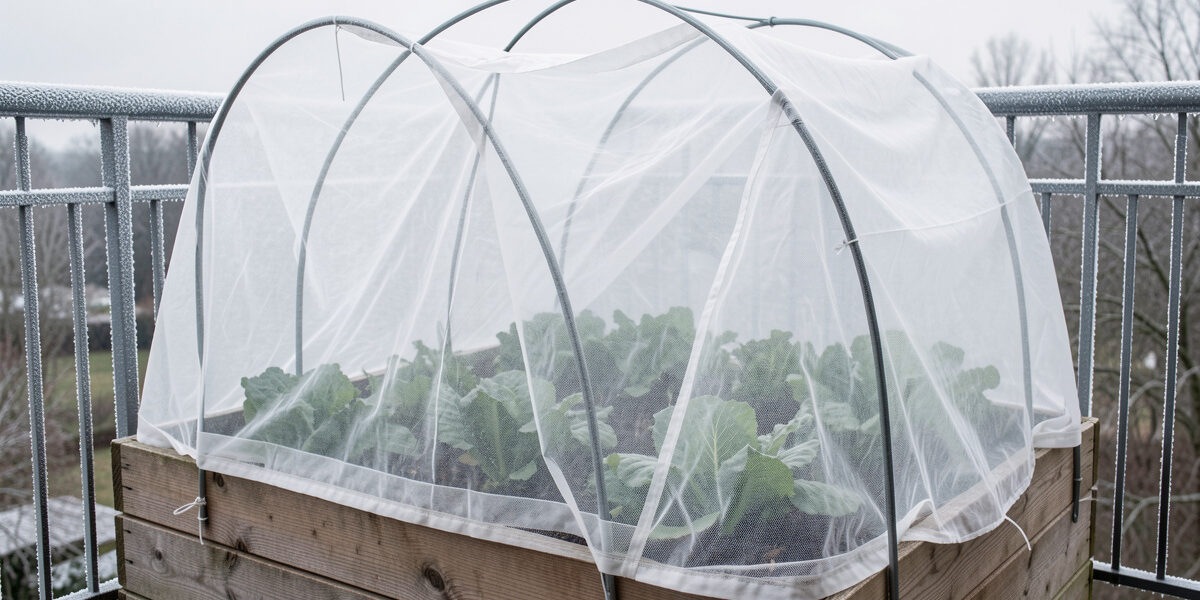
Frost is the cheapest way to lose a crop you’ve already done the hard work on. You start your seedlings indoors under lights, harden them off over a careful week, set them out on the balcony when the calendar finally says go — and then a clear night in late May drops to minus two and burns the lot. After enough of those nights I stopped trusting the calendar and started keeping a stack of cheap fabric and a few clear domes by the door, the way other people keep an umbrella. Row covers and cloches are the least glamorous gear in small-space growing, and pound for pound they buy you more season than anything else I run.
This is the spoke I’d hand a Nordic grower first, because both tools cost almost nothing and both forgive a lot of mistakes. The trick is knowing which one to reach for, when, and how to keep it from blowing into the neighbour’s balcony at the first gust. Let me walk through how I actually use them.
Row cover versus cloche: two different jobs
People lump these together, but they solve different problems and they don’t substitute for each other cleanly. A row cover — also sold as floating fleece, garden fleece, or frost blanket — is a sheet of spun-bonded fabric you drape over a whole bed or run of containers. It’s breathable: rain soaks straight through it, light passes through it, and air moves through it slowly enough that the plants underneath don’t suffocate or cook. That breathability is the whole point. You can leave fleece on for days without coming out to babysit it, which matters when you’ve got a job and a short attention span and a frost warning that runs Thursday through Sunday.
A cloche is the opposite philosophy: a single clear cover over a single plant — a glass bell jar, a rigid plastic dome, a cut-down two-litre bottle with the cap off. It’s a personal greenhouse for one seedling. Clear cover means it traps more heat than fleece does on a sunny day, which is exactly why it’s more dangerous. A cloche left sealed over a seedling on a bright afternoon will cook the plant by lunchtime. Vent it or lose it. The cloche gives you a bigger thermal lift than fleece for that one plant, but it demands attention fleece never does.
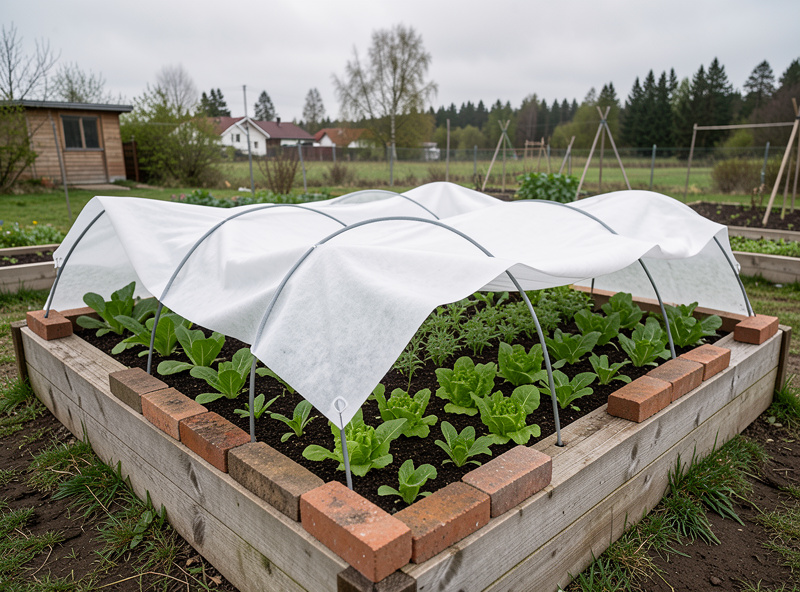
So the mental split I use: fleece for area and for walking away; cloche for a few precious individual plants you want to push hard. On my balcony that usually means fleece over the raised beds and the run of fabric grow bags, and a couple of domes over the first tomatoes or the cucumber I’m gambling on transplanting early.
How much warmth you’re actually buying
Don’t oversell these to yourself — that’s how people lose plants. A single layer of standard garden fleece buys you roughly 2 to 4 degrees Celsius of frost protection on a still night. That’s the honest number, and it’s enough to turn a light minus-two radiation frost into a survivable plus-one or plus-two under the cloth. It is not enough to drag a tender plant through a hard freeze, and stacking expectations on a single sheet is exactly the mistake that gets a balcony full of dead basil.
Two things move that number. First, doubling up: two layers of light fleece protect more than one, and on the worst forecast nights I’ll throw a second sheet over the first. Second, what’s underneath holding heat — a raised bed full of dark, damp soil radiates stored warmth back up under the cloth overnight far better than a shallow dry container does. Cloches do better than fleece on the thermal lift for the one plant they cover, but only while you’re managing the venting; an un-vented clear dome swings from cooking-hot by day to barely-warmer-than-outside by the small hours.
Fabric weights: light insect-weight versus heavy frost fleece
This is where most people buy the wrong thing. “Row cover” is sold in a range of fabric weights, and the weight is the spec that matters — it’s measured in grams per square metre (GSM), and it trades off warmth against light transmission. The light stuff lets through nearly all the light but barely warms anything; the heavy stuff holds real warmth but shades the plants. Pick for the job.
| Cover type | Typical weight / build | Frost lift | Light through | Best job |
|---|---|---|---|---|
| Light insect netting / summer fleece | ~17–19 GSM | ~1°C (negligible) | ~90%+ | Pest exclusion, wind chill, gentle head-start — not frost |
| Medium garden fleece | ~30 GSM | ~2–3°C | ~80% | The all-rounder: spring starts and most frost nights |
| Heavy frost fleece | ~50–60 GSM | ~3–4°C | ~50–70% | Hard frost nights, overwintering hardy greens |
| Clear cloche / dome (per plant) | glass or rigid plastic | ~4–5°C (if vented) | ~90% (clear) | Pushing one early transplant; must vent by day |
My default buy is a medium 30 GSM fleece. It’s the all-rounder — enough warmth for a typical Nordic spring frost, enough light through that I can leave it on a cloudy week without the greens going pale and leggy underneath. I keep a heavier 50-plus GSM sheet for the genuinely cold nights and for tucking over kale and spinach when I’m trying to stretch a harvest into the freezing weeks. The featherweight insect-weight cloth is a different tool entirely: I use it in summer to keep cabbage white butterflies off the brassicas, and it does basically nothing for frost. If you buy one weight, buy the medium.
Fleece or clear plastic? Reach for fleece
The other fork is fabric versus film. You can stretch clear polythene over hoops instead of fleece, and it traps more heat — it’s closer to a mini polytunnel. But clear plastic is far less forgiving, and for a small-space grower I reach for fleece almost every time.
Here’s the problem with film: it’s sealed. Rain runs off it instead of through it, so you have to remember to water underneath. It doesn’t breathe, so on a sunny day the air under it spikes hot and you must vent it, and on a still humid night the condensation sitting on the leaves is an open invitation to damping off and fungal rot — the exact failure modes that already plague small-space growing. Fleece sidesteps all of that. Rain and light come through, air moves, humidity doesn’t build into a swamp, and you can forget it for days. Plastic gives you more warmth in exchange for becoming a chore you have to manage twice a day. Unless I’m deliberately running something like a small hoop tunnel I’m checking daily anyway, fleece wins on forgiveness.

Spring head-start versus autumn frost nights
I use these covers at both ends of the season, and the mindset is different at each end.
In spring it’s about a head start. The soil and air are warming but the late frosts haven’t finished, and that’s the window covers were made for. Fleece over a bed lets me set out hardened-off lettuce, peas, and brassicas a couple of weeks before I’d dare leave them bare, with the cloth catching the odd cold night while the season catches up. A cloche over an early tomato does the same thing harder for that one plant — a warmer pocket that brings it forward, as long as I’m popping the vent on sunny afternoons. This is the same logic as starting indoors under lights, just carried one step further out the door.
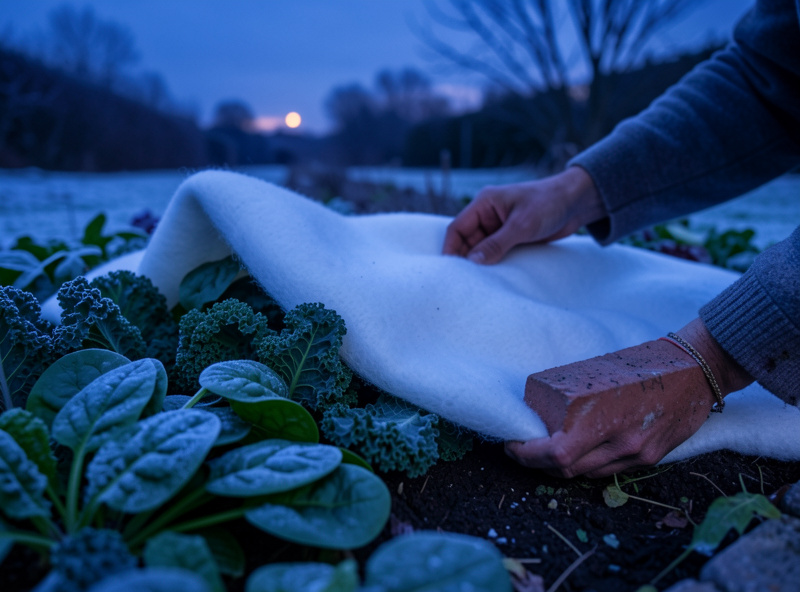
In autumn it’s about frost nights, and the rhythm flips. Now the plants are mature and the threat is a single clear, still night that radiates heat off into a cloudless sky and drops the bed below zero for a few hours before dawn. Watch the forecast for those nights specifically — it’s clear, calm nights that frost, not cloudy windy ones — and float the fleece over your greens before sunset, while the soil still holds the day’s warmth underneath. Pull it back off in the morning once the air lifts. Done right, that one sheet of cloth is the difference between picking kale and spinach into the freezing weeks and watching them turn to mush overnight.
Securing against wind — the part everyone skips
A frost blanket that’s blown halfway across the balcony at 2 a.m. is protecting nothing, and on an exposed Nordic balcony wind is the constant, not the exception. This is the bit that separates fleece that works from fleece that’s decoration.
Over open ground or a raised bed, the classic method is to bury the edges — fold the fabric edge under and weigh it down with soil, bricks, lengths of timber, or proper ground staples driven through into the bed. The cloth wants to be snug at the edges and slack over the plants. On a balcony where you can’t drive a staple into anything, I use weight: a row of bricks, filled water bottles, or sandbags along every edge, and clips where I can. For fleece draped over hoops, spring clamps or even clothes pegs hold the cloth to the hoop ends so the whole assembly doesn’t sail off as one piece.
Cloches need anchoring too, and people forget because they look heavy enough to stay put. A lightweight plastic dome will tumble in a gust and take the seedling with it; push it down into the soil an inch or peg it. A cut bottle wants a stake or a stone. The rule is simple and I learned it the expensive way: if it isn’t weighted or pinned, assume the wind already has plans for it.
A quick disclosure: some links below are affiliate links, which means I may earn a small commission if you buy through them, at no extra cost to you — I only point at gear I’d actually keep by my own door.
The two things worth owning are a roll of floating row cover frost blanket fabric in a medium weight, and a few garden cloche plant protection domes for the individual plants you want to push early. Between them they’re the cheapest frost insurance in the small-space toolkit, and they’ll save you more seedlings in a season than any single thing you can buy.
Putting it together for a Nordic season
The way I run it: medium fleece as the default, kept folded by the door from the last spring frost danger right through to the first hard autumn nights. Cloches reserved for the handful of plants I’m gambling on early. Everything weighted at the edges because the wind is always coming. And always working with the soil’s stored heat rather than against it — cover before sunset, uncover when the air warms, double up on the brutal nights. None of this is clever. It’s just paying attention to clear, calm nights and keeping the cloth where you can reach it. For a cold-climate grower trying to wring a few more weeks out of a short season, that stack of cheap fabric is the highest-return thing on the balcony.
Frequently Asked Questions
What is the difference between a row cover and a cloche?
A row cover is breathable fabric draped over a whole bed or run of containers, letting rain and light through while lifting the temperature a few degrees. A cloche is a clear single-plant cover that traps more heat but must be vented.
How much frost protection does garden fleece actually give?
A single layer of standard garden fleece buys roughly 2 to 4 degrees Celsius on a still night. That turns a light radiation frost into a survivable night, but it will not carry tender plants through a hard freeze on its own.
Should I use fleece or clear plastic over my plants?
For most small-space growers, fleece wins. It breathes, lets rain and light through, and you can leave it for days. Clear plastic traps more heat but seals in humidity, needs watering and daily venting, and invites fungal rot.
What fabric weight of row cover should I buy?
A medium weight around 30 grams per square metre is the best all-rounder, balancing warmth and light. Buy a heavier 50-plus weight for hard frost nights, and reserve featherweight insect fabric for summer pest exclusion, not frost.
How do I stop a row cover from blowing away?
Weight every edge. Over a bed, bury the fabric edge under soil, bricks, or ground staples. On a balcony, line the edges with bricks, filled water bottles, or sandbags, and clip fleece to hoop ends so it cannot sail off as one piece.
When should I put covers on in autumn?
Cover before sunset on clear, calm nights, which are the ones that frost. Float the fleece while the soil still holds the day’s warmth, then pull it back in the morning once the air lifts above freezing so the plants get light and air.