A flush of herbs always arrives faster than you can cook with it, and in a short Nordic season the choice is preserve it or lose it. Drying, freezing, and oil-freezing each suit different herbs, and picking the wrong method is why home-dried basil so often ends up as flavourless green dust. Match the method to the herb and a summer surplus carries you through winter.
I preserve a fair amount each year because the growing window up north is brief and the dark months have none of it. Over time I have learned which herbs dry well, which only survive freezing, and which are best locked into oil. Here is the practical version, method by method, so nothing from a good harvest goes to waste.
Drying: Best for Woody Herbs
Drying works best for low-moisture woody herbs like thyme, rosemary, oregano, and sage, which keep much of their flavour when dried. High-moisture soft herbs such as basil and cilantro dry poorly, losing most of their aroma, so they are better frozen. Match the method to the herb’s water content.
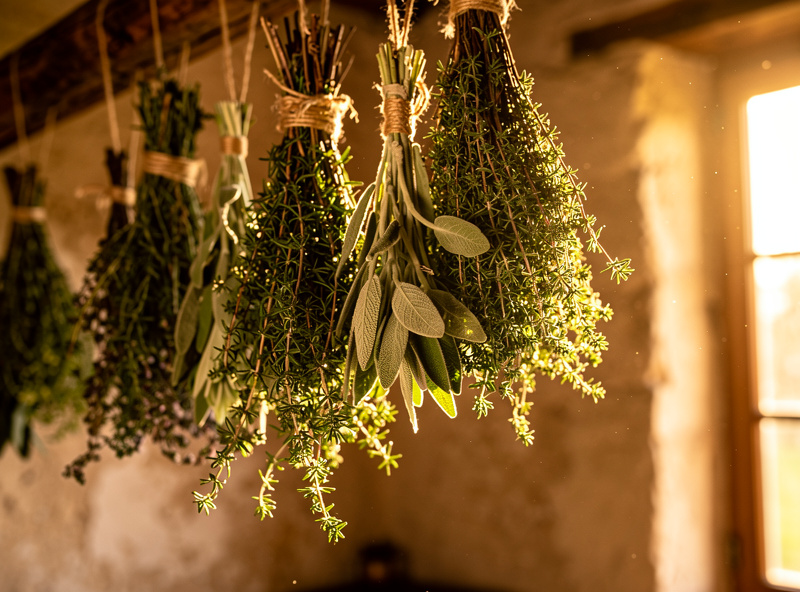
The simplest method is air-drying: tie small loose bunches and hang them somewhere warm, dark, and airy until brittle, usually one to two weeks. Darkness preserves colour and oils, and good airflow prevents mould, which is the main failure mode. A low oven or a dehydrator speeds things up for a damp climate where air-drying can stall; keep the temperature low, around 35-40°C, because high heat bakes off the very oils you are trying to keep. The leaves are ready when they crumble cleanly. I strip them from the stems, store them whole in airtight jars away from light, and crush them only when cooking, which keeps the flavour far longer than pre-ground herbs.
Freezing: Best for Soft Herbs
Freezing preserves the flavour of soft herbs like basil, cilantro, parsley, and chives far better than drying does. The texture softens, so frozen herbs are for cooking rather than garnish, but the taste stays close to fresh, which is exactly what you want for the herbs that dry badly.
The quickest route is to chop the herbs, pack them loosely into an airtight container or bag, and freeze; chives and parsley freeze especially cleanly this way and go straight from freezer to pan. For more delicate handling I freeze chopped herbs flat in a thin layer so I can break off what I need. Frozen herbs go limp on thawing, so I never use them as a fresh topping, only stirred into hot dishes where texture does not matter. This is the method I lean on most for basil, because frozen basil keeps its summer flavour while dried basil simply does not. Label everything, because frozen green herbs all look alike after a month.
Herb Oil and Butter Cubes
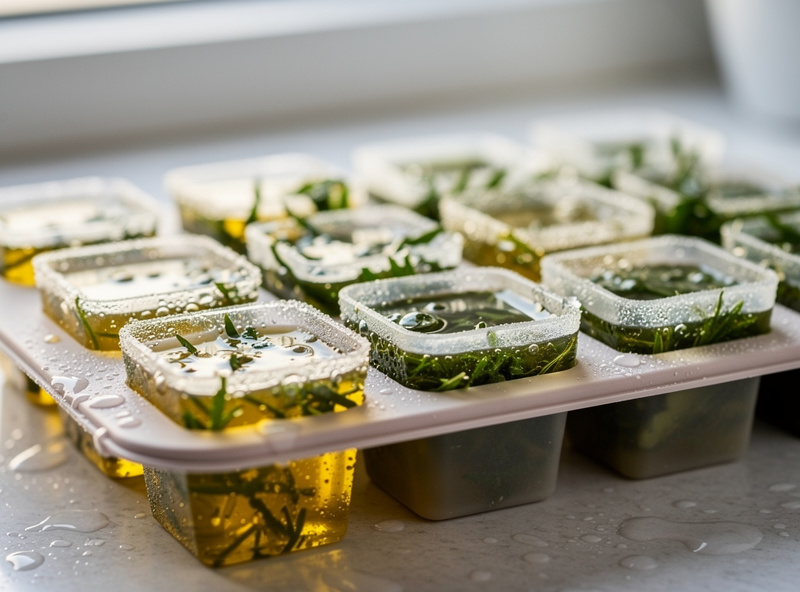
Freezing herbs in oil or butter is the best way to preserve delicate herbs while keeping them ready to cook. Chop the herbs into an ice-cube tray, top with olive oil or melted butter, and freeze into portioned cubes you can drop straight into a hot pan, locking in flavour the moment they are cut.
This is my favourite method for basil and for mixed cooking herbs, because the oil seals the leaf from freezer air and you get a measured flavour bomb every time. I fill each cube of a tray about two-thirds with chopped herb, top up with a neutral or olive oil, and freeze, then pop the cubes into a labelled bag. Straight into a hot pan they melt and release the herb, perfect for the base of a sauce or a sauté. There is one safety caveat worth knowing: raw herb-in-oil stored at room temperature carries a botulism risk, which is precisely why this method belongs in the freezer, never on the shelf. Frozen, it is safe and superb.
Matching the Method to the Herb
The single biggest mistake in herb preservation is drying a herb that should be frozen. Woody, low-moisture herbs dry beautifully; soft, high-moisture herbs lose their soul when dried and need freezing or oil-freezing instead. This table is the cheat sheet I wish I had started with.
| Herb | Best Method | Avoid | Notes |
|---|---|---|---|
| Rosemary, thyme, oregano, sage | Air-dry | — | Keep flavour well dried |
| Basil | Freeze or oil cubes | Drying | Loses aroma when dried |
| Cilantro | Freeze | Drying | Dried is nearly tasteless |
| Parsley | Freeze | Drying | Freezes cleanly chopped |
| Chives | Freeze | Drying | Stay close to fresh frozen |
| Mint | Freeze or dry | — | Both work; dry for tea |
The pattern is simple once you see it: if the herb has tough, small, oily leaves it dries; if the leaves are soft and watery it freezes. Get that right and your preserved herbs actually taste of something, which is more than can be said for most supermarket dried basil.
Storing Preserved Herbs
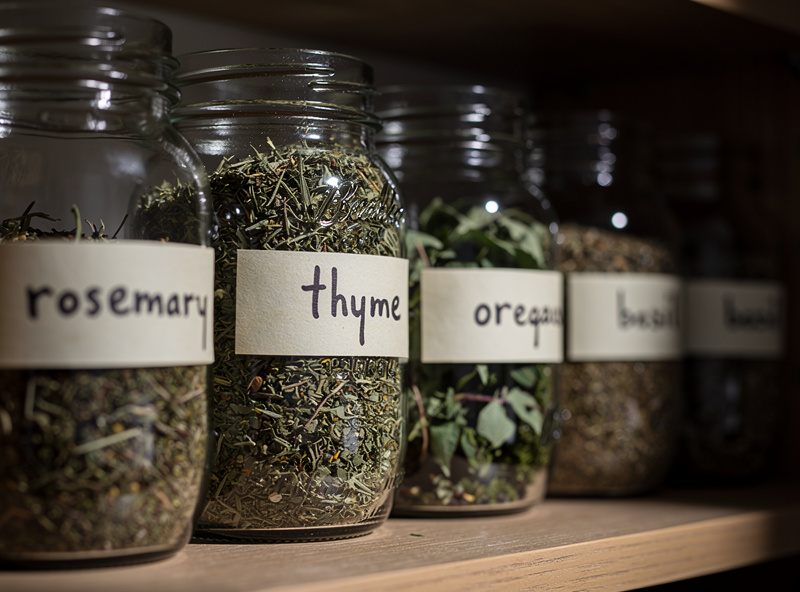
Store dried herbs whole in airtight jars kept away from heat and light, where they hold useful flavour for about a year. Keep frozen herbs and oil cubes in sealed, labelled bags and use within several months for the best taste. Light, heat, air, and time are the four enemies of stored flavour.
For dried herbs I avoid the cabinet above the stove, which is the worst spot because of the heat, and store jars in a cool dark cupboard instead. Keeping leaves whole rather than crushed dramatically slows flavour loss, since the oils stay locked inside until you rub them between your fingers over the pot. For the freezer, the main job is good labelling and squeezing out air, because freezer burn and mystery green bags are the usual ways a good harvest gets wasted. Done properly, a single summer’s herb glut genuinely seasons a whole Nordic winter of cooking.
Preserving Gear
A few inexpensive items make preserving cleaner and longer-lasting. As an Amazon Associate I earn from qualifying purchases; these are items I genuinely use, at no extra cost to you.
- A countertop food dehydrator dries woody herbs fast and evenly in a damp climate where air-drying stalls.
- A set of airtight glass jars keeps dried herbs out of the air and light that destroy their flavour.
- A silicone ice-cube tray makes the herb-in-oil cubes that pop out cleanly into a hot pan.
Frequently Asked Questions
Which herbs are best for drying?
Low-moisture woody herbs dry best: thyme, rosemary, oregano, and sage keep much of their flavour. High-moisture soft herbs like basil and cilantro dry poorly and lose most of their aroma, so freeze those instead. Match the method to the herb’s water content.
What temperature should I dry herbs at?
Dry herbs low, around 35-40C in a dehydrator or low oven, or air-dry in a warm dark airy spot. High heat bakes off the volatile oils that carry flavour, so keep it gentle. The leaves are ready when they crumble cleanly between your fingers.
Is it better to freeze or dry basil?
Freeze basil. Dried basil loses most of its aroma and becomes flavourless, while frozen basil keeps its summer flavour. Chop and freeze it, or freeze it in olive-oil cubes for measured, ready-to-cook portions that drop straight into a hot pan.
How do you freeze herbs in oil?
Chop the herbs into an ice-cube tray, fill each cube about two-thirds, top with olive oil, and freeze into portioned cubes. Drop a cube straight into a hot pan to cook. Always keep these frozen, never at room temperature, to avoid botulism risk.
How long do dried herbs last?
Stored whole in airtight jars away from heat and light, dried herbs hold useful flavour for about a year. Keep leaves whole and crush them only when cooking, since whole leaves keep their oils far longer than pre-ground or crushed herbs.
Can you freeze chopped herbs without oil?
Yes. Chop soft herbs like parsley and chives, pack them loosely into an airtight bag, and freeze. They go limp on thawing so use them in cooked dishes rather than as a fresh garnish. Label bags, since frozen green herbs look identical.