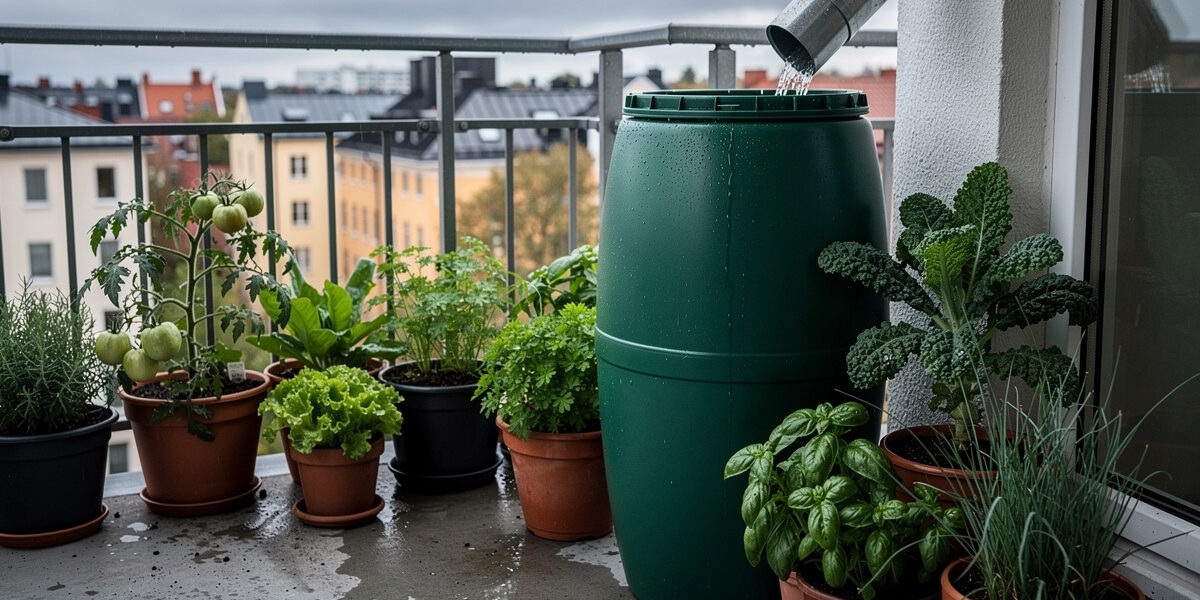
Rainwater harvesting in a small space means catching roof or balcony runoff in a compact barrel or collapsible tank and using it to water containers; even a tiny 1 m² catchment yields about 1 litre per millimetre of rain, so a single 10 mm shower can fill a 10 litre can. It is the cheapest free-water source an apartment grower has, and rainwater is better for plants than tap.
I started collecting rain on the balcony for a simple reason: my tap water is hard and cold, and rain is soft, slightly acidic, chlorine-free, and already at air temperature — everything container plants prefer. You do not need a downpipe and a 200 litre drum to do this. A balcony rail, a sloped awning, or a shed roof feeding a slim barrel is enough to offset a real share of summer watering. Below is how to size a small catchment, the kit that actually fits an apartment, how to keep the water clean and mosquito-free, and the Nordic freeze rule that decides whether your barrel survives the winter.
Disclosure: CityRooted is reader-supported. As an Amazon Associate I earn from qualifying purchases made through links in this article, at no extra cost to you. I only point to gear I actually use or would buy for my own garden.
How Much Rain Can You Actually Collect?
The maths is simple and worth knowing: every square metre of catchment collects almost exactly 1 litre of water for every 1 mm of rainfall, minus a little loss. So a 2 m² balcony roof in a 15 mm shower yields roughly 25–28 litres — enough to water a balcony’s worth of containers for days.
That ratio reframes what counts as worthwhile catchment. You do not need much surface to make a dent: an awning, the underside of a balcony above yours that drips to a corner, or a small shed roof all add up across a rainy Nordic month. The limit on a balcony is almost never the rainfall — it is storage and overflow. Once your barrel is full, the rest runs off, so the realistic goal is to buffer the dry gaps between showers, not to store a whole season. To see where harvested rain fits among all your watering options, my complete garden watering guide sets it in context.
The Kit That Fits a Balcony
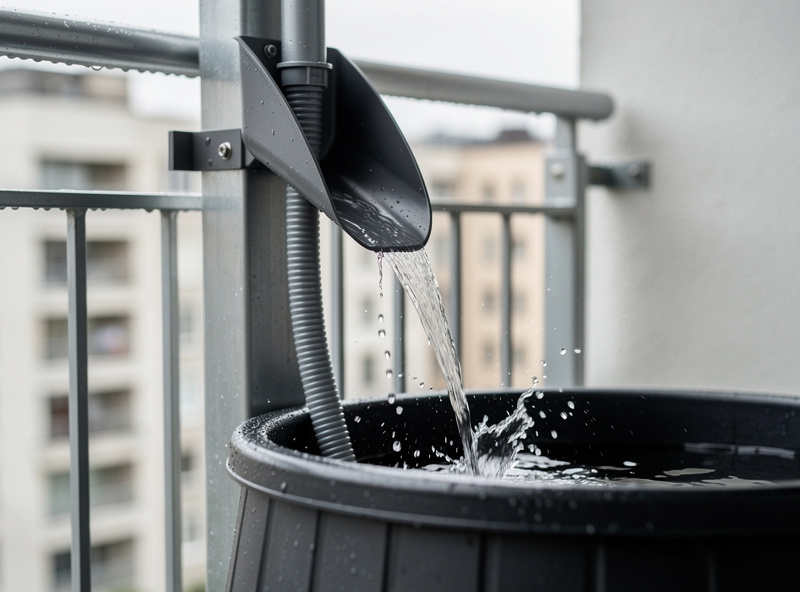
Small-space rainwater harvesting needs three parts: a catchment surface, a way to channel the water, and a slim storage vessel with a tap. The whole setup can cost less than a season of bottled plant feed and takes an afternoon to rig. The trick is choosing storage that fits a narrow balcony footprint.
For storage I favour a slim upright rain barrel with a spigot near the base, or a collapsible tank that folds away in winter and stores nothing when empty. To channel water off a downpipe without cutting into it, a clip-on rain barrel diverter kit sends flow into the barrel and automatically bypasses back down the pipe once the barrel is full — that overflow path is the part beginners forget. From the barrel I fill a can, or gravity-feed a soaker line if the barrel sits high enough. For a fully automated route from a tank, my guide to solar-powered drip irrigation shows how to pump and schedule it.
Sizing Your Storage to Your Garden
Match barrel size to how much your plants drink between rains, not to how much rain falls. A balcony of containers might use 10–20 litres on a hot day, so a 50–100 litre barrel buffers two to five dry days — the typical gap between Nordic summer showers. Bigger storage rarely pays off on a balcony because the catchment refills it slowly.
The table below maps realistic small-space catchment and storage to what it supports. Use it to pick a barrel that actually gets used and emptied rather than one that sits half-full and breeds problems.
| Setup | Catchment area | Yield per 10 mm rain | Storage to pair | Roughly waters |
|---|---|---|---|---|
| Balcony rail / awning | ~1 m² | ~9 litres | 20–30 L collapsible | A few containers, 1–2 days |
| Small shed roof | ~3 m² | ~27 litres | 50–80 L barrel | Full balcony, 2–4 days |
| Garage / lean-to roof | ~6 m² | ~55 litres | 100–120 L barrel | Patio + beds, 4–6 days |
| Single downpipe (house) | ~15 m² | ~135 litres | 150–200 L + overflow | Small garden, a week+ |
| Collapsible tote (no roof) | open top ~0.5 m² | ~4 litres | the tote itself | Top-up only |
Keeping Stored Rainwater Clean
Stored rainwater stays usable for weeks if you keep light and insects out. Always fit a sealed lid or a fine mesh screen over the inlet: an open barrel grows algae in sunlight and becomes a mosquito breeding site within days in warm weather. A first-flush diverter that dumps the dirtiest initial runoff also keeps the water cleaner.
My rules are simple. Keep the barrel opaque or shaded so sunlight cannot drive algae. Screen every opening with fine mesh so mosquitoes cannot lay. Use the water on a rolling basis — fresh-collected is best — rather than letting it sit a month. Rainwater is fine for all ornamental and edible container plants; I keep it for soil watering rather than misting seedling leaves, simply because roof runoff can carry dust. For matching that water to what each crop needs through the season, pair this with my vegetable garden watering schedule.
Putting Harvested Rain to Work
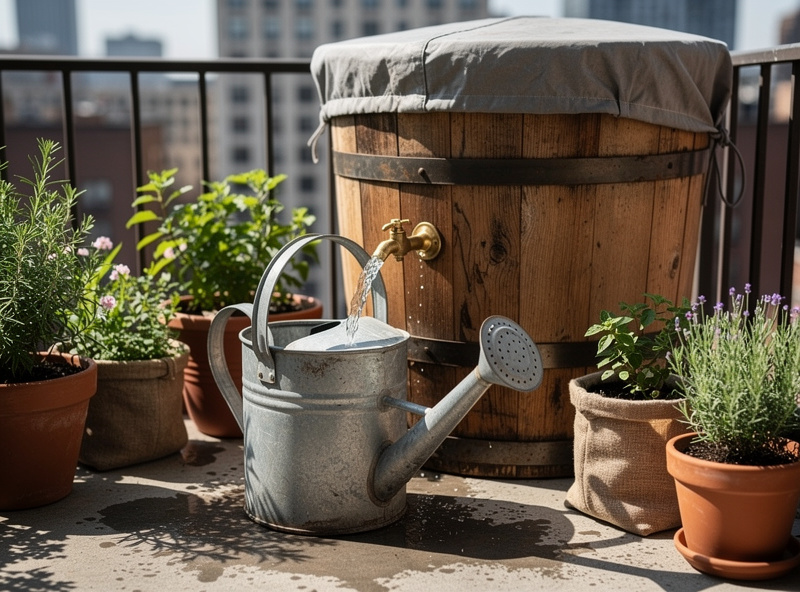
The easiest use is filling a can from the barrel’s tap, but a raised barrel can also gravity-feed low-pressure systems. Even a half-metre of height gives enough head to run a short soaker hose or trickle-fill an olla or wicking bed, turning collected rain into genuinely passive irrigation.
This is where small-space rainwater harvesting connects to the rest of a self-watering balcony. I top up my buried olla clay pots straight from the barrel, and I recharge the reservoir of a DIY wicking bed with it too — both are designed to be filled occasionally and left, which is exactly what a rain barrel supplies. The barrel becomes the free-water hub that feeds every passive system on the balcony, so a rainy week effectively waters the garden for you.
The Nordic Freeze Rule
Drain and stow your rain barrel before the first hard frost. A barrel left full freezes into a solid block that expands and splits the plastic or cracks the tap, and a frozen-shut spigot is useless anyway. In a cold climate a rain barrel is a spring-to-autumn tool, emptied and stored dry over winter.
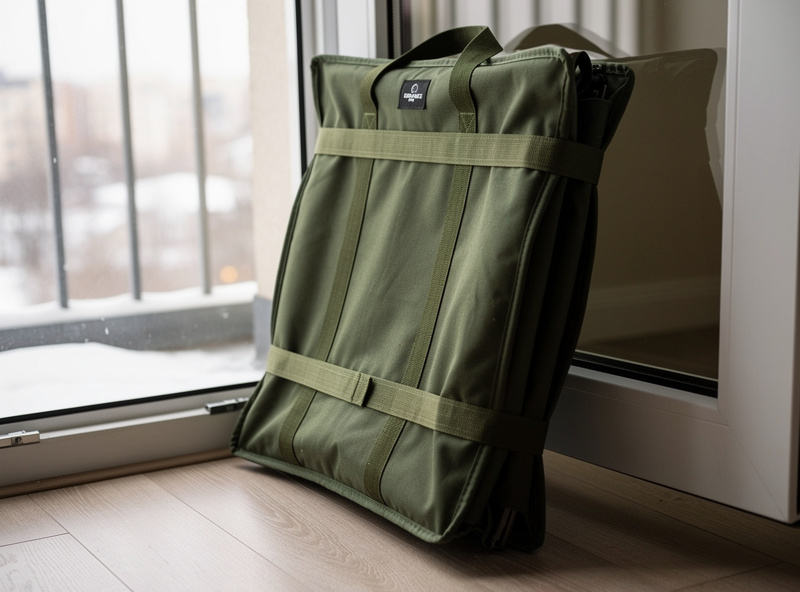
My routine is to empty the barrel, disconnect the diverter so winter melt runs straight down the pipe, and fold the collapsible tank flat into the cellar — which is the real advantage of collapsible storage up north. Snowmelt in spring is itself a harvest worth catching once the freeze risk passes. Through the season, harvested rain slots in alongside my other passive setups, and the whole system is mapped in the complete garden watering guide if you want the bigger picture of how it all fits a Nordic balcony.
Frequently Asked Questions
How much rainwater can a small balcony collect?
Every square metre of catchment yields about 1 litre per millimetre of rain. A 2 square metre balcony roof in a 15 mm shower collects roughly 25 to 28 litres, enough to water a balcony of containers for several days.
Is rainwater better than tap water for plants?
Generally yes. Rainwater is soft, chlorine-free, slightly acidic, and at air temperature, all of which container plants prefer over hard, cold, chlorinated tap water. It is especially good for acid-loving plants and avoids mineral buildup in pots.
What size rain barrel do I need for a balcony?
Match storage to daily use, not rainfall. A balcony of containers uses 10 to 20 litres on a hot day, so a 50 to 100 litre barrel buffers two to five dry days. Bigger barrels rarely pay off because a small catchment refills them slowly.
How do I stop mosquitoes breeding in a rain barrel?
Fit a sealed lid or fine mesh screen over every opening so mosquitoes cannot lay eggs, and keep the barrel opaque or shaded to prevent algae. Using the water on a rolling basis rather than letting it sit for weeks also helps.
Can I collect rainwater without a roof or downpipe?
Yes, on a small scale. An awning, balcony rail, or even an open collapsible tote catches some rain, though yield is lower. A clip-on diverter on an existing downpipe is the most efficient small-space option where one is available.
Do rain barrels need to be emptied for winter?
In cold climates, yes. A full barrel freezes into expanding ice that can split the plastic or crack the tap. Drain and store it before the first hard frost, disconnect the diverter, and fold collapsible tanks away until spring.