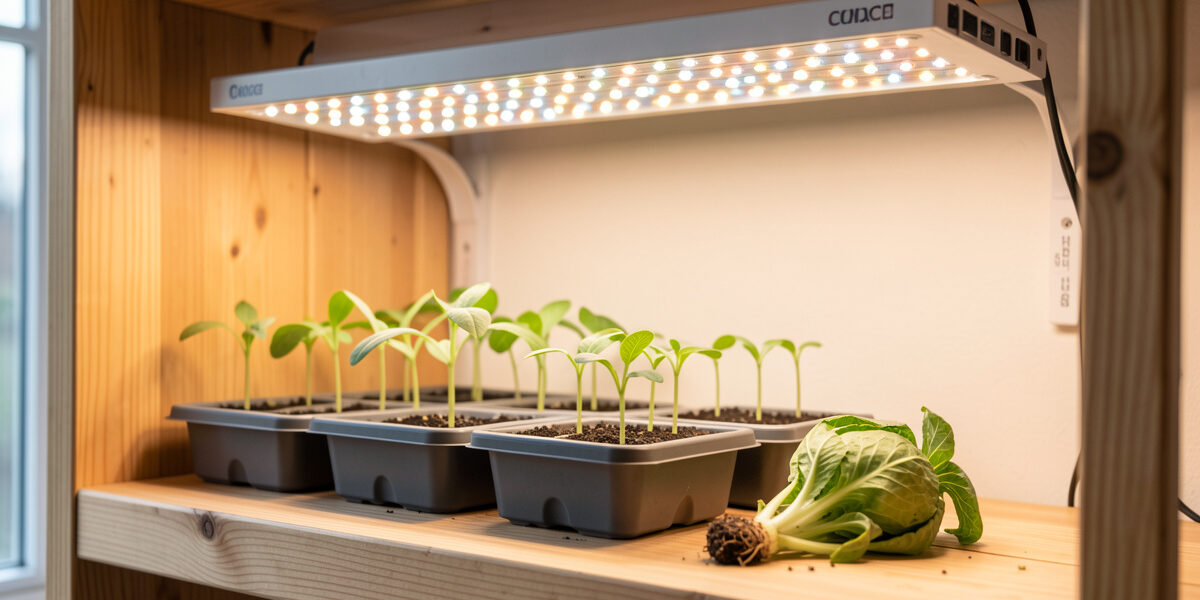
Seedlings usually die from one of six causes — damping off, leggy stretch, a cold or hungry root zone, waterlogged media, or crowding — and where the symptom sits tells you which one. A stem pinched at the soil line is damping off; a tall, pale seedling is starved for light; purple leaves almost always mean cold roots. Here in a Nordic January you get roughly six hours of thin daylight, so low light is the first suspect I reach for when something goes wrong on the shelf.
What makes seedling diagnosis hard is that six different failures can look almost identical for the first day: a seedling that was fine yesterday is now slumped over, and your gut says “water it.” That instinct kills more seedlings than neglect does. The pages under this hub walk through each failure one at a time — what it looks like, what actually causes it, and the move I make — because the fix for damping off is the opposite of the fix for a dry, stalled seedling, and guessing wrong costs you the tray. I have killed seedlings every one of these ways, so the advice below is the short list of what I stopped doing.
What Kills Seedlings Most Often?
Six things, in roughly the order I see them on my own shelf through a Swedish winter: damping-off fungi that pinch the stem at the soil line, leggy stretch from too little light, a cold root zone that locks up phosphorus and turns leaves purple, white saprophytic mold that signals a too-wet tray, seedlings that simply stop growing because their roots ran out of room, and yellowing leaves from spent nutrients or bad watering. Crowding ties them together — a tray you never thinned produces leggy, stalled, moldy seedlings all at once.
The reason these six dominate is that a seedling is a plant running on a tiny energy reserve with a root system the size of a thread. It has almost no buffer. An adult tomato in a grow bag can sit in soggy soil for a week and sulk; a two-week-old seedling in the same conditions rots overnight because its stem is soft, its roots are shallow, and the media stays wet right where the stem meets the soil. Most “why did it die” questions resolve to one of those six because they are the six ways a plant with no buffer fails when its environment drifts.
There is a vulnerability window that ties the six causes together. A seedling runs on its cotyledons — the seed leaves packed with stored energy — for roughly the first two weeks after emergence, while its first true leaves and root system are still developing. In that window the plant is drawing down a finite reserve and has almost no capacity to recover from stress. Once the true leaves start photosynthesising and the roots have colonised the cell, the plant becomes dramatically harder to kill. Most seedling deaths happen in those first two weeks, which is also when the tray is wettest, the air most still, and the light most often too far away. Diagnosing fast matters because the window in which you can act is the same window in which the plant can die.
The Nordic climate layers a seventh factor on top of all of them: light. Sweden’s meteorological institute, SMHI, records Stockholm at around six hours of daylight in January — and that daylight is low-angle and weak, passing through double glazing before it reaches a windowsill. A tomato seedling wants fourteen to sixteen hours of usable light. The gap between what the window gives and what the plant needs is where most winter seedling trouble is born, and it is the thread running through this whole cluster.
How Do I Read a Seedling’s Symptoms?
Diagnosis starts with three questions, in this order: where is the damage, what color is it, and how fast did it happen. A seedling that toppled overnight points to damping off; one that slowly stretched over a week points to light; one whose lowest leaves yellow over days points to nutrients or water. Speed matters because fungal collapse is fast and nutrient problems are slow. Before you touch anything, look at the soil line, the stem, the leaf color top and bottom, and lift a cell to check the root ball.
The table below is the quick-reference I wish I had taped to my shelf the first winter I started seeds indoors. It maps the symptom you actually see to the likely cause and the first move — then the sections that follow go deep on each one.
| Symptom you see | What it usually means | Check first | First thing to do |
|---|---|---|---|
| Seedling toppled, stem pinched right at the soil line | Damping-off fungi (Pythium, Rhizoctonia) | The soil line for a threadlike, water-soaked constriction | Remove it, dry the tray, add a fan; do not reuse that media |
| Tall, pale, floppy stem with small leaves | Low light, etiolation | Distance from plant to light source | Lower the light and run it longer; restart if badly stretched |
| Leaves (often undersides) turning purple or reddish | Phosphorus lockout from cold roots | Root-zone temperature | Warm the root zone before reaching for fertilizer |
| White fuzz sitting on the soil surface | Saprophytic mold, usually harmless | Whether the seedlings themselves look healthy | Dry the surface and add airflow; it warns of trouble rather than causing it |
| Seedling alive but not getting any bigger | Root-bound in too small a cell, or cold | The root ball for circling roots | Pot on to a bigger cell; warm and light it |
| Lowest leaves yellowing, then moving up | Spent nutrients, or over- or underwatering | Which leaves yellow and how wet the media is | Feed weakly if cotyledons fading; fix watering if media soggy |
| Crowded seedlings leaning and thin, competing | No thinning | How many seedlings share a cell | Snip, never pull, the weaklings at first true leaf |
One warning before you scan-and-fix: a seedling can show two of these at once, and one is usually the cause and the other the symptom. A crowded, unthinned tray grows leggy seedlings that then damp off — thinning was the root fix, the stretch and the rot were consequences. When two symptoms appear together, ask which one came first; that is the one to treat.
Why Do Seedlings Topple at the Soil Line?
That is damping off, and it is the single fastest way to lose a tray. A seedling that was upright at breakfast is lying flat by evening, and when you pick it up the stem is constricted to a wet thread exactly where it meets the soil. Damping-off fungi — Pythium and Rhizoctonia are the usual suspects — live in the surface layer of wet media and attack the soft stem at its weakest point. By the time you see the topple, the tissue is already gone, which is why prevention beats cure here by a wide margin — the University of Minnesota Extension, writing for a similarly cold climate, puts sterile media and moving air at the top of its damping-off prevention list.
The conditions that bring it on are wet, cool, still media in a tray that was not clean. I lost a flat of tomatoes to it one spring by bottom-watering cells with no drainage and leaving a humidity dome clamped down tight — still, saturated air over saturated media is exactly what Pythium wants. The fix is the opposite of the instinct: dry the surface, get air moving with a small fan, and start that cell over in fresh media. For the full breakdown of how to spot it early and stop it spreading, read the damping-off guide — and if you are growing microgreens specifically, the failure looks a little different, so see the microgreens damping-off page too.
Why Are My Seedlings Tall, Pale, and Floppy?
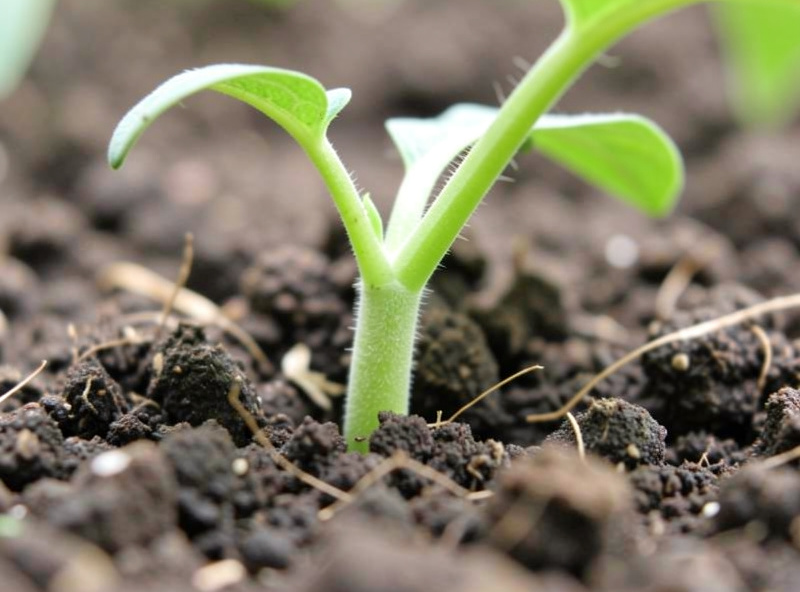
They are stretched for light, a condition called etiolation. The stem elongates reaching for a light source that is too dim or too far away, the cells grow long and weak, and the seedling ends up tall, pale, and unable to hold itself up. In a Nordic window in late winter this is the default outcome — even a south-facing sill is too dark the day a seedling emerges, because the sun is low and the day is short. The fix is more light, closer, for more hours, not pinching the seedling back.
I started a flat of peppers one February thinking the south window would be enough, and within ten days they were pale threads leaning hard toward the glass. They were not sick; they were starving for photons. Lowering my LED bar to about twenty centimetres above the shelf and running it fourteen hours a day on a timer straightened out the next batch. A stretched seedling can sometimes be saved by potting it deeper when you move it on — tomatoes will root along a buried stem — but most badly leggy seedlings are better restarted under proper light. The deep version is in the leggy seedlings fix.
What Does It Mean When Seedling Leaves Turn Purple or Red?
Purple leaves are almost always a temperature problem dressed up as a nutrient problem. When the root zone is cold, the plant cannot take up phosphorus even if it is sitting in a fertile mix, and it responds by producing anthocyanin pigment that turns the leaves — especially the undersides and the older leaves — purple or reddish. The instinct is to dump phosphorus fertilizer on it. That is usually wrong, because cold roots cannot absorb the nutrient you are adding; you fertilize a cold seedling and the leaves stay purple and the roots now sit in salty media.
The fix is to warm the root zone. On my shelf a heat mat under the trays, held to a setpoint by a thermostat, keeps root-zone temperature in the right band — around twenty-one degrees for lettuce and spinach, a few degrees warmer for peppers and tomatoes — and the purple fades within days as phosphorus uptake resumes. The full picture, including when purple is actually normal and not a problem at all, is in the purple seedling leaves guide.
Is White Fuzz on the Seed-Starting Soil Dangerous?
Usually not, and this is the one that makes people throw away trays they should have kept. White, fuzzy, dry-looking growth sitting on top of the seed-starting mix is typically a saprophytic mold feeding on dead organic matter in a wet, still tray — it is not attacking your seedlings. What it is doing is warning you that the environment which grows mold will also grow damping-off fungi, so you treat the cause, which is moisture and stale air, rather than scraping the mold and calling it fixed.
I once panicked over a white cobweb of fuzz on a tray of brassica seedlings and composted the lot; the seedlings had been fine, and the mold was telling me to water less and lift the dome. Dry the surface, get air moving, and the fuzz retreats on its own. The distinction between harmless saprophytic mold and the mold that actually threatens seedlings matters, and the white mold on seed soil guide draws it clearly — the microgreens version of the same question is here.
Why Did Healthy Seedlings Suddenly Stop Growing?
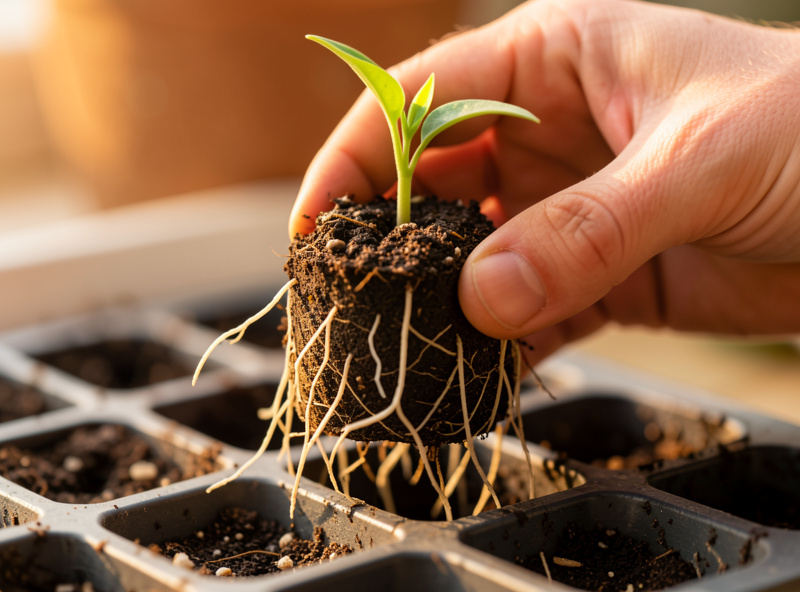
A seedling that germinated fine and then just sits there, alive but not getting bigger, has usually run out of one of three things: root room, root warmth, or light. The most common is root room. A seedling in a one-inch cell can be root-bound in two to three weeks, its roots hitting the cell walls and circling with nowhere to go, and growth pauses because the top cannot outgrow the bottom. It looks like a sick seedling; it is actually a seedling that needs a bigger pot.
Lift a cell and look at the root ball. If you see roots circling the outside or poking out the drainage holes, it is time to pot on — and waiting too long costs you the plant, because a badly root-bound seedling often never catches up. I left lettuce in tiny cells three weeks too long one season and they stalled permanently; potted on, they just sat. The fix, and the other two causes of stalling, are in the seedlings stopped growing guide, and the move that follows — getting them into a bigger container without shock — is covered in the transplanting guide.
Why Are the Leaves on My Seedlings Turning Yellow?
Yellow leaves point to one of three things, and which leaves yellow tells you which. If the lowest leaves — the cotyledons, the first two seed leaves — are yellowing while the new growth stays green, the seedling has simply spent its seed reserves and is ready for a weak feed; that is normal transition, not disease. If the whole plant is pale and yellow from the top down, suspect light or a real nutrient shortfall. If leaves yellow and go limp together, you are overwatering, and the roots are drowning.
The mistake I made here was reading natural cotyledon-yellowing as a deficiency and dosing tiny tomato seedlings with half-strength fertilizer I did not need — the tips burned white within a day. Feed only once the true leaves are working and the cotyledons start to fade, and feed weakly, weaker than the bottle suggests. The full reading of nutrients, water, and light is in the yellow seedling leaves guide.
When Do Crowded Seedlings Need Thinning?
Thin as soon as the first true leaves appear, because every extra day of crowding makes the leggy, stalled, diseased seedlings the rest of this hub is about. When two or three seedlings share a cell they compete for light, water, and root space, and they all stretch and weaken together. The keeper is the one with the stout stem and the first true leaves; the rest come out — and they come out by snipping, not pulling, because pulling tears the keeper’s roots.
The reason thinning belongs in a seedling-failure hub is that skipping it is upstream of half the failures here. A crowded tray goes leggy, then stalls, then damps off, and you end up diagnosing the end of a chain that started with too many seeds in one cell. Cut that chain early. The timing, the choice of keeper, and whether you can transplant the thinnings instead of composting them are in the thinning seedlings guide.
How Should I Water Seedlings So I Don’t Kill Them?
Bottom-water, and let the surface dry between waterings, because overwatering kills more seedlings on my shelf than every other cause combined. Saturated media pushes the oxygen out of the root zone, the roots suffocate, and the wet surface layer becomes exactly the nursery damping-off fungi are looking for. The fix is not a fixed schedule but a test: poke the top centimetre of mix with a fingertip, and water only when it feels dry to the touch. In practice that works out to every two or three days just after germination, stretching to daily once the seedlings are growing hard under lights and transpiring fast.
I bottom-water by setting the tray in a shallow pan of water for fifteen or twenty minutes and letting the mix wick moisture up from below, so the surface stays dry and airy while the root zone gets what it needs. Then I tip out whatever has not been taken up, because a tray left sitting in standing water is a tray slowly drowning its seedlings. When I am away for a stretch, the same wicking principle is what the capillary matting under my trays relies on, and the self-watering inserts I print do the same job for the balcony containers later in the season. The habit that saved the most seedlings was simply never watering on a fixed schedule — the plant and the mix tell you when, and they are rarely wrong.
Does the Seed-Starting Mix Matter?
It matters more than almost anything else on the shelf, because the mix is where damping off lives and where stalling starts. A proper seed-starting mix is fine-textured, low in nutrients, and sterile — loose enough for a thread-thin root to push through, and clean enough not to hand Pythium a head start. Bagged all-purpose potting soil is the wrong medium: it is chunky, it is pre-charged with fertilizer that can burn seedlings, and it compacts into a wet brick that drowns roots. Garden soil straight from the bed is worse still, because it brings soil-borne fungi and weed seeds indoors with it.
I mix my own from coir, perlite, and a little worm castings from the bin under the bench — coir for a fine, airy structure that holds water without compacting, perlite for drainage so the root zone never goes sour, and castings for a gentle biological kick without the salt load of synthetic feed. The point is a mix that drains freely and stays open, so the surface dries and the roots breathe. The seed-starting equipment list covers what I keep on the shelf, and the seed-starting kit decisions walk through the store-bought options if you would rather buy than blend. Get the mix right and you remove the foundation that half the failures in this hub stand on.
What’s Different About Seedlings in a Nordic Window?
Almost every gardening video that tells you to “put your seedlings in a sunny window” was filmed somewhere with winter sun. A south-facing window in California or Kent gives a seedling a fighting chance through February; a south-facing window in Sweden in January gives it roughly six hours of low-angle light that has already lost strength passing through glass. Seedlings started on that sill will stretch, every time, because the light is below the threshold where the plant can build sturdy cells. This is why I treat grow lights as the default, not the upgrade, for winter seed starting up here.
The second Nordic factor is late frost. The last spring frost in southern Sweden lands somewhere in late April or early May — a window the Swedish University of Agricultural Sciences tracks — which means the outdoor season is short and the indoor start has to be timed so seedlings are ready to go out — not so ready they sit indoors getting root-bound for a month. I count back from my frost date: tomatoes and peppers get started around eight weeks before plant-out, hardier greens closer to four. Start too early and you fight leggy, root-bound seedlings; start too late and the short season eats your harvest. The full indoor-start timeline is in the starting seeds indoors guide, and the move outdoors is the two-week hardening-off process.
The third factor is that everything runs colder — the windowsill, the floor near the window, the tray itself. A tray on a sill at twelve degrees grows slow, purple, damping-off-prone seedlings even if the air in the room feels fine, because the root zone is what matters and it is sitting against cold glass. A heat mat fixes more Nordic seedling problems than any single other piece of gear I own, which is why the question of whether you need one has a different answer up here than it does in a warmer climate.
What Gear Actually Prevents Seedling Loss?
The short version: a light, a heat mat with a thermostat, clean trays with drainage, a small fan, and a watering method that does not saturate the surface. I run a full-spectrum LED bar over the shelf at about twenty centimetres, giving roughly 250 micromoles at the surface for fourteen hours a day on a timer — the timer setup that cut my run-cost is written up separately, and my notes on measuring light with a PAR meter and whether the expensive lights are worth it cover the buying decisions. A cheap Viparspectra panel ran side by side with the bar for a season; both grew seedlings, the bar covered more shelf evenly, and neither mattered if the light was too far away.
Under the trays sits a Hydrofarm heat mat controlled by a thermostat, set to the crop. Above all of it, a clip-on USB fan runs on low to keep air moving across the soil line — still air is the single biggest damping-off risk after wet media, and a fan that barely stirs the leaves is enough to change the game. The trays themselves are Bootstrap Farmer 1020s with drainage holes, because a tray that holds water around the cells is a tray that grows fungus; why drainage matters and the seed-starting kit decisions are covered elsewhere. The full inventory is on the seed-starting equipment list.
For watering, I bottom-water and let capillary action pull moisture up, so the surface stays dry and airy — the same principle behind the capillary matting I rely on when I am away. And because I water less often, I lean on the self-watering reservoir inserts I print on my Bambu Lab P1S for the balcony containers later in the season — the same 3D printer that prints hydroponic parts prints the wicking inserts, which is the kind of crossover that only makes sense when your hobbies share a bench. A humidity dome has its place for germination but comes off the moment seedlings emerge; when to use one is a narrower question than people assume. If you want a ready-made version of most of this, the heat-mat-and-thermostat search is where I would start.
As an Amazon Associate I earn from qualifying purchases.
What Would I Do Starting Today?
If a tray is failing right now, do not water it first. Look at the soil line for a pinched stem, look at the leaf color, lift a cell for the root ball, and decide which of the six it is before you reach for anything. The single most useful habit I built was a thirty-second daily scan of the shelf — toppled stems, color shifts, how wet the surface is — because damping off and stretch are both problems you catch a day early or not at all. Most dead seedlings were detectable the morning before they died.
Then build the environment so the failure does not recur: light close and long enough that nothing stretches, a heat mat so the root zone is warm enough to take up nutrients, drainage and a fan so the surface dries between waterings, and thinning early so nothing competes. Get those four right and the six causes above mostly stop happening, which is the real answer to why your seedlings keep dying. The pages under this hub are where I go deep on each one.
Keep Building
- Damping Off: Stop Seedlings Toppling at the Soil Line
- Leggy Seedlings: Why They Stretch and How to Recover Them
- Purple Seedling Leaves: What the Color Is Telling You
- White Fuzzy Mold on Seed-Starting Soil: Harmless or Not?
- Seedlings That Stall and Stop Growing: The Usual Causes
- Yellowing Seedling Leaves: Reading Nutrients, Water, and Light
- When and How to Thin Seedlings Without Killing the Keepers
Why are my seedlings dying even though I water them?
Overwatering is the most common killer. Saturated media starves roots of oxygen and invites damping-off fungi. Let the top centimetre dry between waterings and bottom-water so the surface stays airy.
Can a seedling recover from damping off?
Rarely. Once the stem is pinched at the soil line the tissue is gone. Remove the seedling and protect the rest with airflow and drier media; prevention is the only reliable cure.
Why do my seedlings die after I move them outside?
That is transplant shock from skipping hardening off. Sun, wind, and cold night air damage tissue that grew indoors, so expose them gradually over about two weeks first.
Is a windowsill enough light for seedlings in winter?
In a Nordic winter, no. A south sill in January gives far less than a seedling needs and most will stretch. Add a full-spectrum LED close above them.
How often should I check seedlings for problems?
Daily, for about thirty seconds: scan for toppled stems, color shifts, and whether the media is still wet. Catching damping off or stretch a day early usually saves the tray.
Do seedlings need fertilizer to survive?
Not at first; seeds carry enough stored energy for the first true leaves. Once cotyledons fade, a very weak feed helps, but over-fertilizing burns seedlings fast.