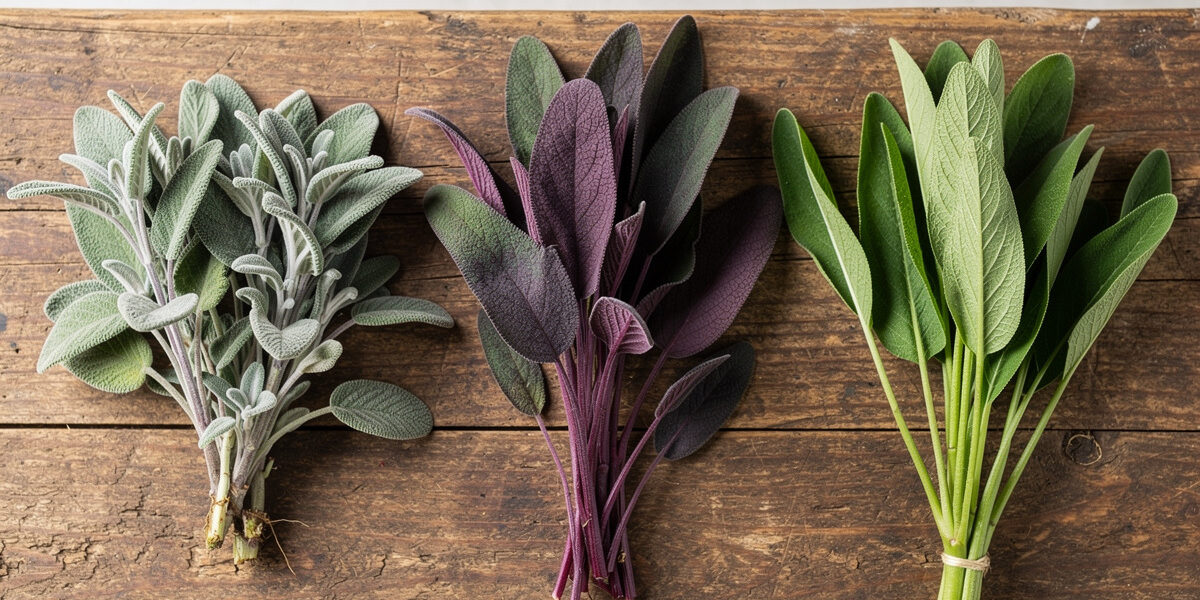
The sage herb plant most cooks recognize is common sage (Salvia officinalis) — but the genus contains over 900 species, with roughly a dozen used culinarily in home gardens. Picking the right sage variety matters more than picking the right tomato variety: pineapple sage tastes nothing like common sage, white sage is mostly grown for ceremonial smudging rather than cooking, and Russian sage is not actually a sage at all. This guide focuses on what sage is rather than how to grow it: the major varieties, the leaf characteristics that identify each, the culinary applications that have endured for centuries, and the rules for sourcing the right plant. For step-by-step growing instructions (germination, watering, pruning, harvest), the dedicated reference is Growing Sage: Mediterranean Perennial Herb Guide; this guide stays focused on identification and use.
As an Amazon Associate I earn from qualifying purchases.
Common Sage (Salvia officinalis): The Culinary Standard
Common sage is the species behind nearly every “sage” mention in Western cooking — the plant in Thanksgiving stuffing, Italian saltimbocca, and traditional sausage. Identifying features:
- Leaves: Elongated oval, 1 to 3 inches long, soft and velvety to the touch with a pebbled texture. Color is gray-green with silvery undersides.
- Stems: Square in cross-section (a Lamiaceae family marker), woody at the base, herbaceous at growing tips. Mature plants reach 24 to 30 inches tall (NC State Extension plant toolbox).
- Flowers: Purple-blue spikes 6 to 12 inches long, attractive to bees and butterflies. Bloom in early summer of year two onward.
- Scent test: Crush a leaf — distinct earthy-herbaceous scent with notes of pine and eucalyptus. The cooking sage smell is unmistakable.
Common sage is the right choice for nearly every household herb garden. It’s hardy in USDA zones 4-9, productive for 4-6 seasons with annual pruning, and works in every recipe that calls for “sage” without specifying variety.
Cultivar Variations Within Common Sage
Several ornamental cultivars of S. officinalis share the species’ culinary use with added visual interest:
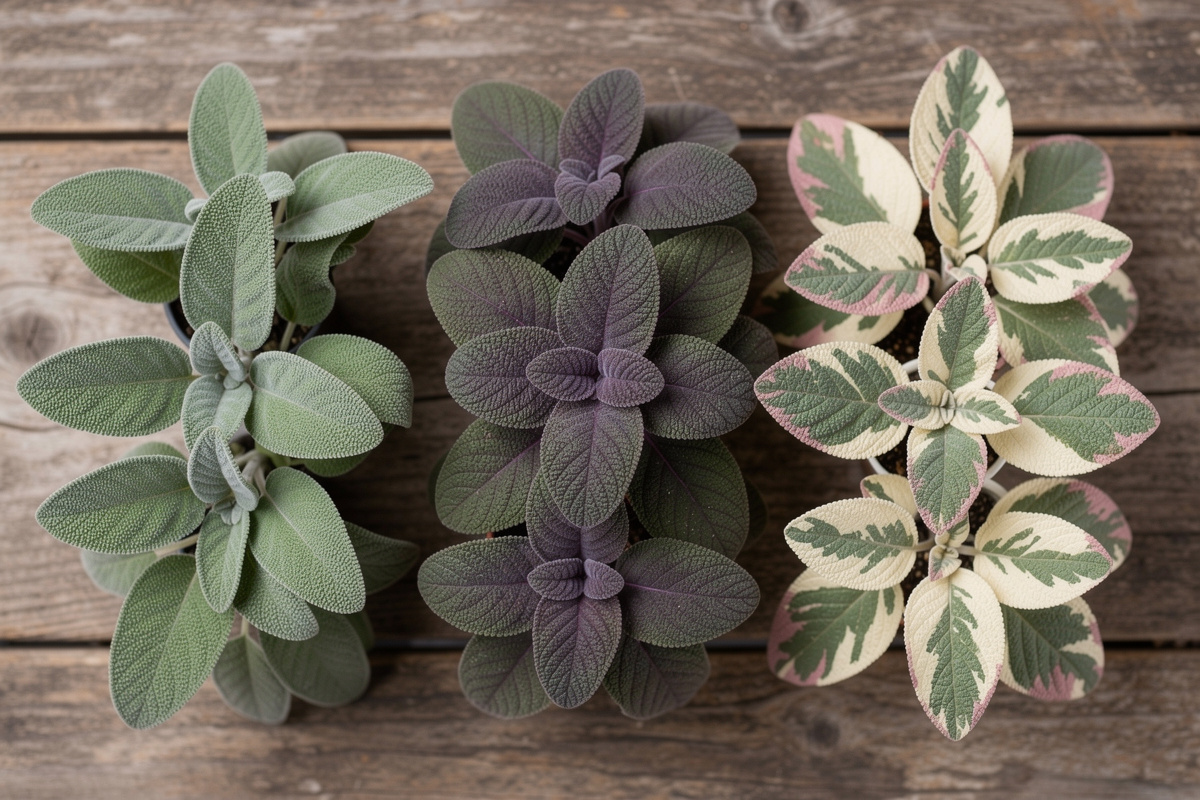
- Purpurea (purple sage): Deep purple-tinged leaves. Slightly milder flavor than green common sage. Less hardy (zones 6-9 reliable). Stunning in mixed borders.
- Tricolor: Variegated leaves with green, white/cream, and purple-pink markings. Decorative but the weakest culinary flavor of the cultivar group.
- Icterina (golden sage): Yellow-green variegated leaves. Moderate flavor, between Purpurea and Tricolor. Hardy zones 5-9.
- Berggarten: Larger rounder leaves than common sage with no flower spike (or rare flowers). Very strong culinary flavor — preferred by chefs for the highest concentration of essential oils per leaf.
The single rule for cultivar selection: if your priority is culinary use, choose plain common sage or Berggarten. If your priority is appearance with adequate culinary value, Purpurea or Icterina. Skip Tricolor for cooking.
Pineapple Sage (Salvia elegans): A Different Plant Entirely
Pineapple sage is sometimes confused with common sage in nursery labels but is a different species with very different uses:
- Leaves: Smooth (not velvety), brighter green, distinct pineapple scent when crushed.
- Hardiness: Tender perennial — hardy only in zones 8-11. Grown as annual or container herb in colder zones.
- Flavor: Sweet, fruity, citrus-pineapple notes. NOT a substitute for common sage in savory cooking.
- Uses: Sweet applications — fruit salads, herbal teas, cocktails, infused syrups, dessert garnish. Flowers also edible and showy red color.
Pineapple sage is worth growing alongside common sage for its different culinary niche, not as a replacement. The two coexist well in a Mediterranean herb bed but require similar containment to other tender sages in cold zones.
White Sage (Salvia apiana): Ceremonial, Not Culinary
White sage is a California native species used primarily in Indigenous American smudging ceremonies. It is not interchangeable with common sage in cooking:
- Leaves: Long, narrow, almost-white silvery foliage. Strong resinous scent (more like camphor than common sage).
- Hardiness: Zones 8-11 only. Drought-tolerant Mediterranean shrub.
- Sustainability concern: Wild white sage populations are over-harvested. If you want to use white sage, grow your own rather than buying wild-harvested bundles.
- Uses: Ceremonial smudging (bundled and burned). Mildly toxic if consumed in large quantities — not a culinary herb.
White sage’s status as a culturally important plant for Native American communities matters in how home gardeners approach it. Growing your own from seed or a nursery transplant is the appropriate way to access white sage; mass-market commercial bundles often come from unsustainable wild harvest on Indigenous lands.
Russian Sage (Perovskia atriplicifolia): Not Actually Sage
Russian sage is a common ornamental perennial that is not a true sage despite the name. It belongs to a different genus (Perovskia) but is in the same Lamiaceae family:
- Leaves: Finely cut silvery-gray foliage, distinctly different from common sage’s broad oval leaves.
- Use: Strictly ornamental and not edible. Beautiful in xeriscape borders.
- Why “sage” in the name: Historical confusion based on similar foliage color and herbaceous habit. Modern taxonomy places it in a separate genus.
If you see “Russian sage” at a nursery, expect a tall ornamental shrub with airy purple flower spikes — beautiful for landscaping but unusable in the kitchen.
Culinary Applications of Common Sage
Common sage’s role in cooking centers on rich, fatty, savory dishes where its earthiness cuts through and complements rather than competes:
- Stuffing and dressing: The defining herb of Thanksgiving turkey stuffing. 1 tablespoon dried sage per cup of bread cubes.
- Sausage and pork: Italian and breakfast sausage recipes lean heavily on sage. Fresh leaves added to the meat mix at 1 to 2 tablespoons per pound of ground meat.
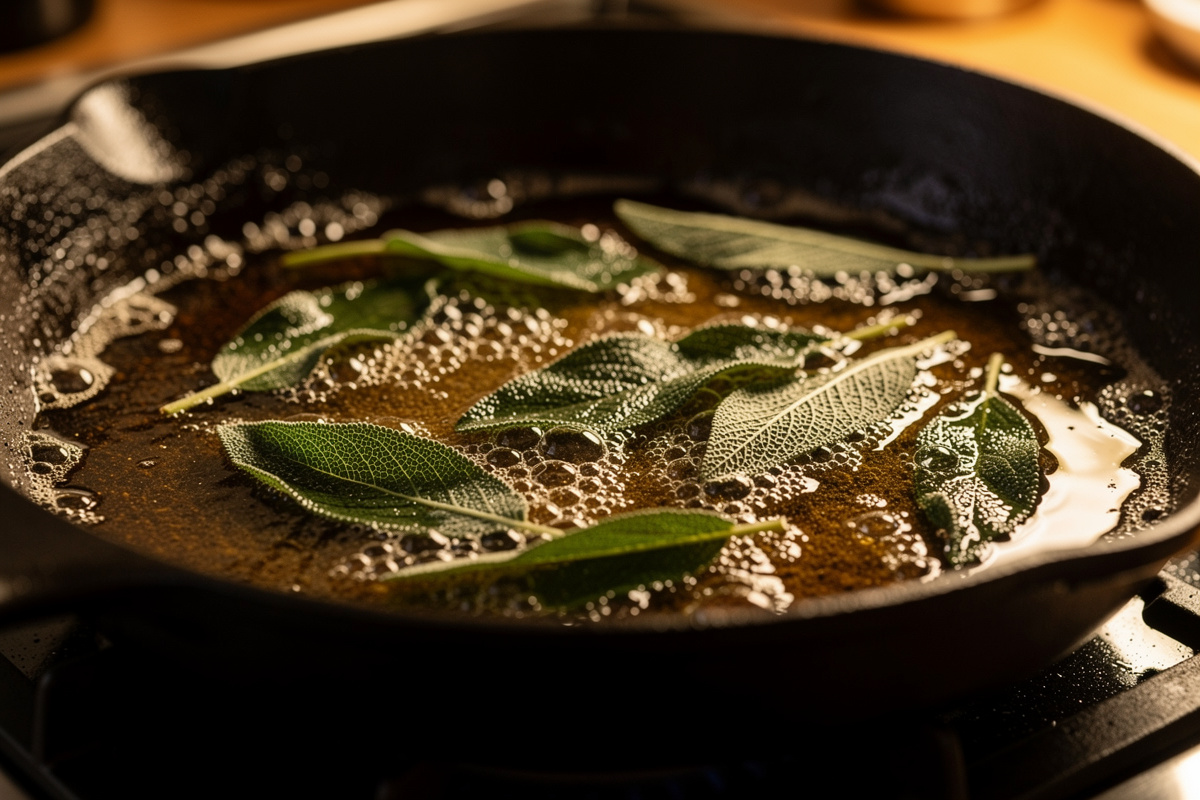
- Brown butter sage sauce: The classic Italian preparation. Melt butter until it browns, drop in 8 to 12 fresh sage leaves until they crisp, pour over pasta or gnocchi.
- Saltimbocca: Veal or chicken cutlets with prosciutto and a single fresh sage leaf pressed into each cutlet before pan-frying.
- Infused vinegar and oil: 8 to 10 fresh sage leaves per pint of olive oil or white wine vinegar. Steep 4 weeks; strain.
- Roast root vegetables: Sage with butternut squash, sweet potatoes, and carrots is a winter staple. Add chopped fresh sage during the last 10 minutes of roasting.
Sage in Culinary History
Sage has been a kitchen staple since at least the Roman era, when it was valued as a food preservative long before refrigeration. The Latin name salvia derives from salvare (to save), reflecting the plant’s historical role in curing meats and extending the shelf life of food through the winter. In medieval European kitchens dried sage was rubbed into pork and game cuts before hanging, and the herb remains the defining seasoning in traditional sausages from Italy, England, and Germany today. Across the Mediterranean, sage is a cornerstone aromatic — chopped into pasta fillings, crisped in browned butter for gnocchi, and layered into the classic saltimbocca that has been a Roman dish for centuries.
A practical culinary note: sage essential oil contains thujone, a compound concentrated in the oil but present at negligible levels in culinary use of fresh or dried leaves. Normal cooking quantities are safe for everyone. Concentrated essential oil should not be ingested without professional guidance, and pregnant women should avoid concentrated sage extracts.
Sourcing the Right Sage Plant
Three buying paths:
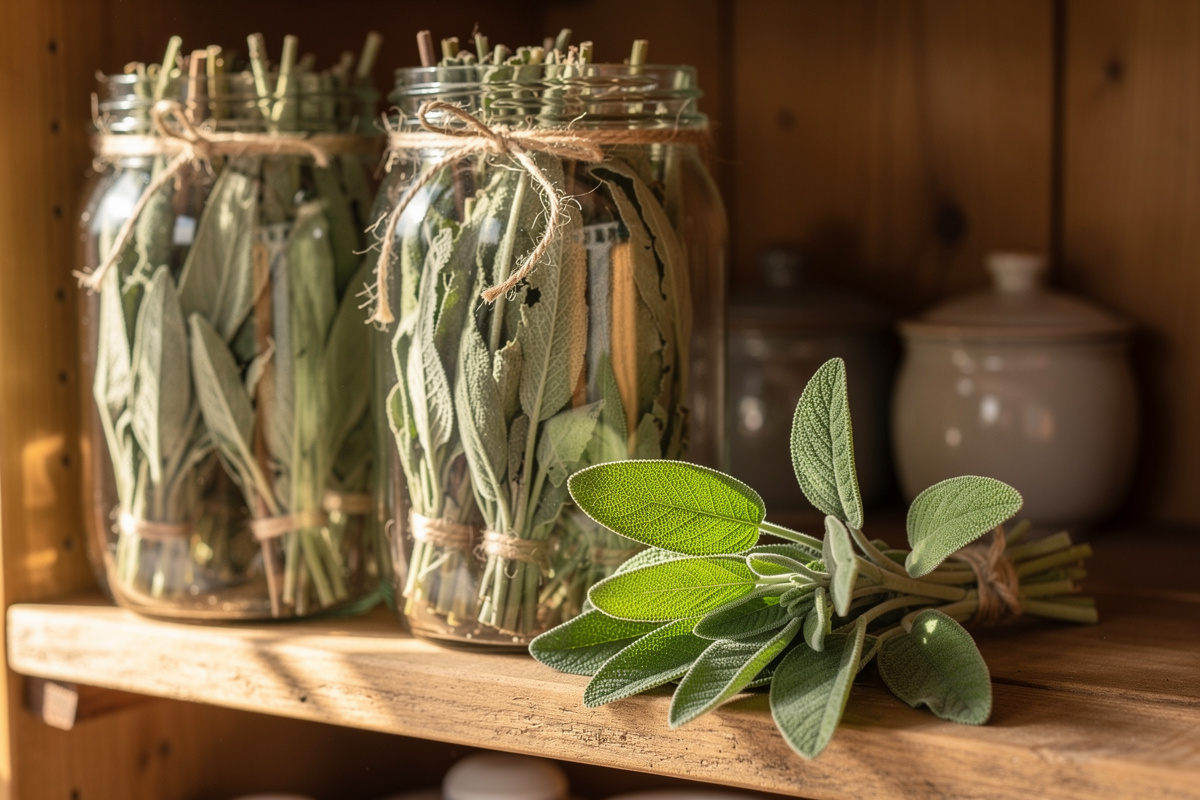
- Garden center transplants ($4-$8): Easiest source for common sage and major cultivars. Always check the Latin name on the label and crush a leaf for the scent test before buying. Avoid plants labeled simply “sage” without species identification.
- Specialty herb nurseries (online): Best for unusual cultivars (Berggarten, Icterina) or species (pineapple sage, white sage). Specialist sources include Mountain Valley Growers, Strictly Medicinal, and Richters Herbs. Plants ship as 4 inch plugs ($6-$12) or bare-root ($4-$8).
- Seed packets ($3-$5): Most reliable path to ensuring the species is what the label claims. Park Seed, Johnny’s Selected Seeds, and Strictly Medicinal carry common sage and several cultivars. Seed-grown plants take a full season to reach harvestable size.
Common Sage Identification Mistakes
Five common identification errors that lead to wrong-plant kitchen failures:
- Buying “sage” without species name and getting an ornamental. Generic “sage” labels often hide tricolor, salvia clevelandii, or other non-culinary species. Always look for Salvia officinalis.
- Confusing pineapple sage with common sage. Pineapple sage smells fruity, has smooth leaves, and tastes nothing like the cooking herb. Use it for sweet dishes only.
- Trying to use Russian sage in cooking. Despite the name, Russian sage is in a different genus and is not edible. Stick to Salvia species for culinary use.
- Buying tricolor sage expecting full kitchen utility. Tricolor is decorative-leaning with notably weaker flavor than plain common sage. Pretty in the bed; weak in the pan.
- Using ornamental sage cultivars for tea or culinary preparations. Compound concentrations vary across cultivars. For tea or culinary use, stick to plain Salvia officinalis or Berggarten.
Sage Through a Nordic Winter
My sage plant has survived three winters on the balcony in a 10-inch terracotta pot with nothing but a gravel mulch around the crown. The leaves go leathery and gray-green through the dark months but the plant never dies back completely, and by March it is already pushing out new velvety silver leaves while the rest of the balcony is still frozen. Sage is the first herb I harvest in spring — a handful of overwintered leaves goes into the first stew of the season before anything else has broken dormancy.
The common sage plant on my balcony has outlasted every annual and most perennials I have tried, quietly producing leaves for three years straight with nothing but gravel mulch and a once-monthly watering through the growing season. It is the definition of a low-input high-return herb and the one I recommend to anyone starting a herb garden in a cold climate.
Frequently Asked Questions
What is the difference between common sage and pineapple sage?
Common sage (Salvia officinalis) has gray-green velvety oval leaves with an earthy savory scent and is the standard cooking herb. Pineapple sage (Salvia elegans) has smooth bright-green leaves with a sweet fruity pineapple scent and is used for desserts, teas, and cocktails. The two are different species with completely different culinary roles.
Can I cook with all sage varieties?
No. Common sage and Berggarten cultivar are the standards for savory cooking. Purple sage and golden sage cultivars work but with milder flavor. Tricolor sage is too weak for serious cooking. Pineapple sage is for sweet applications only. White sage is for ceremonial smudging and is mildly toxic if consumed in quantity. Russian sage is not edible.
How do I identify true sage at a nursery?
Check for Salvia officinalis on the label. Crush a leaf and smell — common sage has a distinct earthy savory scent with pine and eucalyptus notes. The leaves should be elongated oval, 1 to 3 inches long, with a velvety pebbled texture and silvery undersides. Stems should be square in cross-section (a Lamiaceae family marker).
What is the best sage for cooking?
Common sage (Salvia officinalis) is the standard. Berggarten cultivar has the highest essential oil concentration and is preferred by chefs for maximum flavor per leaf. Both are interchangeable in any recipe calling for sage. Skip variegated cultivars (Tricolor, Icterina) for serious cooking — they are decorative-leaning with weaker flavor.
Are sage flowers edible?
Yes for common sage and pineapple sage. Common sage flowers are mild with a hint of the leaf flavor; use sparingly as garnish or in salads. Pineapple sage flowers are showy red and have a sweet flavor — excellent for fruit salads and dessert garnish. White sage flowers should not be eaten in quantity due to thujone content.
How is sage different from rosemary?
Sage and rosemary are both Mediterranean Lamiaceae perennials with overlapping uses but distinct flavors. Sage is earthier and more astringent; rosemary is piney and resinous. They share growing requirements and pair well together in the garden and the kitchen. Sage works better in stuffing and sausage; rosemary works better with roasted lamb and potatoes.