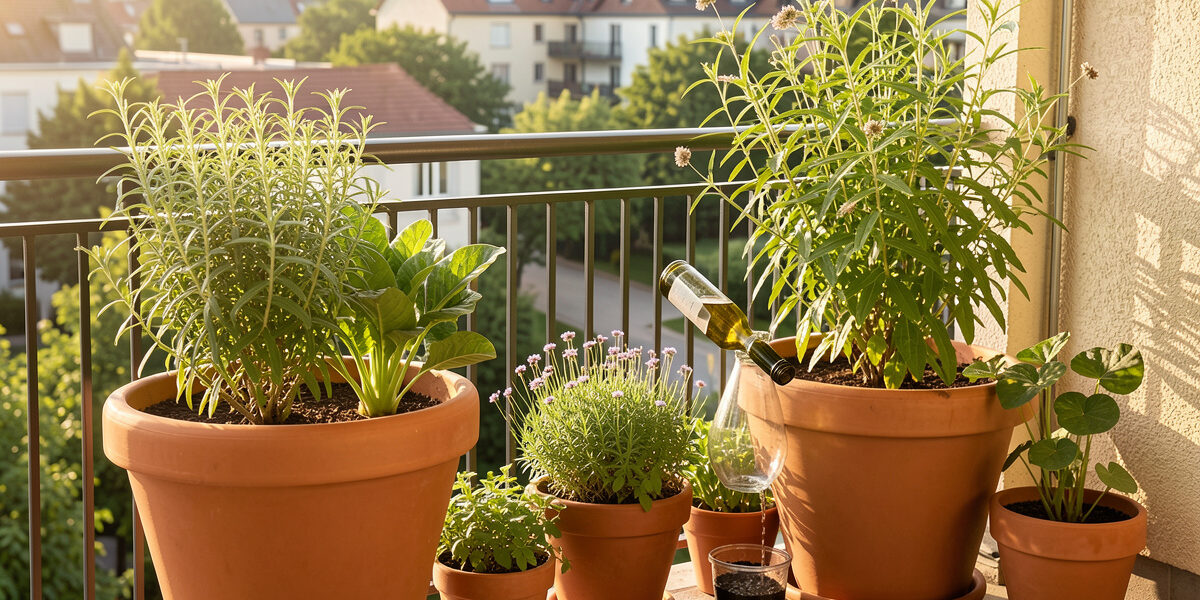
Yes, watering plants with a wine bottle genuinely works, within honest limits: an inverted bottle filled with water and pushed neck-down into the soil releases roughly 500 to 750 ml as a slow top-up over two to four days for a single medium pot. It is not a myth and it is not a two-week solution either, and the results swing hard with how loose your soil is.
I have run wine bottles side by side with shop-bought globes on my balcony, and the physics is identical, which means the bottle’s one real edge is that it holds more than most globes. That is the whole appeal: it is free, it uses something you already have, and for a long weekend on a thirsty balcony pot it can outlast a small decorative globe. Here is exactly how it behaves, how to stop it dumping its load in a day, and when to reach for something else.
Does the Wine Bottle Trick Actually Work?
It works because it runs on the same slow-release mechanism as any watering globe: the sealed bottle only lets water out as the soil dries and air bubbles back up the neck. When the soil is moist nothing much happens; as it dries, the flow picks up. So a wine bottle is a responsive top-up, not a measured or timed supply, and it keeps a single pot ticking over rather than flooding or starving it.
Where the trick earns its reputation for being unreliable is soil density. In a firm, water-retentive mix the bottle barely empties over several days and the plant can still dry at the root ball; in a loose peat-free mix the soil pulls hard and the bottle can glug out its whole 750 ml in a day, leaving nothing for the rest of the trip. The bottle is not failing in either case, it is just obeying the soil, exactly like a self-watering globe does. Once you accept that the soil sets the pace, the bottle becomes predictable rather than a gamble.
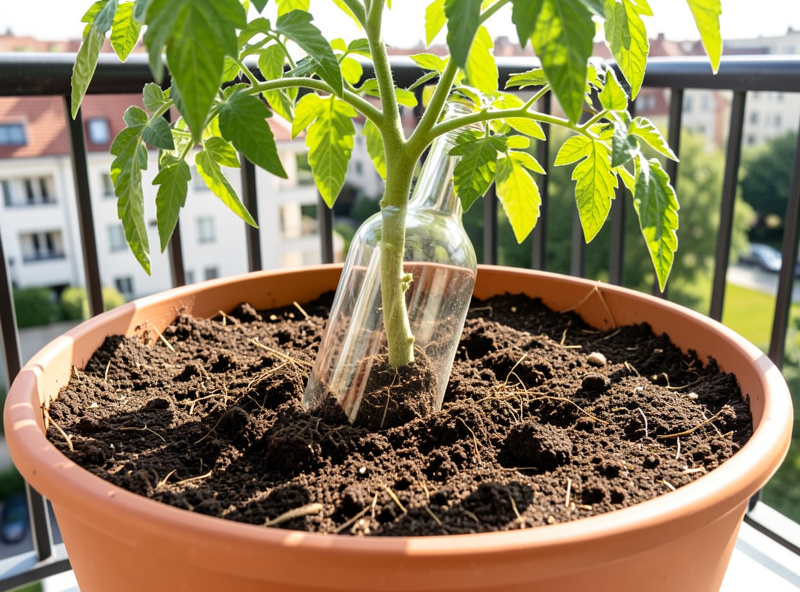
The Bottle’s One Advantage: Capacity
A wine bottle holds more than almost any bulb globe, and that is the only reason to prefer it. A standard bottle is 750 ml, against 300 to 500 ml for a typical globe, so on a medium pot the bottle simply lasts a day or two longer for free. If you are choosing between buying a small globe and using a bottle you already own, the bottle usually wins on both cost and capacity.
The trade-off is control and looks. A globe has a narrow, sometimes ceramic neck that meters the flow; a bare wine bottle has a wide mouth that can gush in loose soil and can slump the soil around it as it empties. It is also, frankly, an eyesore poking out of a balcony pot, which matters to some people and not at all to others. For me the bottle is the pragmatic choice for a short trip on a big outdoor pot where volume beats elegance, and a globe is the tidier pick for a windowsill herb on display. Neither is a serious system, and the honest framing is in my guide to watering plants while away.
How to Stop It Emptying in a Day
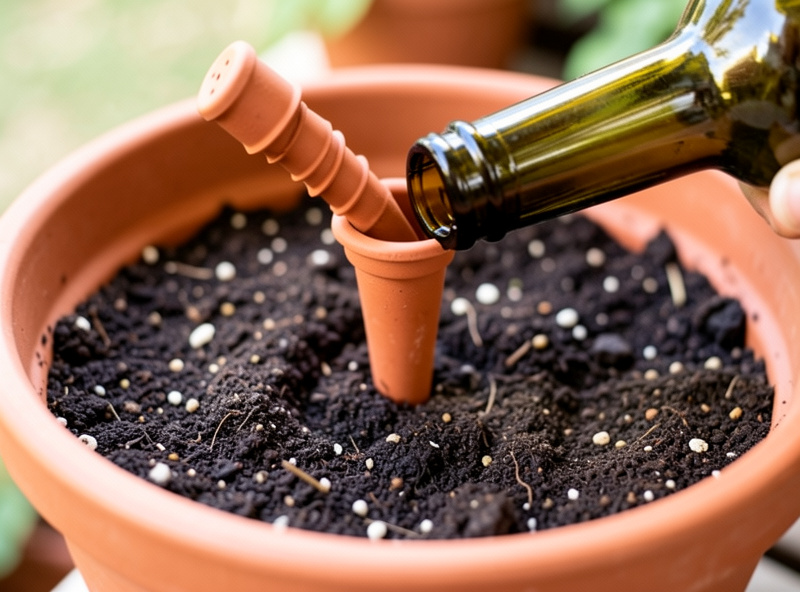
The fix for the bottle’s wide-neck problem is to meter the flow, and there are two easy ways. Bury a little gravel or coarse grit at the neck so water has to seep through it, or screw a terracotta watering spike onto the bottle so the water passes through porous clay instead of an open mouth. Either turns a bottle that empties in a day into one that lasts three or four.
The terracotta spike is the upgrade I actually recommend if you are going to do this often, because it solves both the gushing and the soil-slumping in one cheap part and it fits a standard bottle thread. Without a spike, the low-tech routine still works: water the pot fully first so the bottle only tops up rather than doing all the work, make a pilot hole with a stick so you are not compacting soil into the neck, and push the bottle in at a slight angle so it stays put. Then, as with every passive method, run it at home for a day before you leave and watch how fast the level drops, because a bottle that halves overnight will be dry long before you are back. Reusable terracotta bottle watering spikes cost very little and make the whole trick far more reliable.
As an Amazon Associate I earn from qualifying purchases.
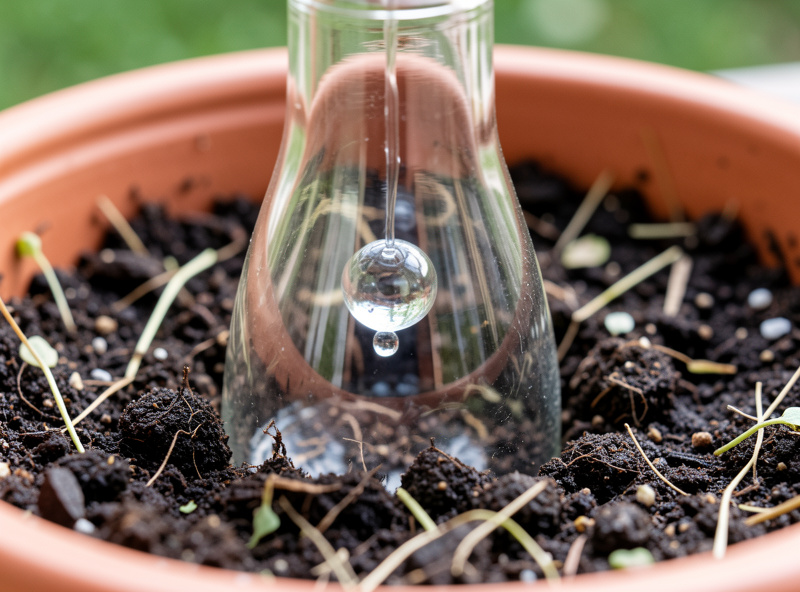
Bottle vs Globe vs Olla
The wine bottle sits in a family of passive clay-and-glass top-ups, and it helps to see where it lands against the alternatives. All three run on the same dry-soil-pulls-water principle; they differ in capacity, flow control, and how long they last.
| Method | Capacity | Holds for | Flow control | Best use |
|---|---|---|---|---|
| Wine bottle (bare) | 750 ml | 1-3 days | Poor (wide neck) | Free short-trip top-up |
| Wine bottle + spike | 750 ml | 3-4 days | Good (clay meters) | Cheap reliable single pot |
| Glass globe | 300-500 ml | 3-5 days | Fair | Tidy windowsill herbs |
| Olla clay pot | 1-4 litres | 5-10 days | Excellent (whole wall) | Raised beds, big pots |
Which Bottles Actually Work Best
Not every bottle is equal for this. A heavy glass wine bottle with a long, fairly narrow neck is close to ideal, because the weight keeps it stable in the pot and the neck slows the flow better than a wide-mouth container. Thin plastic water bottles work in a pinch but tip over easily and their wide caps gush, so they need a spike or a pierced cap to behave.
The long neck matters more than people expect. A short-necked bottle sits shallow and topples as it empties and the centre of gravity shifts, while a proper wine bottle buries deep enough to stay upright for the whole trip. If you want to meter a plastic bottle instead, piercing two or three small holes in the cap and inverting it gives you a rough version of a spike, though it is fiddlier to get right than simply buying the terracotta version. For a big fabric grow bag I sometimes use two bottles rather than one, spaced across the root zone, so the water reaches more of the roots instead of soaking one spot, which matters because a single bottle only wets the soil immediately around its neck.
The Nordic Summer Caveat
As with every passive method up north, a wine bottle that holds a plant for four days in spring may only manage two during a bright July trip. The long midsummer daylight and warm pots push evaporation far higher than the same date further south, so I always plan for the short end of the range in high summer and get the pot into shade first.
This is the single mistake I see most with bottles here: someone tests one on a mild spring weekend, it works beautifully, and they assume it will do the same over midsummer week when the balcony is baking for sixteen hours a day. It will not, because the plant is drinking far more. Moving the pot out of direct sun before you leave, as covered in the away-watering guide, does more to stretch a bottle than any amount of fiddling with the neck, because it cuts the draw at the source rather than trying to slow the supply.
When to Skip the Bottle
The bottle is a short-trip, single-pot tool, and it is the wrong answer for a thirsty plant, a big collection, or any absence past four or five days. A tomato in full summer sun can drink more than a bottle holds in a single day, and no amount of gravel or clay meters around that.
For a genuine week I move to wick watering, which keeps drawing as long as the jar has water rather than emptying on a fixed schedule, or to a buried olla clay pot for a raised bed, which holds far more and waters a whole root zone. For a longer trip or a whole balcony, a drip kit or an indoor timer is the only thing that keeps up. The bottle earns its keep for exactly what it is: a free, decent top-up for one pot over a weekend, no more.
Frequently Asked Questions
How long does a wine bottle water a plant for?
A bare inverted wine bottle lasts one to three days on a single medium pot, releasing its 750 ml as the soil dries. Fitted with a terracotta spike to slow the flow it can stretch to three or four days.
Will a wine bottle work in any soil?
No. In loose, fast-draining mix it can empty in a day, while in dense soil it barely releases water and the plant still dries at the root ball. A terracotta spike or gravel at the neck evens out the flow across soil types.
Is a wine bottle better than a self-watering globe?
The bottle holds more, about 750 ml against 300 to 500 ml for most globes, so it lasts a little longer for free. A globe has better flow control and looks tidier, so it wins on a windowsill and the bottle wins on a big outdoor pot.
Should I water the plant before inserting the bottle?
Yes. Water the pot fully first so the bottle only tops up moist soil rather than trying to rescue a dry pot. Dropping a bottle into bone-dry soil makes it either gush out everything at once or refuse to start.
Can a wine bottle water a plant for two weeks?
No. A single 750 ml bottle is a few days at most, and a thirsty summer plant can drink that in a day. For two weeks you need a wick system, an olla, an indoor timer, or a drip line that adds water on a schedule.