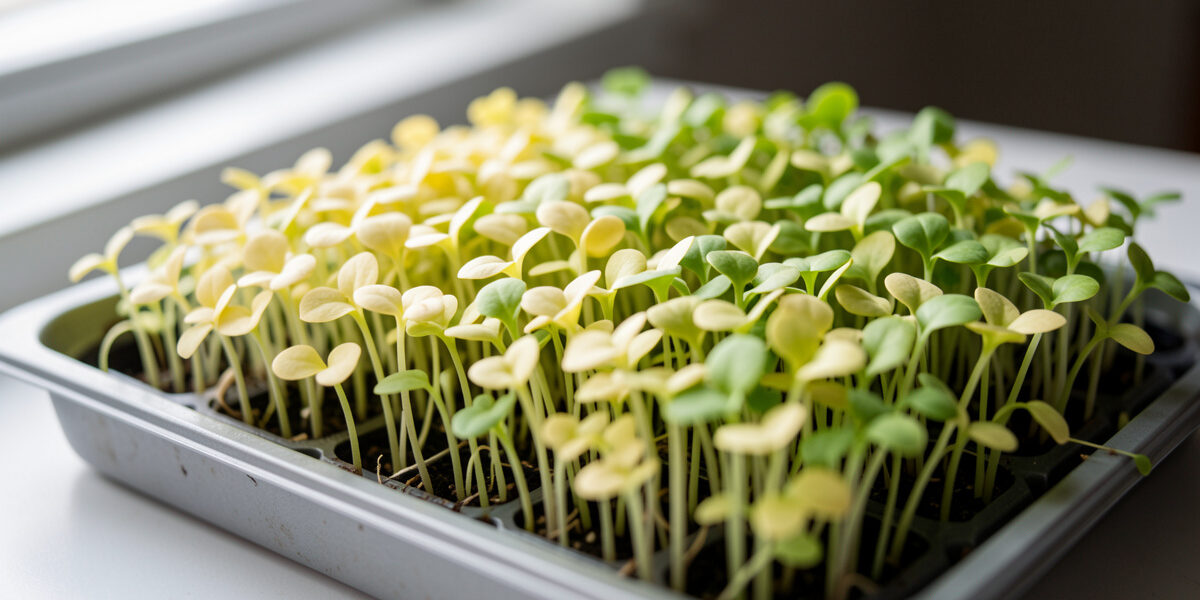
Microgreens turn yellow for one of two opposite reasons: not enough light, or too much water. Pale, lime-yellow leaves after uncovering mean the crop isn’t getting the light it needs to green up. Yellowing from the bottom with soggy medium and a sour smell means the roots are drowning. The two look different once you know where to look, and they need opposite fixes — so the first job is telling them apart.
Yellow is the color that sends people down the wrong path fastest, because the instinct is to do something nurturing — water it, feed it, fuss over it — when half the time the plant needs the opposite. I’ve run trays yellow in both directions on my shelf over the years: blanched-pale ones I forgot to uncover, and drowned ones I loved to death with a heavy hand on the watering can. The decision tree below is exactly how I diagnose it now, in the order that actually works. And there’s a third yellow — the intentional kind — that you should never “fix,” so we’ll clear that up first.
Why Are My Microgreens Yellow Instead of Green?
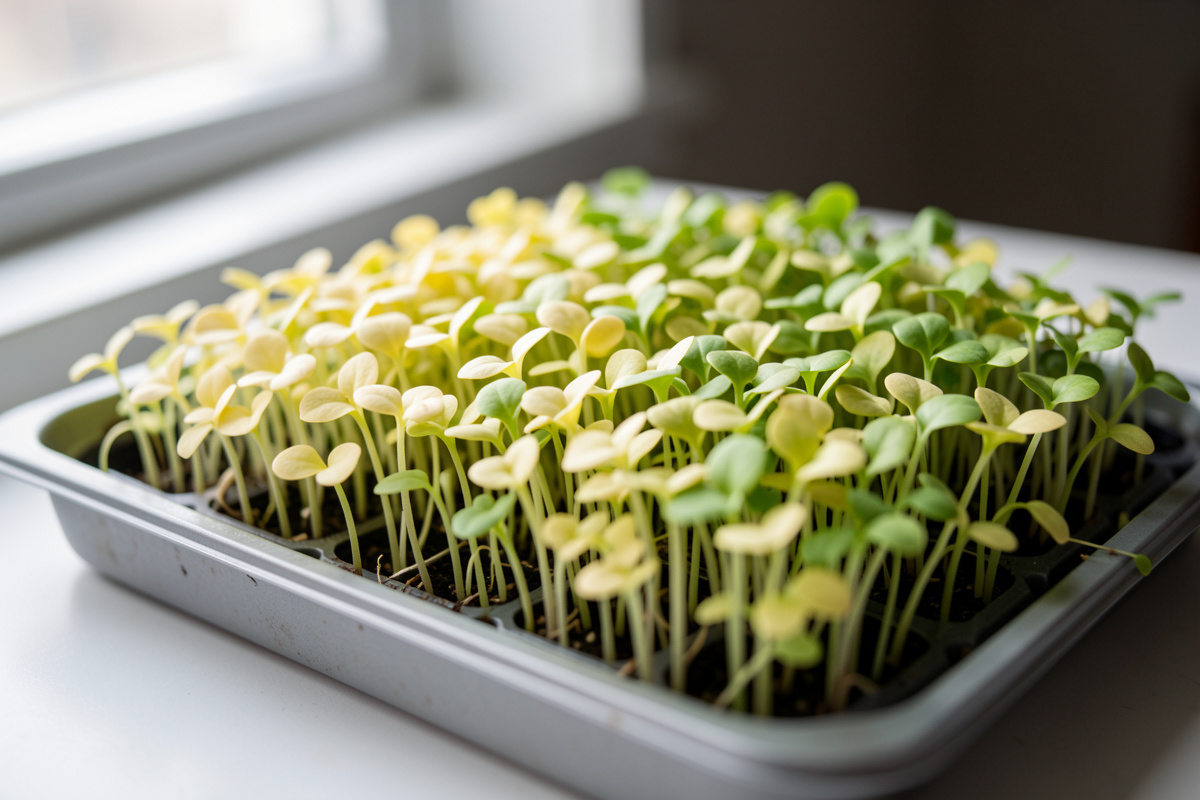
The most common cause of yellow microgreens is simply not enough light after uncovering. During the blackout period the seedlings grow pale because they’re in the dark; they’re supposed to green up rapidly once they hit strong light. If the light they meet is too weak, too far away, or arrives too late, the plants can’t produce enough chlorophyll and stay a washed-out lime-yellow instead of turning deep green.
Chlorophyll is what makes leaves green, and plants build it in response to light. Under the blackout dome, or stacked under a weighted tray, microgreens run pale and yellowish — that’s normal and expected. The moment of truth is uncovering: into strong, close light they green up within a day or two, sometimes within hours on fast crops. Into a dim windowsill or a bar hung too high, they just sit there, pale and stretching. So yellow-and-tall usually travels together, and both point at the same fix — this is the sibling problem to leggy microgreens, and often the same tray has both.
Up here the light shortfall is the default condition half the year. A Swedish winter window gives you a few hours of weak grey light, nowhere near enough to green a tray, which is why I grow microgreens under an LED bar rather than on a sill from autumn to spring. If your greens won’t green up, check the light before you check anything else; what actually matters in a microgreen light is covered in my grow lights for microgreens guide. This is one branch of the wider microgreens troubleshooting guide.
Is Yellow From Overwatering Different?
Yes, and it looks different. Overwatering yellow starts low — the older, lower leaves and the stem base yellow first — and it comes with waterlogged, dark, soggy medium and often a sour or swampy smell. Light-starved yellow is uniform and pale across the whole young canopy with dry-to-normal medium. Bottom-up yellow plus wet, smelly soil means the roots are suffocating.
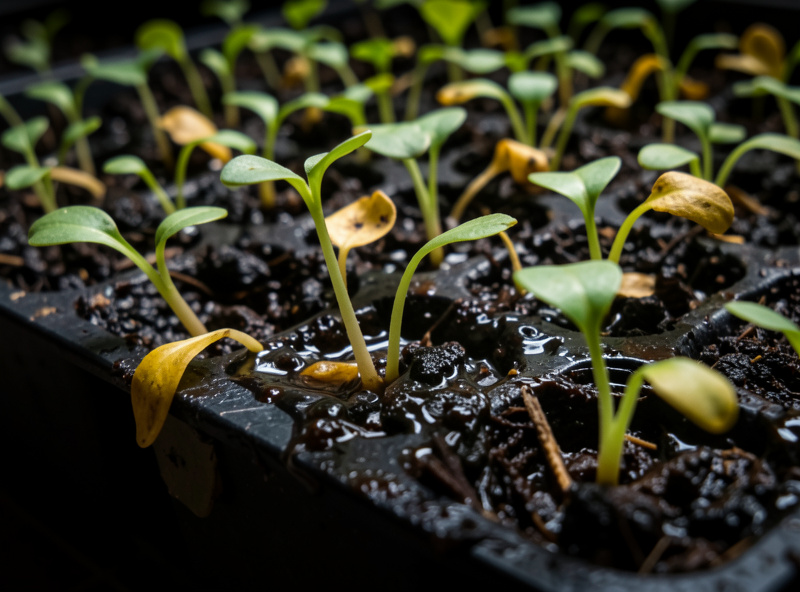
Roots need air as much as they need water. When the medium stays saturated, the air spaces fill and the roots can’t breathe; they start to fail, and the plant pulls resources out of its lower leaves, which yellow and die back. That sour smell is the anaerobic conditions setting in — the same swampy note you’d catch off an overwatered houseplant. If your whole shelf trends soggy, the principles in my guide to the signs of overwatering and how to fix it carry straight over: the roots need to breathe between waterings, tray or pot alike.
The fix is to back off water and switch to bottom-watering. Pour into a tray underneath, let the medium wick up what it needs for 15–20 minutes, then drain the excess so the crop is never standing in water. A canopy and surface that dry between waterings also starve off mold, which loves the exact soggy conditions that cause overwatering yellow — the two problems travel together, and the same restraint fixes both. Good medium helps too; my notes on the best soil for microgreens favor mixes that hold moisture without going to swamp.
When Is Yellow Actually Fine?
Sometimes yellow is exactly what you want. Blanched microgreens and shoots — grown longer in the dark on purpose — come out a buttery pale yellow, and they’re tender and mild by design. “Golden” pea shoots and blanched popcorn shoots are grown this way deliberately. If your crop is pale-yellow because you extended the blackout intentionally, that’s not a problem to solve, it’s a technique.
The distinction is intent and uniformity. Deliberate blanching gives you an even, soft yellow across a healthy, turgid crop that you chose to keep dark. Problem yellow is either accompanied by stretching and weakness (light-starved) or by soggy medium and dieback (overwatered). So before you scramble to fix a yellow tray, ask whether you left it dark on purpose — I’ve caught myself about to “rescue” a tray of pea shoots that was doing exactly what I’d set it up to do.
One thing I won’t do here is make any nutrition claims about color — I grow these to eat and enjoy, and I’ll leave the health angle to people qualified to make those claims. What I can tell you is that deep-green microgreens generally signal a crop that got the light it wanted, and that’s the look most people are after. If you want that reliably, you grow for light. If you want mild and tender, you blanch on purpose. Both are valid; just know which one you’re doing.
How Do You Fix Yellow Microgreens?
Diagnose first, then apply the matching fix. If the medium is dry-to-normal and the whole young canopy is uniformly pale, it’s light — get a strong light close and give it time. If the lower leaves are yellowing, the medium is soggy, and it smells sour, it’s water — back off, bottom-water, and add airflow. Doing the wrong fix makes it worse, which is why the diagnosis comes first.
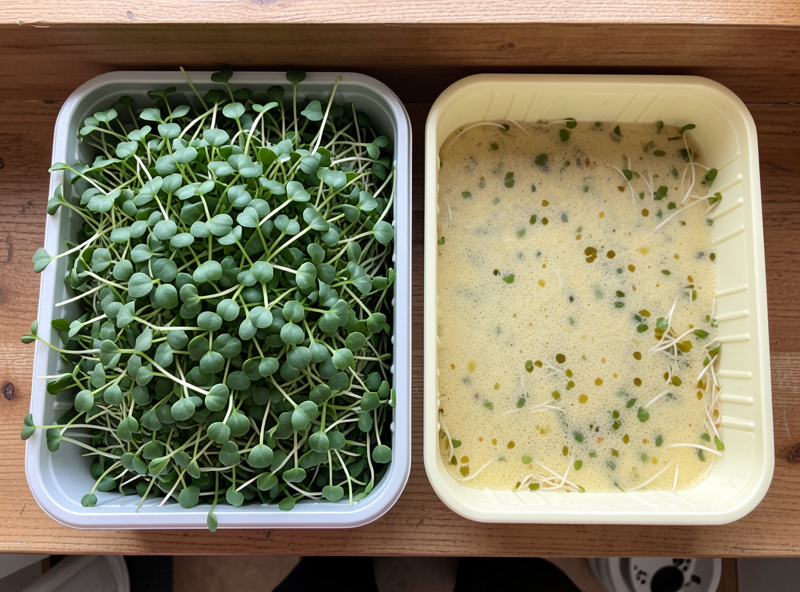
If it’s light: lower your grow light to within 15–25 cm of the canopy and make sure it’s actually running enough hours. Light-starved greens green up fast once the intensity is right — I’ve watched a pale tray of broccoli turn from lime to deep green in a single day after I dropped the bar. Make sure you uncovered on time, too; a tray left blacked out too long starts yellow and has to catch up. My thinking on daily light hours is in how many hours of grow light per day.
If it’s water: stop top-watering immediately, switch to bottom-watering, and get air moving with a small fan so the surface dries between drinks. If the medium is genuinely swampy and sour, the tray may be past saving — waterlogged roots that have started to rot won’t fully recover, and you’re better off composting it and starting clean than nursing a failing tray. Know the line, too: if seedlings are collapsing at the stem base rather than just yellowing, you may be looking at damping off, which is a bin-it fungal problem, not simple overwatering.
The mistake I made most often early on was reaching for water when I saw yellow, because “yellow leaves = thirsty” is drilled into every new grower. On microgreens, more often than not, yellow with soggy soil means the opposite. Slow down, check the medium and the smell, and let the diagnosis pick the fix. A crop that gets close light and disciplined watering rarely goes yellow at all.
For a solid non-commercial reference on light, medium, and moisture in microgreens, the University of Minnesota Extension microgreens growing guide is worth bookmarking, and Johnny’s Selected Seeds keeps a practical guide to growing microgreens with crop-specific notes.
Why are my microgreens yellow instead of green?
Most often they are not getting enough light after uncovering. Microgreens grow pale in the dark blackout period and need strong, close light to green up. Weak, distant, or late light leaves them a washed-out lime-yellow. The other main cause is overwatering, which yellows the lower leaves first.
How do I tell if yellow microgreens are from too little light or too much water?
Light-starved yellow is uniform and pale across the young canopy with dry-to-normal medium. Overwatering yellow starts on the lower leaves and stem base and comes with soggy, dark medium and a sour smell. Check the medium and smell to tell them apart.
Are yellow microgreens safe to eat?
Yellow from too little light or intentional blanching is safe to eat, just milder and paler. Yellow from overwatering with soggy, sour, rotting medium is not something to eat, since the roots are decaying and mold often follows. When in doubt, compost it and start fresh.
Will yellow microgreens turn green again?
Light-starved yellow greens up within a day or two once you give the crop strong, close light. Overwatering yellow does not reverse if the roots have started to rot, so fix the watering for the next sowing rather than expecting a soggy tray to recover.
Can microgreens be yellow on purpose?
Yes. Blanched microgreens grown longer in the dark come out a tender, buttery yellow by design, like golden pea shoots or blanched popcorn shoots. If you extended the blackout deliberately and the crop is healthy and firm, the yellow is intended and not a problem.