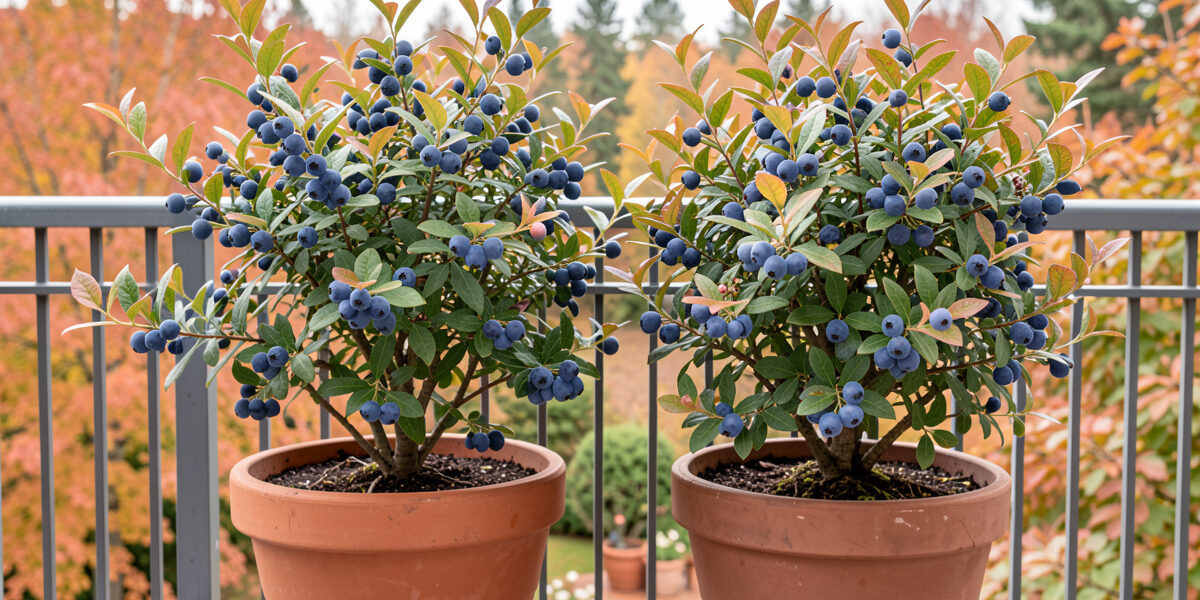
Blueberries are the container fruit a pot was made for. They demand an acidic root zone most garden soil can’t give them, and a pot lets you build exactly that — an ericaceous mix, rainwater instead of tap, and two cultivars for cross-pollination. Get those three right and a blueberry in a 40 cm pot will crop for a decade and shrug off a hard northern winter, because the cold is something blueberries actively want.
That last part is why I rate them so highly up here. Most fruit fights our climate; blueberries lean into it. They need a stretch of winter chill to fruit well, so the long Nordic cold that limits everything else is, for once, on your side. The catch is the soil chemistry, and it’s the thing that quietly kills more potted blueberries than frost ever will. This is how I grow them, and how to avoid the slow starvation that turns a healthy bush yellow and barren.
Why blueberries need an acidic, ericaceous mix
Blueberries are ericaceous plants — the same family habit as rhododendrons and heathers — and they evolved to feed in acidic ground around pH 4.5 to 5.5. In ordinary compost or garden soil, sitting near neutral, they physically can’t take up iron and other nutrients, so the leaves yellow between the veins, growth stalls, and the plant slowly starves while looking like it has a feeding problem. It doesn’t; it has a pH problem. A pot is the cleanest fix because you control the whole root zone from the start.
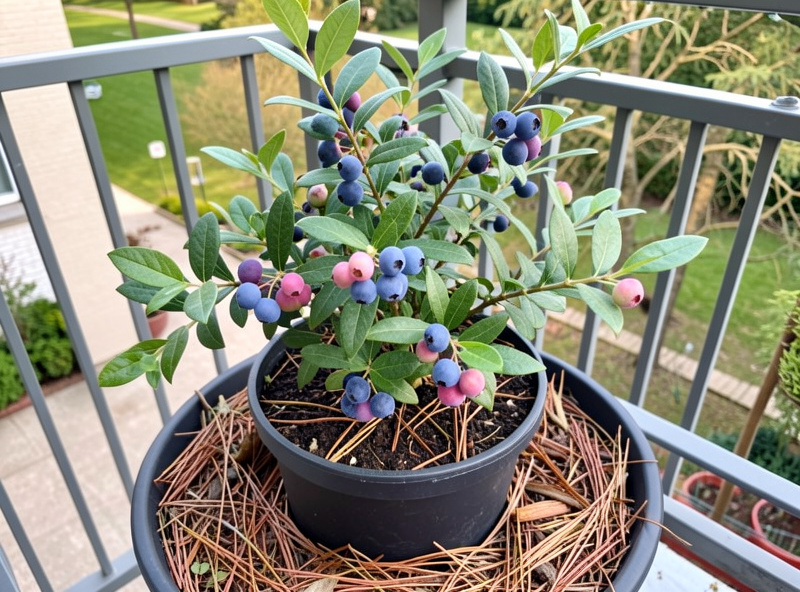
Plant into a dedicated ericaceous (lime-free) compost, not standard bagged mix. I lighten mine with bark and a little pumice for drainage and to keep it open over the years the bush will live there, and I mulch the surface with pine bark or composted conifer needles, which keep the surface acidic as they break down. Skip the general advice in my potting soil guide on this one point — blueberries are the deliberate exception to the all-purpose container mix in the container fruit guide.
Water with rainwater, not tap
This is the detail nobody mentions and everybody needs. Tap water in most areas is slightly alkaline and often hard, and watering an acid-loving plant with it slowly creeps the pot’s pH upward until the bush is back in the same starvation it would have hit in garden soil. Over a season or two of tap water, even a correctly potted blueberry yellows. Collect rainwater and use it as your default — a balcony catches more than you’d think off a small surface into a butt or even a bucket.
If you have no choice but tap water, you can offset it: water with rainwater whenever you have it, top up acidity with an occasional dose of an ericaceous liquid feed, and keep that acidic bark mulch refreshed. A cheap pH meter or test strips let you check the pot now and then rather than guessing — drift is gradual and invisible until the leaves tell you. A simple soil pH meter is worth it for blueberries specifically. As an Amazon Associate I earn from qualifying purchases.
Buy two cultivars for a real crop
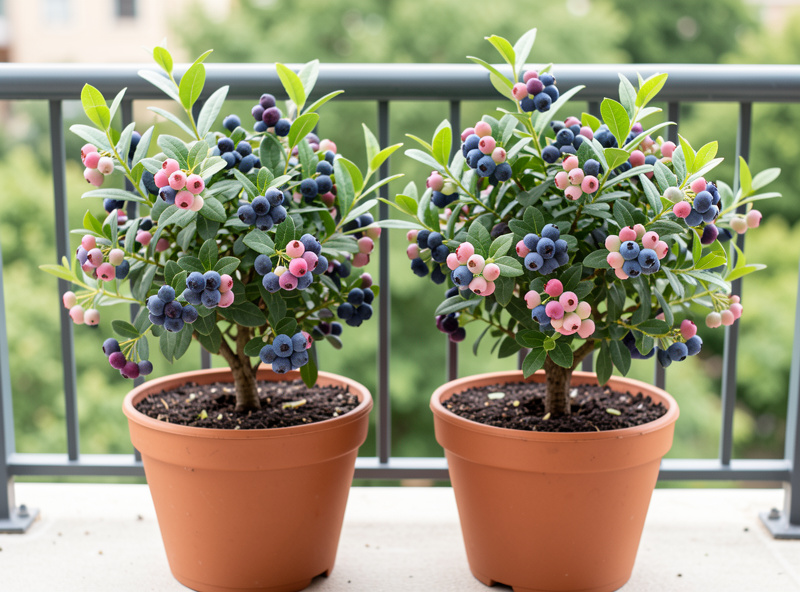
Blueberries are technically self-fertile, so a single bush will set some fruit — but two different cultivars flowering at the same time cross-pollinate and crop dramatically heavier, with bigger berries. Always buy two. For a small space, choose compact or half-high varieties bred for containers rather than the big highbush types that want a metre and a half of spread. Half-high cultivars in particular were bred crossing highbush with the ultra-hardy lowbush blueberry, which makes them both small and superbly cold-tough — exactly the combination a Nordic balcony wants.
Match the two cultivars for flowering time so they actually overlap, and you can stretch your picking by choosing an early and a mid-season variety that still bloom close enough together to pollinate. Bees do the work outdoors, but on a high balcony where few insects visit, a soft brush over the open flowers every couple of days fills the gap — the same hand-pollination habit that pays off across container fruit.
Pots, pruning and the long game
Start a young blueberry in something around 30 cm and pot it on to a final 40 cm-plus container as it grows — a deep pot suits their fibrous, surface-feeding roots, which dislike both drying out and sitting wet. Free drainage with that moisture-retentive ericaceous mix is the balance. Blueberries are slow to build, so expect light crops for the first two or three years while the bush establishes; the reward is a plant that then fruits heavily for many years with little fuss.
Pruning is minimal and only really starts from year three or four: in late winter take out the oldest, twiggiest wood at the base to make room for vigorous young shoots, since blueberries fruit best on wood a couple of years old. Feed in spring with an ericaceous fertiliser as growth starts and ease off by late summer. Net the bush as the berries colour if birds find your balcony, and pick when the berries are fully blue and come away with a gentle roll of the thumb — like strawberries, they don’t sweeten further once picked, so a day or two of patience is worth it.
Overwintering: the easy part
Here’s where blueberries reward the cold-climate grower. They’re genuinely hardy and need winter chill to fruit, so unlike tender container fruit they want to stay outside through the cold. The only real risk is the same one all potted fruit faces — the small, exposed root ball freezing harder than open ground. Group the pots together against a sheltered wall and, in a severe winter, wrap them or sink them in a corner; that’s usually all the protection a hardy half-high blueberry needs. My overwintering guide and frost protection methods cover the wrapping routine. Don’t bring them into a warm room — they need the cold dormancy, and a blueberry kept too warm over winter crops poorly the next year.
Troubleshooting a disappointing bush
When a container blueberry underperforms, the cause is nearly always one of a short list, and they’re worth ruling out in order. Yellowing leaves with green veins is the pH-and-iron starvation already covered — fix the mix and the water. A bush that grows fine but barely fruits is usually either too young (give it to year three) or pollination-starved, so check you have two overlapping cultivars and step in with the brush. Scorched leaf edges and sudden wilting point to drying out, since those surface roots have no buffer in a pot; even moisture is as critical here as it is for strawberries.
One genuinely Nordic problem is a late spring frost catching the open blossom — blueberries flower early, and a hard frost on the flowers means no berries from those trusses. The pot’s mobility is the answer: move it under cover or against a warm wall on a frosty spring night, the same trick I use across the balcony when a clear April night threatens. Birds stripping a ripening bush is the other late-season disappointment; a light net thrown over as the berries colour solves it without poisons or fuss, and it comes off again once you’ve picked.
Frequently Asked Questions
Why are my container blueberry leaves turning yellow?
Almost always a pH problem. Blueberries need acidic soil around pH 4.5 to 5.5, and in ordinary compost or after watering with hard tap water they cannot take up iron, so leaves yellow between the veins. Replant in ericaceous mix, water with rainwater, and mulch with pine bark.
Do I need two blueberry plants to get fruit?
You get some fruit from one, because blueberries are self-fertile, but two different cultivars flowering at the same time cross-pollinate and crop far heavier with larger berries. Always buy two compatible varieties for a small space, choosing compact or half-high types bred for containers.
Can I water blueberries with tap water?
Occasionally, but not as your default. Most tap water is slightly alkaline and slowly raises the pot’s pH until the acid-loving roots can no longer feed, which yellows the leaves. Use collected rainwater whenever possible and offset any tap water with an ericaceous feed and acidic mulch.
How big a pot do container blueberries need?
Start a young plant in about 30 cm and pot on to a final container of 40 cm or more. Blueberries have fibrous surface-feeding roots that dislike both drying out and sitting waterlogged, so a deep pot of free-draining ericaceous mix gives the moisture balance they want.
Are blueberries hardy enough to leave outside in winter?
Yes, and they prefer it. Blueberries need winter chill to fruit well, so they should stay outside through the cold rather than come into a warm room. The only precaution is protecting the exposed pot from freezing solid by grouping the containers against a sheltered wall.
How long until a container blueberry produces fruit?
Expect light crops for the first two or three years while the bush establishes its root system and framework. After that a well-fed blueberry in the right acidic mix fruits heavily for many years, making it one of the most rewarding long-term container fruits.