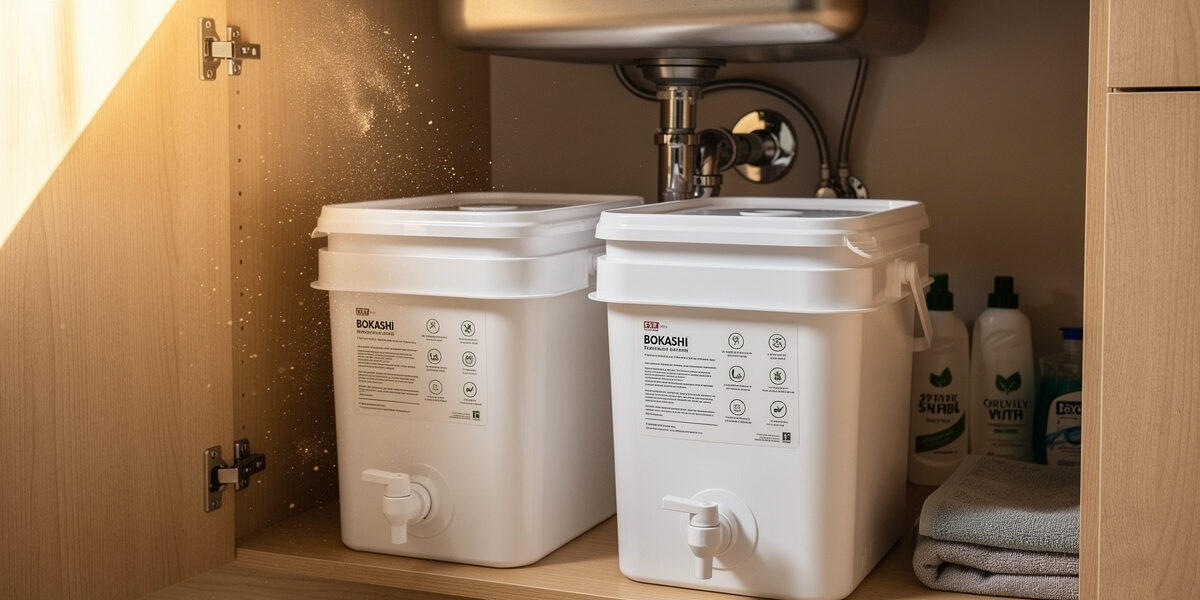
Bokashi composting ferments food waste — meat, dairy, cooked food included — in a sealed 5-gallon bucket using inoculated bran over a 2-week cycle. The pair of buckets I run under my kitchen sink handles everything my worm bin cannot: meat scraps, oily leftovers, citrus peels. The process is anaerobic and odorless because the lid stays air-tight. Output is a fermented pre-compost that needs 2 to 4 weeks in soil to finish, but the bucket itself fits anywhere.
As an Amazon Associate I earn from qualifying purchases.
My bokashi setup is the only reason I can compost the meat and dairy leftovers the worm bin rejects. Bokashi is the only home composting method that accepts meat, fish, dairy, oils, citrus in quantity, onions, garlic, and cooked leftovers. That makes it the best fit for high-meat households, restaurants experimenting with composting, and apartment dwellers who hate the smell of partial-decay vegetable scraps in a worm bin. The trade-off is the burial step: bokashi output is not directly usable on plants. It needs to finish in soil first.
How Bokashi Fermentation Works
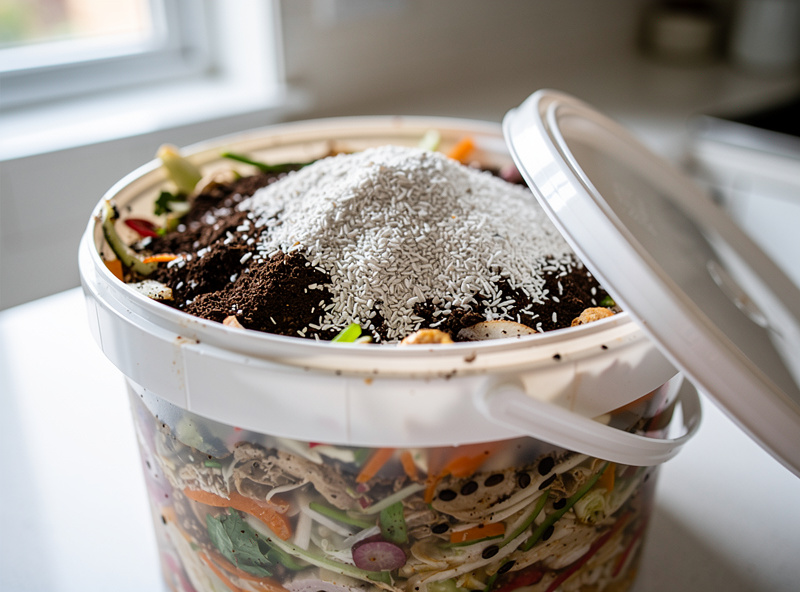
Bokashi is Japanese for "fermented organic matter." The process uses Effective Microorganisms (EM) — a consortium of lactobacillus bacteria, yeast, and phototrophic bacteria — inoculated onto a wheat-bran or sawdust carrier. Sprinkling this bran over food scraps in an air-tight bucket triggers lactic-acid fermentation, the same biological process that produces sauerkraut, kimchi, and yogurt.
Unlike aerobic composting, bokashi does not require oxygen, heat, or turning. The lactobacillus dominate the sealed environment and out-compete putrefactive bacteria that would normally cause rot and odor. The result smells faintly sweet-sour, like pickle brine, never like rotten food.
The fermentation pre-digests the food into a more soil-ready form. As Washington State University Extension puts it, bokashi produces a nutrient-dense pre-compost that is not finished compost and must be buried in soil or added to another compost system to complete its breakdown. Once buried, the pickled biomass breaks down into humus far faster than raw food scraps would in the same conditions. Bokashi is not technically composting — it is acid-fermentation followed by a soil-stage finish.
Setting Up the Two-Bucket System
Indoor bokashi requires two 5-gallon buckets used on rotation: one bucket fills over 2 weeks while the second bucket ferments sealed for 2 weeks. When bucket 1 is full, switch active bucket to bucket 2; bury the contents of bucket 1 after another 2 weeks of sealed fermentation.
Required equipment (one-time, 50 to 90 dollars total):
- Two 5-gallon bokashi buckets with sealed lids and built-in spigots (40 to 70 dollars per pair).
- One 2-pound bag of bokashi bran starter (15 to 25 dollars). Lasts 6 to 8 weeks at average household feeding.
- A press plate or potato masher (5 dollars) to compact food and exclude air.
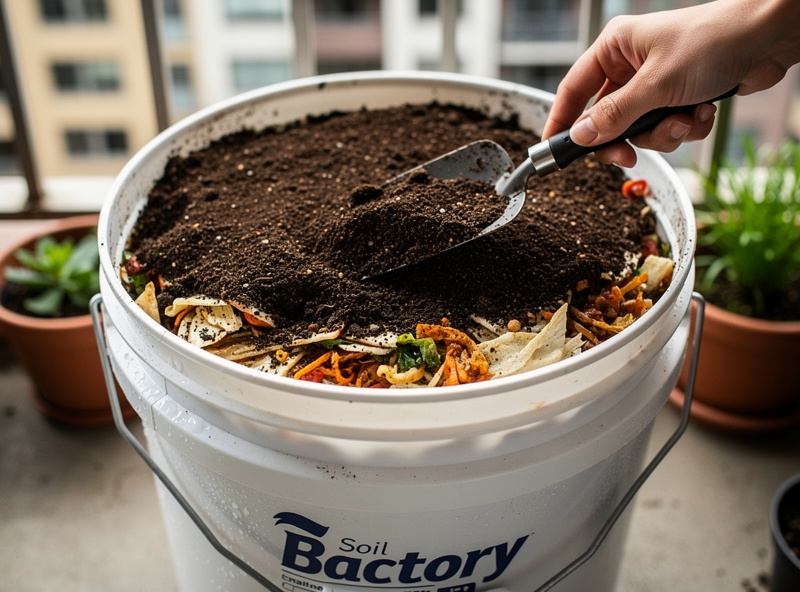
- A 5-gallon "soil factory" bucket of garden soil (free) for indoor finishing if you have no yard.
The buckets sit under a kitchen sink, in a pantry, or in any cabinet. They never need to be in direct sunlight. Temperature 60 to 80°F is optimal — fermentation slows below 50°F and stalls above 90°F.
Daily Feeding Routine
The active bucket fills over roughly 14 days for an average 2-person household. The routine takes 60 seconds per use:
- Add food scraps in a 1 to 2 inch layer on top of the previous batch. Cut large pieces to 1-inch chunks for faster fermentation.
- Sprinkle 1 to 2 tablespoons of bokashi bran evenly over the surface. The bran does not need to cover everything — it just needs to be present.
- Press down with the plate or masher to compress the layer and push out trapped air pockets.
- Seal the lid tight. Air-tightness is critical — any oxygen lets putrefactive bacteria establish and ruin the batch.
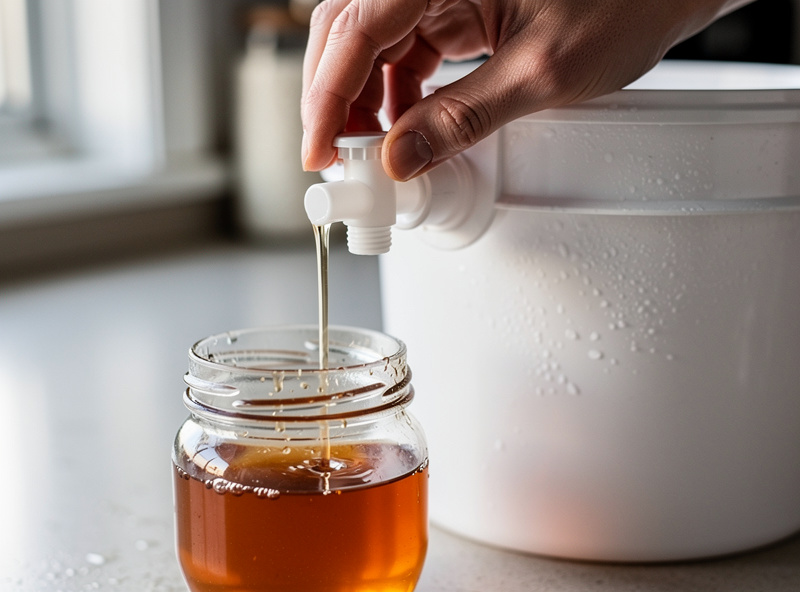
- Drain the bucket spigot every 2 to 3 days. Bokashi tea drains as a byproduct of fermentation and accumulates at the bottom.
The bucket fills when the top of the food layer is within 1 inch of the lid. At that point, seal it for an additional 2 weeks of sealed fermentation, then bury or finish indoors.
What to Do With Bokashi Tea
The liquid that drains from the bucket spigot is bokashi tea — a concentrated extract of lactic acid, fermentation byproducts, and effective microorganisms. It is too acidic to apply directly to plants but has two practical uses:
1. Drain cleaner. Pour 1 cup undiluted bokashi tea down a kitchen or bathroom drain weekly. The lactobacillus colonize the drain biofilm and out-compete the bacteria responsible for slow drains and odors. This is genuinely effective and replaces commercial enzyme drain treatments.
2. Diluted plant feed. Mix 1 tablespoon bokashi tea per gallon of water and apply as a soil drench to outdoor plants. Do not apply to seedlings or houseplants directly — the acidity can burn delicate roots even at high dilution.
Drain the spigot every 2 to 3 days regardless. Bokashi tea is a fermentation byproduct, not optional output. If left in the bucket, it pools and creates anaerobic pockets in the food layer above.
Finishing Bokashi: Burial vs Soil Factory
Fermented bokashi is pickled food, not finished compost. Burying it in soil triggers the second-stage breakdown into humus, taking 2 to 4 weeks depending on soil temperature and microbial activity. Two finishing methods:
Outdoor burial (yard or community garden): Dig a 12-inch trench at least 8 inches deep, dump the bucket contents in, cover with 8 inches of soil. Wait 2 to 4 weeks. Plant directly above. Best for households with any outdoor soil access.
Indoor soil factory (apartment finishing): Layer fermented bokashi 1:1 by volume with garden soil in a 5 to 10-gallon bucket with drainage holes. Stir weekly. Done in 4 to 6 weeks. Output is rich potting soil for houseplants and container gardens. The setup pairs well with the compost bin for small space approach for renters.
Soil factories work because the bokashi feedstock is already fermented — it does not need oxygen or critical mass to finish, just contact with soil microbes. A 5-gallon factory bucket processes one full bokashi bucket every 4 to 6 weeks.
Bokashi vs Other Indoor Composting
| Factor | Bokashi | Worm Bin | Electric Composter |
|---|---|---|---|
| Accepts meat/dairy | Yes | No | Yes (but dries it) |
| Output ready to use | No (burial step) | Yes (castings) | No (dried, needs cure) |
| Cycle time | 2 weeks ferment + 2–4 weeks finish | 3–4 months | 4 hours |
| Setup cost | 50–90 dollars | 40–150 dollars | 400–800 dollars |
| Ongoing cost | Bokashi bran: ~5 dollars/month | None after starter worms | Carbon filter + electricity |
| Energy use | Zero | Zero | 500–800 watts/cycle |
| Maintenance | Daily feeding, drain tea every 2–3 days | Weekly feeding, monthly bedding check | Empty bin, replace filter monthly |
| Best for | Meat/dairy households, renters w/ no yard | Veggie-heavy households, plant lovers | Convenience over output value |
Bokashi and worm bins complement each other. Many indoor composters run both: the bokashi handles meat, dairy, and cooked food, while the worm bin handles vegetable scraps and produces immediately-usable castings. Together they process a household’s complete food waste stream with no exclusions.
Common Bokashi Problems
Bokashi failures cluster around four issues. Each has a clear cause and fix:
White fuzzy mold on top of food layer. Cause: normal — this is mycelium from beneficial fungi and indicates healthy fermentation. Press it back into the bucket and continue. White mold = good.
Black, blue, or green mold. Cause: contamination from putrefactive bacteria, usually from inadequate bran or trapped air. Fix: scoop out the contaminated layer, double the bran rate going forward, ensure better lid seal. If contamination is widespread, dump and restart with a sterilized bucket.
Strong rotten smell (not pickle-sweet). Cause: oxygen leak, inadequate bran, or fermentation temperature too low. Fix: check lid gasket, increase bran to 3 tablespoons per layer, move bucket to a warmer location.
Bucket fills too fast. Cause: producing more food waste than 5-gallon capacity can absorb in 14 days. Fix: add a third bucket to rotation, freeze excess scraps for next batch, or supplement with a worm bin for vegetable matter.
When Bokashi Makes Sense
Bokashi is the right choice when any of these apply:
- Your household generates meat, fish, dairy, or significant cooked-food waste.
- You have indoor or balcony space but no yard for traditional composting.
- You hate the slow visual decay of food scraps in worm bins or open compost.
- You travel often — sealed bokashi buckets pause cleanly during 1 to 4 week absences.
- You already make sauerkraut or kombucha and are comfortable with fermentation.
Bokashi is not the right choice for someone who wants immediately-usable output without an additional finishing step, or someone bothered by the 2-week sealed phase between feeding and burial. For those people, vermicomposting is a better fit — see the worm bin setup guide for the alternative path.
Bokashi is the missing piece in my indoor composting setup — it handles everything else the worm bin rejects, and the two buckets together process a household’s entire food waste stream without a single trip to the garbage disposal. I run a two-bucket bokashi kit on rotation, one fermenting while the other fills, and bury the finished pre-compost in a planter box on the balcony — no yard needed. If you cook with meat, dairy, or oil regularly and want to compost everything indoors, bokashi earns its footprint.
Related Reading
- Home Composting: The Complete Beginner Guide — pillar guide covering all five methods
- Vermicomposting for Beginners — the immediate-output alternative
- Compost Bin for Small Space — bin styles for apartments
- Hot vs Cold Composting — outdoor methods bokashi finishes into
- Best Soil for Houseplants — where finished bokashi soil shines
Why Bokashi Wins Through a Nordic Winter
Bokashi fills the exact gap that a frozen outdoor pile leaves through a Nordic winter. From November through March my balcony compost is a solid block and the outdoor tumbler does nothing, but the bokashi bucket under the sink keeps fermenting everything from coffee grounds to chicken bones at indoor room temperature. It produces a steady stream of pre-compost through the dark months, which I bury in the container soil once the pots thaw in April — the fermented material breaks down within two to four weeks of the soil warming up. Of every method I have tried, bokashi is the only one that runs uninterrupted from November to March without freezing, without needing heat, and without any smell escaping a sealed bucket in a small apartment.
Frequently Asked Questions
What can you put in a bokashi bin?
Almost anything organic: vegetables, fruit, meat, fish, dairy, cooked leftovers, bones (small), citrus peels, onions, coffee grounds, paper towels with food residue. Avoid liquids, large bones, mold-covered food, and inedible inorganic items. Bokashi is the most permissive home composting method.
Does bokashi smell bad?
No. Properly sealed and bran-dosed bokashi smells faintly sweet-sour, like pickle brine or sauerkraut. The fermentation is anaerobic but lactic-acid-driven, not putrefactive. A rotten smell signals oxygen contamination or insufficient bran. The sealed bucket releases zero odor when closed.
How long does bokashi take?
Two weeks of sealed fermentation in the bucket, then 2 to 4 weeks of soil burial or soil-factory finishing. Total cycle from food scrap to plant-ready compost: 4 to 6 weeks. Faster than traditional cold composting (9 to 12 months) but slower than electric composters which dehydrate in hours.
Can I bokashi without a yard?
Yes. Use a soil factory bucket — a 5 to 10-gallon container with drainage holes, layered 1:1 with garden soil. Indoor finishing takes 4 to 6 weeks and produces rich potting soil suitable for houseplants and container gardens. Many apartment composters never bury bokashi outdoors.
What is bokashi bran made of?
Wheat bran or sawdust inoculated with Effective Microorganisms (EM) — a culture of lactobacillus bacteria, yeast, and phototrophic bacteria, plus molasses for initial microbial food. A 2-pound bag costs 15 to 25 dollars and lasts 6 to 8 weeks at average household feeding.
Why does my bokashi have white mold on top?
White fuzzy mold is normal and indicates healthy fermentation — it is mycelium from beneficial fungi colonizing the food surface. Press it back into the bucket and continue feeding. Black, blue, or green mold signals contamination and requires intervention; white mold does not.
Can I add bokashi tea to my plants?
Yes, but only diluted. Mix 1 tablespoon bokashi tea per gallon of water as a soil drench for outdoor plants. Do not apply to seedlings or houseplants — even diluted, the acidity can burn delicate roots. Undiluted bokashi tea works well as a kitchen drain cleaner.