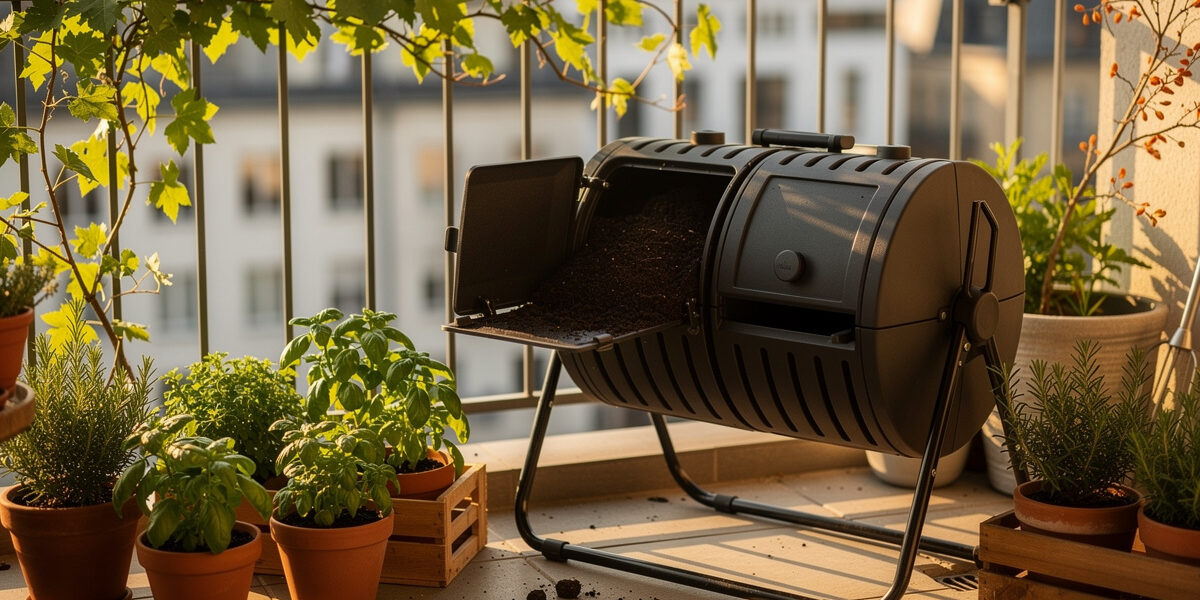
The best compost bin for a small space is a 30 to 60-gallon tumbler for balconies and patios, or a 10 to 15-gallon worm bin for under-sink cabinets. On my balcony, a 30-gallon dual-chamber tumbler fits a 2×2 ft footprint, produces 4 to 6 cubic feet of finished compost every 8 weeks, and has never attracted a single pest in three years of use. Tight space is not a real obstacle — choosing the wrong bin style is.
Most small-space failures come from picking a bin that is too big (no airflow when underfilled) or too small (cannot heat up, full in 3 weeks). The right size matches your weekly food-and-yard-waste output. This guide breaks down the five compost bin styles that actually work in apartments, condos, balconies, patios, and townhouse yards under 200 square feet.
As an Amazon Associate I earn from qualifying purchases.
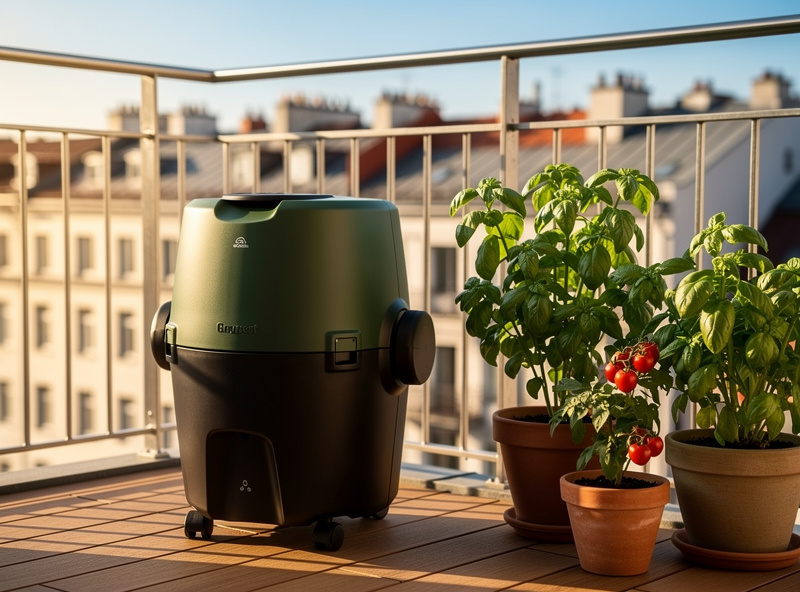
Size the Bin to Your Weekly Output
The single most useful number for choosing a compost bin is your weekly waste volume. Most beginners overestimate this and buy too big. Here is a realistic breakdown:
- Single person, mostly cooking at home: 0.5 to 1 gallon per week (kitchen scraps only).
- Couple, mostly cooking at home: 1 to 2 gallons per week.
- Family of 4: 2 to 4 gallons per week of kitchen scraps, plus seasonal garden waste.
- Single person with a balcony container garden: 0.5 gallon kitchen + 0.5 gallon spent plant matter weekly during growing season.
A 30-gallon tumbler holds roughly 4 weeks of input from a couple. A 10-gallon worm bin handles a single person’s kitchen output indefinitely because worms compress volume as they eat. Buying a 65-gallon tumbler when you only generate 1 gallon a week means it will sit underfilled and never heat up — bigger is not better in the small-space category.
Five Bin Styles That Fit Small Spaces
1. Dual-chamber tumbler (30–80 gallons). Two sealed chambers let one finish while the other fills. Best balance of speed, capacity, and pest exclusion for balconies and patios. Footprint is roughly 2×2 ft. Range: 80 to 250 dollars depending on capacity.
2. Stationary closed bin (Geobin, Earth Machine, FCMP IM4000). 65 to 80 gallons of vertical capacity in a 2.5 ft diameter footprint. No turning capability — slower decomposition (6 to 12 months), but cheap (40 to 80 dollars) and silent. Good for set-and-forget patio use.
3. Stacked-tray worm bin (Worm Factory 360, Urbalive, Subpod). Indoor or balcony use. 2-square-foot floor footprint. Handles 1 to 2 pounds of food scraps per day at full capacity. 60 to 150 dollars. Pairs well with the vermicomposting for beginners guide for setup details.
4. Bokashi bucket pair (5-gallon sealed buckets). Two buckets rotate — one fermenting while you fill the other. Total footprint: under-sink cabinet. Handles meat, dairy, and cooked food that other bins cannot. 40 to 90 dollars. Output requires soil-burial finishing.
5. Stealth pile in a planter (open hot-pile alternative). Use a 30-gallon fabric pot or large planter as a discreet open compost pile on a hidden corner of a patio. Add browns and greens, water occasionally, harvest in 4 to 6 months. Free if you have a spare planter. Best for cold-composting yard trimmings — but note that Washington State University Extension recommends an enclosed, lidded bin for kitchen scraps and keeping meat, dairy, and greasy food out entirely, since those are exactly what draw rodents to an open pile.
Balcony and Apartment Building Rules
Most apartment leases and HOA bylaws permit composting in sealed containers but ban open piles. The rule of thumb that satisfies almost every governing document: if it could leak, smell, or attract pests, it has to be sealed. Tumblers, stacked-tray worm bins, and bokashi buckets all qualify. Open Geobins do not — check your specific bylaws before installing one on a shared balcony.
Practical guidelines that prevent neighbor complaints:
- Keep the bin out of direct sunlight from 11 a.m. to 4 p.m. — heat above 95°F kills worms and can cause tumblers to dry out and stall.
- Use a drip tray under any bin to catch leachate. Tumbler chambers should drain into a removable cup, not directly onto the floor.
- Empty bins below outdoor temperatures of 10°F if the unit is not insulated — frozen contents stop decomposing and can crack plastic walls.
- Store food scraps in the freezer between feedings to prevent fruit fly outbreaks during summer.
- Position the bin at least 3 feet from any door or window the neighbors use.
Indoor Bins for Renters with Zero Outdoor Space
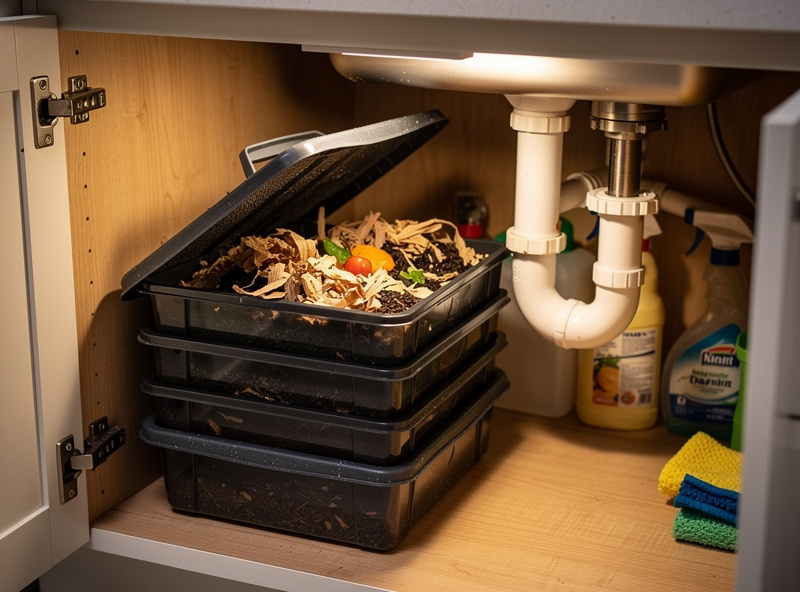
Worm bins and bokashi buckets are the only viable indoor options. Both are odorless when fed correctly. Both fit under a kitchen sink, in a laundry closet, or in a hall cabinet. Neither generates noticeable heat or noise.
Worm bin (vermicomposting): The bin under my kitchen counter produces finished, cured worm castings — usable immediately on houseplants and in container gardens. Capacity scales with bin surface area: a 2 sq ft bin handles 0.5 lb of food per day. Setup is detailed in the vermicomposting beginners guide.
Bokashi: Ferments anaerobically using inoculated bran. Handles meat, dairy, oils, and cooked food — the only home method that does. Output is fermented pre-compost that needs to be buried in soil for 2 to 4 weeks to finish. Renters without yard access can finish bokashi in a 5-gallon "soil factory" bucket of garden soil indoors, then use the result on houseplants.
For renters who want zero-soil-burial output, vermicomposting wins. For households generating significant meat and dairy waste, bokashi wins despite the burial step. Many small-space composters run both: bokashi handles the food worm bins cannot, and vermicomposting handles the high-volume vegetable scraps.
Patio and Townhouse Yard Bins
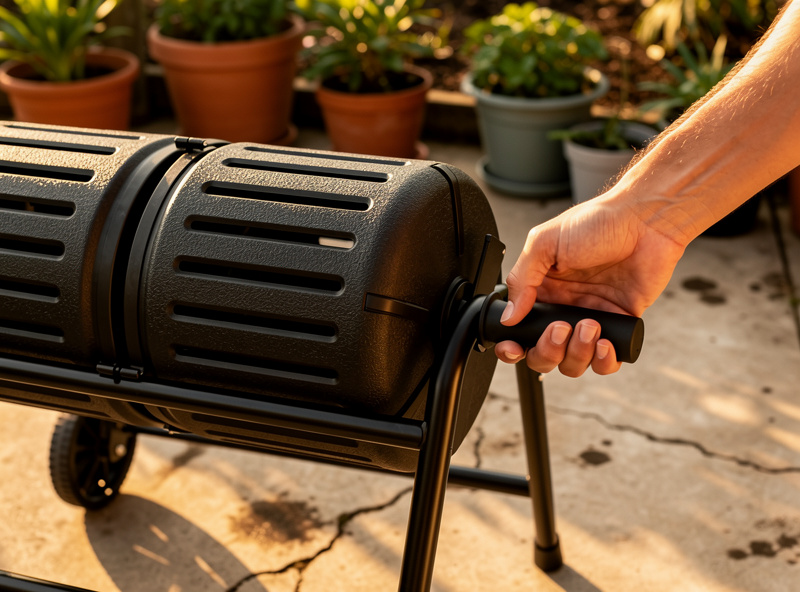
If you have a 50 to 200 square foot outdoor area, a tumbler is almost always the right answer. The one on my balcony is a dual-chamber tumbler — I feed one side for 3 to 4 weeks, then switch chambers and let the first side finish. The sealed lid has kept out every pest that visits the balcony garden, and the handle turn takes about 15 seconds.
Tumblers solve the three biggest problems with traditional piles in tight spaces: pest exclusion (sealed lid), turning ergonomics (crank handle vs pitchfork), and visual neutrality (dark plastic blends into corners).
The two most useful tumbler features for small spaces:
- Dual chambers: Stop adding to one side and let it finish (3 to 6 weeks) while the other side fills. Without this, you constantly add fresh material to almost-finished compost and reset the clock.
- Internal aeration bars: Spike-shaped fins inside the chamber break up clumps as you turn. Tumblers without these tend to ball up wet material into anaerobic clumps.
Avoid spinning ball-style tumblers (like the "EnviroBall") — they take up more floor area when rolled, are awkward to load, and produce uneven results. Stick with horizontal-axis tumblers on a stand.
Small-Space Specific Problems
Three problems hit small-space composters more often than backyard composters. Each has a clear fix:
Bin fills before contents finish. Cause: bin too small for output, or single chamber so fresh and finishing material mix. Fix: switch to a dual-chamber tumbler, or freeze excess scraps until the active batch finishes. A second 5-gallon bucket as overflow works as a stopgap.
Ammonia smell on a balcony. Cause: too many fresh greens (kitchen scraps) without enough browns. Fix: keep a stash of shredded cardboard or dry leaves nearby — add 1 cup browns for every cup of food scraps you add. The complete home composting guide has the full carbon-to-nitrogen breakdown.
Tumbler stops heating up in cold weather. Cause: small bins lose heat fast through plastic walls in temperatures below 40°F. Fix: switch to a worm bin indoors during winter, or wrap the tumbler with reflective bubble-wrap insulation. A 30-gallon tumbler typically pauses below 35°F regardless.
What It Costs to Start in a Small Space
Realistic startup costs for the most common small-space configurations:
- DIY worm bin (cheapest indoor option): 8 dollars (10-gallon plastic tote) + 30 dollars (1 lb red wigglers) + free bedding from shredded paper = 38 dollars total.
- Bokashi pair: 60 dollars (two 5-gallon kits with bran starter).
- Stacked-tray worm bin: 90 to 130 dollars including starter worms.
- Dual-chamber tumbler: 100 to 200 dollars depending on capacity.
- Closed stationary bin (Geobin): 40 to 60 dollars.
The 38-dollar DIY worm bin is the cheapest viable entry point for any apartment dweller. It works as well as a 130-dollar Worm Factory for the first 6 to 12 months — by the time the bin maxes out, you will know whether to upgrade.
The number one mistake I see small-space composters make is buying a bin that is too big. A 65-gallon tumbler on a 50-square-foot balcony is a storage problem, not a solution. If I were outfitting a small apartment balcony from scratch today, I would buy a 30-gallon dual-chamber tumbler and a 10-gallon worm bin for the kitchen — the tumbler handles yard and plant waste, the worm bin handles daily kitchen scraps, and together they cover everything a two-person household throws at them.
Related Reading
- Home Composting: The Complete Beginner Guide — pillar guide covering all five composting methods
- Vermicomposting for Beginners — full worm bin setup walkthrough
- Apartment Composting: 4 Indoor Methods — zero-yard methods for renters
- Compost Tumbler vs Pile — choosing the right outdoor system
- Bokashi Composting Indoor — fermentation method for meat and dairy
- Balcony Gardening Complete Guide — broader context for balcony growing
- Container Gardening Complete Guide — what to grow with the compost you make
- Urban Gardening Beginners Guide — overall starting point for urban food production
- Best Soil for Houseplants — using compost on indoor plants
The Balcony Constraint: Weight and Winter Freezing
A small-space compost bin on a balcony faces two constraints the homestead channels never mention: weight limits and winter freezing. A large bin full of wet compost can push past the safe point load for many apartment balconies, and up here it also freezes solid for months on end. I run a smaller bin that stays a manageable weight even when full, and I stop adding new material in October so the last batch finishes before the freeze locks everything up until spring. The worm bin indoors then carries the kitchen-scrap load through the dark months while the balcony bin sits dormant.
Frequently Asked Questions
What is the smallest compost bin that actually works?
A 10-gallon DIY worm bin or a 5-gallon bokashi bucket are the smallest viable options, both fitting under a kitchen sink. Outdoor tumblers under 30 gallons rarely heat up enough to compost quickly. For balconies, a 30-gallon dual-chamber tumbler is the practical floor.
Can I compost on an apartment balcony without smell?
Yes. A sealed dual-chamber tumbler, stacked-tray worm bin, or bokashi bucket produces no detectable odor when fed correctly. Open piles and unsealed Geobins can leak smells in summer heat — most apartment leases prohibit open composting for this reason. Stick with sealed systems.
Which compost bin is best for a single person?
A 10-gallon worm bin processes a single person’s kitchen scraps indefinitely at a cost of 38 dollars to set up. For someone with a balcony, a 30-gallon dual-chamber tumbler handles kitchen plus container-garden waste with a 4-week finishing cycle.
Do small compost bins attract pests?
Sealed bins (tumblers, worm bins, bokashi buckets) do not attract rats, raccoons, or insects when used correctly. Open small bins like Geobins can attract fruit flies if food scraps sit on the surface. Burying scraps under 4 inches of browns prevents fly access in any open bin.
How long does compost take in a small bin?
A 30-gallon dual-chamber tumbler produces finished compost in 6 to 8 weeks per chamber. Worm bins produce castings in 3 to 4 months. Bokashi ferments in 2 weeks plus 2 to 4 weeks of soil burial. Closed stationary bins without turning take 6 to 12 months.
Can I compost in winter on a balcony?
Below 35 degrees Fahrenheit, small outdoor tumblers stop heating and pause decomposition. Worm bins must come indoors below 55 degrees. The simplest winter solution for balcony composters is moving food scraps into a freezer-stored bag and resuming the bin in spring.
Is bokashi or worm bin better for a tiny apartment?
Worm bins produce immediately usable castings with no burial step — best for renters with no soil access. Bokashi handles meat, dairy, and cooked food but requires soil burial to finish. Many apartment composters run both: bokashi for restricted foods, worm bin for high-volume vegetable scraps.