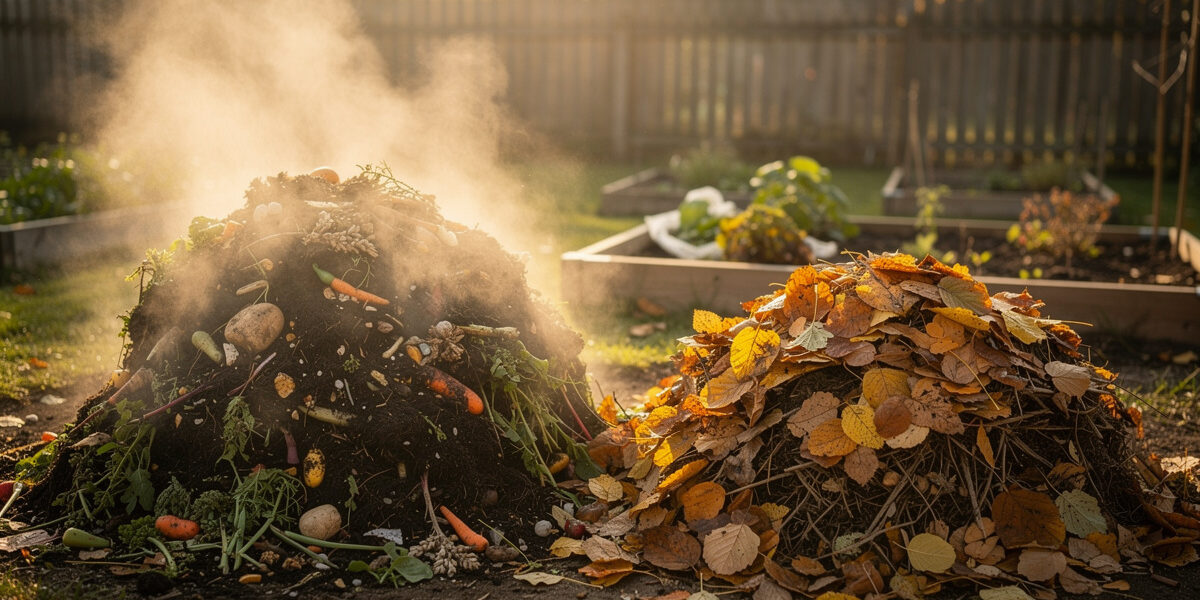
Hot composting finishes in 8 to 12 weeks at 130–160°F, while cold composting takes 9 to 12 months at ambient temperature. The hot pile I run on my balcony kills weed seeds and pathogens; the cold pile I keep in the corner of the yard does not. The end product is identical — same humic acids, same nutrient content — but the labor difference is the decision point for every small-space grower.
Choose hot composting if you have weekly yard waste, can build a 3×3×3 ft minimum pile in one go, and want compost in time for spring planting. Choose cold composting if you generate material slowly, hate turning piles, and are willing to wait a full year. Both methods produce excellent compost — the wrong choice for your lifestyle is what causes most home composting failures, not the method itself.
As an Amazon Associate I earn from qualifying purchases.
The Quick Answer: Which to Choose
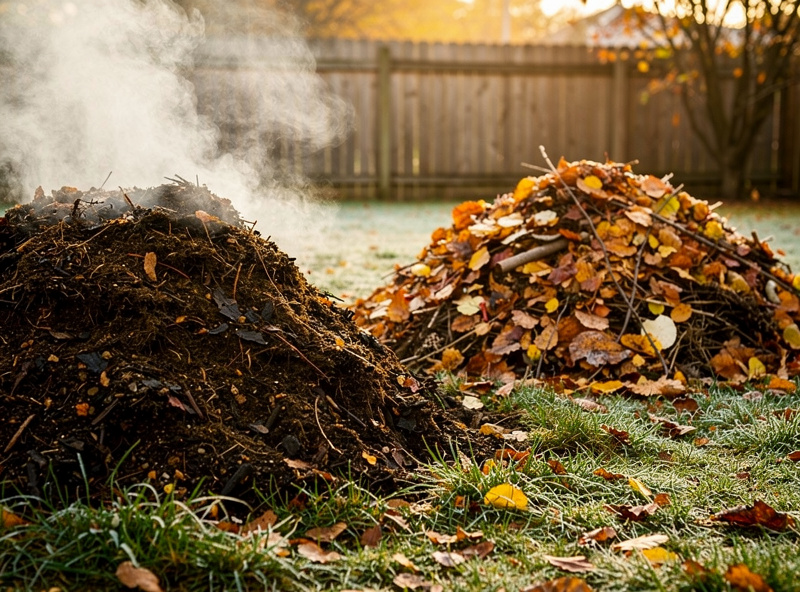
For most urban gardeners with limited yard waste and slow weekly food scrap accumulation, cold composting is the realistic option. Hot composting requires building a full 3×3×3 ft pile in a single day from accumulated material — a constraint that traps beginners who try to build one piece at a time over several weeks.
If you stockpile fall leaves through winter, save kitchen scraps in the freezer, and gather garden trimmings in spring, you can hit the critical mass for one or two hot piles per year. Otherwise, cold composting is more honest about how most home gardeners actually accumulate organic material.
How Hot Composting Works
Hot composting harnesses thermophilic bacteria — heat-loving microbes that thrive between 104°F and 160°F. These organisms break down organic matter 4 to 10 times faster than the mesophilic bacteria active at room temperature. The challenge is keeping the pile in the thermophilic range long enough to do the work.
Three conditions are required simultaneously:
- Critical mass. A pile must be at least 27 cubic feet (3×3×3 ft) to insulate its own core. Smaller piles bleed heat to the surrounding air faster than microbes can produce it.
- Carbon-to-nitrogen ratio between 25:1 and 35:1. Outside this range, microbes either run out of nitrogen (too high C:N) or volatilize it as ammonia (too low C:N). The home composting guide covers C:N math in detail.
- Wrung-sponge moisture and weekly oxygen. Microbes need water and air. A pile that dries out below 40% moisture stalls. A pile that compacts and goes anaerobic stinks of rotten eggs.
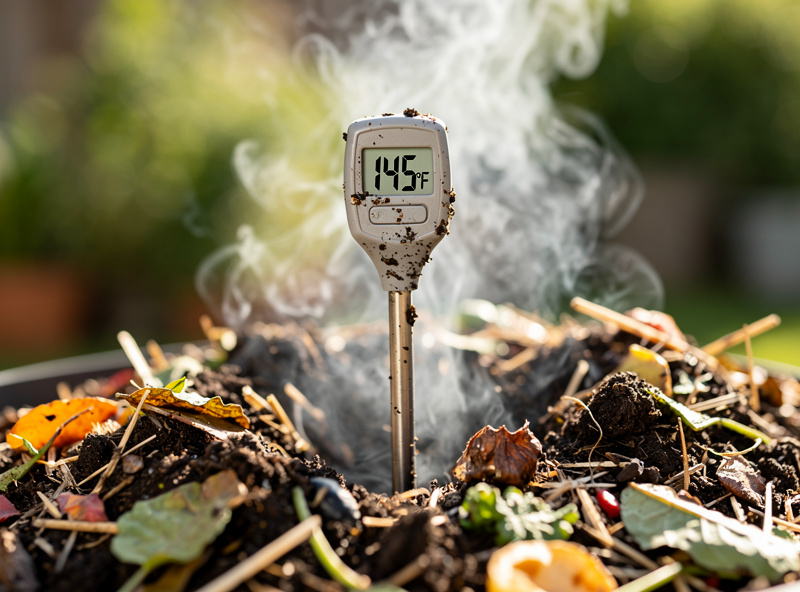
According to NC State Extension, a pile must exceed 131°F to kill most human and pet pathogens and top 145°F to destroy most weed seeds — which is exactly why the sustained heat of a proper hot pile matters. When all three conditions hold, a freshly built pile reaches 140°F within 48 to 72 hours. The thermophilic phase lasts 2 to 4 weeks, then drops as easily-decomposed material is consumed. A two-week curing phase at ambient temperature finishes the compost. Total: 8 to 12 weeks from build to harvest.
Hot Composting Schedule
- Day 0: Build the full 3×3×3 pile in one session. Layer 4-inch bands of browns, greens, and a sprinkle of finished compost.
- Day 4: Pile reaches 140–160°F. First turn — move outside material to center, center material to outside.
- Day 8: Second turn. Pile may still be 130–150°F.
- Day 14: Third turn. Temperature begins dropping as easy carbohydrates are consumed.
- Day 21: Optional fourth turn. Material is 50% reduced in volume.
- Week 8–12: Pile cooled to ambient. Compost is dark, crumbly, smells like forest floor.
How Cold Composting Works
Cold composting relies on the mesophilic microbes that decompose organic matter at temperatures below 100°F. These are the same microbes that drive forest-floor decomposition, just slower because there is no managed pile insulation. Cold piles never heat above ambient air temperature for any sustained period.
The main advantage is operational simplicity: add material when you have it, harvest when it is finished. No critical-mass requirement, no turning schedule, no thermometer. The trade-off is time — most cold piles take 9 to 12 months for the average backyard size, sometimes 18 months in cold climates.
Cold piles do not kill weed seeds reliably. Anything you put in that has gone to seed will likely sprout in the finished compost. Cold piles also do not kill plant pathogens — never cold-compost diseased plant material.
Cold Composting Schedule
- Ongoing: Add browns and greens whenever you generate them. Keep approximately 2 parts browns to 1 part greens by volume. Bury food scraps under 4 inches of browns to discourage flies.
- Once a quarter: Optional pile fluffing with a pitchfork to add air and prevent anaerobic compaction. Skip entirely if you prefer.
- Month 9–12: The bottom of the pile is finished compost. Dig out the bottom layer. Top of pile becomes the new pile base.
Method Comparison Table
| Factor | Hot Composting | Cold Composting |
|---|---|---|
| Time to finish | 8–12 weeks | 9–12 months |
| Minimum pile size | 27 cubic feet (3×3×3) | 9 cubic feet |
| Peak temperature | 130–160°F | Ambient |
| Weed seed kill | Yes (sustained 145°F+) | No |
| Pathogen kill | Yes (sustained 131°F+) | No |
| Turning required | 3–4 turns over 21 days | None (or 1× quarterly) |
| Build approach | All at once | Add as generated |
| Output quality | Identical to cold | Identical to hot |
| Volume reduction | 50–60% | 40–50% |
| Best for | Yards with bulk waste, time pressure | Slow accumulation, low effort |
Both methods produce indistinguishable finished compost. Lab analysis of organic matter, pH, and macro-nutrient content shows no consistent difference between hot and cold compost made from the same input materials. The only meaningful difference is what survives the process — weed seeds and pathogens get through cold piles but not hot ones.
When Hot Composting Is Worth the Effort
Hot composting earns its labor in three specific situations:
1. You have weed-seed contamination concerns. If your yard waste includes seed-bearing weeds, grass clippings from a lawn that has gone to seed, or invasive plant material, only hot composting kills the seeds reliably. Cold-composted weed seeds will sprout from your garden beds for years.
2. You compost diseased plant material. Late blight on tomatoes, powdery mildew on cucurbits, fungal diseases — these survive cold composting and reinfect next year’s plants. Sustained temperatures above 140°F kill them. (Better: do not compost diseased material at all. But if you must, hot only.)
3. You need finished compost on a schedule. Hot composting in early spring produces compost ready by early summer for top-dressing established beds. The 8–12 week cycle aligns with growing-season needs in a way the 9–12 month cold cycle does not.
Outside these three cases, hot composting is mostly an investment of effort for a faster timeline. Whether that is worth it is a personal call — in my own setup, I run the hot pile on my balcony from April through October for weed-free finished compost, and the cold pile in the corner handles the overflow year-round without any turning.
When Cold Composting Wins
Cold composting is the right choice when any of these apply:
- You generate small amounts of material weekly — not enough to build a 3×3 pile in one session.
- You are unwilling to turn piles weekly with a pitchfork.
- You have year-round patience and good winter material storage.
- You compost only non-seed, non-diseased material (kitchen scraps, paper, leaves, grass clippings before seeding).
- You want the lowest possible time investment per pound of finished compost produced.
Most CityRooted readers fall into the cold-composting bucket. The fantasy of a perfect 140°F hot pile is appealing, but the reality of building a 27-cubic-foot pile from scratch in one weekend is harder than it looks. A small backyard with 3 trees and a vegetable bed often produces less than half that volume in usable material per year.
The Hybrid Approach
Many backyard composters run both methods at once: a hot pile for spring yard cleanup and any seed-contaminated material, plus a cold pile or tumbler for weekly kitchen scraps. The hot pile fires once or twice per year when material accumulates; the cold pile chugs along year-round. This gives you the benefits of hot composting (weed-seed kill, faster output) without forcing every banana peel through a 3×3×3 thermophilic process.
For balcony and apartment composters, the hybrid is usually a tumbler (semi-hot, 6–8 weeks) plus a worm bin (3–4 months) — different methods covering different waste streams. The detailed setup for tight spaces is in the compost bin for small space guide.
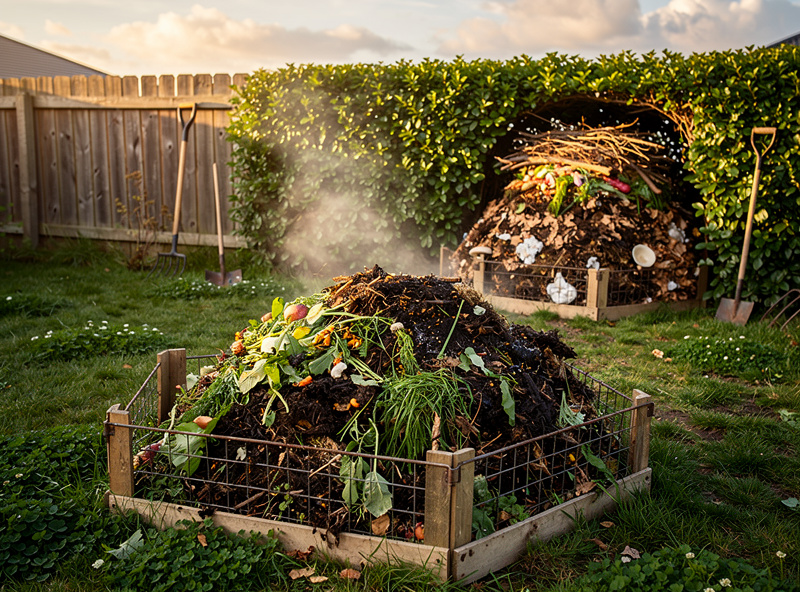
For most apartment and balcony gardeners, the hybrid approach wins: run a hot pile on the balcony during the warm months when material piles up, and let a cold Geobin or fabric pot handle the overflow year-round. The hot pile I run reaches 140°F within 3 days during summer and produces usable compost by the time the fall leaf drop arrives — that is the rhythm I have settled into after years of trial and error. If you are starting from zero, begin with cold composting in a cheap bin and upgrade to a tumbler when you want faster turnaround.
Related Reading
- Home Composting: The Complete Beginner Guide — pillar guide covering all five methods
- Compost Bin for Small Space — bin styles for apartments, balconies, and tight yards
- Vermicomposting for Beginners — the indoor alternative to both hot and cold
- Soil and Compost: Complete Guide for Gardeners — broader soil context
- Best Compost for Vegetable Garden — when homemade is not enough
- Best Soil for Raised Beds — the most common destination for finished compost
Why Hot Composting Wins in a Short Season
In a Nordic climate, speed is the limiting factor. With only about 16 frost-free weeks, a compost pile that needs a full year to finish is out of step with the growing calendar — the batch you start in May does not mature until well into the following season. A hot pile that reaches around 55°C in its first week finishes in 8 to 10 weeks, which means I can run one batch from May through July and a second from August into October if the weather holds. That is the real argument for putting in the extra turning effort up north: cold composting is lower work, but a short season rewards the method that delivers usable compost before the frost returns.
Frequently Asked Questions
Is hot or cold composting better?
Neither is universally better. Hot composting is faster (8 to 12 weeks vs 9 to 12 months) and kills weed seeds and pathogens. Cold composting is lower effort with no critical-mass requirement. Both produce identical finished compost. Choose based on your time, space, and material flow.
Do you have to turn a hot compost pile?
Yes — at least 3 times in the first 21 days. Turning re-oxygenates the pile and brings outside material to the heat in the center. A pile that is not turned will heat once, then go anaerobic and stink. Cold piles can skip turning entirely.
Can a small pile be a hot compost pile?
Not reliably. Below 27 cubic feet (3 by 3 by 3 feet), a pile loses heat to the surrounding air faster than microbes can produce it. Some insulated tumblers reach 130 degrees Fahrenheit at 60 gallons, but unenclosed piles smaller than 3 by 3 by 3 stay cool.
What temperature does a hot compost pile need to reach?
A target of 130 to 160 degrees Fahrenheit sustained for at least 3 days kills weed seeds and most plant pathogens. Above 165 degrees kills beneficial microbes — turn the pile to cool it. Below 110 degrees is not technically thermophilic and will not kill weed seeds.
Does cold compost kill weed seeds?
No. Cold composting never reaches the 145-degree-Fahrenheit threshold required to destroy most weed seeds. Weeds composted cold will sprout when the finished compost is applied to garden beds. For weed-seed-contaminated material, hot composting is required.
Why is my hot compost pile not heating up?
Three causes: pile too small (below 3 by 3 by 3 feet), too dry (below wrung-sponge moisture), or too high in carbon (not enough greens). Add fresh grass clippings or coffee grounds, water to wrung-sponge dampness, and turn. The pile should reach 130 degrees within 72 hours of these fixes.
Can I switch from cold to hot composting mid-pile?
Yes, by adding enough fresh greens (grass clippings, coffee grounds) to drop the C:N ratio into the 25 to 35:1 range, watering to wrung-sponge moisture, and turning. If the pile reaches 3 by 3 by 3 feet of material with these adjustments, it will heat up within 72 hours.