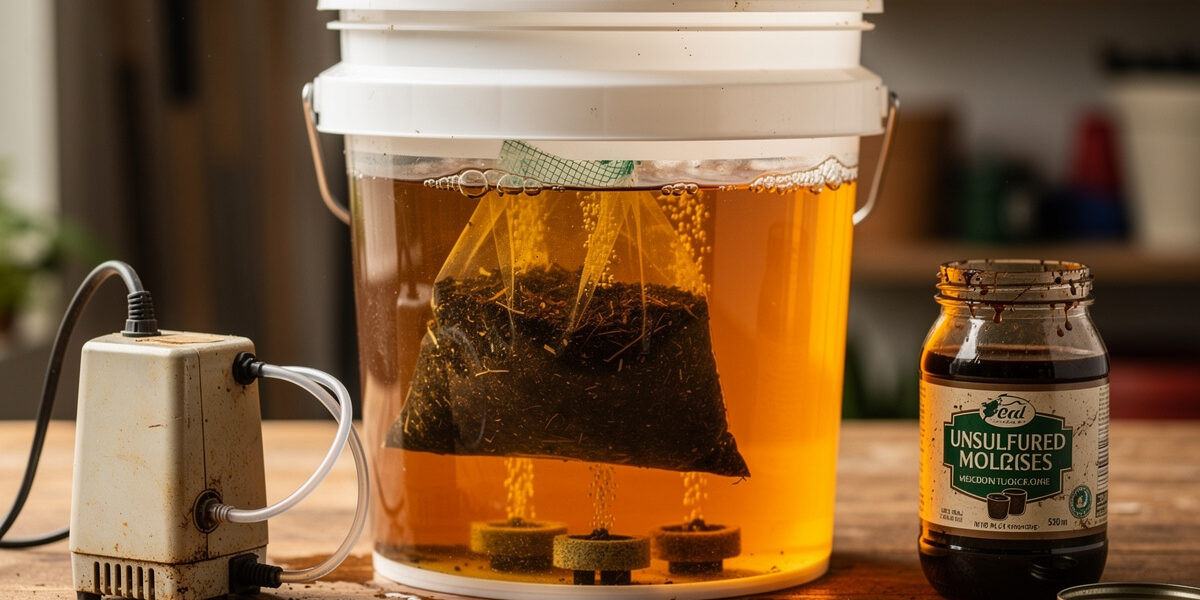
To make compost tea, steep 1 cup of finished compost in 5 gallons of dechlorinated water with 1 tablespoon of unsulfured molasses for 24 to 48 hours, aerating with an aquarium pump the whole time. The molasses feeds beneficial bacteria, the aeration prevents anaerobic conditions, and the result is a microbe-rich liquid fertilizer with 10 to 100 times the bacterial count of the source compost. Apply within 4 hours of brewing for maximum microbial activity, undiluted as a soil drench or 1:5 diluted as a foliar spray.
Compost tea is one of the most over-promised techniques in home gardening. Marketed as a miracle cure-all, the actual evidence shows modest, real benefits: 5 to 15% yield increases in vegetable crops, faster transplant recovery, and noticeable suppression of foliar fungal diseases when applied as a spray. It is not a substitute for finished compost itself — it extends what your compost can do, not replaces it.
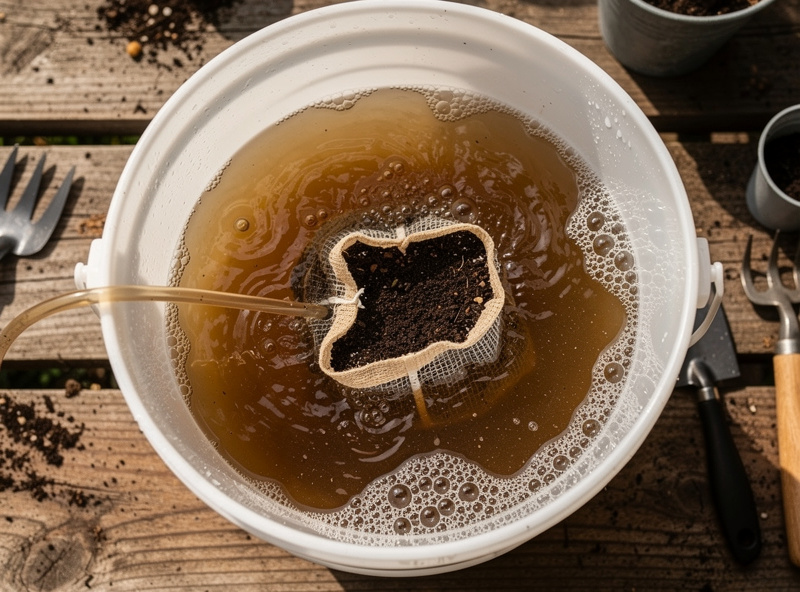
Compost tea sounds like garden mysticism but it’s really just simple microbiology you run in a bucket — and I brew a batch most weeks through the growing season to give my container plants a living boost. Steep finished compost in aerated, dechlorinated water with a little molasses for a day or two and you get a microbe-rich liquid that feeds the soil life, not just the plant. Here’s the exact setup, the recipe, how to apply it, and an honest note on what it does and doesn’t do.
As an Amazon Associate I earn from qualifying purchases.
What Compost Tea Actually Is
Compost tea is a water extract of finished compost, brewed with added oxygen and food sources to multiply the beneficial bacteria, fungi, protozoa, and nematodes that already live in the compost. The brewing process pulls those microbes off the solid compost and into suspension, where they can be sprayed or poured onto plants and soil.
The two recognized types of compost tea are aerated (ACT) and non-aerated (NCT). Aerated tea uses an air pump to keep oxygen levels high during brewing — this prevents pathogens from establishing and produces a microbial community dominated by aerobic bacteria. Non-aerated tea is just compost in water, which can go anaerobic and produce both beneficial and harmful organisms unpredictably. Modern recipes always specify aerated.
The microbial multiplication is real and measurable. Lab counts of bacteria from properly brewed ACT show 10 to 100x increases over the source compost on a per-gram basis. The biological activity in a fresh batch peaks at 24 to 36 hours, then declines sharply as microbes consume the available food and oxygen.
Equipment You Need
- 5-gallon bucket (food-grade). Free if you scavenge from a bakery; 5 dollars new.
- Aquarium air pump rated for 10+ gallons (15 to 30 dollars). The dual-outlet types sold for fish tanks work fine.
- 2 to 4 airstones (3 to 8 dollars total). More airstones = better aeration = better tea.
- Mesh paint-strainer bag or pantyhose (2 to 5 dollars) to hold the compost so it does not clog your sprayer.
- Unsulfured blackstrap molasses (5 dollars per quart, lasts months). Sulfured molasses kills microbes — read the label.
- Dechlorinated water. Tap water left in an open bucket for 24 hours dechlorinates naturally; or use rainwater or well water directly.
Total cost: 30 to 50 dollars for a setup that lasts years. Compost tea brewers are also sold as commercial units for 100 to 800 dollars, but the DIY bucket setup produces equivalent results for home garden volumes.
The Standard Recipe
- Fill the 5-gallon bucket with 4 gallons of dechlorinated water. Leave 1 gallon of headspace for foam.
- Drop in the airstones connected to the air pump. Turn on the pump.
- Place 1 to 2 cups of finished compost (or worm castings, which make an even better tea) in the mesh strainer bag. Tie it shut. Submerge in the water with a string tied to the bucket rim so you can retrieve it.
- Add 1 tablespoon of unsulfured molasses. Stir to dissolve. The molasses is microbial food — it accelerates bacterial multiplication.
- Optional additions based on goal: 1 tablespoon kelp meal (broader microbial diversity), 1 cup worm castings (higher fungal counts), 1 tablespoon fish hydrolysate (faster bacterial growth).
- Brew for 24 to 36 hours at 65 to 75°F. Below 60°F brewing slows; above 80°F it goes anaerobic faster. Stir gently every 8 hours if you remember.
- Strain and apply within 4 hours. Microbial counts drop fast once aeration stops. Cleaning the brewer immediately is critical — biofilm builds up and contaminates the next batch.
The finished tea smells faintly earthy and yeasty, like fresh bread dough. A sour, alcoholic, or rotten smell means the tea went anaerobic — discard it on the lawn or in an outdoor compost pile, never on garden plants. Fresh tea has visible foam from the aeration and a deep tan color.
How to Apply Compost Tea
Two application methods cover almost all uses, with different dilution rates:
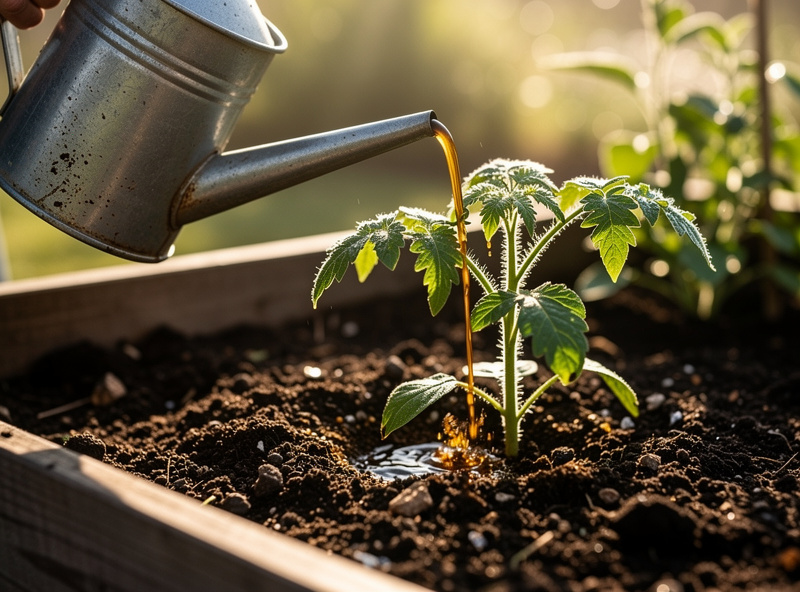
Soil drench (undiluted): Pour 1 to 2 cups of fresh tea per square foot of garden bed at the base of plants. Best applied early morning or evening when temperatures are cool. Re-apply every 2 to 4 weeks during the growing season. Targets soil microbiology directly.
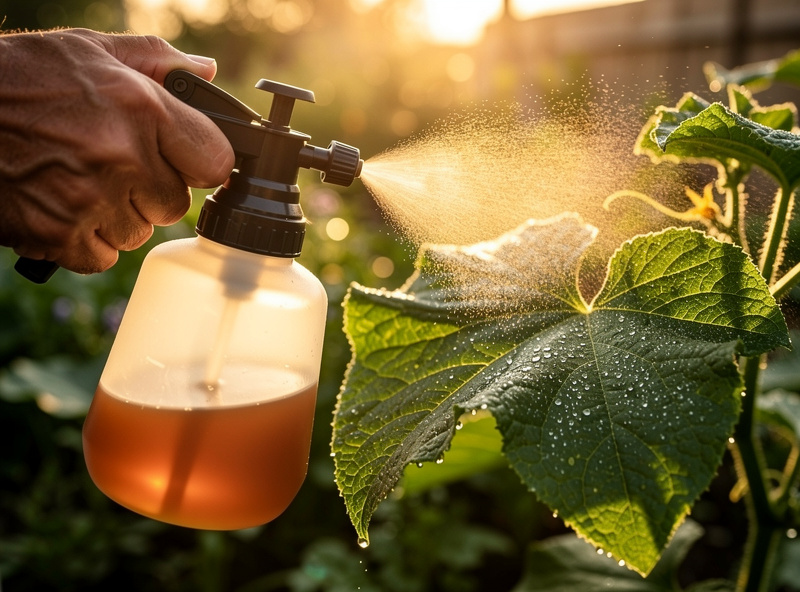
Foliar spray (1 part tea to 5 parts water): Spray onto leaves until they drip. Best applied within 2 hours of dawn or after sunset — UV light damages the microbes within hours. Targets plant surface microbiology and provides direct nutrient uptake through leaves.
Foliar applications work especially well on transplants in their first 2 weeks (faster establishment), tomatoes during fruit set (improved nutrient uptake), and as a preventive against powdery mildew in cucurbits and squash family. Apply weekly during disease-pressure periods.
Avoid spraying compost tea directly on lettuce, leafy greens, or herbs you will eat raw, especially close to harvest. University of Connecticut’s soil lab cautions that the molasses and compost feeding an aerated tea can, under the wrong conditions, encourage E. coli or salmonella growth — reason enough to keep sprays off raw-eaten crops and to lean on soil drenches instead near harvest time.
When Compost Tea Works (and When It Does Not)
The honest answer: compost tea has measurable benefits in specific situations and is over-marketed in others.
Documented benefits (research-supported):
- Faster transplant recovery — measurable reduction in transplant shock for tomatoes, peppers, cucurbits.
- Foliar disease suppression — modest reduction in powdery mildew, downy mildew, and some rust diseases when applied weekly.
- Soil microbial diversity — measurable increase in beneficial fungi and bacteria, especially in newly-built beds.
- Yield improvements of 5 to 15% in nutrient-poor soil — declining as soil quality improves.
Over-promised benefits (weak or no evidence):
- Pest control — compost tea does not deter aphids, caterpillars, or chewing insects despite marketing claims.
- Replacement for fertilizer — the tea contains trace nutrients but cannot substitute for actual feeding.
- Curing established plant diseases — preventive only; established blights and wilts do not respond.
- Yield doubling or tripling — yield gains in well-managed soil rarely exceed 15%.
Compost tea is most useful as a supplement to good soil management — see the home composting guide for the broader composting workflow tea fits into. Tea will not rescue a garden with poor soil, inconsistent watering, or pest pressure beyond what biology can address.
Troubleshooting Bad Tea
A failed batch is obvious within 36 hours. The two failure modes are anaerobic contamination and underbrewing:
Tea smells sour, alcoholic, or rotten. Cause: aeration was insufficient or the temperature too high, allowing anaerobic bacteria to dominate. Fix: discard this batch outdoors, scrub the bucket and airstones with hydrogen peroxide, increase airstone count or pump capacity for the next brew. Anaerobic tea can spread plant pathogens — never use it.
Tea has no foam after 24 hours. Cause: weak air pump, clogged airstones, or compost source had very low microbial counts. Fix: clean airstones with vinegar soak, verify pump is rated for the bucket volume, and confirm the source compost is finished and biologically active (not anaerobic from a stalled pile).
White or gray scum on top. Cause: yeast or fungal mat forming due to excess molasses or surface stagnation. Fix: cut molasses to ½ tablespoon, increase aeration vigor, stir more often during brewing.
Tea works once and then stops working. Cause: applying to soil that already has healthy microbiology. The marginal benefit shrinks as soil quality improves — this is normal, not a tea failure.
I brew compost tea most weeks during the growing season — a 5-gallon bucket on the balcony with an aquarium pump and air stone running for 36 hours. It costs pennies per batch, smells like damp earth, and the container plants respond with visible growth within 5 to 7 days. Compost tea does not replace finished compost — it extends what your pile already produces into a form plants can take up immediately.
Related Reading
- Home Composting: The Complete Beginner Guide — pillar guide; tea starts with the compost you make
- Vermicomposting for Beginners — worm castings make excellent tea base
- Compost Carbon to Nitrogen Ratio — well-balanced compost makes better tea
- Best Soil for Raised Beds — soil context for tea applications
- Best Vegetables for Urban Gardens — what compost tea feeds best
Compost Tea as the Last Step in the Balcony Loop
On a balcony, compost tea closes the nutrient loop: the compost that spent the summer breaking down kitchen scraps gets steeped in a bucket of water, and the resulting tea feeds the tomato plants that produced those scraps in the first place. It is the simplest liquid feed I make. A cup of finished compost in a gallon of water, stirred twice and strained through a paint-strainer bag, produces a dark amber liquid that smells like fresh earth. I apply it as a soil drench around the base of each tomato plant once every two weeks through July and August. The pots I feed this way consistently seem to hold up better through the late-season disease pressure than the ones I keep going on bottled liquid fertiliser — and it costs essentially nothing.
Frequently Asked Questions
How long does compost tea take to brew?
24 to 36 hours of continuous aeration at 65 to 75 degrees Fahrenheit. Microbial activity peaks around hour 30, then declines as oxygen and food are depleted. Brewing longer than 48 hours can shift the tea anaerobic and is not recommended without continuous food and oxygen replenishment.
Why do you add molasses to compost tea?
Molasses provides simple sugars that feed bacteria and accelerate their multiplication during brewing. One tablespoon per 5 gallons is the standard rate. Use unsulfured blackstrap molasses — sulfured molasses kills the microbes you are trying to grow. Skip molasses if you want a more fungal-dominated tea.
Can compost tea replace fertilizer?
No. Compost tea contains trace amounts of nitrogen, phosphorus, and potassium but at concentrations far below what plants need for sustained growth. Use tea as a supplement to feed soil microbiology, not as a substitute for compost amendments or balanced fertilizer in nutrient-deficient soil.
How long does compost tea last after brewing?
Maximum biological activity lasts 4 to 6 hours after the air pump is turned off. After that, oxygen depletes, microbes die, and the tea can shift anaerobic. Apply within 4 hours for best results, or store in a sealed container in the refrigerator for up to 24 hours at reduced effectiveness.
Does compost tea kill plant diseases?
It can suppress some foliar fungal diseases like powdery mildew when sprayed weekly as a preventive. It does not cure established systemic diseases like late blight, fusarium wilt, or bacterial canker. Compost tea is preventive medicine for plants, not a cure for active disease.
Can I make compost tea from worm castings?
Yes — worm-casting tea is one of the highest-quality compost teas available, with significantly higher fungal counts than tea from hot compost. Use 1 cup of worm castings per 5 gallons with the standard molasses and aeration. Especially good as a foliar spray for transplants and seedlings.
What kind of water should I use for compost tea?
Dechlorinated water is essential — chlorine kills the microbes you are brewing. Tap water becomes safe after 24 hours in an open container as chlorine evaporates. Rainwater, well water, or RO water works directly. Avoid distilled water, which lacks the trace minerals microbes need.