Let me start with the honest version, because the internet rarely gives it to you: yes, you really can cut fresh green leaves off a balcony bed in the middle of a Nordic winter. I do it most years, somewhere between a cold frame lid and a doubled row cover, with snow banked up against the planter. It is one of the quietly satisfying things small-space growing gives you up here. But almost every glossy US video on the subject skips the two facts that decide whether it works or wastes your autumn — and once you understand them, the whole thing stops feeling like a magic trick and starts feeling like cold storage with roots attached.
This is the spoke I send people to when they have read the season extension guide and want the actual crop list and timing for eating through the dark months, not just keeping plants alive. So let’s get the promise and the caveats straight first, then build the planting calendar.
The realistic promise — and the two caveats nobody mentions
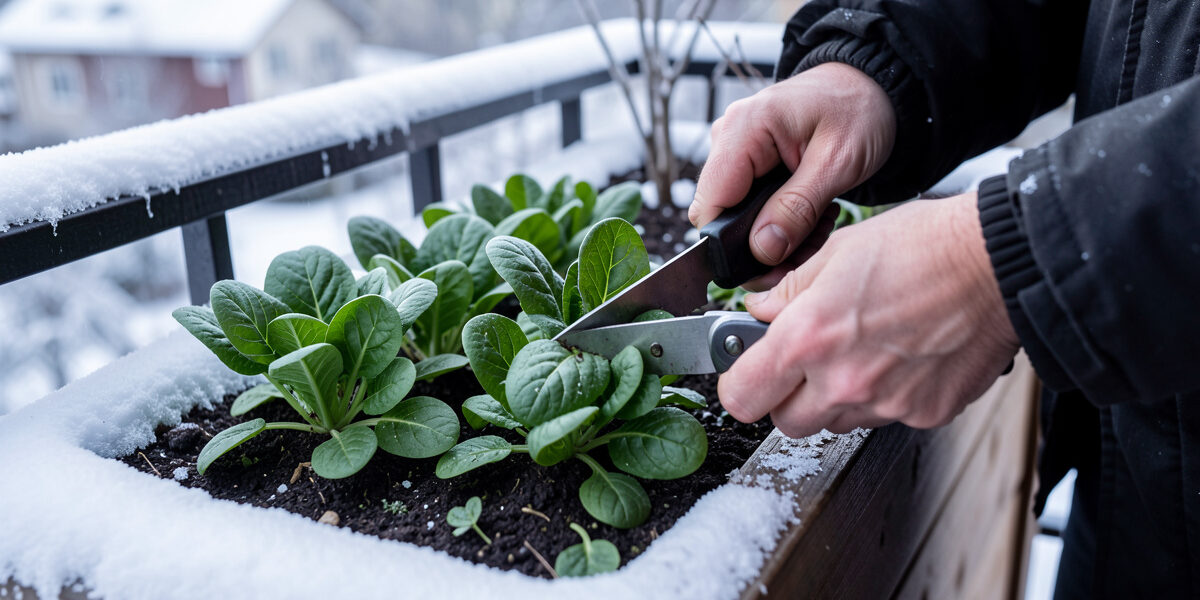
The promise is real. Winter-hardy greens sitting under a simple cover will give you salad and cooking greens long after the supermarket basil has gone slimy. On my balcony I have cut mâche, spinach and kale in January with the thermometer well below zero. That part is not exaggeration.
Here is the first caveat the videos skip. You are harvesting from plants that grew to full size in autumn, not plants growing now. This is the single biggest mental shift. In a Nordic winter, once daylight drops below roughly ten hours — for me that is late November through most of January — photosynthesis slows to almost nothing and growth effectively stops. Your plants are not bulking up under that cover. They are sitting there, mature and dormant, in a cold larder that happens to be alive. You are storing finished crops on the stem, picking from a standing pantry. If a plant is the size of a teaspoon when the light goes, that is the size it stays until February. So the real work happens in late summer: you sow early enough that everything reaches eating size before the lights go out.
The second caveat is about when you harvest, and it is the one that quietly ruins beginners’ results. Harvest on the mild days, and never handle a frozen leaf. A leaf that is frozen solid is glassy and brittle at the cellular level — its water has crystallised inside the cells. Touch it, fold it, cut it while it is like that and you rupture those cells, and that part of the plant turns to translucent mush within a day. The plant itself is usually fine; it survives the freeze and thaws back to crisp. But the leaf you mauled while frozen is dead. So I wait. I let the bed thaw on a milder afternoon, give it an hour, then cut. A frozen-solid morning is a look-but-don’t-touch morning.
Hold those two ideas — grew-in-autumn, harvest-when-thawed — and everything below makes sense.
The crops that actually carry a Nordic winter
Not every “cold-hardy” plant on a US seed packet is built for a Swedish January. Hardiness ratings written for a Pacific Northwest winter quietly assume warmer, brighter conditions than we get. These are the ones I keep coming back to because they have earned it under my covers.
Mâche (corn salad). If I could only grow one winter green up here, this is it. Mâche is almost absurdly cold-tough, forms low rosettes that hide under snow, and shrugs off freezes that flatten everything else. It grows slowly, which is exactly why you sow it early. The flavour is mild and nutty — a proper salad base, not a survival ration.
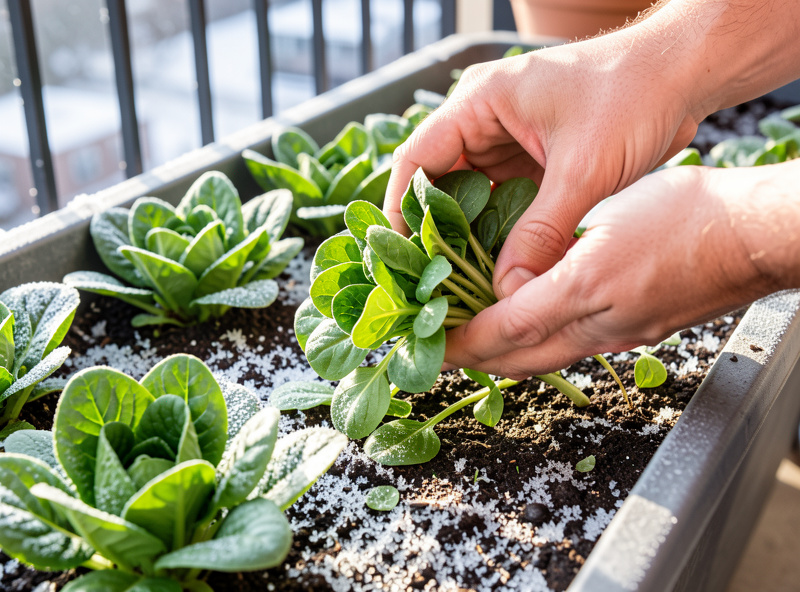
Winter-hardy spinach. Not summer spinach. Look for the overwintering or “giant winter” types bred to sit out the cold. Sown in late summer they make sturdy rosettes that hold through frost and surge back into growth the moment late-winter light returns. The early-spring regrowth alone justifies the bed.
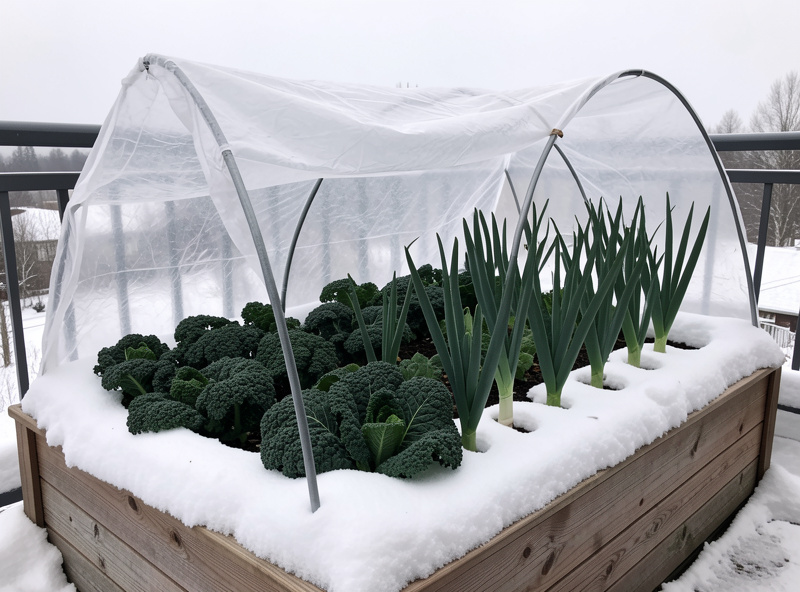
Kale. The reliable workhorse. Curly and the dinosaur types both stand through hard frost, and many growers swear the cold sweetens the leaf as the plant converts starches to sugars as antifreeze. Kale takes longer to size up, so it goes in earliest of all. A row of kale standing in snow is the picture most people have of winter harvesting, and it is well deserved.
Claytonia (miner’s lettuce / winter purslane). Under-grown and under-rated up here. Succulent, mild, genuinely happy in cold and low light, and it self-seeds if you let a plant or two flower. It fills the gap between the mâche rosettes beautifully.
Certain mustards. The hardier Asian mustards — mizuna, some of the red types — bring a peppery kick that nothing else on this list offers, and the better ones take real cold. Treat the milder Asian greens as a gamble worth taking rather than a sure thing; the toughest mustards are the keepers.
Leeks standing in the bed. Not a leaf crop, but the best-kept secret of winter harvesting. The right hardy leek variety simply stands in the soil all winter, alive and fine, and you pull one when you want it. They are living cold storage in vertical form. In a deep container with enough depth they will sit out a Nordic winter without complaint, ready whenever the soup is.
Comparison: hardiness, protection and sow-by timing
This is the table I wish someone had handed me when I started. “Protection needed” assumes a balcony or small bed in a cold-winter climate; in a milder spot you can ease off a level. “Sow by” is the rough latest date to get plants to eating size before the light fails — earlier is always safer.
| Crop | Cold hardiness | Protection needed | Sow by (cold climate) |
|---|---|---|---|
| Mâche (corn salad) | Very high — shrugs off hard freezes | Single cover, often none in a sheltered spot | Late August / early September |
| Winter-hardy spinach | High — overwinters, regrows in spring | Cold frame or doubled row cover | Late August |
| Kale | High — sweetens in frost | Single cover; bare in a sheltered bed | Mid to late July (slow to size) |
| Claytonia | High — thrives in cold and low light | Single cover or cold frame | Late August / early September |
| Hardy mustards (mizuna etc.) | Moderate to high — variety dependent | Cold frame or doubled cover | Late August |
| Leeks (standing) | Very high — overwinters in the soil | Mulch; deep container; little else | Started spring, in place by autumn |
Read across the kale row and you can see the trap: the hardiest, most satisfying winter standby has the earliest sow-by date. Miss it and you spend winter looking at thumbnail plants you can’t eat. That is the whole game in one cell.
The protection layer — cold frame or doubled row cover
None of these crops need heat. They need shelter from the wind and a buffer against the deepest cold snaps, and they need it without cooking on the rare bright day. Two setups do the job on a balcony.
A cold frame over a planter is my preferred rig for the salad crops — it traps a little warmth, blocks the wind completely, and the lid lets me get at the bed on a mild afternoon without disturbing the cover. I cover the deeper cold-frame thinking in the cold frame gardening guide, and it pairs naturally with what you grow inside it.
The lower-effort route is a doubled row cover — two layers of floating fleece over hoops, which buys you several degrees of frost protection and keeps the wind off without much weight on the balcony rail. Doubling matters: one layer is a light frost buffer, two layers is winter insurance. I walk through covers and cloches in detail in the row covers and cloches guide, and the mini greenhouse for small spaces piece covers the upright version of the same idea when you want a bit more headroom.
The one rule with all of it: ventilate on the bright days. A sealed cover over a sunny, still afternoon can roast tender greens even when the air is freezing. Crack the lid, lift a corner of the fleece, let it breathe. Winter cooking under glass is a real and avoidable way to lose a bed.
A quick note on links: a few of the product links below are affiliate links, which means I may earn a small commission if you buy through them, at no extra cost to you — it never changes what I recommend or how I grow.
For seed, I start people on a hardy winter-hardy salad and mâche seed mix — it gives you the mild rosette crops that carry the deepest weeks with the least fuss. For protection, a roll of floating row cover fleece is the cheapest insurance going, and a cold frame sized for a raised bed or planter is the upgrade if your balcony catches enough light.
Sowing timing — the part that happens in summer
This is where winter harvesting is won or lost, and it feels deeply counter-intuitive: you sow your winter crops in late summer, not in winter. Up here that means the back half of August for most of the salad crops, mid-to-late July for the slow growers like kale. You are racing to get plants to full eating size before the light drops below the growth threshold in late November.
Think of it as filling the pantry. Every plant needs to reach harvest size while there is still enough daylight to grow it. Once the dark weeks arrive, the plants stop adding leaf — they simply hold what they have, and you draw it down through winter like jars off a shelf. Sow too late and you are storing thumbnails. Sow on time and you are storing meals.
One nuance worth knowing: a lot of these crops put on a second, generous flush of growth in late winter as the light returns, well before anything outdoors stirs. The overwintered spinach in particular comes roaring back in February. So the bed earns its keep twice — once as a winter pantry, once as the earliest spring crop you will get.
Pairing the bed with indoor crops for the darkest weeks
I will be honest about the limit: even a perfectly timed winter bed thins out in the deepest, darkest weeks. You are drawing down a finite pantry, and around the solstice the picking gets lean. This is exactly where the small-space toolkit earns its place — the outdoor bed and the indoor shelf cover for each other.
Through those weeks I lean on the things that don’t care what the sky is doing. Growing lettuce inside under a light bar gives me cut-and-come-again leaves on demand, and a tray of microgreens turns around in a week or two regardless of the season. For the absolute darkest stretch, sprouting seeds at home on the kitchen counter needs no light at all and gives you something green and crunchy in days. Together they fill the gap the balcony can’t.
That pairing is the whole philosophy of cold-climate small-space growing in one move: the hardy bed outside for the bulk and the satisfaction of cutting greens in the snow, the lit shelf and the sprouting jar inside for the weeks the bed can’t carry. Neither one alone gets you through a Nordic winter. Together they get you fresh leaves on the plate every week of it.
Frequently asked questions
Can you really harvest fresh vegetables outdoors in a Nordic winter?
Yes, if the plants grew to full size in autumn first. Hardy greens like mache, kale and spinach sit dormant under a cover through the dark weeks, and you pick from them like a living pantry. They store, they do not keep growing.
Why do my winter greens stop growing in December?
Once daylight drops below roughly ten hours, photosynthesis nearly stops and growth halts. The plants are not bulking up under the cover anymore. They are holding finished crops on the stem until late winter light returns and growth restarts.
When should I sow vegetables for a winter harvest?
Late summer, not winter. Most salad crops go in during the back half of August, and slow growers like kale by mid to late July. The aim is full eating size before the deep-winter light drops below the growth threshold.
Why does a frozen leaf turn to mush when I pick it?
A frozen leaf is glassy because the water inside its cells has crystallised. Handling or cutting it then ruptures those cells and the leaf collapses. Wait for a mild day, let the bed thaw for an hour, then harvest the crisp leaves.
Which vegetables are the most reliable for a cold-climate winter bed?
Mache is the toughest and easiest, followed by winter-hardy spinach, kale, and claytonia. Leeks standing in a deep container are excellent living storage. The hardier Asian mustards add a peppery option that takes real cold.
Do winter crops need a heated cover or greenhouse?
No heat needed. A cold frame or a doubled row cover blocks wind and buffers the deepest cold, which is enough for hardy greens. Just ventilate on bright days, because a sealed cover can overheat tender leaves even in freezing air.