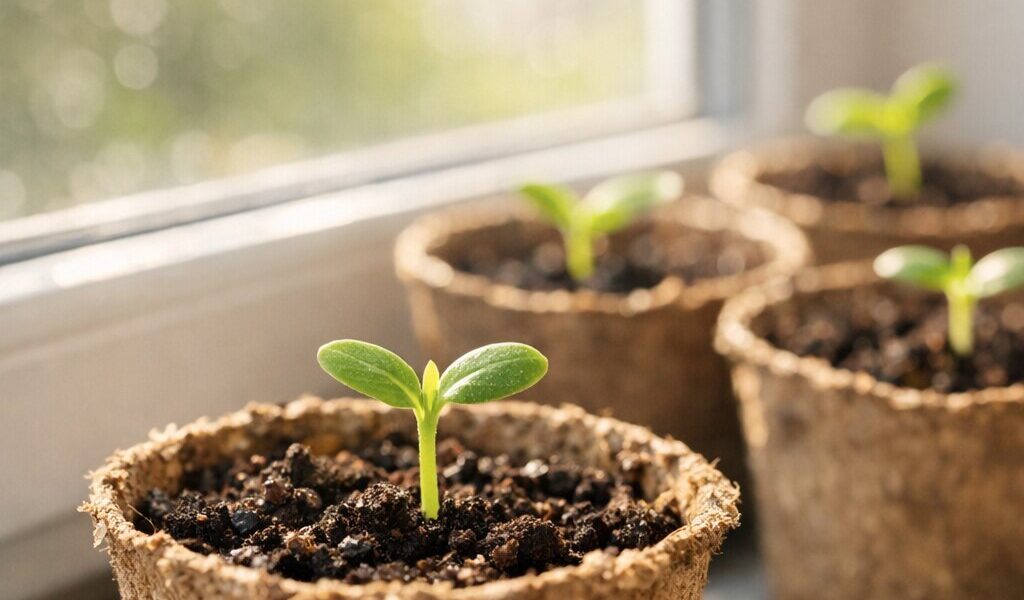
Fungus gnat larvae in soil are the real destructive stage — the stubby, translucent white maggots living in the top 2-3 inches of potting mix that feed on root hairs, fungi, and decaying organic matter. A single female gnat lays 100-300 eggs in moist soil, and larvae can consume enough root tissue in 2 weeks to stunt or kill seedlings. For the full step-by-step elimination protocol, see the complete fungus gnat elimination guide.
Fungus gnat larvae are the real problem — adults are just the warning sign. The tiny white maggots with black heads live in the top 2-3 inches of potting soil, feeding on root hairs and organic matter for 12-14 days before pupating. I spot-check the soil surface of every tray under my grow lights with a handheld LED magnifier — it takes 10 seconds per pot and catches infestations before adults even appear.
As an Amazon Associate I earn from qualifying purchases.
If you’ve confirmed larvae are present, skip the sticky traps for now and go straight to soil treatment. For the complete elimination protocol, see the fungus gnat elimination guide.
The Hidden Threat: Fungus Gnat Larvae in Plant Soil
Fungus gnat larvae in soil represent the truly destructive stage of these common houseplant pests. While flying adult gnats are annoying, it is the legless, white maggots living in the top layer of potting mix that actually damage plants by feeding on roots, fungi, and organic matter. Understanding how to identify, monitor, and eliminate these soil-dwelling larvae is essential for protecting your houseplants from the significant harm these hidden pests can cause.
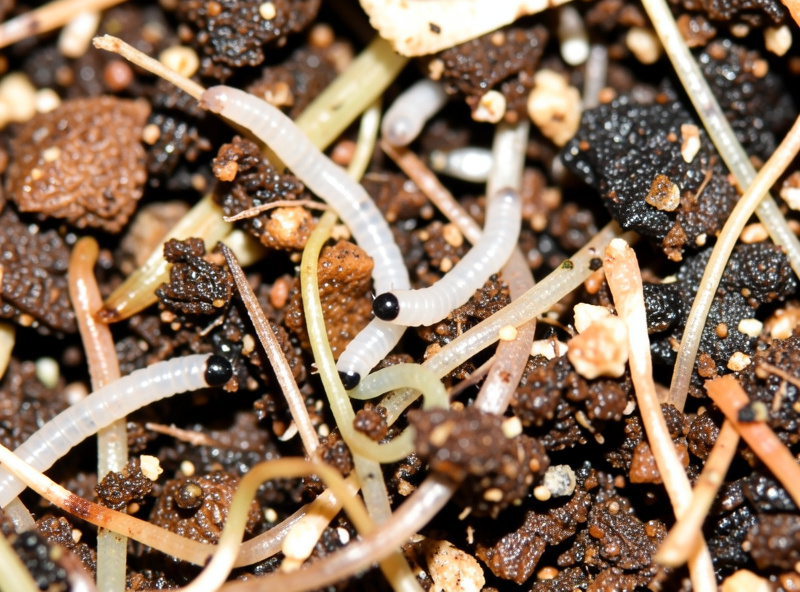
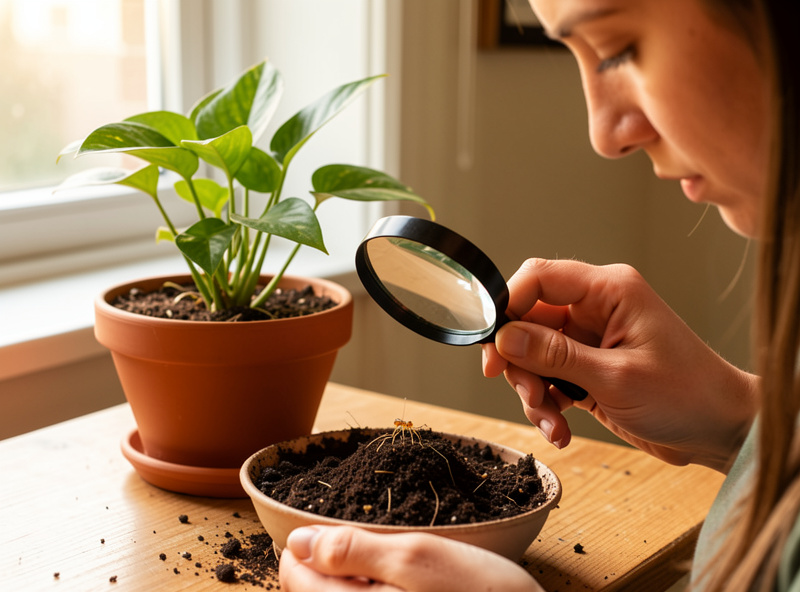
These tiny creatures, barely visible to the naked eye at early stages, live in the top 2-3 inches of soil where they feed on fungi, decaying organic matter, and fine root hairs. Iowa State University Extension notes that while larvae rarely bother established plants, in high numbers they feed on the roots of seedlings and young plants and stunt their growth. While adult gnats live only 7-10 days, larvae persist for 12-14 days of active feeding, so on a tray of seedlings that damage adds up fast. Learning to recognize and eliminate larvae is the key to effective gnat management.
Identifying Fungus Gnat Larvae
For treating larvae directly, see hydrogen peroxide soil drench.
For complete elimination, follow the fungus gnat guide.
Physical Appearance
Fungus gnat larvae are small, legless maggots with distinctive characteristics that aid identification. Fully grown larvae reach approximately 1/4 inch (5-6mm) in length, though younger instars are much smaller. Their bodies are shiny white to translucent, allowing you to see internal contents in bright light. The most distinctive feature is the black head capsule at the anterior end, creating a stark white-with-black-head appearance that distinguishes them from other soil-dwelling organisms.
The larvae bodies are cylindrical and smooth, tapering slightly at both ends. Unlike some other maggots, they lack obvious segmentation or body hairs. When disturbed, they writhe actively in an S-shaped motion that is characteristic of fly larvae. This active movement distinguishes them from potting soil debris or perlite particles that might be mistaken for larvae at first glance.
Where to Find Larvae
Gnat larvae concentrate in the top 2-3 inches of soil where organic matter is most abundant and moisture conditions favor both the fungi they eat and their own survival. They are most numerous in moist, rich potting mixes containing peat moss, compost, or inadequately composted bark. Heavily infested soil may contain dozens of larvae per square inch in this upper layer.
Check for larvae by gently scraping away the top inch of soil from suspected pots and examining the exposed material under bright light. Look for the characteristic white bodies with black heads actively writhing in the soil. In heavy infestations, you may see larvae on the soil surface or around drainage holes where they have been forced by competition or moisture changes.
Distinguishing from Similar Organisms
Several other soil-dwelling organisms might be confused with fungus gnat larvae. Springtails are tiny jumping insects, not larvae, and move by leaping rather than writhing. Root aphids are small, pear-shaped insects that may cluster on roots but have distinct body segmentation and legs. Beneficial nematodes (used for gnat control) are microscopic and not visible without magnification.
Soil mites are beneficial predators that feed on decomposing matter and are generally smaller than gnat larvae with visible legs. Earthworm castings or small soil aggregates might resemble larvae at a glance but lack the characteristic movement and head coloration. With practice, accurate identification becomes straightforward.
Monitoring Techniques
The potato slice method provides an effective monitoring technique that concentrates larvae for easier detection. Place a 1/4-inch thick slice of raw potato on the soil surface and leave for 4-8 hours or overnight. Larvae are attracted to the potato starch and congregate beneath or within the slice. Carefully lift the potato and count the larvae on the underside to assess infestation severity.
Another monitoring technique involves creating a soil sample: remove a tablespoon of soil from the top inch of a pot, place it in a clear container with a small amount of water, and swirl gently. Larvae will separate from soil particles and become visible against the container bottom or suspended in water.
Life Cycle and Development
To prevent egg-laying, try sand on soil surface as a physical barrier.
From Egg to Adult
Understanding the larval life cycle explains why infestations persist and why treatments must target multiple stages. Adult females lay 100-300 tiny eggs in moist soil, typically in the top layer where conditions are optimal. These eggs hatch in 4-6 days into first-instar larvae that immediately begin feeding. Larvae pass through four instars (developmental stages) over 12-14 days, growing larger with each molt and consuming increasing amounts of organic matter and root tissue.
Fourth-instar larvae construct small pupal cases in the soil where they metamorphose into adults over 4-6 days. The emerging adults live 7-10 days, focusing entirely on reproduction to continue the cycle. Under warm indoor conditions, the entire cycle completes in approximately 3-4 weeks, with multiple overlapping generations persisting simultaneously in favorable environments.
Feeding Behavior and Damage
Larvae are generalist feeders that consume fungi, decaying organic matter, algae, and plant roots. In natural environments, this feeding contributes to decomposition and nutrient cycling. However, in the confined environment of a plant pot, concentrated larval feeding damages the fine root hairs essential for plant health. Even when feeding primarily on fungi, larvae may incidentally consume root tissue or create wounds that allow pathogen entry.
The feeding damage is cumulative and often goes unnoticed until significant harm has occurred. Young plants with developing root systems are most vulnerable, while established plants may tolerate light to moderate larval pressure without obvious symptoms. However, heavy infestations eventually impact even mature specimens through root destruction and associated stress.
Environmental Requirements
Larval development requires consistently moist conditions and temperatures between 65-80°F (18-27°C), typical of indoor environments. They cannot survive in dry soil or temperatures below 50°F (10°C). These requirements explain why overwatered plants in warm homes experience explosive gnat population growth while properly watered plants in cooler conditions rarely develop problems.
The dependence on moisture means that allowing soil to dry completely breaks the life cycle, as eggs and larvae desiccate and die. This biological vulnerability forms the basis of cultural control methods that are often sufficient for light infestations.
Damage Assessment and Plant Impact
Symptoms of Larval Feeding
Plants suffering from gnat larval damage show characteristic symptoms that distinguish this pest from other problems. Yellowing leaves that do not respond to fertilization suggest root damage impairing nutrient uptake. Sudden wilting despite adequate soil moisture indicates root destruction preventing water absorption. Stunted growth and reduced vigor occur as damaged root systems cannot support normal plant development.
Seedlings and young plants may collapse and die suddenly (damping off) when larval feeding destroys the small root systems needed for survival. Mature plants show slower decline but gradually deteriorate under sustained larval pressure. The symptoms often mimic root rot or other soil-borne diseases, requiring careful diagnosis to distinguish gnat damage from other problems.
Vulnerable Plant Stages
Plants are most vulnerable during germination, seedling establishment, and active growth phases when root systems are small and rapidly developing. Seedlings may be killed by just a few larvae feeding on their limited root systems. Young transplants establishing in new soil are similarly vulnerable as they develop new root growth that attracts larval feeding.
Plants in flower or fruit production phases are also vulnerable because their metabolic demands are high and root damage impairs the ability to support reproductive structures. Stressed plants from any cause (drought, nutrient deficiency, disease) are less able to tolerate additional gnat damage.
Assessing Infestation Severity
Quantify larval populations to assess infestation severity and guide treatment decisions. Using the potato slice method, count larvae attracted to a single slice: 1-5 larvae indicates light infestation manageable with cultural controls; 5-20 larvae indicates moderate infestation requiring active treatment; over 20 larvae indicates severe infestation demanding aggressive intervention.
Consider the plant stage and value when interpreting counts. Even light infestations warrant treatment on seedlings or valuable specimens, while established plants may tolerate moderate populations without significant damage. Multiple sampling across different pots provides better assessment than single samples.
Elimination Methods Targeting Larvae
For organic treatment options, check neem oil for fungus gnats.
Cultural Control: Drying Soil
The most effective cultural control targets the larval requirement for moist conditions. Allow the top 2-3 inches of soil to dry completely between waterings, creating conditions lethal to larvae and eggs. This drying period may need to extend 7-10 days depending on pot size and environmental conditions. While plants may show slight water stress, they typically tolerate this temporary dryness better than sustained gnat damage.
Bottom watering helps maintain this dry surface layer while keeping roots hydrated. Place pots in water and allow absorption from drainage holes up, keeping the soil surface completely dry. This technique deprives larvae of the moisture they need while meeting plant water requirements.
Physical Removal
For light infestations, physically removing the top inch of soil eliminates many larvae and eggs. Discard this soil in sealed trash, not compost where larvae might survive. Replace with fresh sterile potting mix and implement preventive measures to prevent reinfestation. This simple technique can dramatically reduce populations without chemicals.
Repotting heavily infested plants entirely removes all larvae and eggs in one action. Discard all old soil, gently wash roots to remove any adhering larvae, and replant in fresh sterile mix. While labor-intensive for large collections, this guarantees elimination when combined with preventive measures in the new pot.
Hydrogen Peroxide Drenches
Hydrogen peroxide soil drenches kill larvae on contact through oxidation while oxygenating soil and breaking down into harmless water and oxygen. Mix 1 part 3% hydrogen peroxide with 4 parts water and drench soil thoroughly. The visible fizzing indicates active killing of larvae and fungal spores. This treatment is safe for plants and provides immediate larval reduction.
Apply hydrogen peroxide every 5-7 days for 3-4 applications to catch overlapping generations. For detailed application instructions, see my guide on hydrogen peroxide for fungus gnats.
Biological Controls
Beneficial nematodes (Steinernema feltiae) are microscopic roundworms that seek out and kill gnat larvae in soil. Apply as a soil drench; nematodes enter larvae and release bacteria that kill the host within 48 hours. These biological agents are safe for plants, pets, and humans while effectively targeting the destructive larval stage.
Bacillus thuringiensis israelensis (Bti) is a naturally occurring soil bacterium that kills larvae when ingested. Available as mosquito dunks or liquid formulations, Bti can be applied to soil or mixed into watering cans. Apply every 5-7 days for three cycles to break the life cycle completely.
Chemical Insecticides
For severe infestations, chemical options may be necessary. Pyrethrin sprays kill larvae on contact and can be applied to soil surfaces. Systemic insecticides containing imidacloprid are applied to soil and absorbed by plants, killing larvae that feed on roots. However, use these as last resorts due to environmental concerns and potential impacts on beneficial organisms.
Monitoring and Verification
Post-Treatment Assessment
After implementing larval control measures, verify effectiveness through continued monitoring. Repeat potato slice tests weekly to track population trends. Captured larvae should decline progressively over 2-3 weeks as treatments take effect. If populations do not decrease, reassess treatment methods or consider whether you are dealing with a different pest.
Yellow sticky traps placed above soil surfaces capture emerging adults, providing indirect evidence of larval survival. Declining trap captures indicate successful larval control. Continue monitoring for 4-6 weeks after apparent elimination to ensure complete success before relaxing control measures.
Long-Term Prevention
Once larval populations are eliminated, prevent recurrence through cultural practices. Always allow soil to dry between waterings, use sterile potting mix, quarantine new plants, and maintain barriers like sand layers on soil surfaces. These practices prevent the moist, organic-rich conditions that support larval development.
For comprehensive prevention strategies, see my complete guide on how to get rid of fungus gnats.
The Potato Slice Monitoring Method
The simplest way to confirm larvae are present — and track whether your treatment is working — is the potato slice test. Place a thin raw potato slice on the soil surface for 24 hours, then lift it. If larvae are active, you will see 5-20 tiny translucent worms on the underside of the potato, attracted to the moisture and starch. Repeat the test every 3 days during treatment; a decreasing count confirms the elimination is working. In my experience it flags an infestation earlier than scanning the soil surface by eye, because the larvae come to the potato before they are numerous enough to spot at a glance.
Related Articles
- How to Get Rid of Fungus Gnats: Complete Elimination Guide
- Fungus Gnats vs Fruit Flies: Identification Guide
- Hydrogen Peroxide for Fungus Gnats: Treatment Guide
- Neem Oil for Fungus Gnats: Natural Treatment Guide
- Sand on Soil for Gnats: Barrier Method Guide
What do fungus gnat larvae look like?
Fungus gnat larvae are small (1/4 inch when full-grown), legless maggots with shiny white to translucent bodies and distinctive black heads. They resemble tiny worms and actively writhe in an S-shape when disturbed. They live in the top 2-3 inches of moist soil.
How do I know if I have gnat larvae in my soil?
Check the top inch of soil under bright light for white maggots with black heads. Use the potato slice method: place a raw potato slice on the soil surface overnight; larvae will congregate underneath. Signs include yellowing leaves, stunted growth, and sudden wilting.
How long do gnat larvae live in soil?
The larval stage lasts 12-14 days under favorable warm, moist conditions. During this time, they feed continuously on soil fungi and plant roots. The entire life cycle from egg to adult takes approximately 3-4 weeks indoors.
Can gnat larvae kill my plants?
Yes, heavy larval infestations can kill plants, particularly seedlings and young specimens. Larvae feed on fine root hairs essential for water and nutrient absorption, causing yellowing, stunting, wilting, and eventual death if untreated.
What kills gnat larvae in soil?
Hydrogen peroxide drenches kill larvae immediately on contact. Beneficial nematodes and Bti are biological controls that target larvae specifically. Drying soil completely desiccates larvae and eggs. Chemical insecticides are also effective.
Will larvae die if I let soil dry out?
Yes, allowing soil to dry completely for 7-10 days kills larvae and eggs through desiccation. This is one of the most effective non-chemical control methods. Most plants tolerate this temporary dryness better than sustained gnat damage.