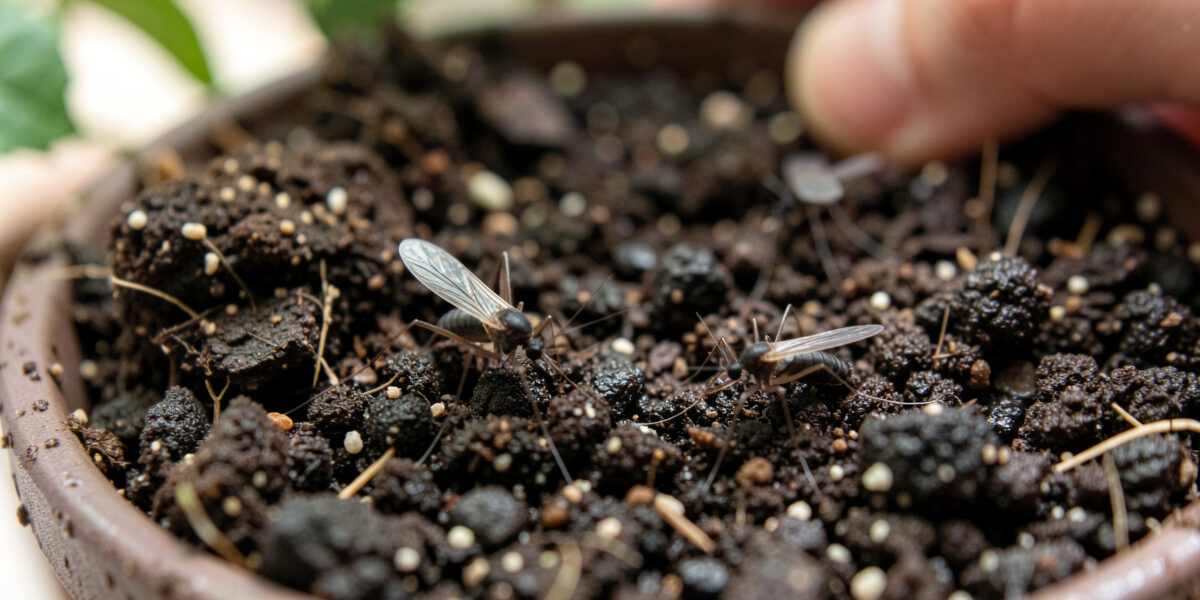
If you’ve landed here because tiny black flies keep dive-bombing your face while you water the plants, let me put your mind at rest straight away: fungus gnats do not bite. They physically can’t — they lack the mouthparts to pierce skin, draw blood, or sting, and they transmit nothing to you or your pets. I fight them every winter in my own seed trays and houseplants, so I understand the irritation completely; but the real damage these insects do is underground, to your plant roots, not to you. If you just want them gone, jump to my step-by-step fungus gnat elimination guide — otherwise, here’s the full picture, including what is biting you if something is.
As an Amazon Associate I earn from qualifying purchases.
Fungus gnats do not bite humans, pets, or damage mature plant tissue — their mouthparts are designed for sipping water and nectar, not piercing skin. I’ve had gnats land on my hands and face hundreds of times while working under my grow lights, and they simply cannot break skin. The confusion comes from their resemblance to biting midges and mosquitoes, but fungus gnats are strictly nuisance pests, not biters. If something is biting you in your apartment, it’s not a fungus gnat — check for mosquitoes, biting midges, or fleas instead.
For the complete identification guide that distinguishes fungus gnats from every lookalike, see the fungus gnats vs fruit flies comparison.
Why Fungus Gnats Cannot Bite
An adult fungus gnat has soft, sponging mouthparts — fleshy little lobes that soak up moisture and dissolved nutrients from a surface, like a sponge. They’re built for mopping up the fungal and bacterial film on damp soil, not for piercing anything. Biting insects evolved entirely different piercing-sucking equipment; fungus gnats simply never did, because their niche is decaying organic matter, not blood. No amount of them swarming your face changes that anatomy.
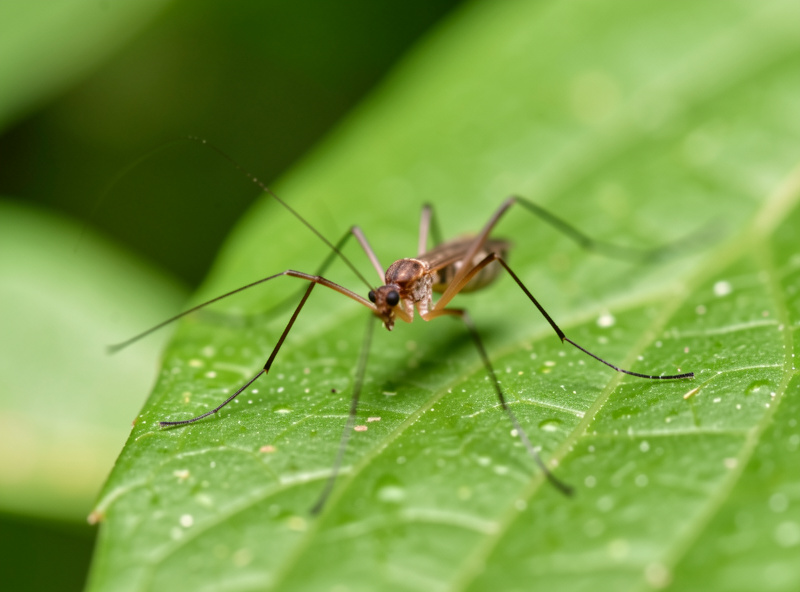
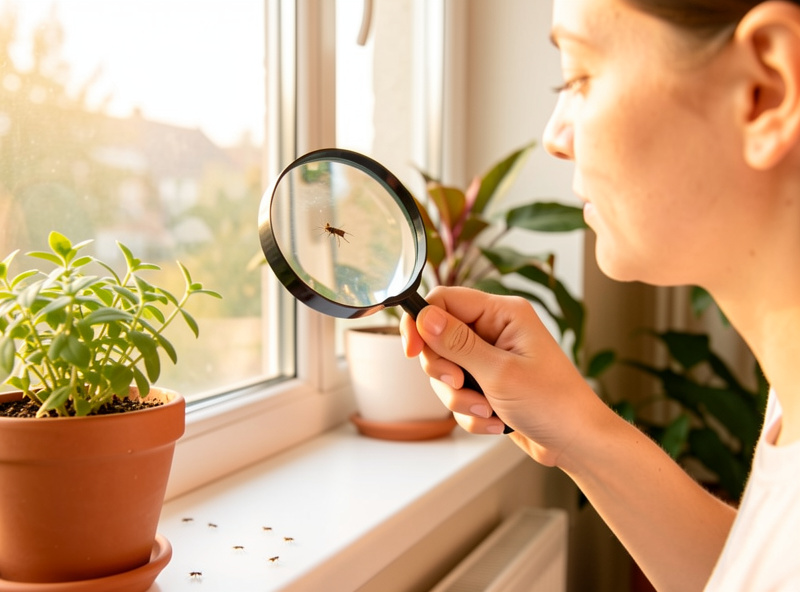
The larvae can’t bite either. They live in the soil with tiny chewing mouthparts made for grinding fungi, algae, and root tissue — not skin. Even if you handled them, they couldn’t break the surface. So whether it’s the adults around your face or the larvae in the pot, biting is off the table. (Still not sure what you’ve got? My fungus gnats vs fruit flies guide sorts out the common indoor look-alikes.)
So What’s Actually Biting You?
Here’s the important bit, because if you genuinely have bites, you have a different pest and treating the gnats won’t help. The small flies people confuse with fungus gnats:
- Biting midges (no-see-ums): much smaller than fungus gnats, with real piercing mouthparts and an intensely itchy bite. Outdoor insects near water that slip in through window screens — not plant pests.
- Black flies: larger, humpbacked, found near running water, with a painful cutting bite. Strictly outdoor.
- Eye gnats: hover annoyingly around faces and eyes but don’t bite; outdoor, livestock-associated.
And if you’re being bitten indoors, especially at night, the usual culprits aren’t gnats at all — they’re fleas (ankles and lower legs), bed bugs (lines or clusters of night bites), or mosquitoes. Don’t assume the visible gnats are responsible just because they’re there; misidentifying the biter means treating the wrong thing for weeks.
What Fungus Gnats Actually Do
Two real problems, neither involving your skin.
They’re a genuine nuisance. Weak, erratic fliers that erupt from the soil when you brush a plant, land on screens and food, and seem to materialise out of nowhere. In a home full of plants — or a flat full of seed trays in February, like mine — a bad infestation is legitimately wearing, even though it’s harmless.
The larvae damage plants. This is the part that matters. Down in the soil, the maggots feed on fungi, organic matter, and — crucially — fine plant roots. A light population does little, but a heavy one shreds the root system of seedlings and young plants, causing yellowing, stunting, wilting, and sometimes death. The flying adults are the annoyance; the hidden larvae are the actual threat. For the underground side, see my guide on fungus gnat larvae in soil, and for treating an infested plant directly, fungus gnats in houseplants.
The Real Fix Is the Soil
Here’s what I’ve learned fighting them every winter: fungus gnats are a symptom, and the disease is wet soil. They breed in the top inch of constantly-damp, organically-rich potting mix — exactly what you get when you overwater plants in low winter light, which is the single most common houseplant mistake. Fix the conditions and the gnats lose their nursery.
Two things do most of the work. First, let the top few centimetres of soil dry out between waterings — the larvae can’t survive a dry surface. Second, use a chunky, fast-draining mix that doesn’t stay sodden. This is where the right potting soil quietly solves a pest problem: a gritty, well-aerated blend dries on top far faster than dense bagged “potting soil.” I lay out exactly what to use in my best soil for houseplants recipes and, if you’d rather buy a bag, my best potting soil for indoor plants guide. Topping the soil with a centimetre of coarse sand or grit also blocks the adults from laying eggs in the first place.
Knocking Down an Active Infestation
When they’re already swarming, hit adults and larvae at the same time:
- Yellow sticky traps for the adults — gnats are drawn to yellow and stick fast, which both thins the breeding population and tells you whether you’re winning. A pack of yellow sticky traps is the first thing I reach for. You can also make your own — see my DIY fungus gnat traps.
- BTI for the larvae — Bacillus thuringiensis israelensis, sold as mosquito bits, is a soil bacterium that kills gnat larvae and nothing else. Steep mosquito bits in your watering can and water it in; it’s the most effective larvae treatment I’ve used.
- Natural options — a cinnamon top-dressing (a natural fungicide that starves the larvae of the fungi they eat) and neem oil both help as part of the routine.
- A small fan — gnats are weak fliers drawn to the CO₂ of your breath, which is why they pester your face during a video call. A small USB fan across the plant shelf disrupts their flight and keeps them off you, no chemicals required.
For the complete attack plan combining all of these, see my how to get rid of fungus gnats guide.
Health, Safety, and the Myths
To put the worries fully to rest: fungus gnats transmit no diseases — they don’t carry human pathogens the way mosquitoes or houseflies can. Genuine allergic reactions to them are rare, and most skin or respiratory symptoms blamed on gnats trace back to mould, dust mites, or something else. The one real cost beyond plant damage is psychological — a constant cloud of insects is stressful, and that alone is reason enough to deal with them, even though they can’t hurt you.
The persistent “gnats bite” myth survives mostly because “gnat” is a catch-all word covering several unrelated insects, a few of which do bite — and because a gnat landing on your arm to sip moisture can feel, for a second, like the start of a bite. Entomology is unambiguous, though: fungus gnats (family Sciaridae) are non-biting, full stop. There are no documented cases of a fungus gnat bite, because there’s no anatomy to make one. The UC Statewide IPM Program puts it as plainly as it can be put: adult fungus gnats don’t damage plants or bite people, and their presence is primarily a nuisance — it’s the larvae, in large numbers, that damage roots and stunt young plants.
Why Winter Makes Them Worse Up North
Fungus gnats are a year-round possibility, but in a Nordic apartment they peak in the dead of winter, and it’s worth understanding why. From November onward, the radiators run, the air goes dry, and every houseplant I own is crowded indoors under grow lights because nothing survives on the balcony. The dry indoor air pushes the gnats toward the one reliably moist thing in the flat — the potting soil — while the low winter light slows plant growth so pots use less water and stay damp longer. That combination, warm room plus perpetually moist mix plus a sealed apartment with no outdoors to dilute the population, is exactly what turns two stray gnats in December into a cloud by January.
The reassuring part is that the winter fix is the same harmless-pest fix as any other time of year, just applied with more discipline. A yellow sticky trap at soil level in each pot catches the adults, and letting the top inch of soil dry between waterings starves the larvae of the damp they need. Because the plants are barely growing anyway, they tolerate that drier regime easily. I water less, lean on bottom watering to keep the surface dry, and run a small fan over the shelf — and within a couple of weeks the cloud is gone, without a single thing that could ever have bitten me in the first place.
Frequently Asked Questions
Do fungus gnats bite humans?
No, fungus gnats do not bite humans. They lack the piercing mouthparts required for biting and feed only on moisture, fungi, and organic matter. The sponging-type mouthparts of adult gnats are physically incapable of penetrating skin.
Can fungus gnat larvae bite?
No, gnat larvae cannot bite. They possess chewing mouthparts designed for grinding plant material and fungi, not for piercing or biting. Even if they contact human skin, they cannot bite.
Why do I feel like gnats are biting me?
The sensation may be psychosomatic, caused by the stress of having flying insects around. Alternatively, you may have different biting pests (fleas, bed bugs, mosquitoes). Fungus gnats sometimes land on skin, creating tickling sensations that might be misinterpreted as bites.
Do fungus gnats bite pets?
No, fungus gnats do not bite pets. Cats, dogs, and other animals are safe from gnat bites. The gnats may annoy pets by flying around them, but they cannot bite or feed on animal blood.
What is biting me if not fungus gnats?
If you have bites in a home with fungus gnats, consider: fleas (bite ankles and lower legs), bed bugs (bite at night in lines or clusters), mosquitoes (active at dawn/dusk), or spiders. Consult a pest professional if you cannot identify the source.
Are there any health risks from fungus gnats?
Fungus gnats pose minimal health risks. They do not bite, do not transmit diseases, and rarely cause allergic reactions. The primary concerns are nuisance from flying adults and potential plant damage from larvae.
Should I be worried about gnat bites around my plants?
No, worry is unnecessary because gnat bites do not occur. Focus instead on the actual problems: nuisance from flying adults and potential plant damage from soil-dwelling larvae.
Are there biting gnats in my house?
Biting gnats in homes are usually no-see-ums (biting midges) entering through window screens, not fungus gnats. Fungus gnats live in plant soil and cannot bite. If you feel bites indoors, check for fleas, bed bugs, or seasonal midge swarms near windows and doors.
Can gnats bite you in bed?
Fungus gnats cannot bite you in bed because they lack biting mouthparts. Nighttime bites are typically from bed bugs, fleas, or mosquitoes. Inspect mattress seams and bedding with a flashlight to identify the actual culprit before treating.
What gnats actually bite humans?
Three gnat-like insects bite humans: biting midges (no-see-ums), black flies, and sandflies. All three live primarily outdoors near water and have piercing mouthparts. Fungus gnats, fruit flies, and eye gnats do not bite because they lack the anatomical structures required.
Related Reading
- How to Get Rid of Fungus Gnats — the complete elimination plan
- Fungus Gnat Larvae in Soil — dealing with the real damage underground
- Fungus Gnats vs Fruit Flies — tell your tiny flies apart
- Best Soil for Houseplants — the fast-draining mixes that prevent gnats
- DIY Fungus Gnat Traps — homemade options that work