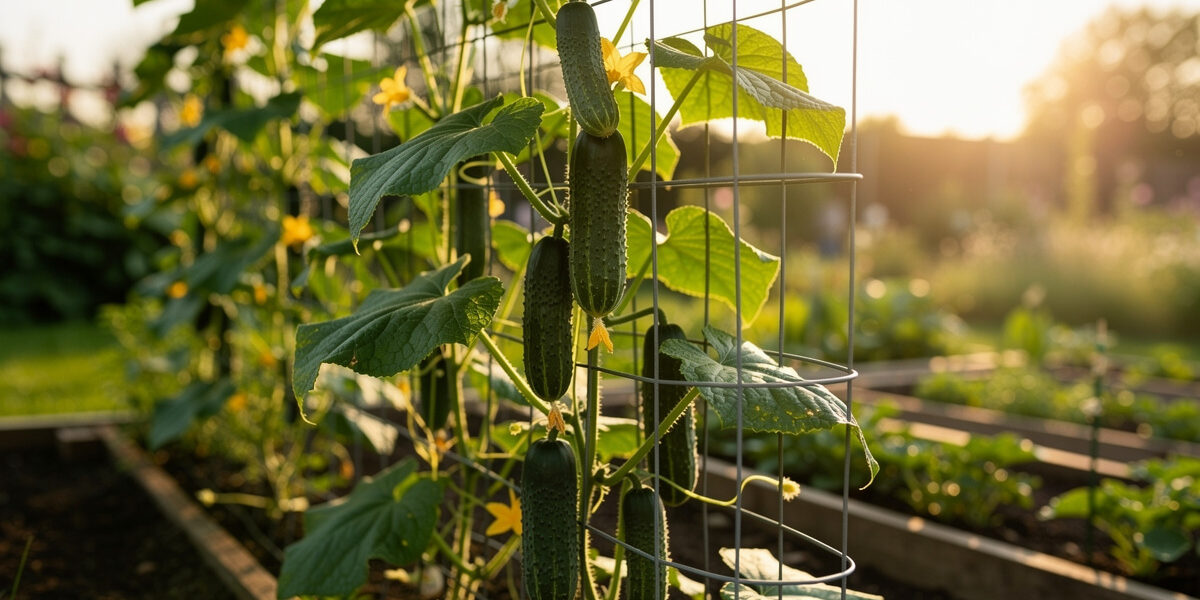
Growing cucumbers vertically is the only way I’d grow them, and in a small Nordic space it’s less a choice than a necessity. A cucumber left to sprawl eats a square metre or two of ground I simply don’t have; trained up a trellis, the same plant takes a sliver of floor and hands you cleaner, straighter fruit at picking height. Add in our short, cool season — where airflow and disease resistance decide whether you get a crop at all — and vertical wins on every count. This is how I run mine, from variety choice to the training that keeps a loaded vine on the trellis instead of in a heap on the balcony floor. For the bigger picture, see my complete vertical gardening guide.
For the complete vertical gardening overview covering systems, cost comparisons, and plant selection, see my vertical gardening guide.
As an Amazon Associate I earn from qualifying purchases.
Why Grow Cucumbers Vertically
A ground-grown cucumber sprawls across one to two square metres per plant. Trained up a trellis, that same plant occupies about 30 cm of floor while fruiting along a couple of metres of vertical vine — a huge saving in floor area for the same plant, which is everything in a small garden, a raised bed, or a balcony setup like mine.
It’s not only about space. Cucumbers resting on damp soil develop yellow bellies and belly rot; hanging fruit grows uniformly green, straight, and clean. And because air moves freely around a vertical vine, the foliage dries faster after rain — which in our cool, often-damp climate is the single biggest thing standing between you and the powdery mildew that flattens cucumbers every year. Vertical fruit is also simply easier to find. Hidden cucumbers on a ground vine balloon into bitter clubs before you spot them; on a trellis, every one hangs in plain sight.
Best Cucumber Varieties for Vertical Growing
Choose vining (indeterminate) varieties, not bush types — bush cucumbers stay compact and won’t climb, wasting the trellis entirely. In a short, cool season I lean hard on disease resistance and early maturity, and on a balcony with no reliable bees, on parthenocarpic types (more on those below).
| Variety | Type | Fruit Size | Days to Harvest | Disease Resistance | Vertical Rating |
|---|---|---|---|---|---|
| Marketmore 76 | Slicing | 20–22 cm | 58–68 | High (scab, mosaic, mildew) | Excellent |
| Straight Eight | Slicing | 20 cm | 58–65 | Moderate | Excellent |
| Diva | Slicing (seedless) | 15–18 cm | 58 | High | Excellent |
| Suyo Long | Asian slicing | 30–40 cm | 60–65 | Moderate | Excellent |
| National Pickling | Pickling | 12–15 cm | 50–55 | Moderate | Good |
| Boston Pickling | Pickling | 10–15 cm | 50–55 | Moderate | Good |
| Armenian (Yard Long) | Specialty | 30–60 cm | 50–70 | High (heat tolerant) | Excellent |
| Lemon Cucumber | Specialty | 8 cm round | 55–65 | Moderate | Good |
My pick for most people: Marketmore 76 — it climbs vigorously, shrugs off the three most common cucumber diseases, and crops reliably with straight, uniform fruit. For a cool short season or a pollinator-poor balcony I’d reach for Diva instead (seedless, high resistance, and parthenocarpic). Marketmore 76 and Diva seed are easy to find. Start them off right with my guide to starting seeds indoors.
Best Trellis Types for Cucumbers
A trellis has to carry real weight — a productive vine plus its fruit is several kilos of load, and flimsy supports buckle mid-season exactly when you need them. Here’s how the proven options compare.
| Trellis Type | Load Capacity | Cost | Setup Time | Lifespan |
|---|---|---|---|---|
| Cattle panel (welded wire) | 50+ kg | $25–$40 | 30 min | 10+ years |
| Wooden A-frame with netting | 20–30 kg | $20–$40 | 1–2 hrs | 3–5 years |
| T-post + wire mesh | 30+ kg | $15–$30 | 30 min | 8+ years |
| String trellis (overhead line) | 10–15 kg per string | $5–$15 | 20 min | 1 season |
| Bamboo teepee | 10–15 kg | $10–$20 | 20 min | 1–2 seasons |
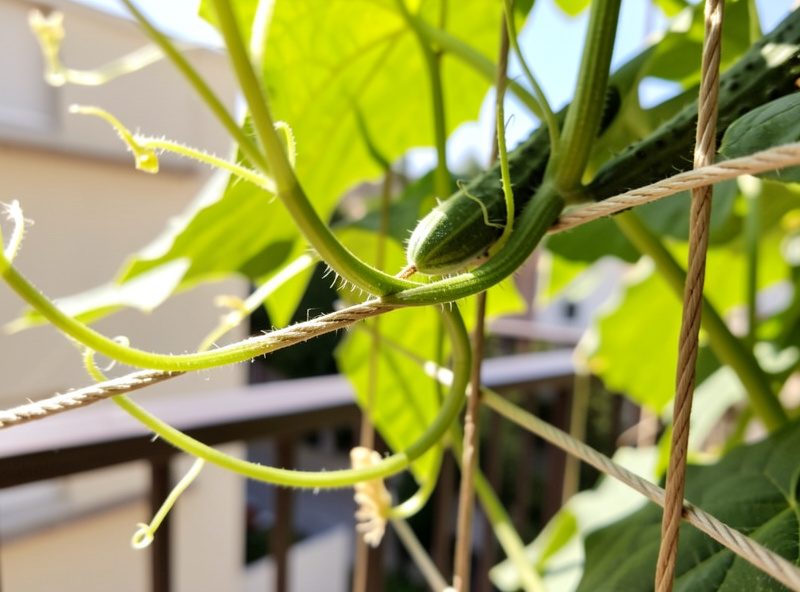
Best overall is a cattle panel — bent into an arch or fixed flat against T-posts. It’s practically indestructible, carries any cucumber load, and the wide grid lets tendrils grip while you reach a hand through to pick from behind. On a balcony, though, where I can’t sink posts, I run a heavy cucumber trellis netting stretched on a light frame against the railing — cheap, packs away in winter, and the vines don’t know the difference.
How to Train Cucumbers on a Trellis
Cucumber tendrils are the little curling appendages at each leaf node. They reach out, touch a support, and coil around it within a day. Your only job is to keep the main vine close enough to the trellis that the tendrils can find it for the first three or four weeks. After that the plant takes over and climbs itself.
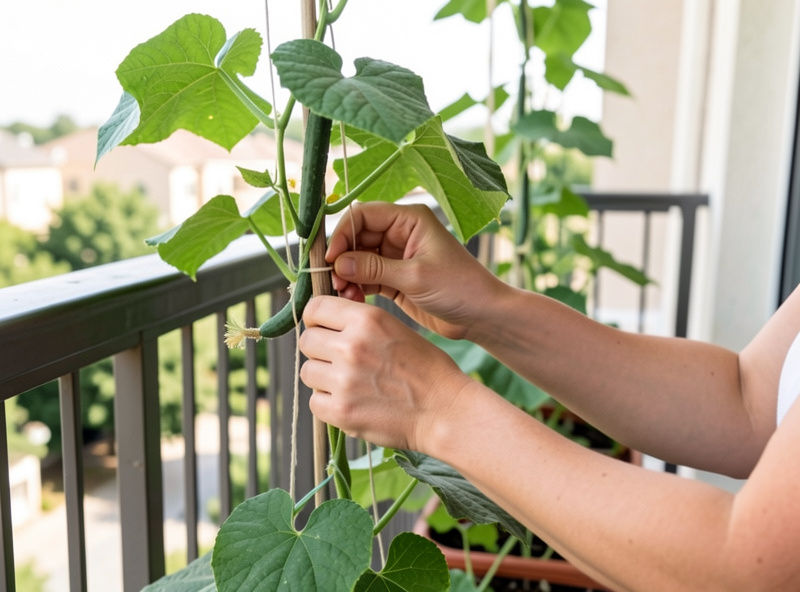
- Plant at the base of the trellis — set transplants 30–45 cm apart, right at the trellis foot. From seed, sow 2–3 per spot and thin to the strongest.
- First tie (week 1–2) — once the seedling hits 15–20 cm, tie the main stem loosely to the trellis with soft twine or a fabric strip in a figure-8 (one loop round the stem, one round the wire) so it won’t choke the stem as it thickens. I keep a roll of soft plant ties by the door for exactly this.
- Guide weekly (week 3–5) — direct the vine upward, adding a tie every 20–25 cm, and nudge any tendrils reaching into empty air toward the nearest wire.
- Let the tendrils take over (week 5+) — once it’s anchored at several points it’ll grip new sections on its own. Stop tying unless a heavy side branch needs help.
- Prune suckers below 60 cm — strip the side shoots off the bottom 60 cm to make a clean “trunk.” This is the airflow trick that matters most in a damp climate: it keeps the base open and dry and pushes energy up to the fruiting branches.
Three things never to do: never use wire or zip ties (they cut into the swelling stem and strangle it); never force a vine sharply in a new direction (bend it gradually over days, or you’ll crack the stem and lose everything above the break); and never cut the tendrils off — they’re the plant’s own anchor system against wind.
Watering Vertical Cucumbers
Cucumbers are almost all water, and vertical growing raises the demand because raised beds and containers drain faster than open ground. In peak summer a single plant drinks a few litres a day. Water at the soil line, never over the leaves — wet foliage is how powdery mildew starts. A soaker hose along the trellis base on a timer keeps moisture even without splashing. Then mulch the base with 5–8 cm of straw to cut water loss, keep the roots cool, and stop soil splashing spores up onto the lower leaves.
Feeding for a Strong Crop
Cucumbers are heavy feeders. Start with compost-rich soil and a slow-release balanced granular (10-10-10) at planting. Once flowers appear, around week four or five, switch to a high-potassium liquid feed (a tomato fertiliser is perfect) every 7–10 days — potassium is what turns flowers into fruit. Get this wrong and you’ll have a vine smothered in flowers and almost no cucumbers.
| Symptom | Deficiency | Fix |
|---|---|---|
| Yellow older leaves, stunted growth | Nitrogen | Apply balanced liquid feed immediately |
| Purple-tinged stems, slow fruiting | Phosphorus | Bone meal or high-P liquid fertiliser |
| Brown crispy leaf edges | Potassium | Potassium-rich liquid feed (tomato fertiliser) |
| Yellow between leaf veins | Magnesium | Epsom salt spray (1 tbsp per litre) |
| Bitter-tasting fruit | Water stress, not nutrient | Water more consistently |
Pest and Disease Management
Vertical growing reduces pressure but doesn’t end it. The big three:
Powdery Mildew
White powdery patches that spread fast in warm, humid spells — our most reliable cucumber problem. Prevent it with resistant varieties (Marketmore 76, Diva), good airflow from pruning the lower suckers, and base-only watering. If it appears, strip the worst leaves and spray the rest with a potassium bicarbonate solution (3 g per litre). The University of Maryland Extension’s cucumber growing guide has a useful key to diagnosing and managing these common problems.
Cucumber Beetles
Small striped beetles that chew leaves and, worse, transmit bacterial wilt. Cover young transplants with floating row cover for the first few weeks (lift it once flowering starts so pollinators can reach — unless you’re growing parthenocarpic, in which case leave it on). Hand-pick the adults in the cool of the morning when they’re sluggish.
Aphids
Clusters of soft green or black insects on the growing tips. A hard jet of water knocks light infestations off; for heavier pressure, neem oil (about 5 ml per litre) every 5–7 days clears them, and ladybugs will do the rest if you don’t spray broad-spectrum poisons that kill them too.
Companion Plants Under the Trellis
The shaded strip beneath a climbing cucumber is prime real estate — dappled shade that suits crops which bolt in full sun. Tuck lettuce and spinach in for a quick harvest before the canopy closes, radishes for a 25-day crop, or shade-loving cilantro and parsley. Bush beans fix a little nitrogen for the hungry vine above. Keep cucumbers away from potatoes (shared pests), strong aromatic herbs like sage and mint, and other cucurbits competing for the same trellis.
Growing Cucumbers Vertically in Containers
No bed? No problem — this is most of my growing. Give each plant a 20-litre bucket or a 30 cm-plus pot with drainage holes, fill with a light mix (roughly 60% coco coir, 30% perlite, 10% compost), and fix a DIY bamboo teepee or a wall grid right behind it. Container cucumbers dry out fast — check the top few centimetres daily and water deeply when dry — and feed weekly rather than fortnightly, since frequent watering flushes nutrients out of the limited soil. Stand the pot against a south-facing wall; the wall soaks up heat by day and releases it in the evening, which buys a week or two of season at each end — genuinely useful this far north. The University of Wisconsin Extension’s guide to growing vegetables in containers covers the soil and drainage fundamentals I lean on for these bucket-grown cucumbers.
Harvesting Vertical Cucumbers
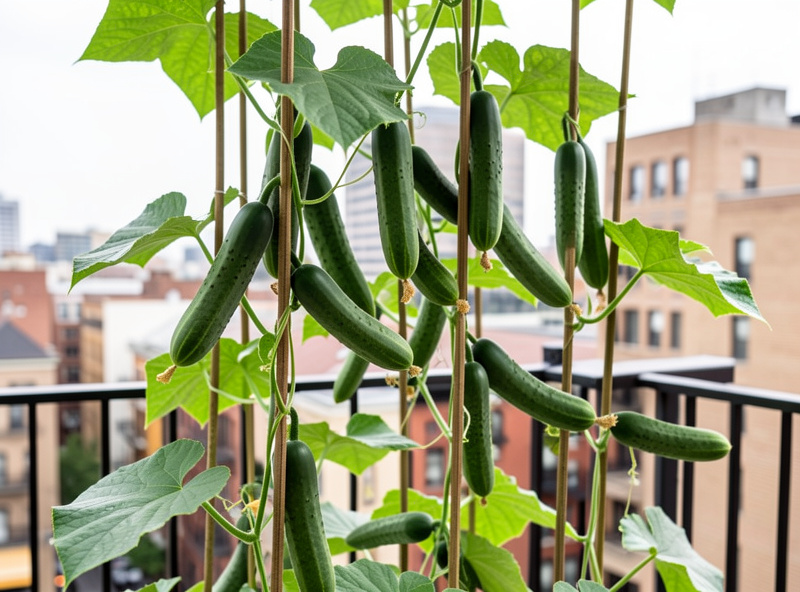
Pick at the variety’s mature size — roughly 15–22 cm for slicers, 10–15 cm for picklers — and pick often, every day or two at the peak. Leaving an oversized fruit on the vine tells the plant to ease off producing new ones, so harvesting frequently is what keeps the crop coming. Cut the stem cleanly with shears a centimetre above the fruit rather than pulling or twisting, which tears the vine and rips off the tendrils holding it to the trellis. A few healthy plants on a single trellis section will keep a household in cucumbers right through summer.
Vertical Cucumber Growing Calendar
| Week | Task | Details |
|---|---|---|
| 0 (indoors) | Start seeds | Sow indoors 3–4 weeks before last frost. Use a seed-starting setup and keep at 24–27°C. |
| 3–4 | Transplant | Harden off and plant at the trellis base once soil hits 18°C. Space 30–45 cm apart. |
| 4–5 | Begin training | First tie to the trellis; guide the main stem up. |
| 5–7 | Prune and feed | Remove suckers below 60 cm; start liquid feeding as flowers appear. |
| 7–9 | First harvest | Pick at mature size every 1–2 days. |
| 9–14 | Peak production | Keep harvesting, feed weekly, water daily. |
| 14–16 | Late season | Production slows; remove yellowing leaves; final harvests. |
Parthenocarpic Varieties — The Balcony Grower’s Friend
Parthenocarpic cucumbers set fruit without pollination, and they’ve become much easier for home growers to buy. Varieties like Diva, Tyria, and Socrates give seedless, thin-skinned cucumbers with no bees and no hand-pollination needed — which is exactly why they’re my recommendation for balcony and indoor trellis growing, where insect pollination is unreliable at best. On a windy third-floor balcony where I rarely see a bee, a parthenocarpic variety still fills the trellis. Look for seed labelled “greenhouse” or “parthenocarpic” — most are gynoecious (nearly all-female flowers), so almost every flower becomes a cucumber.
Can you grow cucumbers vertically on a trellis?
Yes, cucumbers are one of the best vertical crops. They climb readily with tendrils, the fruit hangs clean and straight without soil contact, and the better airflow cuts disease. Choose a vining (not bush) variety and a trellis that can carry several kilos of load.
What type of trellis is best for cucumbers?
A cattle panel arch or flat panel is the strongest and longest-lasting option, with a wide grid for tendrils and easy two-sided picking. For balconies or where you cannot sink posts, heavy cucumber trellis netting on a light frame works just as well and packs away in winter.
How do you support cucumber fruit on a vertical trellis?
Most cucumbers are light enough to hang unaided. For large varieties like Suyo Long or Armenian, cradle individual fruit in a sling made from netting or a fabric strip tied to the trellis so the weight does not pull on the vine.
How many cucumber plants can you grow on a trellis?
Space vining cucumbers 30-45 cm apart, so a two-metre trellis section comfortably supports four to six plants. A handful of healthy vines is enough to keep a household in cucumbers through the summer.
When should you harvest vertically grown cucumbers?
Pick every one to two days at peak, when slicers reach about 15-22 cm and picklers 10-15 cm. Frequent harvesting keeps the plant producing; leaving oversized fruit on the vine signals it to slow down.
Do cucumbers on a balcony need pollinators?
Standard cucumbers need insect pollination, which is unreliable on a high or enclosed balcony. Choose a parthenocarpic variety such as Diva, Tyria, or Socrates – these set seedless fruit with no pollination needed and are the best choice for balcony and indoor trellis growing.