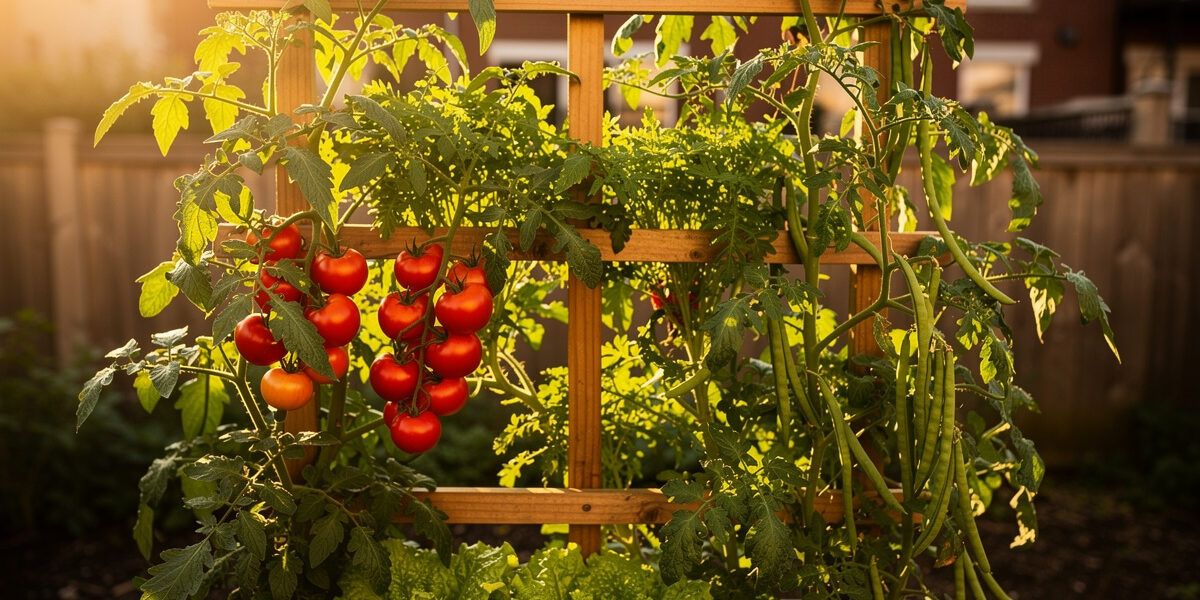
A vertical vegetable garden grows food upward — on trellises, towers, and wall planters — instead of sprawling across the ground. For me it isn’t a clever option, it’s the only way I grow vegetables at all: a Swedish apartment balcony gives me a few square metres of floor and a short season, so every crop has to climb a wall or stack in a tower to earn its place. The payoff is real — tomatoes, beans, cucumbers, lettuce, and herbs from a sliver of floor space — and this is how I actually plan and build mine. For the wider view, see my complete vertical gardening guide.
A quick note: some links below are affiliate links — if you buy through them I may earn a small commission at no extra cost to you. I only point to gear I’d use on my own balcony. Details on my disclaimer page.
Best Vegetables for Vertical Growing
Not everything suits going up. The winners are either natural climbers with tendrils and twining stems, or compact, shallow-rooted plants that slot into pockets and stacked tiers. Deep, heavy crops like pumpkins and melons overwhelm most structures — leave those on the ground.
| Vegetable | Growth Habit | Vertical System | Yield per Plant | Days to Harvest |
|---|---|---|---|---|
| Pole Beans | Climbing (twining) | Trellis, string frame | 1–2 kg | 55–65 |
| Cucumbers | Climbing (tendrils) | Trellis, cattle panel | 3–5 kg | 50–70 |
| Peas (snap/snow) | Climbing (tendrils) | Trellis, netting | 0.5–1 kg | 55–70 |
| Indeterminate Tomatoes | Vining | String, stake, cage | 4–8 kg | 70–85 |
| Lettuce | Compact rosette | Pocket, tower, stacked | 200–400 g | 30–60 |
| Spinach | Compact rosette | Pocket, tower | 150–300 g | 35–50 |
| Basil | Upright bush | Pocket, tower, stacked | 100–200 g | Continuous |
| Strawberries | Trailing | Stacked, tower, pocket | 300–500 g | 60–90 |
| Kale | Upright rosette | Pocket, stacked | 500–800 g | 50–65 |
| Peppers (compact) | Upright bush | Stacked, large pocket | 1–3 kg | 60–90 |
Climbers vs Compact Crops: Two Approaches
Vertical gardens split into two camps, and which one you’re in decides the structure you build and how you water it.
Climbing Vegetables
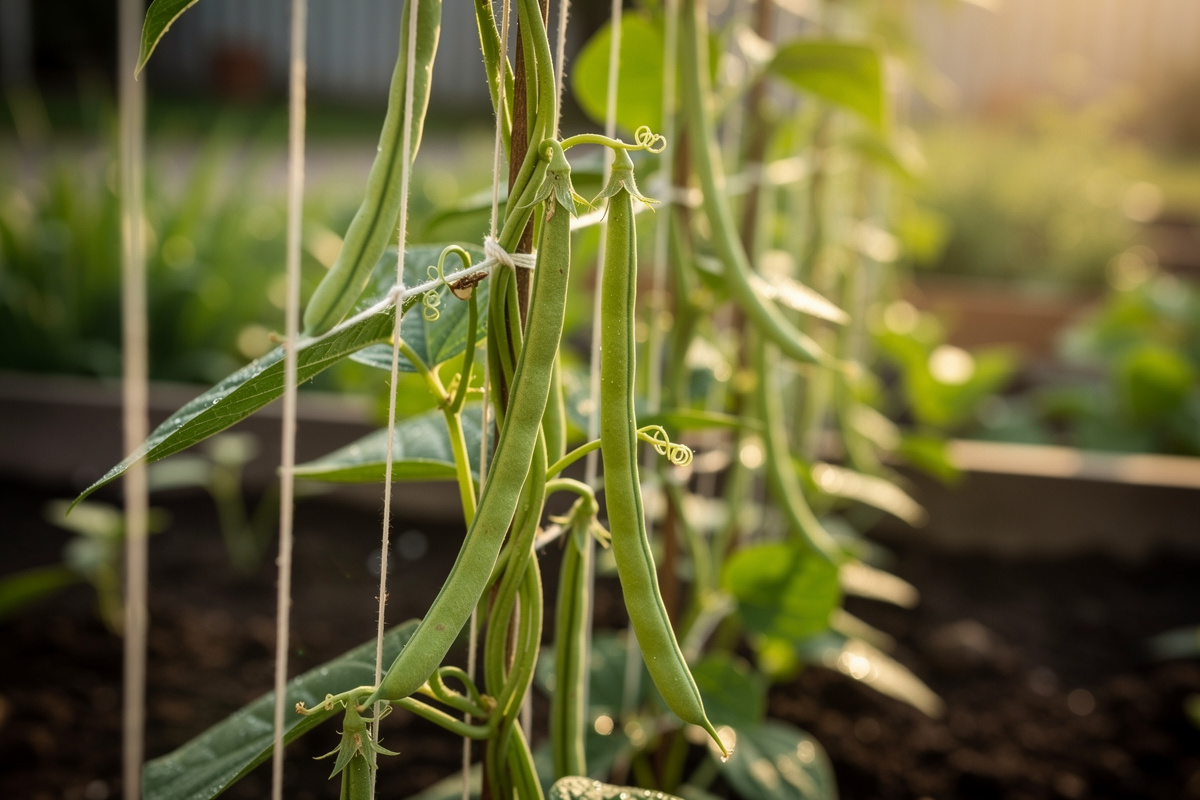
Pole beans, cucumbers, peas, and indeterminate tomatoes climb naturally with tendrils or twining stems. They need strong supports — a mature cucumber vine loaded with fruit pulls real weight on a single attachment point — but they give the highest yield per plant. Six pole-bean plants on a simple string frame take under a square metre of floor yet cover two or three square metres of growing surface. The one rule that matters: buy “pole” or “climbing” types, never “bush” or “dwarf,” which stay short and waste the whole point. (Cucumbers get their own deep dive in my growing cucumbers vertically guide.)
Compact and Leafy Vegetables
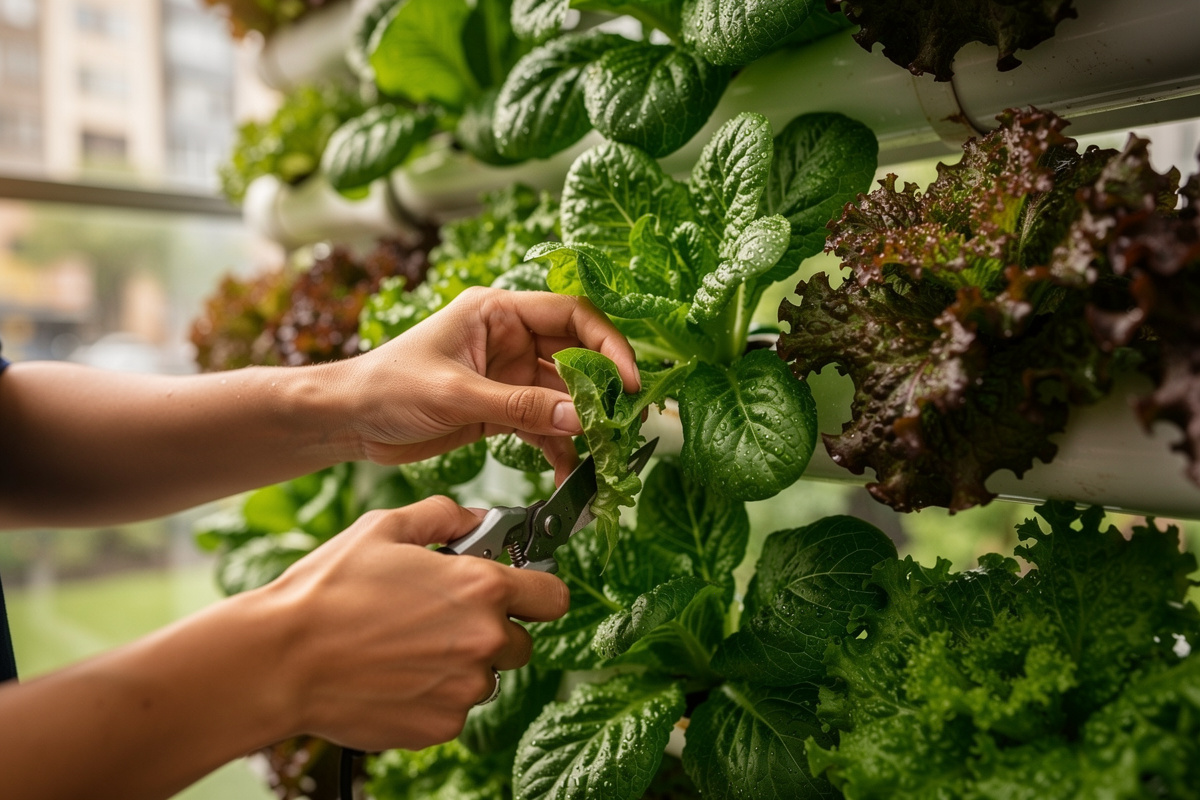
Lettuce, spinach, kale, herbs, and strawberries don’t climb — they sit as rosettes or small bushes in pockets, tower ports, or stacked tiers. They need less support but more frequent watering, since each plant lives in a small pocket of soil that dries fast. Their superpower is density: a 36-pocket wall planter holds 36 lettuces in under a square metre of wall, where the same heads would need three or four square metres of bed. On a small balcony, compact vertical crops deliver the most food per available area by a wide margin.
Planning Your Layout
Start with sun. Most fruiting vegetables want 6–8 hours of direct light; leafy greens and herbs cope with 4–6. Put your structure where it catches the most light without shading what’s behind it. A south-facing wall is gold this far north — it gets the most sun and radiates stored heat into the evening, which buys real season at both ends. Then think about wind: a tall trellis full of vines is a sail, so run it parallel to the prevailing wind and anchor the base well, or use a wall-mounted system that’s naturally sheltered (just water it more, since the wall reflects heat and dries the soil).
Spacing Guidelines
| Crop | Horizontal Spacing | Vertical Spacing | Container Depth |
|---|---|---|---|
| Pole Beans | 15 cm apart | Train to 2 m height | 20+ cm (ground or deep pot) |
| Cucumbers | 30–45 cm apart | Train to 1.5–2 m | 25+ cm |
| Tomatoes (indeterminate) | 45–60 cm apart | Train to 1.5–2.5 m | 30+ cm |
| Lettuce | 15–20 cm apart | One per pocket/port | 10–15 cm |
| Herbs (basil, cilantro) | 15–20 cm apart | One per pocket/port | 10–15 cm |
| Strawberries | 20–25 cm apart | One per pocket/tier | 15+ cm |
Building a Vertical Vegetable Garden Step by Step
Step 1: Choose your structure
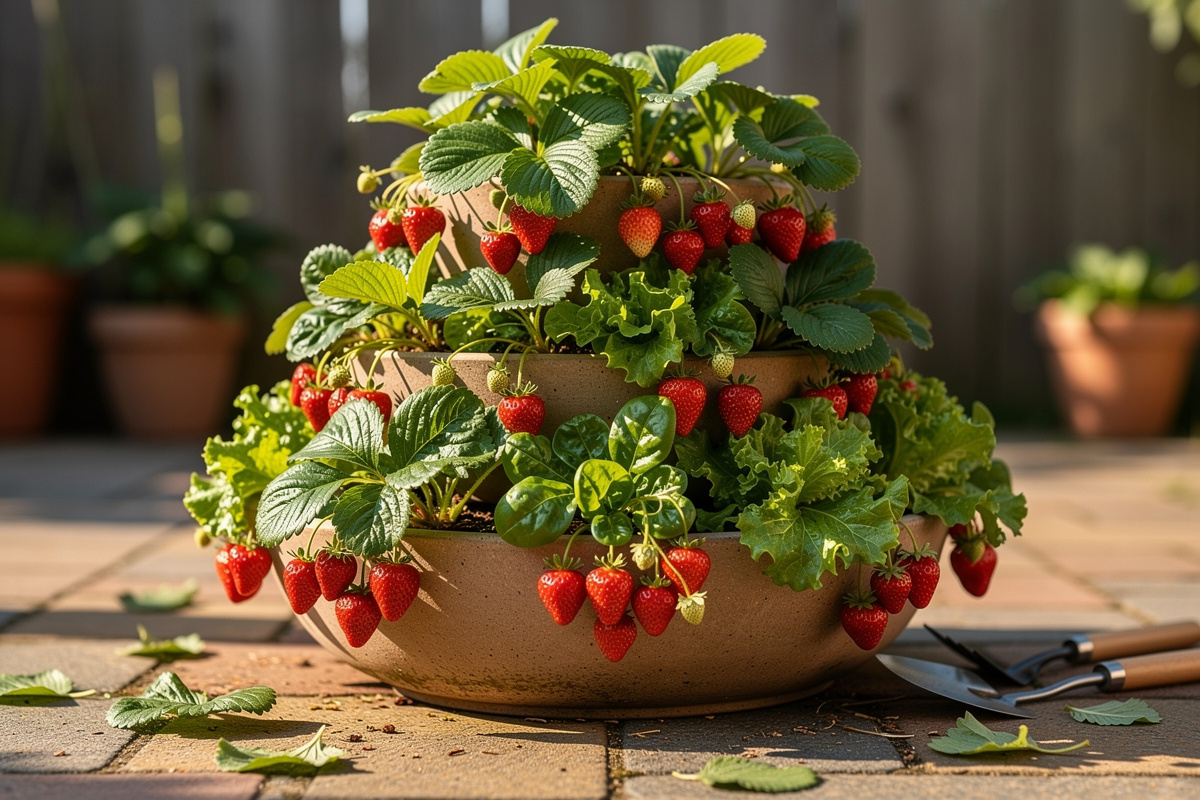
For climbers, a cattle-panel arch or A-frame trellis is the best mix of strength, airflow, and easy picking — a panel bent into an arch even makes a tunnel you can grow shade-loving lettuce under. Where I can’t sink posts, I use a freestanding climbing trellis against the railing. For compact crops, a stacked vertical planter tower gives every plant its own soil compartment — a 5-tier system holds 15–30 plants in about a third of a square metre. Pocket-style wall planters are the densest option of all for herbs and greens.
Step 2: Prepare soil and containers
Use a light potting mix, never heavy garden soil, which compacts and chokes drainage in a container. My recipe: roughly 60% peat-free coco coir, 30% perlite, 10% compost or worm castings — it drains freely, holds enough moisture, and weighs far less. Stir in a slow-release granular feed at planting to cover the first month or so.
Step 3: Plant and train
Transplant seedlings rather than direct-sowing into a vertical system — they establish faster and won’t wash out during watering. For climbers, plant at the base and tie loosely with soft twine every 15–20 cm as the vine grows (never wire or zip ties — they strangle the stem). For compact crops, press one seedling into each pocket and water it in straight away.
Step 4: Set up watering
A drip irrigation kit on a timer is the most efficient route — a main line along the top with an emitter at each plant, run twice a day. Stacked towers with a central column are even simpler: fill the top reservoir and let gravity feed every tier. Manual watering is fine for a small setup, but expect daily watering in summer.
Maximizing Yield from Vertical Vegetables
Vertical space is finite, so every plant has to pull its weight. The techniques that push production higher without adding structures:
- Succession planting — the moment a lettuce or spinach comes out, a new seedling goes in. One pocket can run several crops a season on a 30-day turnover.
- Interplanting — quick radishes or baby lettuce at the foot of slow tomato vines use ground that would otherwise sit empty.
- Vertical stacking — shade-tolerant crops below sun-lovers: lettuce thrives in the dappled shade beneath a bean trellis.
- Pruning for production — strip the lower leaves off tomato and cucumber vines once fruit sets higher, for airflow and to push energy into fruit.
- Harvest often — picking beans, cucumbers, and lettuce regularly keeps the plant producing; let ripe fruit sit and it slows right down.
Feeding Vertical Vegetables
Small containers run out of nutrients faster than beds. Once the slow-release feed fades at four to six weeks, switch to a liquid feed every 10–14 days: a balanced 10-10-10 for leafy greens, a higher-potassium blend for fruiting crops like tomatoes, cucumbers, and peppers once they flower. Potassium drives fruit, nitrogen drives leaves — the wrong ratio gives you a lush plant and no harvest. Deficiencies show fast in small containers: yellow lower leaves mean nitrogen, purple stems mean phosphorus, crispy brown edges mean potassium. Feed at the first sign.
Seasonal Planning for Year-Round Harvests
A vertical garden produces outdoors from early spring to late autumn, and year-round if you bring compact crops inside under grow lights for winter — which, in my dark months, is the whole reason I run a few towers indoors.
| Season | Climbing Crops | Compact Crops | Notes |
|---|---|---|---|
| Early Spring | Peas | Lettuce, spinach, kale | Start when soil reaches 7°C |
| Late Spring | Beans, cucumbers | Herbs, strawberries | Plant after last frost date |
| Summer | Tomatoes, beans, cucumbers | Basil, peppers, chard | Peak production period |
| Early Fall | Late beans | Lettuce, spinach (second crop) | Direct sow cool-season greens |
| Winter (indoor) | — | Lettuce, herbs, microgreens | Requires grow lights 12–14 hrs |
Common Problems and Solutions
| Problem | Cause | Solution |
|---|---|---|
| Wilting despite wet soil | Root rot from overwatering | Add perlite for drainage, water less |
| Yellow leaves, slow growth | Nitrogen deficiency | Apply balanced liquid feed immediately |
| Fruit dropping before ripening | Poor pollination or heat stress | Hand pollinate with a brush, shade in heat |
| Spindly, stretched growth | Insufficient light | Move to a brighter spot or add grow lights |
| Powdery mildew on leaves | Poor airflow, wet foliage | Prune for circulation, water at soil level only |
| Fungus gnats in pockets | Overwatered organic soil | Let the top layer dry between waterings, add a sand mulch |
Pest and Disease Management
Vertical growing cuts a lot of pest pressure — slugs and snails rarely climb a wall planter, and isolated pockets of fresh mix limit soil-borne disease. But concentrating plants together can favour aphids, whiteflies, and spider mites when airflow is poor. Space plants properly, prune crowded growth, and check leaf undersides weekly. Treat early: a hard water jet knocks off aphids, and neem oil (about 5 ml per litre) handles aphids, whiteflies, and mites on contact. For powdery mildew, remove affected leaves and keep water off the foliage.
Cost Breakdown: Starting a Vertical Vegetable Garden
The barrier to entry is low — you can start for well under $50 or invest in a premium tower for faster growth.
| Setup Type | Structure Cost | Soil/Media | Plants/Seeds | Watering | Total |
|---|---|---|---|---|---|
| Pallet + trellis (DIY) | $0–$15 | $15–$25 | $10–$20 | $0 (manual) | $25–$60 |
| Pocket planters (36 pockets) | $20–$35 | $15–$25 | $10–$20 | $0–$15 | $45–$95 |
| Stacked planter (5-tier) | $50–$120 | $20–$30 | $10–$20 | $0 (built-in) | $80–$170 |
| Cattle panel trellis | $30–$50 | $15–$25 | $10–$15 | $15–$30 (drip kit) | $70–$120 |
| Hydroponic tower | $150–$400 | $10–$20 (clay pebbles) | $15–$25 | $0 (built-in pump) | $175–$445 |
For a beginner, the DIY pallet-and-trellis route is the best value — reclaimed pallets are free from local shops and a bundle of bamboo and twine costs almost nothing. Prove vertical growing works for you one season, then upgrade. The urban gardening on a budget guide has the full from-scratch costings.
Stackable Tower Systems Have Got Cheap
One genuinely useful 2026 shift: stackable planter towers finally dropped into the budget range. Five-tier systems with a built-in central watering column now sell for around $30–40 — less than half what they cost a couple of years ago — and that central column is the real upgrade, because it feeds every tier evenly and ends the top-dry/bottom-soggy problem that plagued cheap towers. For a balcony under 20 square feet, a single tower plus a couple of railing planters gives you more growing space than a 4×4 raised bed, on a footprint the size of one large pot.
How much space do you need for a vertical vegetable garden?
Very little floor space – often just 2 to 4 square feet. A single 6-foot trellis four feet wide gives around 24 square feet of growing surface, and a stacked tower needs only 1 to 2 square feet of floor while holding 20 to 30 plants. It is the most space-efficient way to grow on a balcony or small patio.
What is the best vertical garden system for vegetables?
For climbing crops like cucumbers and beans, an A-frame trellis or cattle panel arch is best. For herbs and leafy greens, wall-mounted pocket planters pack in the most plants. For strawberries and compact vegetables, a stacked tower works well. Match the system to whether your crops climb or stay compact.
How do you train vegetables to grow vertically?
Give climbers a thin support their tendrils can wrap around and gently guide young vines toward it, tying loosely with soft twine until they grip on their own. For tomatoes, which do not cling, use stakes and string or the Florida weave. Never use wire or zip ties – they cut into the stem.
Do vertical gardens produce as much as ground gardens?
For the floor space they use, vertical gardens usually out-produce ground beds, thanks to better airflow, less disease, and far denser planting. A single trellis or tower fits into a corner that could never hold the same number of plants laid flat.
How do you water a vertical vegetable garden?
Drip irrigation with an emitter at each plant is the most reliable method, or use self-watering towers with a central column. For trellised plants, water at the base. Check the upper tiers daily in hot weather – they dry out faster than the ones lower down.