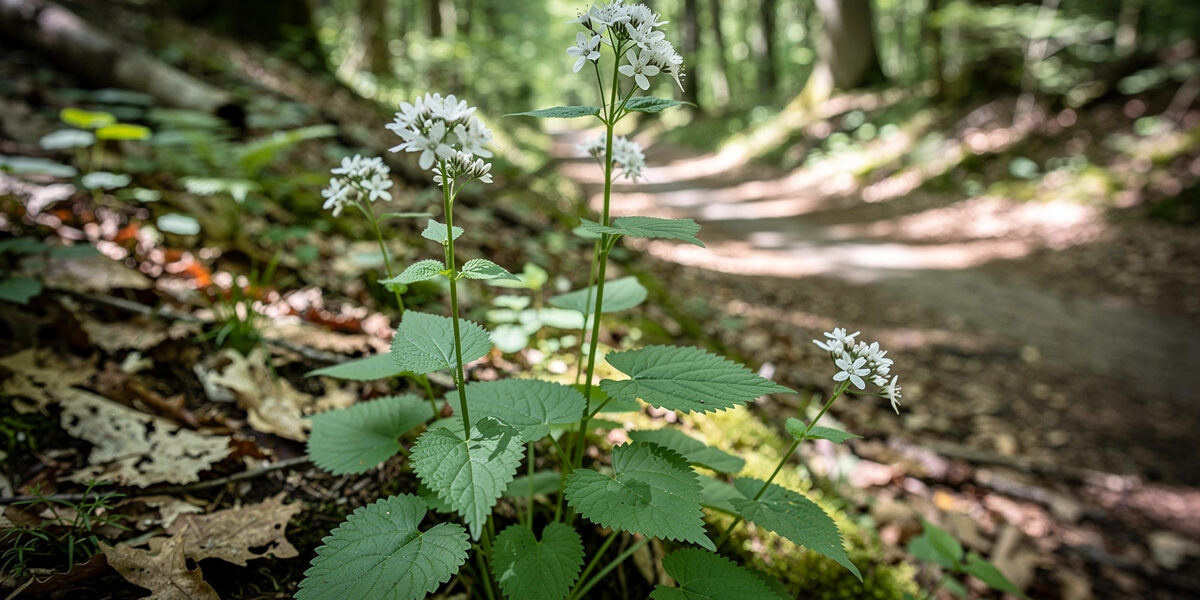
Hedge garlic (Alliaria petiolata) is one of the most abundant wild edible plants in temperate regions, producing mild garlic-flavored leaves from early spring through late fall when few other greens are growing. A single patch provides free harvests of salad greens, pesto base, and cooking greens for years without any planting or watering.
This biennial plant grows wild across Europe and has naturalized throughout North America, where it is classified as invasive in many states. For urban foragers and homesteaders, hedge garlic represents an unusual opportunity: a flavorful wild edible whose removal is actively encouraged because pulling it benefits native ecosystems. This guide covers identification, safe foraging practices, cultivation in controlled settings, culinary uses, and the ecological context that every forager should understand.
As an Amazon Associate I earn from qualifying purchases.
Identifying Hedge Garlic in the Wild
Correct identification is the most critical skill for any forager. Hedge garlic has distinctive features at every growth stage that distinguish it from potentially harmful look-alikes, but you must learn all stages because the plant changes dramatically between its first and second year.
First-year plants form a low rosette of kidney-shaped leaves with scalloped edges close to the ground. The leaves are 2 to 4 inches across, dark green, and produce a clear garlic smell when crushed between fingers. This garlic scent is the single most reliable identification feature. No other common wild plant in its habitat produces kidney-shaped leaves that smell like garlic.
Second-year plants bolt upward to 2 to 4 feet tall in spring, producing a flowering stem with triangular to heart-shaped toothed leaves that alternate up the stem. Small white four-petaled flowers cluster at the top from April through June. The flowers are followed by narrow seed pods (siliques) 1 to 2 inches long that release tiny black seeds when mature.
The garlic smell test is definitive. Crush a leaf between your fingers and smell it. If it smells like garlic, you have hedge garlic. If there is no garlic odor, you have a different plant and should not eat it. Never forage any plant based solely on visual identification without confirming with the smell test.
Where Hedge Garlic Grows
Hedge garlic thrives in partial to full shade along hedgerows, woodland edges, stream banks, fence lines, and shaded urban margins. It is one of the few edible plants that actually prefers shade, growing most vigorously where tree canopy filters 50 to 75% of direct sunlight. This shade preference makes it the opposite of sun-demanding herbs like lavender or English lavender.
In North America, hedge garlic is found from the Atlantic coast west to the Great Plains and from southern Canada to the mid-Atlantic states. It is most abundant in the northeastern and midwestern United States. Urban areas with older tree canopy, parks, abandoned lots, and residential backyards frequently host established populations.
Look for hedge garlic starting in early March when first-year rosettes are among the earliest green growth to appear after winter. By April, second-year plants are sending up flower stalks. The plant becomes less palatable after flowering as leaves develop increasing bitterness, so early spring is prime foraging season.
Foraging Hedge Garlic Safely
Harvest hedge garlic leaves by pinching or cutting individual leaves from the rosette with a pair of foraging scissors or stem. I carry a small basket and a damp cloth on my walks through the woods in early April — take only what you plan to use within 2 to 3 days because the leaves wilt quickly after picking and lose their garlic potency. First-year rosette leaves have the mildest, most pleasant garlic flavor. Second-year stem leaves are stronger and can become bitter after the plant flowers.
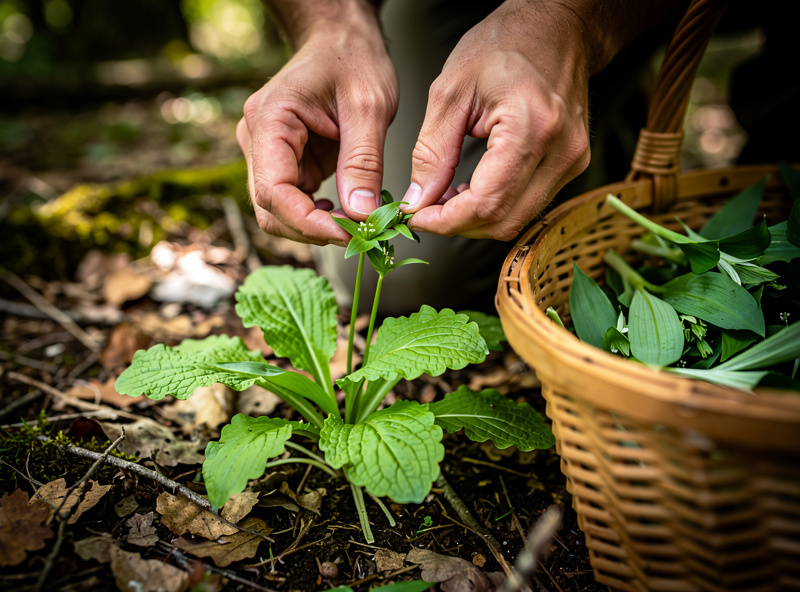
Follow responsible foraging practices even with an invasive species. Avoid harvesting from roadsides where plants absorb vehicle exhaust and heavy metals. Do not harvest from areas that may have been treated with herbicides or pesticides, including parks and utility corridors that receive chemical maintenance. Wash all foraged greens thoroughly before eating.
In North America, harvesting hedge garlic is actively encouraged by environmental agencies because it is an aggressive invasive that displaces native woodland wildflowers. Pulling entire plants rather than just picking leaves actually provides ecological benefit. Remove the root when you harvest because hedge garlic can regrow from root fragments left in soil.
Growing Hedge Garlic in a Controlled Garden Setting
While hedge garlic grows wild abundantly, some gardeners prefer a controlled patch near their kitchen for convenient access. Plant hedge garlic in a shaded bed, under deciduous trees, or on the north side of a building where other herbs would struggle. It fills the shade-garden niche that sun-loving herbs cannot occupy, and I keep a small contained patch on the north side of my building where even mint struggles — hedge garlic is the one green thing that actually thrives there.
Sow seeds directly outdoors in fall because they require winter cold stratification (60 to 90 days below 40F) to germinate. Press seeds lightly into the soil surface in a prepared bed and cover with a thin layer of leaf mulch. Seeds germinate the following spring as soil temperatures rise above 45F.
If growing hedge garlic intentionally, contain it rigorously. Use a dedicated raised bed with solid sides, or plant in large containers. Remove all flower stalks before seeds mature to prevent escape into surrounding areas. In North America, intentionally spreading hedge garlic into natural areas would worsen an existing invasive species problem. A contained raised bed keeps the plants accessible without ecological risk.
Culinary Uses for Hedge Garlic
Hedge garlic leaves add mild garlic flavor to dishes without the heat or lingering breath of true garlic cloves. The flavor is best described as a cross between garlic and mustard greens, with a peppery note that intensifies as leaves mature. Use raw leaves for maximum flavor because cooking reduces the garlic compounds significantly.
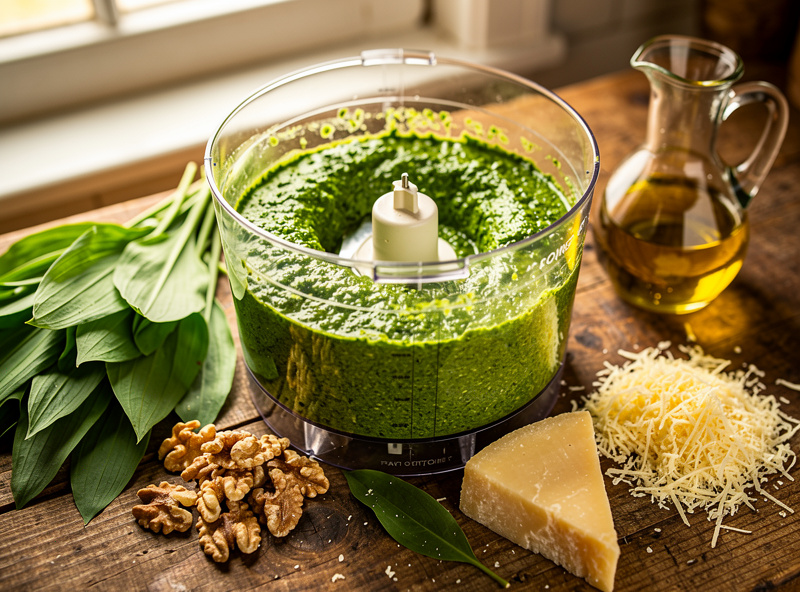
The most popular preparation is hedge garlic pesto. Blend 2 cups of fresh leaves with a quarter cup of walnuts or pine nuts, a quarter cup of parmesan cheese, a quarter cup of olive oil, and salt to taste. The resulting pesto has a unique garlicky-green flavor that differs from both traditional basil pesto and standard garlic paste. It freezes well in ice cube trays for year-round use.
Fresh leaves work as a salad green mixed with milder lettuce varieties. Add them to sandwiches for a garlic kick without actual garlic. Stir chopped leaves into cream cheese, butter, or soft goat cheese for a flavorful spread. The flowers are also edible and make an attractive garnish with a milder garlic-mustard flavor.
Hedge garlic roots harvested in fall from first-year plants have a horseradish-like pungency. Grate fresh root into vinegar for a wild condiment, or dry and grind it into a powder that approximates wasabi in heat level. The roots are small and labor-intensive to harvest, so consider them a bonus forage rather than a primary crop.
Flavor and Culinary Character of Hedge Garlic
Hedge garlic belongs to the Brassicaceae (mustard) family alongside broccoli, cabbage, and kale. The glucosinolate compounds responsible for the garlic-mustard flavor connect it directly to its domesticated garden cousins. Young first-year rosette leaves add a mild garlic-mustard bite to salads, pesto, and sandwiches. Second-year leaves are stronger and work better cooked.
Ecological Context: Why Hedge Garlic Is Invasive in North America
Hedge garlic was introduced to North America in the 1800s by European settlers who brought it as a culinary herb. Without the specialized herbivores and pathogens that control it in Europe, hedge garlic spread unchecked through North American forests and now threatens native plant communities in 34 US states and 4 Canadian provinces (USDA National Invasive Species Information Center).
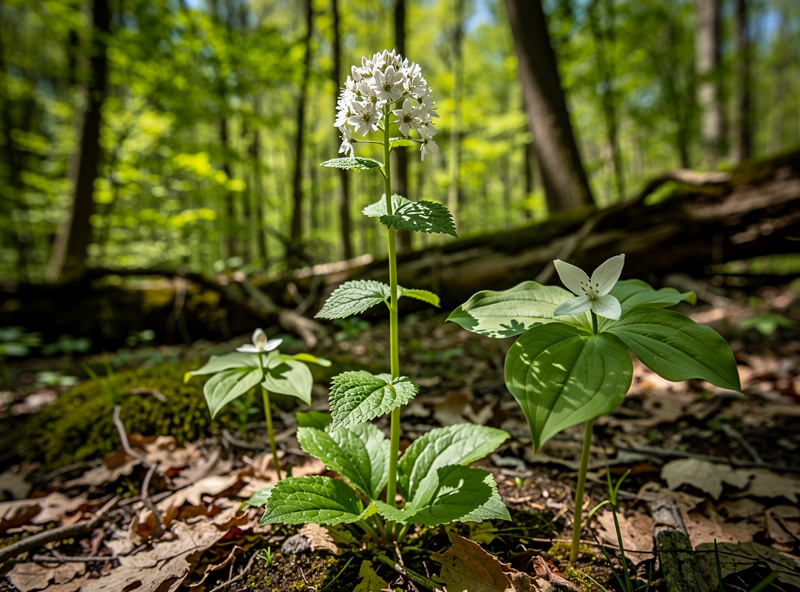
The plant produces allelopathic chemicals (sinigrin and related compounds) that inhibit the growth of native mycorrhizal fungi in the soil. Most North American forest wildflowers depend on mycorrhizal relationships to access nutrients. When hedge garlic invades, it disrupts these fungal networks, causing native wildflowers like trillium, bloodroot, and wild ginger to decline even before being directly outcompeted for light or space.
This ecological context means that foraging hedge garlic in North America is genuinely helpful. Unlike most foraging where sustainability limits how much you should take, with hedge garlic the guidance is the opposite: take as much as you can. Pull whole plants. Remove roots. Prevent flowering. Every plant removed gives native wildflowers a slightly better chance of recovery.
Preserving Hedge Garlic
Fresh hedge garlic loses its garlic aroma and flavor within 3 to 4 days of picking, so preservation is essential for year-round use. Pesto is the best preservation method because oil and freezing retain the garlic compounds that heat and dehydration destroy.
Freeze whole leaves by blanching for 10 seconds in boiling water, plunging into ice water, patting dry, and freezing flat on a sheet pan before transferring to freezer bags. Frozen leaves work in cooked dishes but lose their texture for raw applications. Hedge garlic compound butter (leaves blended into softened butter and rolled into logs) freezes well and provides instant garlic flavor for finishing dishes.
Drying hedge garlic is not recommended because the garlic-flavored volatile compounds evaporate during dehydration, leaving tasteless dried leaves. Vinegar infusion works moderately well: pack a jar tightly with fresh leaves, cover with white wine vinegar, and steep for 2 to 4 weeks. The resulting vinegar captures some of the garlic flavor for salad dressings. The comfrey guide covers working with another vigorous garden-grown perennial.
Companion Context in a Perennial Herb Garden
Hedge garlic occupies the shade niche in a perennial herb garden design. While creeping thyme covers sunny ground and catnip fills semi-shaded borders, hedge garlic thrives under trees and on the north side of structures where nothing else in the herb garden grows.
Plant contained hedge garlic patches under fruit trees where the filtered light suits its shade preference. The garlic compounds in the leaves and roots may provide mild pest-deterrent benefits to the tree above, though this effect is less studied than the proven pest-repelling properties of lemongrass or lavender.
Foraging Through the Seasons
Hedge garlic offers two distinct harvest windows. First-year rosettes are available from fall through early spring and produce the mildest leaves. Second-year plants send up flower stalks in April and May with larger but stronger-flavored foliage. I forage the young rosette leaves in March and April, before the tree canopy leafs out, when the garlic-mustard bite is at its cleanest. After the plants flower in May, the leaves become tougher and more bitter.
Frequently Asked Questions
Is hedge garlic safe to eat?
Yes. Hedge garlic (Alliaria petiolata) is a safe wild edible with a long history of culinary use in Europe. Always confirm identification using the garlic smell test: crush a leaf and check for clear garlic aroma before eating.
What does hedge garlic taste like?
Hedge garlic tastes like a mild cross between garlic and mustard greens with a peppery note. Young first-year rosette leaves are mildest. Second-year leaves become stronger and slightly bitter after the plant flowers in spring.
When is the best time to forage hedge garlic?
Early spring from March through May before flowering produces the best-tasting leaves. First-year rosette leaves are available from fall through spring. Second-year plants become increasingly bitter after flowering in April through June.
Is hedge garlic invasive?
In North America, yes. Hedge garlic is classified as invasive in 34 US states. It displaces native wildflowers by disrupting soil fungal networks. Environmental agencies actively encourage harvesting and removal to protect native ecosystems.
Can I grow hedge garlic in my garden?
Yes, but contain it in raised beds or pots to prevent spread. Sow seeds outdoors in fall because they need winter cold stratification. Remove all flower stalks before seeds mature. In North America, never let it escape into natural areas.
How do I preserve hedge garlic?
Pesto is the best preservation method because oil and freezing retain the garlic compounds. Freeze pesto in ice cube trays. Drying is not recommended because the volatile garlic flavors evaporate during dehydration, leaving tasteless dried leaves.