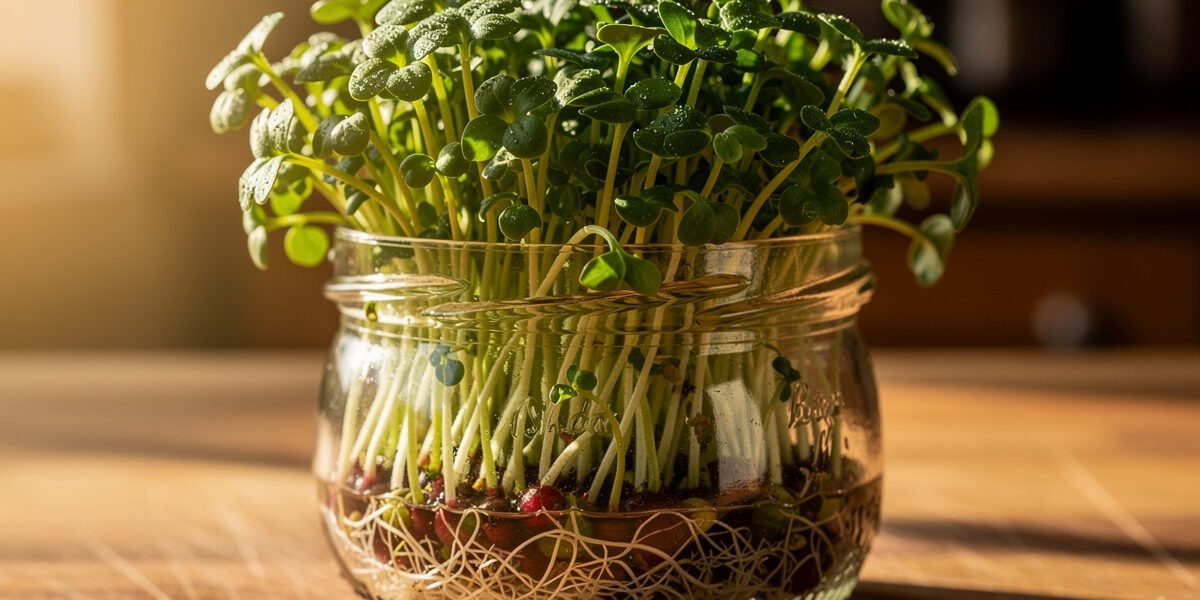
How to sprout radish seeds: Soak for 4-6 hours. Rinse and drain twice daily. Harvest in 4-6 days. Radish sprouts are famous for their fuzzy white root hairs and spicy kick. They are a perfect spicy addition to salads.
For a complete overview of all sprouting methods and seeds, see our complete sprouting guide.
If alfalfa is the mild, polite guest at the party, radish is the loud, exciting one. Radish sprouts pack a concentrated punch of heat — think of the spiciest radish you have ever eaten, condensed into a tiny 2-inch thread.
They are beautiful (often with pink or red stems), fast-growing, and a wake-up call for the palate. However, they are also the number-one source of panic for new growers due to their fuzzy roots. In this guide, we will clear up the confusion and get you growing spice in no time.
Varieties Matter: Choosing Your Spice Level
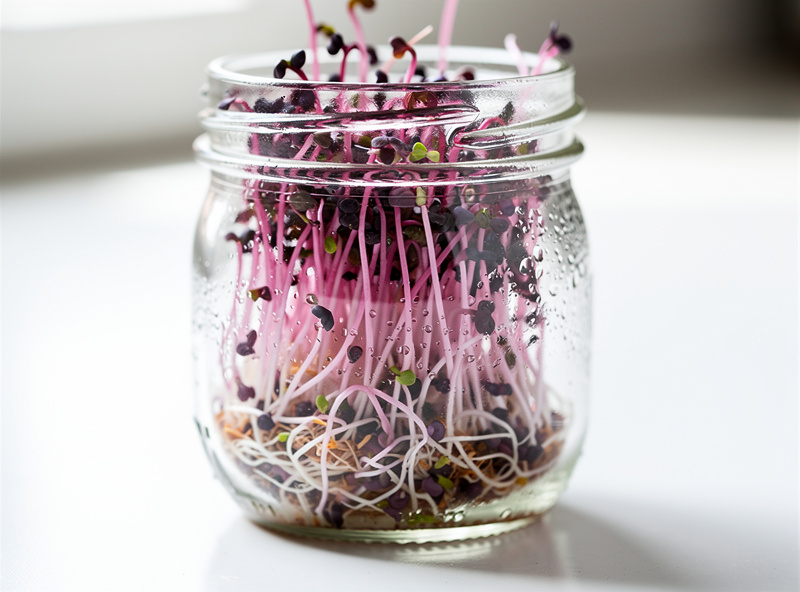
Radish sprout varieties offer distinct flavor profiles, color variations, and heat levels that determine how you use them in the kitchen. Daikon produces thick white stems with a clean, sushi-appropriate spice; China Rose delivers stunning pink stems with intense heat; Sango Purple creates dramatic dark purple foliage; while Rambo brings the deepest red-purple coloring of the bunch. Understanding these four primary varieties lets you match the spice level and visual punch to the dish — mild garnishes through bold salad components.
- Daikon Radish: Thick white stems, large green leaves. Flavor is spicy but clean. Best for sushi.
- China Rose: Beautiful pink/magenta stems with green leaves. Very spicy and visually stunning.
- Sango Purple: Deep purple stems and dark purple leaves. These look incredible in a green salad.
- Rambo Radish: Dark red/purple stems and leaves — the most dramatic color of the bunch, with heat to match.
Flavor Profile and Heat Level by Variety
Radish sprouts are the hottest thing I grow on my counter — hotter than broccoli, hotter than mustard. The heat is clean and quick, like biting into a fresh radish, and it fades fast without the lingering burn of chili pepper. Different radish varieties produce different heat levels, and the choice changes how you use them.
Through the Swedish winter, when fresh local radishes are months away, a jar of radish sprouts is the closest thing to a spring crunch the kitchen can produce in 5 days. I run them side by side with the broccoli jar through the dark months — the two together cover most of the “peppery green” uses a winter kitchen needs without buying a single bag of imported salad greens.
Daikon Radish Sprouts: The mildest of the bunch. Daikon sprouts taste green and peppery rather than hot. I use these as an alfalfa replacement when I want a sandwich sprout with a bit more character — they add crunch without dominating.
China Rose Radish: Medium heat with a pinkish stem. These are my go-to for salads because the color looks beautiful against dark greens and the heat is assertive but not aggressive. Two tablespoons of seed fills a quart jar.
Purple Radish: Intense, wasabi-like heat. These are the ones you use by the pinch, not the handful. A small pile on avocado toast or a grain bowl is all it takes — pile them on like alfalfa and you will regret it. I learned that the first time I made a “radish sprout sandwich” with purple radish sprouts.
The “Fuzzy Root” Panic (Cilia)
As an Amazon Associate I earn from qualifying purchases.On Day 3, you will look into your jar and see a white fluff covering the roots. It looks exactly like mold. It almost never is. The white fuzz is natural root hairs (cilia) — the same fine hairs you see on the roots of any healthy seedling — and they appear on almost every healthy radish sprout. Radish is a thirsty plant and these hairs massively increase the surface area the root can use to absorb moisture.
The Spray Test: Spray the roots with water.
- If the fuzz vanishes (mats down against the root) — it is root hair. Keep going.
- If the fuzz stays puffy, looks grey or black, or smells musty — it is mold. Discard the batch.
Ninety-nine percent of the time, it is just root hairs. The spray test is the reliable way to tell.
Once you get the rhythm, radish is one of the most rewarding sprouts to keep in rotation. For seed, I run organic radish seed sold for sprouting — daikon and China Rose are the two varieties I keep on the shelf because they cover the mild-to-hot range between them.
Step-by-Step Instructions
Radish seeds behave almost identically to broccoli seeds — same tiny size, same mucilage during the soak, same mold risk. I run them with the same fine mesh lid and the same roll technique I use for broccoli. The only difference is radish is slightly faster and slightly more forgiving.
Radish sprouting follows a rapid 5-6 day cycle starting with a 4-6 hour warm water soak and ending when leaves open and turn green. The process requires twice-daily rinsing, temperature management (radish generates heat during growth), light exposure beginning Day 3-4 for greening, and final hull removal through water washing. Success depends on maintaining 65-75°F temperature throughout, using mesh lids for drainage, and harvesting before over-maturity causes bitterness or fiber development.
Step 1: Soak
Use 2 tablespoons of seeds per quart jar. Soak in warm water for 4-6 hours. Warm water helps penetrate the hard shell.
Step 2: Rinse and Drain
Drain well. Radish seeds are round and roll easily, so use a mesh lid. Rinse morning and night.
Step 3: Keep Cool
Radish sprouts generate heat as they grow. If your jar feels warm to the touch, rinse it with cold water. If they get too hot, they will rot.
Step 4: Greening (Day 3-4)
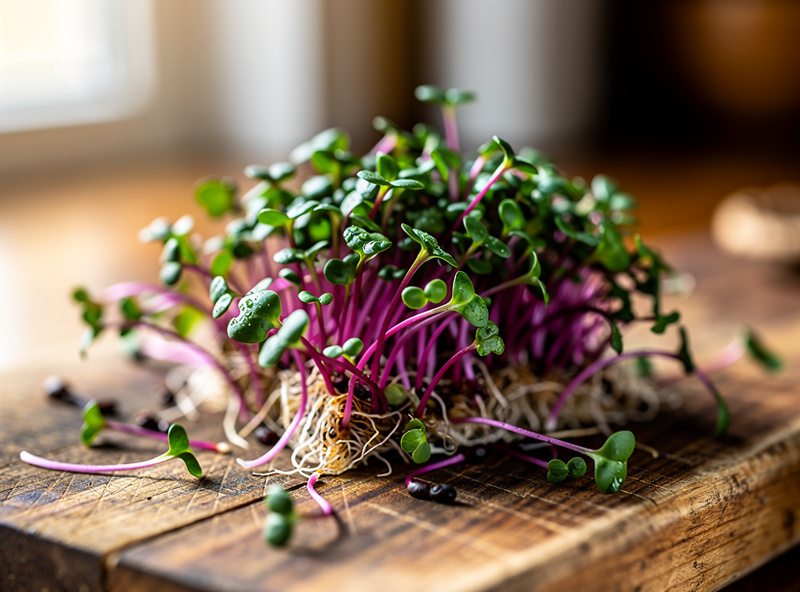
Radish sprouts grow fast. By day 3, you will see leaves. Move them to the light. The leaves will turn dark green, and the stems (depending on variety) will show their color.
Step 5: Harvest (Day 5-6)
Harvest when the leaves are open and green. Wash them in a bowl to remove the brown seed husks, which fall off easily. Taste a sprout before you commit to harvesting the whole jar — different batches land differently depending on temperature and light, and you want to pull them at the moment the heat and the crunch are both where you like them.
Step 6: The Final Dry
Once harvested and de-hulled, spread the sprouts on a clean tea towel for 20-30 minutes to wick surface moisture. Radish sprout leaves are delicate and bruise easily — do not use a salad spinner on high, and do not pile them deep. Once dry to the touch, transfer to an airtight container with a paper towel and refrigerate immediately.
Storage and Shelf Life
Radish sprouts keep for 5-7 days refrigerated when they go into the container dry. The delicate leaves crush easily and the bruised spots spoil first, so handle them gently and store loosely rather than packed tight. After harvest, spread them on a clean tea towel for 20-30 minutes to wick surface moisture, then transfer to an airtight container lined with a paper towel and refrigerate at 35-40°F. Swap the paper towel for a dry one if it dampens.
Check the jar daily once you are past day 4 and pull any single sprout that has gone soft or dark — one bad sprout will pull the rest with it. Radish sprouts do not freeze well; the cellular structure collapses on thaw and the texture turns to mush. If you have more than you can eat in a week, start a smaller jar next time.
Signs of spoilage: Discard the whole batch if the sprouts turn slimy, develop visible grey or black mold (not the white root hairs — see the section above), or smell sour or rotten rather than the normal peppery radish note.
A Quick Word on Sprout Safety
Radish sprouts belong to the same brassica family as broccoli and follow the same hygiene rules. The warm, wet conditions inside the jar suit Salmonella and E. coli as much as they suit the seed. Source radish seed sold specifically for sprouting (not garden seed, which may be treated with fungicides), rinse in clean cold running water at every step, drain thoroughly, refrigerate the finished sprouts, and discard any batch that smells off. People who are pregnant, elderly, very young, or immunocompromised should cook sprouts rather than eat them raw. The FDA Sprout Safety Alliance publishes the full industry-side guidance, and our own sprouting safety tips page has the short version for home growers.
Culinary Uses and Recipes
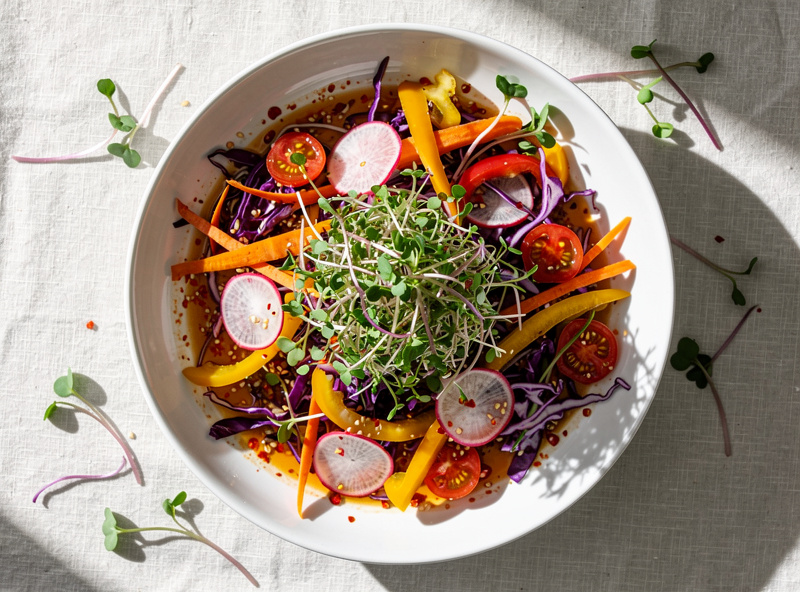
Because of their heat, radish sprouts are best used as a flavor accent rather than a base vegetable.
Recipe: The Spicy Avocado Toast
- 1 slice sourdough bread, toasted.
- 1/2 ripe avocado, mashed.
- Generous handful of Radish Sprouts.
- Squeeze of lemon.
- Pinch of chili flakes.
The fat of the avocado cuts the heat of the radish perfectly, creating a balanced bite.
Other Uses:
- Sushi / Sashimi: They pair perfectly with raw fish (a traditional Japanese garnish).
- Tacos: Use them instead of salsa for a fresh crunch.
- Burgers: Add a layer for a horseradish-like kick.
Troubleshooting Common Problems
- They are too spicy to eat!
- Harvest them earlier (Day 4). The older they get, the hotter they get. Also, try mixing them 50/50 with alfalfa or clover to dilute the heat.
- They smell sulfurous.
- Radish is a brassica. A slight sulfur/cabbage smell is normal. A rotting vegetable smell is not.
- Seeds are not germinating.
- Check the age of your seeds. Old seeds have lower germination rates. Ensure your soaking water is not too hot, as temperatures above 110 degrees Fahrenheit can kill the embryo. Also verify that your seeds are specifically sold for sprouting and have not been treated with fungicides.
- Sprouts are growing unevenly.
- This usually indicates inconsistent moisture distribution. Make sure you are rinsing thoroughly so all seeds receive equal hydration. Rotate your jar position between rinses to ensure even exposure to air and light.
- Brown or slimy sprouts at the bottom.
- Poor drainage is the culprit. Your jar angle is not steep enough, or your mesh lid holes are too small. Water must drain completely within a few minutes of rinsing. Try adding an extra midday rinse during hot weather.
- Sprouts taste bitter.
- Bitterness often results from too much direct sunlight or allowing sprouts to grow too long. Radish sprouts only need indirect light to develop color. Harvest promptly when leaves are fully open.
How long do radish seeds take to sprout?
Radish seeds sprout quickly—typically 3-5 days. After a brief 4-6 hour soak, you’ll see tails within 24-48 hours. Harvest when sprouts are 1-2 inches long for the spiciest flavor.
Why are my radish sprouts so spicy?
Radish sprouts carry the same peppery heat as the mature radish, concentrated into a tiny stem — that is the brassica family signature. The spice level increases with longer growing time. Harvest earlier for milder sprouts, or let them grow longer for more heat.
Can I grow radish microgreens indoors?
Yes, radish microgreens grow easily indoors. They’re one of the best beginner microgreens—fast-growing, forgiving, and flavorful. Grow on a windowsill or under basic grow lights for 7-10 days.
What varieties work best for radish sprouts?
Daikon radish is most popular for sprouting—mild with a slight spice. Red radish varieties produce pink-stemmed sprouts with more heat. Any radish seed labeled for sprouting will work well.
What do radish sprouts taste like?
Radish sprouts taste like a concentrated radish — peppery, hot, and clean, with a crunch that holds up raw. The heat varies by variety (daikon is mildest, Rambo is hottest) and intensifies the longer you let them grow. Use them as a flavor accent, not a bulk ingredient.
How do I store radish sprouts?
Store radish sprouts in a sealed container lined with paper towels. Refrigerate at 40°F (4°C) and use within 5-7 days. Keep them dry—excess moisture causes mold. Do not freeze.
Can I use any seeds for sprouting?
Only use seeds specifically labeled for sprouting or microgreens. Regular garden seeds may carry pesticides or pathogens. Look for organic, high-germination seeds rated 90%+ for best sprouting results.